
GIP Library icon

LOG IN TO REVIEW
About the Book


"Visioneering" by Andy Stanley is a practical guide to understanding and implementing a vision for your life and work. Stanley walks readers through the process of identifying and clarifying their vision, overcoming obstacles, and staying focused on their goals. He emphasizes the importance of having a clear vision and taking strategic steps to turn that vision into reality. The book is a valuable resource for anyone looking to create meaningful and impactful change in their personal or professional life.

Charles Finney

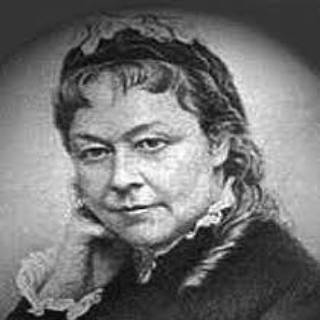
Charles Finney Childhood and Teen years Charles Grandison Finney was born the year after Wesley died on 29th August, 1792 in Warren, Connecticut. In 1794 his family moved to New York state, eventually settling at Henderson, near Lake Ontario. Although he received only a brief formal education he decided to study law and joined the practice of a local lawyer, Benjamin Wright. He was also very musical, played the cello and directed the choir at the local Presbyterian Church pastured by Rev. George Gale. His conversion His conversion on October 10th 1821 reads like something out of the book of Acts. Smitten with conviction from Bible reading he decided to ‘settle the question of my soul’s salvation at once, that if it were possible, I would make my peace with God.’ (Autobiography) This conviction increased to an unbearable level over the next couple of days and came to an head when he was suddenly confronted with an ‘inward voice.’ He was inwardly questioned about his spiritual condition and finally received revelation about the finished work of Christ and his own need to give up his sins and submit to Christ’s righteousness. As he sought God in a nearby wood he was overwhelmed with an acute sense of his own wickedness and pride but finally submitted his life to Christ. Back at work that afternoon he was filled with a profound sense of tenderness, sweetness and peace. When work was over and he bade his employer goodnight, he then experienced a mighty baptism in the Holy Spirit, which was recorded as vividly as the day he experienced it, though it was penned some fifty years later. The next morning Finney announced to a customer that he was leaving his law studies to become a preacher of the Gospel. Charles Finney licensed to preach He was licensed to preach in 1823 and ordained as an evangelist in 1824. His penetrating preaching was quite different from many local ministers and included an obvious attempt to break away from the traditional and, as he saw it, dead, orthodox Calvinism. He married to Lydia Andrews in October 1824 and was also joined by Daniel Nash (1774-1831), known popularly as ‘Father Nash.’ Undoubtedly Nash’s special ministry of prayer played a great part in Finney’s growing success as an evangelist. Things really took off when he preached in his old church, where Rev. Gale still ministered. Numerous converts and critics followed! Similar results were experienced in nearby towns of Rome and Utica. Soon newspapers were reporting his campaigns and he began drawing large crowds with dramatic responses. Soon he was preaching in the largest cities of the north with phenomenal results. Campaign after campaign secured thousands of converts. The high point of Finney’s revival career was reached at Rochester, New York, during his 1830-1 meetings. Shopkeepers closed their businesses and the whole city seemed to centre on the revivalist. Responding to his irresistible logic and passionate arguments many of his converts were lawyers, merchants and those from a higher income and professional status. His Preaching Finney openly preached a modified Calvinism, influenced with his own theology of conversion and used what were perceived to be ‘revivalistic techniques.’ These ‘means’ included the use of the anxious bench (a special place for those under conviction), protracted meetings, women allowed to pray in mixed meetings, publicly naming those present resisting God in meetings and the hurried admission of new converts into church membership. Opponents viewed his preaching of the law as ‘scare tactics’ and his persuasive appeals for sinners to come to Christ for salvation were seen as over-emphasising the responsibility of men and ignoring the sovereignty of God. His theology and practise soon became known as the ‘New Measures’ and attracted many opponents from the Old School Presbyterians led by Asahel Nettleton (himself no stranger to true revival and , the revivalistic Congregationalists headed by Lyman Beecher. Pastor at Chatham Street Chapel Finney accepted an appointment as pastor of Chatham Street Chapel in New York City in 1832 where he remained until 1837. It was during this time that he delivered a series of sermons published in 1835 as ‘Lectures on Revivals of Religion.’ Here he clearly stated his views regarding revivals being products of the correct use of human means. Such was the controversy that he left the Presbyterian denomination and joined the Congregationalists in 1836. Oberlin College The next year he became professor of theology at Oberlin College (Ohio) where he taught until his death. He was President here from 1851 until 1866, but still continued regular revival meetings in urban settings (twice in England, 1848, 1851) until 1860. During his stay at Oberlin he produced his, Lectures to Professing Christians (1836), Sermons on Important Subjects (1839) and his famous Memoirs. The Father of Modern Revivalism There is no doubt that Charles Grandison Finney well-deserves the title ‘The Father of Modern Revivalism.’ He was an evangelistic pioneer whose model was followed by a long line of revivalists from D. L. Moody to Billy Graham. His writing have made a massive impact on the entire evangelical world and particularly the ‘Lectures on Revivals’ which has, arguably, ignited more fires of revival than any other single piece literature in evangelical history. This ‘Prince of Revivalists’ passed away peacefully at Oberlin on Sunday, 16th August, 1875 aged almost 83 years. Bibliography: I Will Pour Out My Spirit, R. E. Davies, 1997; Ed: A. Scott Moreau, Baker Evangelical Dictionary of World Missions, 2000; Dictionary of Evangelical Biography 1730-1860, Vol. 1, 1995. Tony Cauchi

you can’t fake what you love

The soul is measured by its flights, Some low and others high, The heart is known by its delights, And pleasures never lie. I was 25 years old when John Piper’s book  The Pleasures of God  was first released in 1991. My wife and I had been attending Bethlehem Baptist for two years and had read John’s book  Desiring God , which unpacked what he called Christian Hedonism. His fresh emphasis on the truth that  God is most glorified in us when we are most satisfied in him  was working its way into our spiritual bones. But as I read the introduction to  The Pleasures of God , the one-sentence poem above crystalized the truth of Christian Hedonism for me, opening my mind to the role delight plays in the Christian life. One Sentence Begets Another John wrote that life-changing sentence as a kind of exposition of  another  life-changing sentence he had read four years earlier. In fact, the whole sermon series that birthed the book was born of his meditation on that sentence written in the seventeenth century by a young Professor of Divinity in Scotland named Henry Scougal. Scougal had actually penned the sentence in a personal letter of spiritual counsel to a friend, but it was so profound that others copied and passed it around. Eventually Scougal gave permission for it to be published in 1677 as  The Life of God in the Soul of Man . A year later, Scougal died of tuberculosis before he had reached his twenty-eighth birthday. John Piper describes what gripped him so powerfully: One sentence riveted my attention. It took hold of my thought life in early 1987 and became the center of my meditation for about three months. What Scougal said in this sentence was the key that opened for me the treasure house of the pleasures of God. He said, “ The worth and excellency of a soul is to be measured by the object of its love .” (18) John realized that this statement is as true of God as it was of man. The worth and excellency of  God’s  soul is measured by the object of its love. This object must, then, be God himself, since nothing of greater value exists than God. John previously devoted a whole chapter in  Desiring God  to God’s happiness in himself — the God-centeredness of God. Scougal’s sentence, however, opened glorious new dimensions of this truth for John as he contemplated how the excellency of God’s soul is measured. And John’s sentence opened glorious new dimensions for me as I began to contemplate that a heart, whether human or divine, is known by its delights. Pleasures Never Lie It was the last line of John’s poem that hit me hardest: The heart is known by its delights, And pleasures never lie. Pleasures never lie.  This phrase cut through a lot of my confusion and self-deceit to the very heart of the matter: what really matters to my heart. “Our lips can lie about what we love, but our pleasures never lie.” “Pleasures never lie” doesn’t mean things we find pleasurable are never deceitful. We all know, from personal experience as well as the testimony of Scripture, that many worldly pleasures lie to us (Hebrews 11:25). Rather, it means that pleasure is the whistle-blower of the heart. Pleasure is our heart’s way of telling us what we treasure (Matthew 6:21). When we take pleasure in something evil, we don’t have a  pleasure problem ; we have a  treasure problem . Our heart’s pleasure gauge is working just like it’s supposed to. What’s wrong is what our heart loves. Our lips can lie about what we love, but our  pleasures never lie . And we can’t keep our pleasure-giving treasures hidden, whether good or evil, at least not for long. What we truly love always ends up working its way out of the unseen heart into the plain view of what we say and don’t say, and what we do and don’t do. My heart, like God’s heart, is known by its delights. I found this wonderfully clarifying. It resonated deeply; all my experience bore out its truth. And I saw it woven throughout the Bible. The more I contemplated it, however, the more devastating this truth became. Devastated by Delight It’s devastating because if the worth and excellency of my soul is measured by the heights of its flights of delights in God, I find myself “naked and exposed” before God, without embellishment or disguise (Hebrews 4:13). No professed theology, however robust and historically orthodox, no amount of giftedness I possess, no “reputation of being alive” (Revelation 3:1) can compensate if I have a deficit of delight in God. And to make sure I understand what is and isn’t allowed on the affectional scale, John says, You don’t judge the glory of a soul by what it wills to do with lukewarm interest, or with mere teeth-gritting determination. To know a soul’s proportions you need to know its passions. The true dimensions of a soul are seen in its delights. Not what we dutifully will but what we passionately want reveals our excellence or evil. (18) As I place my passions on God’s soul-scale, my deficits become clear. I’m a mixed bag when it comes to my passion for God. I can savor God like Psalm 63 and yet still sin against him like Psalm 51. I have treasured God like Psalm 73:25–26, and questioned him like Psalm 73:2–3. Sometimes I sweetly sing Psalm 23:1–3, and sometimes I bitterly cry Psalm 10:1. At times I keenly feel the wretchedness of Romans 7:24, and at times the wonder of Romans 8:1. I have known the light of Psalm 119:105 and the darkness of Psalm 88:1–3. I’ve known the fervency of Romans 12:11 and the lukewarmness of Revelation 3:15. Many times I need Jesus’s exhortation in Matthew 26:41. “We must know our spiritual poverty before we will earnestly seek true spiritual wealth.” It is devastating to stand before God with only what we passionately want revealing the state of our hearts, measuring the worth of our souls. But it is a merciful devastation we desperately need. For we must know our spiritual poverty before we will earnestly seek true spiritual wealth. We must see our miserable idolatries before we will repent and forsake them. We must feel our spiritual deadness before we will cry out, “Will you not revive us again, that your people may rejoice in you?” (Psalm 85:6) That’s all true. However, the longer I contemplated John’s sentence over time, the more I realized the devastating exposure of my spiritual poverty is meant to be a door into an eternal world of delight-filled love. Pleasures Forevermore I made this discovery in the story of the rich young man (Mark 10:17–22). When Jesus helped this man see his heart’s true passions (when he exposed his spiritual poverty), the exposure wasn’t Jesus’s primary purpose. Jesus wanted the man to have “treasure in heaven,” to give this man eternal joy (Mark 10:21). And Jesus knew the man would never joyfully sell everything he had to obtain the treasure that is God unless he saw God as his supreme treasure (Matthew 13:44). So he tried to show him by calling the man to the devastating door of exposure and knocking on it. And he grieved when the man wouldn’t open it, because the door led to a far greater treasure than the one he would leave behind. God created pleasure because he is a happy God and wants his joy to be in us and our joy to be full (John 15:11). When he designed pleasure as the measure of our treasure, his ultimate purpose was that we would experience maximal joy in the Treasure. And that the Treasure would receive maximal glory from the joy we experience in him. It is a marvelous, merciful, absolutely genius design:  God is most glorified in us when we are most satisfied in him . If God has to expose our poverty to pursue our eternal joy, he will. But what he really wants for us is to experience “fullness of joy” in his presence and “pleasures forevermore” at his right hand (Psalm 16:11). And so it is a great mercy, even if at times devastating, that our pleasures never lie.

Feedback
Suggestionsuggestion box
x