
Others like the 360° leader Features >>




About the Book
"The 360° Leader" by John Maxwell offers practical advice for aspiring leaders at all levels of an organization, showing how they can influence and lead those around them. Maxwell argues that leadership is about influence, not just a title or position, and provides strategies for becoming a more effective leader from any position within an organization. He emphasizes the importance of building relationships, developing trust, and being adaptable in order to succeed as a leader regardless of where you are in the organizational hierarchy.
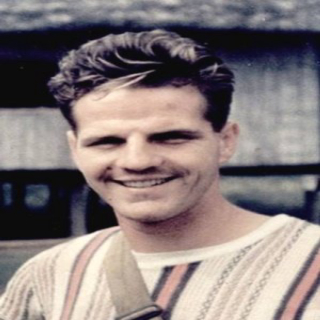
Jim Elliot
 EARLY LIFE
Jim Elliot began his life in Portland, Oregon in the USA. His mother, Clara, was a chiropractor and his father, Fred, was a minister. They married and settled in Seattle, WA where they welcomed their first son, Robert in 1921.
Later they relocated the family to Portland where Herbert arrived in 1924, Jim in 1927, and Jane in 1932.
Jim knew Christ from an early age and was never afraid to speak about Him to his friends. At age six Jim told his mother, “Now, mama, the Lord Jesus can come whenever He wants. He could take our whole family because I’m saved now, and Jane is too young to know Him yet.”
THE YEARS THAT CEMENTED HIS DESIRE TO SERVE THE LORD IN MISSIONS
Jim entered Benson Polytechnic High School in 1941. He carried a small Bible with him and, an excellent speaker; he was often found speaking out for Christ. He and his friends were not afraid to step out and find adventure. One thing Jim didn’t have time for in those early years were girls. He was once quoted as telling a friend, “Domesticated males aren’t much use for adventure.”
In 1945 Jim traveled to Wheaton, IL to attend Wheaton College. His main goal while there was to devote himself to God. He recognized the importance of discipline in pursuing this goal. He would start each morning with prayer and Bible study. In his journal he wrote, “None of it gets to be ‘old stuff’ for it is Christ in print, the Living Word. We wouldn’t think of rising in the morning without a face-wash, but we often neglect the purgative cleansing of the Word of the Lord. It wakes us up to our responsibility.”
Jim’s desire to serve God by taking His gospel to unreached people of the world began to grow while at Wheaton. The summer of 1947 found him in Mexico and that time influenced his decision to minister in Central America after he finished college.
Jim met Elisabeth Howard during his third year at Wheaton. He did ask her for a date which she accepted and then later cancelled. They spent the next years as friends and after she finished at Wheaton they continued to correspond. As they came to know each other there was an attraction, but Jim felt he needed to unencumbered by worldly concerns in order to devote himself completely to God.
In addition to his hope to one day travel to a foreign country to share Christ with the unchurched of the world, he also felt the need to share with people in the United States. On Sundays while at Wheaton he would often ride the train into Chicago and talk to people in the train station about Christ. He often felt ineffective in his work as the times of knowingly leading people to Christ were few. He once wrote, “No fruit yet. Why is that I’m so unproductive? I cannot recall leading more than one or two into the kingdom. Surely this is not the manifestation of the power of the Resurrection. I feel as Rachel, ‘Give me children, or else I die.’”
After college with no clear answer as to working for the Lord in a foreign country, Jim returned home to Portland. He continued his disciplined Bible study as well as correspondence with Elisabeth Howard whom he called Betty.
They both felt a strong attraction to each other during this time, but also felt that the Lord may have been calling them to be unmarried as they served Him.
In June of 1950 he travelled to Oklahoma to attend the Summer Institute of Linguistics. There he learned how to study unwritten languages. He was able to work with a missionary to the Quichuas of the Ecuadorian jungle. Because of these lessons he began to pray for guidance about going to Ecuador and later felt compelled to answer the call there.
Elisabeth Elliot wrote in Shadow of the Almighty:
“The breadth of Jim’s vision is suggested in this entry from the journal:
August 9. “God just now gave me faith to ask for another young man to go, perhaps not this fall, but soon, to join the ranks in the lowlands of eastern Ecuador. There we must learn: 1) Spanish and Quichua, 2) each other, 3) the jungle and independence, and 4) God and God’s way of approach to the highland Quichua. From thence, by His great hand, we must move to the Ecuadorian highlands with several young Indians each, and begin work among the 800,000 highlanders. If God tarries, the natives must be taught to spread southward with the message of the reigning Christ, establishing New Testament groups as they go. Thence the Word must go south into Peru and Bolivia. The Quichuas must be reached for God! Enough for policy. Now for prayer and practice.
THE ECUADOR YEARS
In February 1952 Jim finally left America to travel to Ecuador with Pete Fleming. In May Elisabeth moved to Quito and though they didn’t feel the need to get engaged she and Jim did begin a courtship.
In August Jim left Elisabeth in Quito and travelled with Pete to Shell Mera. At the Mission Aviation Fellowship headquarters in Shell Mera, Jim and Pete learned more about the Acua Indians, a people group that was largely unreached and very savage.
Leaving Shell Mera, Pete and Jim moved on to Shandia where Jim was captivated by the Quichua. He felt very strongly that this was exactly where God intended for him to work to spread the Gospel.
While Jim was in Shandia, Elisabeth was working to learn more about the Colorado Indians near Santa Domingo. In January of 1953 he went to Quito and she met him there and they were finally engaged. They married in October of that year and their only child Valerie was born in 1955.
They settled in Shandia and continued their work with the Quichua Indians. It was Jim’s desire to be able to reach the Waodoni tribe that lived deep in the jungles and had little contact with the outside world. A Waodoni woman who had left the tribe was taken in by the missionaries and helped them to learn the language.
Jim, along with Pete, Ed McCully, Roger Youderian, and their pilot Nate Saint began to search by plane in hopes of finding a way to contact the Waodoni. The found a sandbar in the middle of the Curaray River that worked as a landing strip for the plane and it was there that they first made contact with the Waodoni. They were elated to be able to finally be able to attempt to share the love of Christ with this people group.
After their first meeting, one of the tribe, a man they called George lied to the tribe about the men’s intentions. This lie led the Waodoni warriors to plan an attack for when the missionaries returned. The men did return on January 8, 1956 and were surprised by ten members of the tribe who massacred the missionaries.
Jim’s short life that was filled with the desire to share God’s love can be summed up by a quote that is attributed to him. “He is no fool who gives that which he cannot keep, to gain what he cannot lose.”
EARLY LIFE
Jim Elliot began his life in Portland, Oregon in the USA. His mother, Clara, was a chiropractor and his father, Fred, was a minister. They married and settled in Seattle, WA where they welcomed their first son, Robert in 1921.
Later they relocated the family to Portland where Herbert arrived in 1924, Jim in 1927, and Jane in 1932.
Jim knew Christ from an early age and was never afraid to speak about Him to his friends. At age six Jim told his mother, “Now, mama, the Lord Jesus can come whenever He wants. He could take our whole family because I’m saved now, and Jane is too young to know Him yet.”
THE YEARS THAT CEMENTED HIS DESIRE TO SERVE THE LORD IN MISSIONS
Jim entered Benson Polytechnic High School in 1941. He carried a small Bible with him and, an excellent speaker; he was often found speaking out for Christ. He and his friends were not afraid to step out and find adventure. One thing Jim didn’t have time for in those early years were girls. He was once quoted as telling a friend, “Domesticated males aren’t much use for adventure.”
In 1945 Jim traveled to Wheaton, IL to attend Wheaton College. His main goal while there was to devote himself to God. He recognized the importance of discipline in pursuing this goal. He would start each morning with prayer and Bible study. In his journal he wrote, “None of it gets to be ‘old stuff’ for it is Christ in print, the Living Word. We wouldn’t think of rising in the morning without a face-wash, but we often neglect the purgative cleansing of the Word of the Lord. It wakes us up to our responsibility.”
Jim’s desire to serve God by taking His gospel to unreached people of the world began to grow while at Wheaton. The summer of 1947 found him in Mexico and that time influenced his decision to minister in Central America after he finished college.
Jim met Elisabeth Howard during his third year at Wheaton. He did ask her for a date which she accepted and then later cancelled. They spent the next years as friends and after she finished at Wheaton they continued to correspond. As they came to know each other there was an attraction, but Jim felt he needed to unencumbered by worldly concerns in order to devote himself completely to God.
In addition to his hope to one day travel to a foreign country to share Christ with the unchurched of the world, he also felt the need to share with people in the United States. On Sundays while at Wheaton he would often ride the train into Chicago and talk to people in the train station about Christ. He often felt ineffective in his work as the times of knowingly leading people to Christ were few. He once wrote, “No fruit yet. Why is that I’m so unproductive? I cannot recall leading more than one or two into the kingdom. Surely this is not the manifestation of the power of the Resurrection. I feel as Rachel, ‘Give me children, or else I die.’”
After college with no clear answer as to working for the Lord in a foreign country, Jim returned home to Portland. He continued his disciplined Bible study as well as correspondence with Elisabeth Howard whom he called Betty.
They both felt a strong attraction to each other during this time, but also felt that the Lord may have been calling them to be unmarried as they served Him.
In June of 1950 he travelled to Oklahoma to attend the Summer Institute of Linguistics. There he learned how to study unwritten languages. He was able to work with a missionary to the Quichuas of the Ecuadorian jungle. Because of these lessons he began to pray for guidance about going to Ecuador and later felt compelled to answer the call there.
Elisabeth Elliot wrote in Shadow of the Almighty:
“The breadth of Jim’s vision is suggested in this entry from the journal:
August 9. “God just now gave me faith to ask for another young man to go, perhaps not this fall, but soon, to join the ranks in the lowlands of eastern Ecuador. There we must learn: 1) Spanish and Quichua, 2) each other, 3) the jungle and independence, and 4) God and God’s way of approach to the highland Quichua. From thence, by His great hand, we must move to the Ecuadorian highlands with several young Indians each, and begin work among the 800,000 highlanders. If God tarries, the natives must be taught to spread southward with the message of the reigning Christ, establishing New Testament groups as they go. Thence the Word must go south into Peru and Bolivia. The Quichuas must be reached for God! Enough for policy. Now for prayer and practice.
THE ECUADOR YEARS
In February 1952 Jim finally left America to travel to Ecuador with Pete Fleming. In May Elisabeth moved to Quito and though they didn’t feel the need to get engaged she and Jim did begin a courtship.
In August Jim left Elisabeth in Quito and travelled with Pete to Shell Mera. At the Mission Aviation Fellowship headquarters in Shell Mera, Jim and Pete learned more about the Acua Indians, a people group that was largely unreached and very savage.
Leaving Shell Mera, Pete and Jim moved on to Shandia where Jim was captivated by the Quichua. He felt very strongly that this was exactly where God intended for him to work to spread the Gospel.
While Jim was in Shandia, Elisabeth was working to learn more about the Colorado Indians near Santa Domingo. In January of 1953 he went to Quito and she met him there and they were finally engaged. They married in October of that year and their only child Valerie was born in 1955.
They settled in Shandia and continued their work with the Quichua Indians. It was Jim’s desire to be able to reach the Waodoni tribe that lived deep in the jungles and had little contact with the outside world. A Waodoni woman who had left the tribe was taken in by the missionaries and helped them to learn the language.
Jim, along with Pete, Ed McCully, Roger Youderian, and their pilot Nate Saint began to search by plane in hopes of finding a way to contact the Waodoni. The found a sandbar in the middle of the Curaray River that worked as a landing strip for the plane and it was there that they first made contact with the Waodoni. They were elated to be able to finally be able to attempt to share the love of Christ with this people group.
After their first meeting, one of the tribe, a man they called George lied to the tribe about the men’s intentions. This lie led the Waodoni warriors to plan an attack for when the missionaries returned. The men did return on January 8, 1956 and were surprised by ten members of the tribe who massacred the missionaries.
Jim’s short life that was filled with the desire to share God’s love can be summed up by a quote that is attributed to him. “He is no fool who gives that which he cannot keep, to gain what he cannot lose.”
how to love people you don’t like
“Nothing makes me more unsure whether I will persevere until the end like spending too long in his presence.” Months had gone by, interactions multiplied, and good intentions no longer were strong enough to sustain my friend. According to him, this particular gentleman was the type to complain incessantly, listen sparingly, intermingle belligerently, receive presumptuously, smile seldomly, and gossip freely (even when food still lingered half-eaten in his mouth). Like the pre-converted Augustine who took pleasure in senseless offenses, he was a cyclist — not because he enjoyed the exercise — but he peddled leisurely down the middle of the street, prodded along by honking horns, because he took delight in their displeasure. He was the type to stick gum under tables. My friend tried in vain to enjoy his company. But after a year, he still wondered piously in the words of Jesus, “How long am I to bear with you?” (Mark 9:19). He even began praying, “Lord, allow him to obey your word and live quietly and mind his own affairs” (1 Thessalonians 4:11). He lamented that his love was so small as to only cover handfuls of faults. My friend didn’t want to admit it, he felt unchristian acknowledging it — and he knew God had placed the man in his life — but he didn’t like him. He preferred a hangnail or wet socks. He wondered how he could obey God’s call to love this man he no longer could stand to be around. An Unpleasant Command It is unmistakable that Jesus calls his own to love those we don’t like — within the church and without. The love he taught us is not grounded on natural affinities or common interests. We do not stare at our neighbor, as some squint at the shapeless clouds, trying to make out something lovable in them before we act. All it takes to summon our care towards anyone on the planet is our Master’s command, “Love your neighbor as yourself” (Luke 10:27). And vexingly, we do not get to choose who moves next door or who lies bleeding on the side of the road (Luke 10:25–37). God’s expectations for love, indeed, the whole point of commanding it, is that we might extend it to those we wouldn’t love naturally. Jesus even goes so far as to call us to love those we have the most cause to dislike: our enemies (Luke 6:35). While even unbelievers love those who love them in return — while they invite over the funny, the wealthy, the attractive — God calls his people to love the hard to like, requiring no reciprocation. But, like my friend, we ask the genuine question, How? Jesus and Paul let us in on the secret. Rehearse Our Hope Paul imparts the divine recipe that the Colossians had discovered: We always thank God, the Father of our Lord Jesus Christ, when we pray for you, since we heard of your faith in Christ Jesus and of the love that you have for all the saints, because of the hope laid up for you in heaven . (Colossians 1:3–5) The Colossians loved “all the saints” not because “all the saints” were easy to love. Later Paul would call these same Colossians to continue to bear with one another and forgive each other (Colossians 3:13). Paul did not live in the clouds. He knew that you will have to “bear with” some people, and forgive many others. But notice that they didn’t wait for these others to clean up their act, become worthy of love, or do kind deeds that make loving easy. No, their motivation was untouchable. They loved because of the hope laid up for them in heaven . Serve the Undeserving Jesus also taught this way. Expanding our call to love beyond the realms of the faithful, he says, “If you then, who are evil, know how to give good gifts to your children, how much more will your Father who is in heaven give good things to those who ask him! So whatever you wish that others would do to you, do also to them, for this is the Law and the Prophets.” (Matthew 7:11–12) The Father will give good gifts to his children. Convinced of this — assured of his eternal provision and unceasing care, “because of the hope laid up for you in heaven” — love others and do them good. The Golden Rule is forged in the fires of trust in our Father’s temporal and eternal provision. And Jesus practiced what he preached. Notice the indispensable truth motivating our Lord to stoop down to serve those who — within hours — would collectively betray, abandon, and disown him: During supper, when the devil had already put it into the heart of Judas Iscariot, Simon’s son, to betray him, Jesus, knowing that the Father had given all things into his hands, and that he had come from God and was going back to God , rose from supper. He laid aside his outer garments, and taking a towel, tied it around his waist. Then he poured water into a basin and began to wash the disciples’ feet and to wipe them with the towel that was wrapped around him. (John 13:2–5) Jesus did not get up and start doing it out of willpower. Their benevolence did not move him. The text says he knew something, he considered something, he held a truth in mind that braced his back to kneel down and wash his disciples’ feet — an act which anticipated his coming cross (John 13:6–11). He knew that all was his. He knew he was his Father’s Beloved. He rehearsed the hope laid up for him in heaven. His hope in the everlasting tomorrow overwhelmed him with resources to love today. God Moved Towards the Unlikeable Jesus did not merely preach this way or serve this way. He girded up his loins to die this way. He did not look at us and choose the cross because we were so attractive. He did not squint to find a strain of loveliness to move towards the cross for us. He left heaven and came to die a shameful, bloody, brutal death, bearing the Almighty weight of punishment for our sin, while we breathed to disregard him. When we were most unlovable, “while we were still sinners, Christ died for us” (Romans 5:8). While we esteemed him not, he esteemed us. His hands were pierced by our unloveliness, but his love remained unscarred. “Father, forgive them” was his cry. And Isaiah foretold what came to pass: Amidst his soul-crushing anguish, he would see something to satisfy him and sustain his love until the end (Isaiah 53:11). What did he see? Love himself looked beyond the whips, the nails, the cross. He heard something other than the taunts, the laughter, the cries of “Crucify him!” He saw more than just betrayal, dereliction, wrath. He saw the eternal bliss of his Father’s smile and the eternal destiny of his people propped against the backside of the cross. And for the joy, the reward, the prize that lay before him, he took up his cross (Hebrews 12:2), despised its shame, and conquered death for his own. He saw beyond the unlikeable to make them his beloved. Grabbing Our Towels Our love also looks past our neighbor to the promises of heaven and, having our hearts warmed there, looks upon them afresh with a resoluteness to care. We do not love past them, around them, above them; we love them — despite their annoyances, oddities, shortcomings, ungratefulness. We repay them with love, not because they have earned it, but because we hadn’t either and yet are inheritors of the world. Giving kindness, sacrifice, and consideration to those who cannot (or for whatever reason, will not) repay us, does not bankrupt us. Our reward is “imperishable, undefiled, and unfading,” kept for us in heaven (1 Peter 1:4). With the pockets of our minds filled with heavenly gold and chests brimming with imperishable treasures, we are wealthy enough to spend time with the irritating, the exasperating, the mostly tiresome and vexing. Knowing that we are born of God, and going back to him, we can rise, wrap a towel around our waists, and bend low to serve others we might otherwise find impossible to love.