

The Amazing Discernment Of Women Order Printed Copy
- Author: Jentezen Franklin
- Size: 922KB | 134 pages
- |
Others like the amazing discernment of women Features >>

The Resolution For Women

Becoming A Brave New Woman

The True Measure Of A Woman

The Confident Woman: Start Today Living Boldly And Without Fear

Girls With Swords
Captivating: Unveiling The Mysteries Of A Woman's Soul
-160.webp)
Women Of The Word

The Well-Watered Woman

The Proverbs 31 Woman
Woman, Thou Art Loosed!
About the Book
"The Amazing Discernment of Women" by Jentezen Franklin is a spiritual guide that explores the unique gift of discernment possessed by women and how they can use it to navigate life's challenges, make wise decisions, and fulfill their purpose. Through real-life stories and biblical examples, Franklin highlights the power of intuition and spiritual insight that women possess and offers practical advice on how to cultivate and harness this gift in their everyday lives. Ultimately, the book encourages women to trust their intuition, rely on their discernment, and walk confidently in their calling.
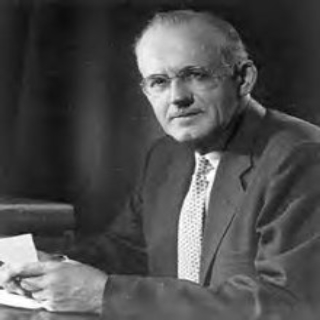
A.W. Tozer (Aiden Wilson Tozer)
 Early life
Tozer hailed from a tiny farming community in western La Jose, Pennsylvania. He was converted to Christianity as a teenager in Akron, Ohio: While on his way home from work at a tire company, he overheard a street preacher say, "If you don't know how to be saved ... just call on God, saying, 'Lord, be merciful to me a sinner.'" Upon returning home, he climbed into the attic and heeded the preacher's advice.
Pastor
In 1919, five years after his conversion and without formal education in Christian theology, Tozer accepted an offer to serve as pastor of his first church. That began 44 years of ministry associated with the Christian and Missionary Alliance (C&MA), a Protestant Evangelical denomination, 33 of them serving as a pastor in several different congregations (his first, a small storefront church in Nutter Fort, West Virginia). Later, he served thirty years (1928 to 1959) as the pastor of Southside Alliance Church in Chicago; the final years of his life he spent as pastor of Avenue Road Church in Toronto, Ontario, Canada. Observing contemporary Christian living, Tozer felt that the church was on a dangerous course toward compromising with "worldly" concerns.
Born into poverty, Tozer was self-educated and taught himself what he missed in high school and university.
Author
Tozer began writing in 1931 for the denominational magazine of the Christian and Missionary Alliance, Alliance Weekly (now Alliance Life), which became the platform from which his writing career emerged. He later wrote the monthly column “There’s Truth in It” (1936–37) and “A Word in Season” (1944–46). In May 1950, he became the editor of the Alliance Weekly, a position he filled until his death in 1963.
At the urging of David W. Fant, publications secretary of the C&MA, Tozer wrote biographies of A. B. Simpson (1943) and Robert A. Jaffray (1947). It was the publication of his third book, The Pursuit of God (1948), that made Tozer a household name among evangelicals. In addition to the 12 books he published in his lifetime, more than 40 other books have been compiled from his magazine features, editorials, and transcribed sermons.
During his lifetime, Tozer’s works were published by Christian Publications, Inc., the denominational press operated by the C&MA. The publishing house declared bankruptcy in 2006 and was purchased by WingSpread Publishers of Camp Hill, Pennsylvania.[8] In November 2013, Moody Publishers acquired Wingspread from parent company Zur Ltd., a transaction that included more than 60 Tozer books and pamphlets. Some of Tozer’s works are now in the public domain and have been issued by multiple publishers.
Personal life
Tozer had seven children, six sons and a daughter. Living a simple and non-materialistic lifestyle, he and his wife, Ada Cecelia Pfautz, never owned a car, preferring bus and train travel. Even after becoming a well-known Christian author, Tozer signed away much of his royalties to those who were in need.
Prayer was of vital personal importance for Tozer. "His preaching as well as his writings were but extensions of his prayer life," comments his biographer, James L. Snyder, in the book In Pursuit of God: The Life Of A.W. Tozer. "He had the ability to make his listeners face themselves in the light of what God was saying to them," writes Snyder.
Death and legacy
Tozer died on May 13, 1963, after suffering a heart attack. He was buried in Chicago, and later the family had his remains reinterred at Ellet Cemetery, Akron, Ohio. A simple marker reads: A. W. Tozer—A Man of God. The Alliance Weekly ran a memorial issue with numerous tributes and excerpts. The same issue also featured “God’s Greatest Gift to Man," a transcription of his final sermon. A few months prior to his death, Tozer had submitted the manuscript to The Christian Book of Mystical Verse, which was released in 1964 as his final book. His official publisher, Christian Publications, released many titles after his death, based on his magazine articles and sermon transcriptions. These continue in print with Moody Publishers. Several other publishers have released his public domain works.
In 2000, The Pursuit of God was named to Christianity Today’s list of 100 “Books of the Century.” In 2006, Knowledge of the Holy was named in “The Top 50 Books That Have Shaped Evangelicals.” Contemporary Christian music artist Lauren Barlow of BarlowGirl later published a compilation of stories told by 59 artists, writers, and leaders about A.W. Tozer’s personal inspiration.
Early life
Tozer hailed from a tiny farming community in western La Jose, Pennsylvania. He was converted to Christianity as a teenager in Akron, Ohio: While on his way home from work at a tire company, he overheard a street preacher say, "If you don't know how to be saved ... just call on God, saying, 'Lord, be merciful to me a sinner.'" Upon returning home, he climbed into the attic and heeded the preacher's advice.
Pastor
In 1919, five years after his conversion and without formal education in Christian theology, Tozer accepted an offer to serve as pastor of his first church. That began 44 years of ministry associated with the Christian and Missionary Alliance (C&MA), a Protestant Evangelical denomination, 33 of them serving as a pastor in several different congregations (his first, a small storefront church in Nutter Fort, West Virginia). Later, he served thirty years (1928 to 1959) as the pastor of Southside Alliance Church in Chicago; the final years of his life he spent as pastor of Avenue Road Church in Toronto, Ontario, Canada. Observing contemporary Christian living, Tozer felt that the church was on a dangerous course toward compromising with "worldly" concerns.
Born into poverty, Tozer was self-educated and taught himself what he missed in high school and university.
Author
Tozer began writing in 1931 for the denominational magazine of the Christian and Missionary Alliance, Alliance Weekly (now Alliance Life), which became the platform from which his writing career emerged. He later wrote the monthly column “There’s Truth in It” (1936–37) and “A Word in Season” (1944–46). In May 1950, he became the editor of the Alliance Weekly, a position he filled until his death in 1963.
At the urging of David W. Fant, publications secretary of the C&MA, Tozer wrote biographies of A. B. Simpson (1943) and Robert A. Jaffray (1947). It was the publication of his third book, The Pursuit of God (1948), that made Tozer a household name among evangelicals. In addition to the 12 books he published in his lifetime, more than 40 other books have been compiled from his magazine features, editorials, and transcribed sermons.
During his lifetime, Tozer’s works were published by Christian Publications, Inc., the denominational press operated by the C&MA. The publishing house declared bankruptcy in 2006 and was purchased by WingSpread Publishers of Camp Hill, Pennsylvania.[8] In November 2013, Moody Publishers acquired Wingspread from parent company Zur Ltd., a transaction that included more than 60 Tozer books and pamphlets. Some of Tozer’s works are now in the public domain and have been issued by multiple publishers.
Personal life
Tozer had seven children, six sons and a daughter. Living a simple and non-materialistic lifestyle, he and his wife, Ada Cecelia Pfautz, never owned a car, preferring bus and train travel. Even after becoming a well-known Christian author, Tozer signed away much of his royalties to those who were in need.
Prayer was of vital personal importance for Tozer. "His preaching as well as his writings were but extensions of his prayer life," comments his biographer, James L. Snyder, in the book In Pursuit of God: The Life Of A.W. Tozer. "He had the ability to make his listeners face themselves in the light of what God was saying to them," writes Snyder.
Death and legacy
Tozer died on May 13, 1963, after suffering a heart attack. He was buried in Chicago, and later the family had his remains reinterred at Ellet Cemetery, Akron, Ohio. A simple marker reads: A. W. Tozer—A Man of God. The Alliance Weekly ran a memorial issue with numerous tributes and excerpts. The same issue also featured “God’s Greatest Gift to Man," a transcription of his final sermon. A few months prior to his death, Tozer had submitted the manuscript to The Christian Book of Mystical Verse, which was released in 1964 as his final book. His official publisher, Christian Publications, released many titles after his death, based on his magazine articles and sermon transcriptions. These continue in print with Moody Publishers. Several other publishers have released his public domain works.
In 2000, The Pursuit of God was named to Christianity Today’s list of 100 “Books of the Century.” In 2006, Knowledge of the Holy was named in “The Top 50 Books That Have Shaped Evangelicals.” Contemporary Christian music artist Lauren Barlow of BarlowGirl later published a compilation of stories told by 59 artists, writers, and leaders about A.W. Tozer’s personal inspiration.
rewards, or the place of christian works
True Christian living and service flow out of the new creation which is the result of the saving work of God and are divinely recognized by the promise of rewards. The Bible revelation concerning rewards not only presents a great incentive to holy and faithful living, but is a necessary counterpart of the doctrines of free grace. The divine plan of salvation under free grace is to save men "without money and without price." This means that no exchange is made. Man receives all that he has as a gift and only as a gift. It also means that there are no after payments to be made "on the installment plan, as though some attempted correctness of life and conduct could qualify the transaction of grace. What is done for man is done graciously. God will not suffer His gift to be confused with useless attempts to pay, or return, anything to Him in exchange. It is equally evident that it is not His purpose that Christian service shall be rendered as an attempt to return something for what He has done, notwithstanding the fact that such motives in service are sometimes urged by the misinformed. God is said to be actuated by at least three motives in saving men: First, they are said to be "created in Christ Jesus unto good works, which God hath before ordained that they should walk in them." This, it is evident, is the least of all. It is, however, the only motive that is sometimes presented. "We are saved to serve" is a common phrase which if taken alone would represent the Father as seeking our service only and as debased to the level of the most sordid commercialist. It is true rather that we are saved in order that we may serve. There can be no true service apart from salvation. Service then becomes a divinely provided privilege. Second, we are saved that "we might not perish, but have everlasting life." This would seem of greatest importance, for it represents our unmeasured and eternal blessing in Him. But there is a third divine motive infinitely beyond these which, we may believe, is the highest motive of saving grace: namely, we are saved "that in the ages to come he might shew the exceeding riches of his grace in his kindness toward us through Christ Jesus." The result of that kindness toward us will be seen to be the final form in which we appear in the glory when we are "conformed to the image of his Son." Every being in the universe will know what we were and will behold the spectacle of what we are in that final and eternal glory. This transformation will have measured the grace of God for us, and on that scale which will be wholly satisfying to Himself. He will have made a demonstration of His grace before all created beings which will be to His own exceeding joy. It may be concluded, then, that God is moved to act in our behalf from the sole motive of love toward us and not for gains of any kind whatsoever. It is all to unfold His grace alone. Thus the new-born child in the Father's house begins his career with no hopeless debt. He has simply to enter into that which is his by all right and title in the amazing grace of God. When the Christian enters into service the greatest care must be exercised that the very motives for service do not in some way violate these most precious relations of divine favor. It will not do to attempt to repay Him by service for what He has done. A gift is not appreciated as such by the recipient when there is the slightest intention even to pay for it. Yet the stupid human heart is so often proposing to repay God for His mercy. Such words are put into the lips of Christ in the hymn, "I gave my life for thee, what hast thou given for me?" The question "what hast thou given for me?" may well be asked of us all; but never as though it was a "dun" for a long unpaid debt to Him. The only true motive for Christian life and service is the very one motive which has actuated God in His service for us. It is just LOVE. Salvation was to reveal and satisfy His love for us. "God commendeth his love toward us, in that, while we were yet sinners, Christ died for us" (Rom. 5:8). "Hereby perceive we the love of God, because he laid down his life for us" (1 John 3:16). It then follows that "we ought to lay down our lives for the brethren"; but never to pay Him for laying down His life for us. It is rather that we act on the same principle of love. We can make no claim on Him whatsoever. At best, from our own standpoint, we are "unprofitable servants." He will reward every faithful service; but He will not demand the service. His recognition of Christian service will be but another manifestation of His marvelous grace. No child of God is "earning his way." Such a thought might satisfy a sordid commercial instinct of an untaught heart, but the thought is foreign to a normal relation of the child to his Father. "He hath given us all things richly to enjoy." The Father's supply of our temporal needs may come through the very channel in which our service is rendered, but it must not be deemed a payment for that service or all truth is subverted. His care for us is in pure love which can be claimed by the most helpless invalid as much as by the most active person. He does not promise to care for us if we "deliver the tale of bricks." Such doctrine belongs to the Egyptian taskmasters of old. God is just as much committed to care for us, by His loving promises, after our vitality is exhausted as when we are in the prime of life and strength. "They that serve in the gospel shall live by the gospel" is a divine exhortation to those who have the privilege of love gifts to the gospel ministry. It is not addressed to the minister. "Give and it shall be given to you" is an assurance that you cannot approach the Father with an expression of your love to Him that He will not meet you with a vastly greater response of His overflowing grace. "Seek ye first the kingdom of God, and his righteousness; and all these things shall be added unto you" is not an injunction to seek an increase in salary, even as a secondary consideration. It is forgetting all else but Him, and the divine response is to the end that "All these (temporal) things shall be added unto you." Every service for God, then, should be, like His, a service expressing love, and all occupation in life should be deemed by the Christian as a service for God (I Cor. 10:31; Eph. 6:6-8; Col. 3:22-24). God does not need our paltry gifts: He wants us. He is not looking for free labor from us: He is looking for evidence of our love for Him. Service for a salary is a poor return: service for His own sake is most precious in His eyes. There is no commercialism in the household of God, for there the standard of value is only love. "He brought me to the banqueting house, and his banner over me was love." "She hath loved much" was a priceless verdict of Christ. For such service of love there will be a divine recognition in the coming glory. This will be shown by the bestowal of rewards. It should also be stated that Christian service is not any good act we may choose to perform. The child of God has been "created in Christ Jesus unto good works, which God hath before ordained that we should walk in them." This means that there is a design and field of service divinely planned for each one, and "good works" in the Bible sense can only be the finding and doing of that which He has ordained. The works are "good" in that they are "that good, and acceptable, and perfect, will of God" for each believer. These can only be entered into by His divine direction, which will be realized by all who wholly yield to Him. Service must be "where he will." God has promised by many Scriptures to recognize all service that is rendered as a love expression to Him and all that is within the gracious plan of life He has made for every child of His. There will be rewards, crowns and prizes. No one can define them. They most evidently speak of His loving appreciation of our little suffering and faithfulness for Him. They will be inexpressibly sweet, and they will abide for all eternity. Salvation is not a reward for the believer's service. Salvation is God's work for us. Rewards are always connected with the believer's works and merit. The rewards are to be bestowed at "the judgment-seat of Christ" (2 Cor. 5:10). This is when the saints are gathered to meet their Lord in the air (1 Cor. 4:5; 2 Tim. 4:8; Rev. 22:12; Mt. 16:27; Luke 14:14). It will be a moment of discovery as to who hath loved much and who was much occupied with Him. It is most comforting to read of that very time of judgment, "and then shall every man have praise of God" (1 Cor. 4:5). Of the many passages in the Bible on rewards, two may be considered here. The first, 1 Cor. 9:18-27, is the divinely recorded illustration of true service as seen in the life of the Apostle Paul. This passage opens with the question: "What is my reward then?" This is followed by a description of the tireless service and faithfulness of the Apostle. At the twenty-fifth verse he presents an illustration based on the Grecian games. "Know ye not that they which run in a race run all, but one receiveth the prize? So run, that ye may obtain." The most violent effort of the runner in the race is, in the illustration, the standard of effort for the servant of God, "And every man that striveth for the mastery is temperate in all things." There is the greatest care of the body that it may be found at its highest state of efficiency in agility, strength and endurance. "Now they (the athletes) do it (sacrifice their desires and every indulgence and carefully train) to obtain a corruptible crown." What was more transitory than the wreath of leaves that was placed on the victor's brow? "But we (sacrifice our desires and indulgences and train ourselves for) an incorruptible crown." If only such were true! Few have so lived before God as did the Apostle Paul. How shame must cover us when we think of the ceaseless effort of the worldly athlete to gain a fading crown that soon will be forever forgotten, while God is offering to us an incorruptible crown the effulgence of which will be increasing in brightness when all the contests of earth are forgotten in the ages of the ages! This passage closes with a personal testimony from the Apostle. "I therefore so run, not as uncertainly; so fight I, not as one that beateth the air: but I keep under my body, and bring it into subjection: lest that by any means when I have preached to others, I myself should be a castaway" (disapproved). There is no reference to salvation in this passage. It begins with the words: "What is my reward then?" and is of rewards throughout. The fear that is expressed at the end is of being disapproved of the Lord. It is not fear of being found unsaved. This would be opposed to the unvarying and always consistent teaching of the Apostle concerning the grounds of salvation. He testifies that there is a halfhearted preaching which would disappoint His Lord. He is striving that he may be approved as a faithful servant in that ministry to which he was called. The second Scripture to be mentioned on rewards is 1 Cor. 3:9-15. This presents the fact of rewards as certainly promised by God. "For we are labourers together with God: ye are God's husbandry, ye are God's building. According to the grace of God which is given unto me, as a wise master builder, I have laid the foundation, and another buildeth thereon. But let every man take heed how he buildeth thereupon. For other foundation can no man lay than that is laid, which is Jesus Christ." This is not the building of character, which undertaking is unknown in the Scriptures. It is rather the building of service unto a reward. Christ is the foundation and to be on Him is to be saved. It is possible to build on Him of very different spiritual substances, but all built on the same foundation, Christ. Such are the possibilities in service for all who are saved in Christ. "Now if any man build upon this foundation gold, silver, precious stones, wood, hay, stubble; every man's work (not his salvation) shall be made manifest: for the day shall declare it, because it shall be revealed by fire; and the fire shall try every man's work of what sort it is. If any man's work abide which he hath built there upon (Christ), he shall receive a reward. If any man's work (built on Christ the Foundation) shall be burned, he shall suffer loss: but he himself shall be saved; yet so as by fire." Fire is the symbol of the judgment by which the super-structure of Christian works is to be tested. Jesus made use of another symbol of judgment, the floods of water, that shall test the foundation. Woe to those who are found building on the sand! Not only will their superstructure of self-righteousness collapse, but their foundation, the fallen nature, will be swept by the waters of judgment into everlasting darkness. Although secure against the floods, established on the Rock Christ Jesus, great sorrow and shame will come upon those saved ones who have had all the days of grace and the enabling power of God and a field so white for harvest and in the end present a completed service of "wood, hay, stubble" only. Thus it may be concluded that we are saved in the boundless grace of God and His attitude toward us is ever and always one of love. We are the objects of His bounty and care. Being saved, we are privileged to enter some service of His eternal design. This is not a field in which to compensate Him for His love. It is our divinely given opportunity to express our love to Him to the praise of the Glory of His grace. He recognizes such ministries of love by that which He has been pleased to call "rewards." What more could He do than He has done? How more faithfully could He appeal for our heart's devotion to Him? From Salvation by Lewis Sperry Chafer. Philadelphia: Sunday School Times Company, ©1917.