-480.webp)






About the Book
"Women of the Word" by Marilyn Hickey is a guidebook for women seeking to deepen their understanding and application of the Bible. Hickey provides practical tips and tools for studying scripture, along with personal stories and insights to help women grow in their faith and knowledge of God's Word. This book empowers women to become more confident and effective in living out their Christian faith.
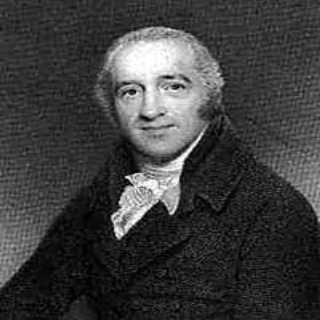
Charles Simeon
Dressed in His Righteousness Alone
I’ll never forget meeting up with a mentor of mine at Starbucks shortly after becoming a Christian. We regularly met there to read and study the Bible. One day, a person walked by and was elated to find Christians. But during our conversation, my mentor began asking some pretty forthright questions, and I couldn’t quite understand why. “Do you believe that a person is justified by faith alone?” he said. The stranger hesitantly responded, “No, I believe that a person is justified by faith and works.” My mentor graciously but strongly insisted, “Then you don’t have a biblical view of justification.” A lot of back-and-forths followed, but because I was a recent convert, I found it immensely difficult to understand what was going on. I barely understood what the term justification meant! Eventually, I discovered the importance of this vital doctrine. Martin Luther and other Reformers considered the doctrine of justification by faith alone the article on which the church stands or falls. It is at the core of the gospel, and the church needs to embrace it as such. What Is Justification? So then, what is justification? This is a crucial starting point. How one defines justification will determine not only how one thinks and believes but also how one lives. Roman Catholic dogma, for example, defines justification as synonymous with sanctification,1 and the result is detrimental. One’s standing on the final day is determined by the growth of Christ’s righteousness, which is imparted to a person through baptism and increases through participation in the sacraments.2 In a word, justification is essentially a clean slate that one needs to maintain to enjoy a favorable verdict at the final judgment. Diametrically opposed stands the Reformed understanding of justification, which is carefully, succinctly, and biblically defined in the answer to question 33 of the Westminster Shorter Catechism: Justification is an act of God’s free grace, wherein he pardons all our sins, and accepts us as righteous in his sight, only for the righteousness of Christ imputed to us, and received by faith alone.3 Notice that justification is an act, not a work or process.4 It is not a hopeful destination. It is God’s gracious, once-for-all verdict — his declaration of a person to be righteous in Christ, and therefore fully accepted by God. The Greek words for justification and righteousness, along with their cognates,5 belong to the legal sphere.6 Consider, for example, Romans 8:31–34: What then shall we say to these things? If God is for us, who can be against us? He who did not spare his own Son but gave him up for us all, how will he not also with him graciously give us all things? Who shall bring any charge against God’s elect? It is God who justifies [Greek ho dikaiōn]. Who is to condemn? Justification language belongs to the courtroom; it is forensic. Accusations are met with God’s justifying verdict spoken over his elect (see also Romans 5:16–19) — a spoken word that melts the hardened hearts of sinners. Whose Righteousness? God, the holy, just, and perfect Judge, finds sinners not guilty and declares them righteous. How? On the basis of the person and work of Jesus Christ — by forgiving our sins on account of the substitutionary death of Christ in our place (Romans 3:21–26) and imputing or reckoning Christ’s righteousness to us (Romans 4:1–9; Philippians 3:9; 2 Corinthians 5:21). What is this righteousness? His perfect obedience to God, rendered in his life and death, often referred to as the active and passive obedience of Christ. He perfectly fulfilled the law (Galatians 4:4–5; Romans 8:1–4) and also died under the curse of the law (Galatians 3:13), in love for his people (Galatians 2:20). Nevertheless, death could not keep its prey, and so Christ tore the bars away and arose a victor from the dark domain.7 Jesus’s resurrection was not only proof that his sacrifice satisfied God’s wrath; it was also his own justification or public vindication (1 Timothy 3:16; cf. Romans 4:25). On Resurrection Sunday, God declared the verdict of righteous over his Son, and through union with him, we too receive that unchangeable righteous standing (2 Corinthians 5:21). How Do We Receive It? What is necessary to receive this righteous standing? Faith, works, or a combination of both? The answer is faith alone. Paul makes this clear in Galatians 2:16: “We know that a person is not justified by works of the law but through faith in Jesus Christ, so we also have believed in Christ Jesus, in order to be justified by faith in Christ and not by works of the law, because by works of the law no one will be justified.” Justification is not a both-and matter. It’s either by faith or by works. Paul fleshes this out in Romans 10:3–4. He speaks of his Jewish kinsmen as those who are “ignorant of the righteousness of God,” are “seeking to establish their own [righteousness],” and thereby do “not submit to God’s righteousness.” Then he provides this explanation: “For Christ is the end of the law for righteousness to everyone who believes.” We submit to Christ’s righteousness by faith. Just breaths later, in Romans 10:9–10, Paul writes, “If you confess with your mouth that Jesus is Lord and believe in your heart that God raised him from the dead, you will be saved. For with the heart one believes and is justified, and with the mouth one confesses and is saved.” No wonder Paul, in the very next chapter, helpfully explains that “if it is by grace [that we are chosen, saved, and presumably justified (see Romans 10:10)], it is no longer on the basis of works; otherwise grace would no longer be grace” (Romans 11:6). “Justification is not a both-and matter. It’s either by faith or by works.” A biblically Reformed understanding of justification by faith alone is indeed comforting to the sinner. “How can I be righteous before a holy God?” is an appropriate question to ask for those outside of Christ. The only acceptable answer is found in Christ. He is the basis of our justification, and he can be received only by the empty hands of faith. And this doctrine is at the core of the gospel. More to the Gospel than Justification? In loving and declaring the doctrine of justification by faith alone, some can begin to think that justification is the gospel. But that is not true. Simply saying, “Jesus died for my sins so that I can receive Christ’s righteousness” does not capture the entire gospel.8 Paul doesn’t stop there when he lays out the gospel in 1 Corinthians 15:1–4. Jesus also was buried and rose from the dead. In fact, the resurrection of Christ plays a crucial role in our justification (as we’ve seen in Romans 4:25; see also Romans 1:3–4; 1 Corinthians 15:20–23, 42–49; 1 Timothy 3:16).9 The gospel also includes Jesus’s ascension, enthronement as Lord, and outpouring of the Holy Spirit (Romans 1:3–4; Acts 1:11; 2:1–21; 2:32–33). We therefore should not say that justification is the gospel. And yet, neither should we welcome the persistent emphasis of those who downplay justification, whether by minimizing it to a “subsidiary crater” in Paul’s theology10 or, even more drastically, by insisting that “our justification by faith is not part of the gospel.”11 In the end, justification is not the gospel, but it is undeniably at its center.12 If you exclude justification from the gospel, then the gospel ceases to be “good news.” Solely by Faith? The Reformed tradition has consistently promoted a threefold definition of faith: (1) knowledge of the content of the gospel that we believe (Latin notitia), (2) intellectual assent to the gospel of Christ (assensus), and (3) trust in the person and work of Christ on our behalf (fiducia). Recently some have taken aim at the third part of that definition (trust).13 They argue that faith is not primarily “interior” or “emotional” but “exterior” and “embodied.” In other words, faith is active rather than passive, and it should be seen rather than felt. So they prefer slogans such as “justification by allegiance alone,” since allegiance underscores the active nature of faith. Those who argue for this definition of faith make a major mistake. Since they redefine faith as a more active response, they argue that Paul’s either-or of justification is actually a both-and — both faith and works. To be clear here, they do not think a person can be justified by works that stem from self-righteous efforts. They believe Romans 3:20, that “by works of the law no human being will be justified in his sight.” However, they underline the phrase “works of the law” and say, “Paul was not against Spirit-wrought good works contributing to a person’s justification.” “Christ is the basis of our justification, and he can be received only by the empty hands of faith.” At this point, you may be feeling the way I did in the conversation at Starbucks, not really understanding the fine distinctions. But this is significant. To say that Paul wasn’t against good works with respect to justification, you have to make a drastic move theologically. You have to reject the distinction between justification and sanctification. What do I mean by that? Put simply, justification and sanctification are inseparable yet distinct, like the heat and light of a fire.14 You cannot have one without the other; at the same time, you can distinguish one from the other.15 Good works, as Paul commends them, are done in our sanctification, but they cannot contribute to our justification. If they do, justification is no longer by faith alone. Is Christ’s Righteousness Imputed? After the conversation with the stranger at Starbucks, I asked my mentor, “What does imputation mean?” The word was thrown around during our discussion but never really defined. Imputation means that the righteousness of Christ — his active and passive obedience — is counted or reckoned to believers. Christ’s righteousness is imputed, counted, reckoned to you when you are united to Christ by faith (1 Corinthians 1:30; 6:11; 2 Corinthians 5:21; Philippians 3:9). As Calvin said, “We do not . . . contemplate [Christ] outside ourselves from afar in order that this righteousness may be imputed to us but because we put on Christ and are engrafted into his body — in short, because he deigns to make us one with him. For this reason, we glory that we have fellowship of righteousness with him.”16 When we talk about receiving righteousness, union with Christ is essential. Imputed righteousness is distinct from infused righteousness. In the Roman Catholic view, Christ merited righteousness for us, and that righteousness is then infused into believers at baptism. It’s as if Christ’s seed of righteousness should be planted into your heart. It becomes your own. And it is up to you, in dependence on the Spirit and the sacraments, to water it and grow in personal righteousness. By contrast, the imputation view intentionally uses the words count or reckon, as Scripture does (Romans 4:1–8; 5:12–19; Galatians 3:6).17 In justification, Christ’s righteousness does not become ours as some sort of personal possession. It is counted or reckoned as ours. Why? Because we do not perform the acts of justifying righteousness. Christ, as our substitute, lived the perfect life we couldn’t and died the death we deserved. The righteousness of Christ must therefore primarily and exclusively belong to him.18 It is therefore an alien righteousness — it comes from outside of us. And it is graciously imputed, counted, or reckoned to those who have no inherent righteousness whatsoever (Romans 3:9, 23; Ephesians 2:1–3). We are indeed “dressed in his righteousness alone, faultless to stand before the throne.”19 For nothing else avails before God. Jesus Receives Sinners Listening to the conversation my mentor had with that fellow at Starbucks was intimidating and a bit over my head. I heard many terms and distinctions that didn’t seem, at the time, to make much of a difference in the Christian life. But the more questions I asked, the more I learned that the doctrine of justification by faith alone is not only theologically essential but thoroughly practical. Just think of Christians who question their salvation as they struggle with sin. In those times, they easily can turn inward. “Have I done enough to please God?” “Perhaps if I serve more at church, he will accept me.” “I need to stop sinning in order to be accepted by him.” They may never say these words out loud. After all, they wouldn’t want anyone to think they were weak in faith — or even worse, an unbeliever. But their knee-jerk reaction to turn inward reveals a deeper underlying issue. They need to turn outward toward the objective realities of the gospel. They need to trust in Christ Jesus, their righteousness (1 Corinthians 1:30). They need to rest — not only in mind and mouth, but in heart and life — in the “word of surest consolation; word all sorrow to relieve, word of pardon, peace, salvation! . . . ‘Jesus sinners doth receive.’”20 Catechism of the Catholic Church: “Justification is not only the remission of sins, but also the sanctification and renewal of the interior man” (1989); “The Holy Spirit is the master of the interior life. By giving birth to the ‘inner man,’ justification entails the sanctification of his whole being” (1995). ↩ See the Council of Trent, “Decree Concerning Justification,” §7. ↩ I have slightly updated the language to make the answer easier to read. ↩ The Westminster divines reserved that language for sanctification: “Sanctification is the work of God’s free grace, whereby we are renewed in the whole man after the image of God, and are enabled more and more to die unto sin, and live unto righteousness” (Westminster Shorter Catechism 35). ↩ See the words dikaioō, “I justify”; dikaiōsunē, “righteousness”; dikaios, “just, right”; dikaiōsis, “justification, vindication, aquittal”; and dikaiōma, “righteous requirement.” ↩ As recently argued by James B. Prothro, Both Judge and Justifier: Biblical Legal Language and the Act of Justifying in Paul, WUNT 2.461 (Tübingen: Mohr Siebeck, 2018), though for a criticism of other statements he makes, see my forthcoming review of his book in the Westminster Theological Journal. ↩ Trinity Hymnal #206, “Low in the Grave He Lay — Christ Arose.” ↩ That is one reason, after all, why the church disciples new believers: to increase their understanding of the gospel of Christ. ↩ See also Richard Gaffin, Resurrection and Redemption: A Study in Paul’s Soteriology (Phillipsburg, NJ: P&R, 1987). ↩ Albert Schweitzer, The Mysticism of Paul the Apostle (Baltimore, MD: Johns Hopkins University Press, 1998), 225. ↩ Matthew W. Bates, Gospel Allegiance: What Faith in Jesus Misses for Salvation in Christ (Grand Rapids, MI: Brazos Press, 2019), 37. See also Salvation by Allegiance Alone: Rethinking Faith, Works, and the Gospel of Jesus the King (Grand Rapids, MI: Baker Academic, 2017). ↩ I am currently in the process of writing a review article of Matthew Bates’s work in the Westminster Theological Journal, which will contain more in-depth critical interaction with his arguments. ↩ See Bates, Salvation by Allegiance Alone, 92. He qualifies this in Gospel Allegiance, 64: “I’m not arguing that faith simply means allegiance without remainder. Nor am I denying that pistis primarily means ‘faith/faithfulness’ or ‘trust/trustworthiness.’” But then he adds a telling caveat: “Trust in or faithfulness toward a leader that endures through trials over the course of time is probably best termed ‘loyalty’ or ‘allegiance.’” ↩ John Calvin make this comparison in Institutes 3.11.6. ↩ I find it telling that Matthew Bates denies the categorical distinction between justification and sanctification because it cannot be found in Scripture (Allegiance, 185–86), and yet, after reading Scripture and laying out his view, he promotes a strikingly similar distinction (see 127, 191–92, 196, and 206). Both justification and sanctification occur in union with Christ (1 Corinthians 1:30; 6:11). But at the same time, you can distinguish one from the other throughout Scripture “by good and necessary consequence” (Westminster Confession of Faith 1.6). See also the Westminster Larger Catechism 77 for a very helpful analysis of the inseparable yet distinct nature of justification and sanctification. ↩ Institutes 3.2.10; my italics. ↩ For helpful works on imputation and criticisms raised against it, see Brian Vickers, Jesus’ Blood and Righteousness: Paul’s Theology of Imputation (Wheaton, IL: Crossway, 2006); John Piper, Counted Righteous in Christ: Should We Abandon the Imputation of Christ’s Righteousness? (Wheaton, IL: Crossway, 2002); Ben C. Dunson, “Do Bible Words Have Bible Meaning? Distinguishing between Imputation as Word and Doctrine,” WTJ 75 (2013): 239–60; Thomas Schreiner, Faith Alone: The Doctrine of Justification (Grand Rapids: Zondervan, 2015). ↩ James Buchanan, The Doctrine of Justification: An Outline of Its History in the Church; and of Its Exposition from Scripture (Edinburgh: T&T Clark, 1867), 326. ↩ Trinity Hymnal #459, “My Hope is Built on Nothing Less.” ↩ Trinity Hymnal #394, “Jesus Sinners Doth Receive.” ↩ Article by David Briones Professor, Westminster Theological Seminary