
Others like the esther anointing Features >>





About the Book
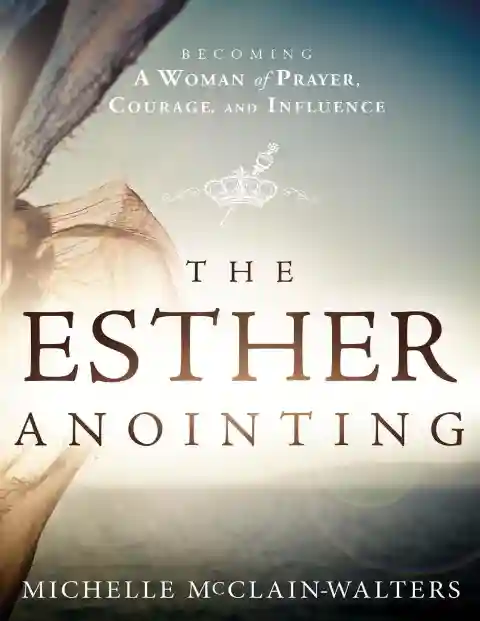
"The Esther Anointing" by Michelle McClain-Walters explores the story of Queen Esther from the Bible and the lessons that modern women can learn from her life. The author discusses how women can tap into the strength, courage, and favor that Esther had to fulfill their own God-given destinies and make a significant impact in the world. Through practical insights and personal stories, McClain-Walters encourages women to embrace the Esther anointing and walk boldly in their purpose.
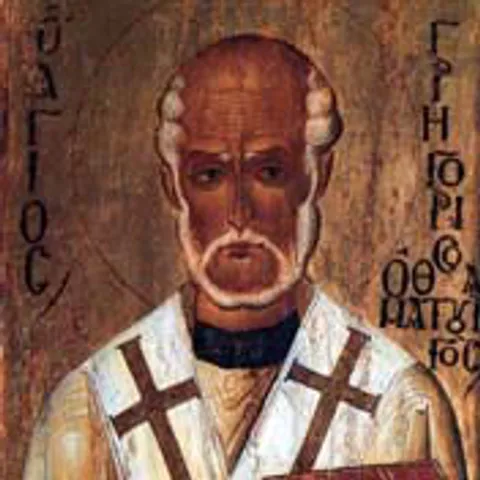
Gregory Thaumaturgus
 Gregory the Wonderworker’s Early life
Gregory was born in a Pontus, a region on the southern coast of the Black Sea, located in the modern-day eastern Black Sea Region of Turkey, around 212-13. His was a wealthy home and his parents named him Theodore (Gift of God) despite their pagan beliefs. When he was 14 years old his father died and soon after, he and his brother, Athenodorus, were anxious to study law at Beirut, Lebanon, then one of the four of five famous schools in the Hellenic world.
Influence of Origen
However, on the way, they first had to escort their sister to rejoin her husband, who was a government official assigned to Caesarea in Palestine (modern Haifa, Israel). When they arrived they learned that the celebrated scholar Origen, head of the catechetical school of Alexandria, lived there.
Inquisitiveness led them to hear and speak with the Origen and his irresistible charm quickly won their hearts. They soon dropped their desires for a life in Roman law, became Christian believers and pupils of Origen, learning philosophy and theology, for somewhere between five and eight years. Origen also baptised Gregory.
Pastor (then Bishop) of Neoceasarea
Gregory returned to his native Pontus with the intention of practicing oratory, but also to write a book proving the truth of Christianity, revealing his evangelistic heart. But his plans were disrupted when locals noticed his passion for Christ and his spiritual maturity. There were just seventeen Christians in Neoceasarea when Gregory arrived and this small group persuaded him to lead them as their bishop. (‘bishop’ simply meant a local overseer). At the time, Neocaesarea was a wicked, idolatrous province.
Signs of the Spirit
By his saintly life, his direct and lively preaching, helping the needy and settling quarrels and complaints, Gregory began to see many converts to Christ. But it was the signs and wonders that particularly attracted people to Christ.
En route to Neocaesarea from Amasea, Gregory expelled demons from a pagan temple, its priest converted to Christ immediately.
Once, when he was conversing with philosophers and teachers in the city square, a notorious harlot came up to him and demanded payment for the sin he had supposedly committed with her. At first Gregory gently remonstrated with her, saying that she perhaps mistook him for someone else.
But the loose woman would not be silenced. He then asked a friend to give her the money. Just as the woman took the unjust payment, she immediately fell to the ground in a demonic fit, and the fraud became evident. Gregory prayed over her, and the devil left her. This was the beginning of Gregory’s miracles. It was at this time he became known as ‘Gregory Thaumaturgus,’ ‘Gregory the Miracle Worker’ (or Wonderworker).
At one point Gregory wanted to flee from the worldly affairs into which influential townsmen persistently sought to push him. He went into the desert, where by fasting and prayer he developed an intimacy with God and received gifts of knowledge, wisdom and prophecy. He loved life in the wilderness and wanted to remain in solitude with God until the end of his days, but the Lord willed otherwise.
His theological contribution
Though he was primarily an evangelist and pastor, Gregory also had a deep theological understanding.
His principal work ‘The Exposition of Faith’, was a theological apology for Trinitarian belief. It incorporated his doctrinal instructions to new believers, expressed his arguments against heretical groups and was widely influential amongst leaders in the Patristic period: Basil the Great, Gregory the Theologian, and Gregory of Nyssa (The Cappadocian Fathers). It was the forerunner of the Nicene Creed that was to appear in the early 4th century.
In summary
He gave himself to the task of the complete conversion of the population of his diocese. The transformation in Neocaesarea was astonishing. Persuasive preaching, numerous healings and miraculous signs had a powerful effect. Such was his success that it was said that when Gregory became bishop (c 240) he found only seventeen Christians in his diocese; when he died only seventeen remained pagan (Latourette 1953:76).
Basil the Great’s Testimony
Basil the Great (330-379, Bishop of Caesarea, in his work ‘On the Spirit’ wrote the following account of Gregory the wonder-worker.
“But where shall I rank the great Gregory, and the words uttered by him? Shall we not place among Apostles and Prophets a man who walked by the same Spirit as they; who never through all his days diverged from the footprints of the saints; who maintained, as long as he lived, the exact principles of evangelical citizenship?
I am sure that we shall do the truth a wrong if we refuse to number that soul with the people of God, shining as it did like a beacon in the Church of God: for by the fellow-working of the Spirit the power which he had over demons was tremendous, and so gifted was he with the grace of the word ‘for obedience to the faith among. . .the nations.’ that, although only seventeen Christians were handed over to him, he brought the whole people alike in town and country through knowledge to God.
He too by Christ’s mighty name commanded even rivers to change their course, and caused a lake, which afforded a ground of quarrel to some covetous brethren, to dry up. Moreover, his predictions of things to come were such as in no wise to fall short of those of the great prophets. To recount all his wonderful works in detail would be too long a task. By the superabundance of gifts, wrought in him by the Spirit, in all power and in signs and in marvels, he was styled a second Moses by the very enemies of the Church.
Thus, in all that he through grace accomplished, alike by word and deed, a light seemed ever to be shining, token of the heavenly power from the unseen which followed him. To this day he is a great object of admiration to the people of his own neighborhood, and his memory, established in the churches ever fresh and green, is not dulled by length of time. (Schaff and Wace nd., Series 2. 8:46-47).
“Gregory was a great and conspicuous lamp, illuminating the church of God.” —Basil the Great.
Gregory the Wonderworker’s Early life
Gregory was born in a Pontus, a region on the southern coast of the Black Sea, located in the modern-day eastern Black Sea Region of Turkey, around 212-13. His was a wealthy home and his parents named him Theodore (Gift of God) despite their pagan beliefs. When he was 14 years old his father died and soon after, he and his brother, Athenodorus, were anxious to study law at Beirut, Lebanon, then one of the four of five famous schools in the Hellenic world.
Influence of Origen
However, on the way, they first had to escort their sister to rejoin her husband, who was a government official assigned to Caesarea in Palestine (modern Haifa, Israel). When they arrived they learned that the celebrated scholar Origen, head of the catechetical school of Alexandria, lived there.
Inquisitiveness led them to hear and speak with the Origen and his irresistible charm quickly won their hearts. They soon dropped their desires for a life in Roman law, became Christian believers and pupils of Origen, learning philosophy and theology, for somewhere between five and eight years. Origen also baptised Gregory.
Pastor (then Bishop) of Neoceasarea
Gregory returned to his native Pontus with the intention of practicing oratory, but also to write a book proving the truth of Christianity, revealing his evangelistic heart. But his plans were disrupted when locals noticed his passion for Christ and his spiritual maturity. There were just seventeen Christians in Neoceasarea when Gregory arrived and this small group persuaded him to lead them as their bishop. (‘bishop’ simply meant a local overseer). At the time, Neocaesarea was a wicked, idolatrous province.
Signs of the Spirit
By his saintly life, his direct and lively preaching, helping the needy and settling quarrels and complaints, Gregory began to see many converts to Christ. But it was the signs and wonders that particularly attracted people to Christ.
En route to Neocaesarea from Amasea, Gregory expelled demons from a pagan temple, its priest converted to Christ immediately.
Once, when he was conversing with philosophers and teachers in the city square, a notorious harlot came up to him and demanded payment for the sin he had supposedly committed with her. At first Gregory gently remonstrated with her, saying that she perhaps mistook him for someone else.
But the loose woman would not be silenced. He then asked a friend to give her the money. Just as the woman took the unjust payment, she immediately fell to the ground in a demonic fit, and the fraud became evident. Gregory prayed over her, and the devil left her. This was the beginning of Gregory’s miracles. It was at this time he became known as ‘Gregory Thaumaturgus,’ ‘Gregory the Miracle Worker’ (or Wonderworker).
At one point Gregory wanted to flee from the worldly affairs into which influential townsmen persistently sought to push him. He went into the desert, where by fasting and prayer he developed an intimacy with God and received gifts of knowledge, wisdom and prophecy. He loved life in the wilderness and wanted to remain in solitude with God until the end of his days, but the Lord willed otherwise.
His theological contribution
Though he was primarily an evangelist and pastor, Gregory also had a deep theological understanding.
His principal work ‘The Exposition of Faith’, was a theological apology for Trinitarian belief. It incorporated his doctrinal instructions to new believers, expressed his arguments against heretical groups and was widely influential amongst leaders in the Patristic period: Basil the Great, Gregory the Theologian, and Gregory of Nyssa (The Cappadocian Fathers). It was the forerunner of the Nicene Creed that was to appear in the early 4th century.
In summary
He gave himself to the task of the complete conversion of the population of his diocese. The transformation in Neocaesarea was astonishing. Persuasive preaching, numerous healings and miraculous signs had a powerful effect. Such was his success that it was said that when Gregory became bishop (c 240) he found only seventeen Christians in his diocese; when he died only seventeen remained pagan (Latourette 1953:76).
Basil the Great’s Testimony
Basil the Great (330-379, Bishop of Caesarea, in his work ‘On the Spirit’ wrote the following account of Gregory the wonder-worker.
“But where shall I rank the great Gregory, and the words uttered by him? Shall we not place among Apostles and Prophets a man who walked by the same Spirit as they; who never through all his days diverged from the footprints of the saints; who maintained, as long as he lived, the exact principles of evangelical citizenship?
I am sure that we shall do the truth a wrong if we refuse to number that soul with the people of God, shining as it did like a beacon in the Church of God: for by the fellow-working of the Spirit the power which he had over demons was tremendous, and so gifted was he with the grace of the word ‘for obedience to the faith among. . .the nations.’ that, although only seventeen Christians were handed over to him, he brought the whole people alike in town and country through knowledge to God.
He too by Christ’s mighty name commanded even rivers to change their course, and caused a lake, which afforded a ground of quarrel to some covetous brethren, to dry up. Moreover, his predictions of things to come were such as in no wise to fall short of those of the great prophets. To recount all his wonderful works in detail would be too long a task. By the superabundance of gifts, wrought in him by the Spirit, in all power and in signs and in marvels, he was styled a second Moses by the very enemies of the Church.
Thus, in all that he through grace accomplished, alike by word and deed, a light seemed ever to be shining, token of the heavenly power from the unseen which followed him. To this day he is a great object of admiration to the people of his own neighborhood, and his memory, established in the churches ever fresh and green, is not dulled by length of time. (Schaff and Wace nd., Series 2. 8:46-47).
“Gregory was a great and conspicuous lamp, illuminating the church of God.” —Basil the Great.
As for Me and My House
If you are a Christian man, I know something about you. I know you want more. You want more thrill in your walk with Jesus. You want more life, more wakefulness, more awe and wonder, more heavenly ambition, more consistency, more urgency, more sin lying slain at your feet. You want more of an inbreaking sense of God’s utter immensity, his total majesty, his relentless love for you by name. You want fewer clichés and unrealities, and more of the real thing. You want to live for more, with more power and purpose. And if you have a family, you want more skill to lead them to Christ. You want to live in a world of worship and mission with them. You want your wife to increasingly blossom as she beholds more of Jesus. You want to hear your kids singing to Jesus. You want to pray real prayers together, and face difficulties as a family, saying as Jehoshaphat did to God: “We do not know what to do, but our eyes are on you” (2 Chronicles 20:12). And you want to see him answer mightily. In other words, you want true, living, family religion that spills into your neighborhood and your local church. But is it possible? This desire, perhaps now neglected and starved, only visits with whispers of guilt as you look around at what your life is really like: a fight for survival. Maybe you have conceded to a listless and half-living expectation: just get through the day, enjoy a little entertainment in the crevices, sleep, and then repeat. But just as you want more for yourself and your family, God wants and promises more too. Family Alive to God Christian man, you have a delightful duty to provide for your household, both physically and spiritually. Such a privilege was long foretold, given not just in the cultural mandate (Genesis 1:28) but in the great command to God’s covenant people: Hear, O Israel: The Lord our God, the Lord is one. You shall love the Lord your God with all your heart and with all your soul and with all your might. And these words that I command you today shall be on your heart. You shall teach them diligently to your children, and shall talk of them when you sit in your house, and when you walk by the way, and when you lie down, and when you rise. You shall bind them as a sign on your hand, and they shall be as frontlets between your eyes. You shall write them on the doorposts of your house and on your gates. (Deuteronomy 6:4–9) “Christian man, you have a delightful duty to provide for your homes, both physically and spiritually.” This vision for the family could not be higher: nothing less than a world submerged with God. God raised the ultimate banner, “Love the Lord with everything,” which is to fly in the wind over everyday life. He meant for all facets, every corner of family life, to be inscribed with reminders of God and his unchanging worth. He meant to be supreme in all things for the joy of all his people and their families. Parents diligently passed this passion along to the next generation, praying that God would give new birth. The truth that made one wise for salvation was to be repeated, again and again, as a man strikes a blade repeatedly to sharpen it, in hopes that God would fashion children who also love him with their all. More than simply passing truths along, however, we see how a faithful man creates an atmosphere into which he draws his children. The home stood as a place where discussions of God continue: as you sit down as you walk by the way when you lie down when you rise up When at home, or when traveling away from home — from the early morning to the laying down at night — conversation was to revolve around God. Israel even decorated themselves and their world with physical reminders of God’s word: “You shall bind them as a sign on your hand, and they shall be as frontlets between your eyes,” and, “You shall write them on the doorposts of your house and on your gates.” I tremble myself to write this to you in Christ: Not a day should pass when God’s ways, God’s gospel, and God’s return should go uncontemplated and unspoken in our families. Men with Burning Hearts The point is that this vision for family religion wasn’t something to check off a list; it was a lifestyle. Not merely a devotional squeezed in the cracks, but a consistent disposition to worship. The God worthy of our all devotion fills the believer’s sphere, especially his household. A vision that matches the secret desire. If you are a Christian man, you especially bear the responsibility of this — and again, you desire it, heavy as it is. How do I know? Because the text says so. You shall love the Lord your God with all your heart and with all your soul and with all your might. And these words that I command you today shall be on your heart. “This vision for the family could not be higher: nothing less than a world submerged with God.” You will be convinced — Christian father, Christian son, Christian brother — to give yourself to cultivating a world full of God, whether or not you have your own family yet. And not because you read an article or good book, but because God has inscribed his great blazing commandment on your heart. No one needs to twist your arm to want to live for Christ to greater and greater stature. “For they shall all know me” (Jeremiah 31:34). Does Your Spirit Burn? In the old covenant, getting the commandments on one’s heart entailed memorization, meditation, prayer, obedience. In the new covenant, these means are likewise employed but from a very different starting place: This is the covenant that I will make with the house of Israel after those days, declares the Lord: I will put my law within them, and I will write it on their hearts. And I will be their God, and they shall be my people. (Jeremiah 31:33) Does your spirit not burn within you? You may feel guilt for past laziness, you may feel convicted about current neglect, you may need to fall to your knees and beg God’s forgiveness for leaving him forgotten in the attic, but one thing is sure if you know Christ: You long to provide spiritual blessing to your home. Perceive the Lord Jesus extending more grace and providing fresh opportunity. No longer resist plunging into this promised sea of blessing: “those who honor me I will honor” (1 Samuel 2:30). If you are real, brother, his law is already etched on your heart: You want to care for your family. You want to put away trivialities and live for Christ. You want to build your home and fill it with great thoughts and loving deeds. You want Bethlehem’s star resting above your roof, indicating the King’s presence. You want to provide spiritual meat and everlasting drink to those you love most. You want to truthfully and continually say, “As for me and my house, we will serve the Lord.” Article by Greg Morse