
Others like the mary | martha principles Features >>








About the Book
"The Mary | Martha Principles" by Tommy Tenney explores the biblical story of Mary and Martha to provide insight into balancing the spiritual and practical aspects of life. The book emphasizes the importance of finding a balance between intimacy with God and serving others, highlighting the value of both contemplation and action in living a fulfilling Christian life. Through practical advice and biblical wisdom, readers are encouraged to find harmony between worship and work, rest and service, and spiritual growth and practical tasks.
Gordon Lindsay
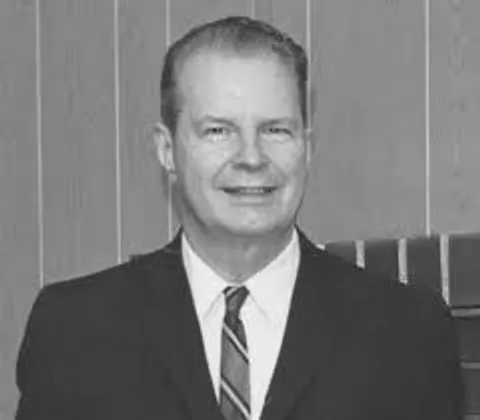 Gordon Lindsay’s Early life
Gordon Lindsay’s parents were members of J. A. Dowie’s Zion City, Illinois when he was born. The city’s financial difficulties forced the family west in 1904, where they temporarily joined another Christian-based community led by Finis Yoakum at Pisgah Grande, California. When similar problems emerged the family moved to Oregon after only a few months. From here the family moved to Portland, Oregon where Lindsay attended high school and was converted during a Charles F. Parham evangelistic campaign.
During his youth he came under the influence of John G. Lake, former resident of Zion City, missionary to South Africa, and founder of the Divine Healing missions in Spokane, Washington, and Portland, Oregon in 1920. Lindsay joined the healing and evangelistic campaigns of Lake, traveling throughout California and the southern states.
Lindsay began his own ministry in California as pastor of small churches in Avenal and San Fernando and for the next eighteen years, he travelled acros s the country holding revivals in full gospel churches. This period of travel prepared him as perhaps no other man in the nation to establish communication among a variety of Pentecostals.
When World War II began, Lindsay felt compelled to give up his evangelistic ministry because its rigorous lifestyle was taking its toll on his young family. He accepted a call to pastor a church in Ashland, Oregon.
William Branham enters Gordon Lindsay’s life
By 1947 he had witnessed the extraordinary ministry of William Branham and responded to the invitation to become Branham’s manager. His managerial skills were soon obvious in the Branham campaigns, and in April 1948, he furthered the cause of the of the revival when he produced the first issue of The Voice of Healing, specifically to promote Branham’s ministry. To Lindsay’s great surprise Branham announced that he “would not continue on the field more than a few weeks more.”
At great financial cost Lindsay decided to continue the publication of the new magazine in cooperation with his long-time friends, Jack Moore and his talented daughter Anna Jeanne Moore. He broadened the scope of the magazine by including more of the lesser known healing evangelists who were beginning to hold campaigns and were drawing large audiences.
One such evangelist was William Freeman who had been holding meetings in small churches. Lindsay visited one of his campaigns and immediately felt it was the will of God to team up with him and organise a series of meetings through 1948. The Voice of Healing featured the miracles of the Freeman campaigns.
Voice of Healing Conventions
By March 1949 The Voice of Healing circulation had grown to nearly 30,000 per month and had clearly become the voice of the healing movement. It’s pages successfully spread the message of the Salvation-Deliverance-Healing revival across the world.
In December 1949, Lindsay arranged the first convention of healing revivalists in Dallas, Texas. The assembly was addressed by Branham, Lindsay, Moore, old-timers such as F. F. Bosworth and Raymond T. Richey, and a number of rising revivalists including O. L. Jaggers, Gayle Jackson, Velmer Gardner, and Clifton Erickson. This historic conference symbolized the vitality and cohesion of the revival.
The following year, the convention, now about 1,000 strong, met in Kansas City, with virtually every important revivalist in the nation, with the notable exceptions of William Branham and Oral Roberts. Lindsay exercised great skill and wisdom exposing several points of danger and tension in the movement proposed guidelines for the future. Lindsay understood the fears of the older Pentecostal denominations and leaders and tried his utmost to deal with the offending issues.
In an article announcing “the purpose, plan and policy of the Voice of Healing Convention,” he denounced “free-lancers who violently and indiscriminately attack organization in general,” and he urged avoidance of “novel prophetic interpretations, dogmatic doctrinal assertions, sectarian predilections, theological hair-splitting.”
The Voice of Healing Association
The 1950 meeting made the Voice of Healing convention into a loose association of healing revivalists. The evangelists officially associated with The Voice of Healing magazine held “family meetings” at the conventions, at the same time maintaining their desire to “prove to the world that those associated with The Voice of Healing have no intention to organize another movement.” Through the decade the Voice of Healing conventions were showcases for healing revivalism.
The conference programs were workshops on the problems of healing evangelists. Typical topics were “prayer and fasting,” “preparation for a campaign,” “the follow-up work after a campaign,” “the system of cards for the prayer tent and the healing line” and the delicate issue of finances. As the association grew in importance in the 1950s, the program was frequently headed by Roberts or Branham; though every new revivalist aspired to be a speaker on the program.
The Voice of Healing family of evangelists flowered in the early 1950s. Lindsay continued to publicize Branham’s work, although he was not formally associated with the organization; the nucleus of the fellowship was an influential clique which included O. L. Jaggers, William Freeman, Jack Coe, T. L. Osborn, A. A. Allen, and Velmer Gardner.
Gradually major ministries began their own magazines and had no further need for Voice of Healing promotion. Nevertheless, by 1954 the “associate editors and evangelists” listed in The Voice of Healing numbered nearly fifty.
Though Lindsay became personally involved with healing evangelism from 1949, especially with other revivalists such as T. L. Osborn, he confined his best work to organization and management of the Voice of Healing magazine. By 1956 the expenses of the Voice of Healing were running $1,000 a day. In addition to the national and regional conventions sponsored by his organization, Lindsay also began to sponsor missions and a radio program.
“Lindsay was more than an advisor during the first decade of the healing revival; he was much like the director of an unruly orchestra. He tried desperately to control the proliferation of ministries in an effort to keep the revival respectable. He repeatedly advised, “It is better for one to go slow. Get your ministry on a solid foundation. . . . By all means avoid Hollywood press agent stuff.”
Many of the new leaders of the early 1950s owed their early success to the literary support of Gordon Lindsay through the Voice of Healing, but by 1958, many of the revivalists believed that Lindsay’s work was over.
An evolving ministry
Lindsay’s efforts to consolidate and coordinate the healing movement and its ministries became an impossible task. The increasing independence of ministries and the burgeoning charismatic movement caused Lindsay to reconsider his goals. He took the example of T. L. Osborn and concentrated on missionary endeavours. He remained the historian and theologian of the healing movement but began to produce teaching and evangelistic materials which were sent across the world.
The Voice of Healing ultimately became Christ for the Nations. Native church programs, literature, teaching tapes and funds were distributed to hundreds of locations. The organization had changed from one of healing revivalists into an important missionary society.
His ministry was always to those involved in the healing revival, independents and mainline Pentecostals, but the new charismatics – Lutherans, Methodists and Baptists – became his new audience. His encouragement of, and involvement with, the Full Gospel Businessmen’s Fellowship was designed to provide teaching and wisdom for charismatic leaders, many of whom held Lindsay in high regard.
His death on April 1st 1971
Suddenly, on April 1, 1973, Gordon Lindsay died. His wife, Freda, stepped into the breach and was able to stabilize and advance the ministry of Christ for the Nations. Lindsay’s death brought unparalleled financial support paying off all debts and expanding most of its programs.
David Harrel summarises the life of Gordon Lindsay perfectly: ‘The death of Gordon Lindsay closed a major chapter in the charismatic revival. No single man knew the revival and its leaders so well. No man understood its origins, its changes, and its diversity as did Lindsay. A shrewd manager and financier, Lindsay had been as nearly the coordinator of the healing revival as any man could be.
When the revival began to wane, Lindsay was faced with a crisis more severe than those of most of the evangelists themselves. Never a dynamic preacher, he found himself virtually abandoned by his most successful protégés. But Lindsay proved able to adapt. Always a balanced person, Lindsay built a balanced and enduring ministry.’
Tony Cauchi
Gordon Lindsay’s Early life
Gordon Lindsay’s parents were members of J. A. Dowie’s Zion City, Illinois when he was born. The city’s financial difficulties forced the family west in 1904, where they temporarily joined another Christian-based community led by Finis Yoakum at Pisgah Grande, California. When similar problems emerged the family moved to Oregon after only a few months. From here the family moved to Portland, Oregon where Lindsay attended high school and was converted during a Charles F. Parham evangelistic campaign.
During his youth he came under the influence of John G. Lake, former resident of Zion City, missionary to South Africa, and founder of the Divine Healing missions in Spokane, Washington, and Portland, Oregon in 1920. Lindsay joined the healing and evangelistic campaigns of Lake, traveling throughout California and the southern states.
Lindsay began his own ministry in California as pastor of small churches in Avenal and San Fernando and for the next eighteen years, he travelled acros s the country holding revivals in full gospel churches. This period of travel prepared him as perhaps no other man in the nation to establish communication among a variety of Pentecostals.
When World War II began, Lindsay felt compelled to give up his evangelistic ministry because its rigorous lifestyle was taking its toll on his young family. He accepted a call to pastor a church in Ashland, Oregon.
William Branham enters Gordon Lindsay’s life
By 1947 he had witnessed the extraordinary ministry of William Branham and responded to the invitation to become Branham’s manager. His managerial skills were soon obvious in the Branham campaigns, and in April 1948, he furthered the cause of the of the revival when he produced the first issue of The Voice of Healing, specifically to promote Branham’s ministry. To Lindsay’s great surprise Branham announced that he “would not continue on the field more than a few weeks more.”
At great financial cost Lindsay decided to continue the publication of the new magazine in cooperation with his long-time friends, Jack Moore and his talented daughter Anna Jeanne Moore. He broadened the scope of the magazine by including more of the lesser known healing evangelists who were beginning to hold campaigns and were drawing large audiences.
One such evangelist was William Freeman who had been holding meetings in small churches. Lindsay visited one of his campaigns and immediately felt it was the will of God to team up with him and organise a series of meetings through 1948. The Voice of Healing featured the miracles of the Freeman campaigns.
Voice of Healing Conventions
By March 1949 The Voice of Healing circulation had grown to nearly 30,000 per month and had clearly become the voice of the healing movement. It’s pages successfully spread the message of the Salvation-Deliverance-Healing revival across the world.
In December 1949, Lindsay arranged the first convention of healing revivalists in Dallas, Texas. The assembly was addressed by Branham, Lindsay, Moore, old-timers such as F. F. Bosworth and Raymond T. Richey, and a number of rising revivalists including O. L. Jaggers, Gayle Jackson, Velmer Gardner, and Clifton Erickson. This historic conference symbolized the vitality and cohesion of the revival.
The following year, the convention, now about 1,000 strong, met in Kansas City, with virtually every important revivalist in the nation, with the notable exceptions of William Branham and Oral Roberts. Lindsay exercised great skill and wisdom exposing several points of danger and tension in the movement proposed guidelines for the future. Lindsay understood the fears of the older Pentecostal denominations and leaders and tried his utmost to deal with the offending issues.
In an article announcing “the purpose, plan and policy of the Voice of Healing Convention,” he denounced “free-lancers who violently and indiscriminately attack organization in general,” and he urged avoidance of “novel prophetic interpretations, dogmatic doctrinal assertions, sectarian predilections, theological hair-splitting.”
The Voice of Healing Association
The 1950 meeting made the Voice of Healing convention into a loose association of healing revivalists. The evangelists officially associated with The Voice of Healing magazine held “family meetings” at the conventions, at the same time maintaining their desire to “prove to the world that those associated with The Voice of Healing have no intention to organize another movement.” Through the decade the Voice of Healing conventions were showcases for healing revivalism.
The conference programs were workshops on the problems of healing evangelists. Typical topics were “prayer and fasting,” “preparation for a campaign,” “the follow-up work after a campaign,” “the system of cards for the prayer tent and the healing line” and the delicate issue of finances. As the association grew in importance in the 1950s, the program was frequently headed by Roberts or Branham; though every new revivalist aspired to be a speaker on the program.
The Voice of Healing family of evangelists flowered in the early 1950s. Lindsay continued to publicize Branham’s work, although he was not formally associated with the organization; the nucleus of the fellowship was an influential clique which included O. L. Jaggers, William Freeman, Jack Coe, T. L. Osborn, A. A. Allen, and Velmer Gardner.
Gradually major ministries began their own magazines and had no further need for Voice of Healing promotion. Nevertheless, by 1954 the “associate editors and evangelists” listed in The Voice of Healing numbered nearly fifty.
Though Lindsay became personally involved with healing evangelism from 1949, especially with other revivalists such as T. L. Osborn, he confined his best work to organization and management of the Voice of Healing magazine. By 1956 the expenses of the Voice of Healing were running $1,000 a day. In addition to the national and regional conventions sponsored by his organization, Lindsay also began to sponsor missions and a radio program.
“Lindsay was more than an advisor during the first decade of the healing revival; he was much like the director of an unruly orchestra. He tried desperately to control the proliferation of ministries in an effort to keep the revival respectable. He repeatedly advised, “It is better for one to go slow. Get your ministry on a solid foundation. . . . By all means avoid Hollywood press agent stuff.”
Many of the new leaders of the early 1950s owed their early success to the literary support of Gordon Lindsay through the Voice of Healing, but by 1958, many of the revivalists believed that Lindsay’s work was over.
An evolving ministry
Lindsay’s efforts to consolidate and coordinate the healing movement and its ministries became an impossible task. The increasing independence of ministries and the burgeoning charismatic movement caused Lindsay to reconsider his goals. He took the example of T. L. Osborn and concentrated on missionary endeavours. He remained the historian and theologian of the healing movement but began to produce teaching and evangelistic materials which were sent across the world.
The Voice of Healing ultimately became Christ for the Nations. Native church programs, literature, teaching tapes and funds were distributed to hundreds of locations. The organization had changed from one of healing revivalists into an important missionary society.
His ministry was always to those involved in the healing revival, independents and mainline Pentecostals, but the new charismatics – Lutherans, Methodists and Baptists – became his new audience. His encouragement of, and involvement with, the Full Gospel Businessmen’s Fellowship was designed to provide teaching and wisdom for charismatic leaders, many of whom held Lindsay in high regard.
His death on April 1st 1971
Suddenly, on April 1, 1973, Gordon Lindsay died. His wife, Freda, stepped into the breach and was able to stabilize and advance the ministry of Christ for the Nations. Lindsay’s death brought unparalleled financial support paying off all debts and expanding most of its programs.
David Harrel summarises the life of Gordon Lindsay perfectly: ‘The death of Gordon Lindsay closed a major chapter in the charismatic revival. No single man knew the revival and its leaders so well. No man understood its origins, its changes, and its diversity as did Lindsay. A shrewd manager and financier, Lindsay had been as nearly the coordinator of the healing revival as any man could be.
When the revival began to wane, Lindsay was faced with a crisis more severe than those of most of the evangelists themselves. Never a dynamic preacher, he found himself virtually abandoned by his most successful protégés. But Lindsay proved able to adapt. Always a balanced person, Lindsay built a balanced and enduring ministry.’
Tony Cauchi
Hell Will Not Unsettle Heaven
How many of us, if we’re honest, can barely stomach the thought of divine judgment? We may genuinely believe the Bible, and acknowledge the reality (and rightness) of God’s wrath and an eternal hell, while mostly trying to avoid the subject. In a way, we tolerate God’s judgment, but our instinct is to turn away. At bottom, we may be a touch embarrassed by it. We celebrate Jesus’s self-sacrifice at the cross, but talk as little as possible about hell, even when sharing the gospel. The idea that we might someday enjoy God’s justice and power on display in his judgment seems almost imponderable — much less the thought that we might actually appreciate him for it, even now. Reconsidering Wrath When we avoid hell, though, we miss deeper and wider vistas on the glory of God. We overlook, minimize, or neglect significant facets of who God is. The wrath of God, and the reality of divine judgment, is one of Christianity’s most offensive claims today. Yet, as Tim Keller writes to skeptics, and to all of us, “If Christianity were the truth, it would have to be offending and correcting your thinking at some place. Maybe this is the place, the Christian doctrine of divine judgment” (The Reason for God, 73). “What if our shyness about divine judgment actually erodes our joy in God, rather than preserving it?” What if our shyness about divine judgment actually erodes our joy in God, rather than preserving it? Healthy hearts, of course, are not warmed at the prospect of unbelieving loved ones facing omnipotent wrath for all eternity. And yet if we follow God’s revelation of himself to us in the Scriptures, many of us will find more joy to be had, even now, not only in his love and grace, but also in his wrath and justice. Take just two glimpses, among others, in pondering the possibility. Judgment and Joy at the Exodus In Exodus 14, God’s people were backed up against the Red Sea, and they could see Pharaoh’s army coming for them. They seemed trapped, and began to experience a collective panic. Speaking into their great fear, Moses promised, “The Lord will fight for you” (Exodus 14:14), and as Pharaoh’s army approached, The angel of God who was going before the host of Israel moved and went behind them, and the pillar of cloud moved from before them and stood behind them, coming between the host of Egypt and the host of Israel. (Exodus 14:19–20) God, manifesting his presence in the pillar, moves to stand between his people and their enemy. This is an act of war. He steps forward to shield his own. He puts himself in the middle. He says, in effect, I’ll take this fight. I’ll protect my people from their aggressors. Let me have the Egyptians. DIVINE MAN OF WAR Then, after he has parted the sea, and as the Israelites are walking across, with the Egyptians coming in after them, God ends the battle with terrifying force: In the morning watch the Lord in the pillar of fire and of cloud looked down on the Egyptian forces and threw the Egyptian forces into a panic, clogging their chariot wheels so that they drove heavily. And the Egyptians said, “Let us flee from before Israel, for the Lord fights for them against the Egyptians.” (Exodus 14:24–25) “Divine wrath serves divine love, and in this way, love wins.” Moses stretches out his hand, the waters return to their normal course, and Exodus 14:27 reports, “The Lord threw the Egyptians into the midst of the sea.” God indeed has fought for them. He took their battle. He utterly destroyed their oppressors, and so, they break into song to celebrate their God, that “he has triumphed gloriously” (Exodus 15:1). They sing, “The Lord is a man of war; the Lord is his name” (Exodus 15:3). Exodus 14–15 will not be the last time we see God as a divine warrior against the enemies of his people (see also Deuteronomy 1:30; 3:22; 20:4; Joshua 23:10; 2 Chronicles 20:17; 32:8; Psalm 35:1; Isaiah 30:32; 31:4; Zechariah 14:3). However, note in particular here at the exodus: he is not only a “man of war,” but his people praise him for it. They don’t cringe. They’re not embarrassed. In fact, they delight in his wrath. They sing. They even dance (Exodus 15:20). Why? Because he destroyed their oppressors. WRATH SERVES LOVE The people celebrate God’s love (Exodus 15:13) — but not only his love. They also celebrate his fury against their enemies. They enjoy the protection of his wrath: Your right hand, O Lord, glorious in power, your right hand, O Lord, shatters the enemy. In the greatness of your majesty you overthrow your adversaries; you send out your fury; it consumes them like stubble. (Exodus 15:6–7) In the same moment, in the same action, God’s people are the object of his undeserved love, while his enemies are the objects of his well-deserved judgment. God’s demonstration of his wrath toward the Egyptians makes known his steadfast love to his people. He may patiently endure their mistreatment for a time, but in the end, his love compels the execution of justice against the wicked. Divine wrath serves divine love, and in this way, love wins. Judgment and Joy at the End We not only look back, though, to the exodus, but also forward to the final judgment. More blood flows in the pages of Revelation than anywhere else in the Scriptures. And yet what is the defining tenor of God’s people from beginning to end? They worship (Revelation 4:10; 5:14; 7:11; 11:16; and more). Their joy in God overflows in praise. As God’s horrific judgments fall one after another on the wicked, the torments of the damned do not diminish the delight of the saints in heaven. In fact, God’s judgments inspire the praises of his people. They rejoice, and know themselves recipients of his grace, precisely as his justice descends on those who endure in their rebellion against their Maker. “The day is coming when the people of God will rejoice that his judgment has fallen on the wicked.” When the clouds roll back, and we peek into heaven, we see martyrs cry out for justice: “O Sovereign Lord, holy and true, how long before you will judge and avenge our blood on those who dwell on the earth?” (Revelation 6:10). We hear an angelic call to worship “because the hour of his judgment has come” (Revelation 14:7). We hear yet another “song of Moses,” in which the saints in heaven proclaim, “All nations will come and worship you, for your righteous acts have been revealed” (Revelation 15:4). JUDGMENT AGAINST THEM, FOR YOU The worship of the heavenly hosts commends the justice of God’s judgments: Just are you, O Holy One, who is and who was, for you brought these judgments. For they have shed the blood of saints and prophets, and you have given them blood to drink. It is what they deserve! (Revelation 16:5–6) Heaven’s praises culminate in Revelation 18 and 19 with the final destruction of the wicked. God’s judgment displays his might for the watching eyes of his worshiping people (Revelation 18:8), and the destruction of Babylon summons his saints to worship: Rejoice over her, O heaven, and you saints and apostles and prophets, for God has given judgment for you against her! (Revelation 18:20) “For you,” it says to the saints. Divine judgments against the wicked are for you. HALLELUJAHS OVER HELL The climactic moment comes in Revelation 19:1–6. Here, at the height of God’s judgment, his people break forth in four hallelujahs (verses 1, 3, 4, and 6) — the only four in this book transfixed on heaven’s worship. Why hallelujah now? God’s people praise him for the judgment through which he saves them: Hallelujah! Salvation and glory and power belong to our God, for his judgments are true and just; for he has judged the great prostitute [Babylon] who corrupted the earth with her immorality, and has avenged on her the blood of his servants. (Revelation 19:1–2) “The horrors of hell will not spoil the joy of Jesus’s bride.” Then, once more, they cry, “Hallelujah!” and declare, “The smoke from her goes up forever and ever” (Revelation 19:3). The day is coming when the people of God will rejoice that his judgment has fallen on the wicked (so also Psalm 48:11; 58:10; 96:11–13). Then we will know in full what we perhaps only know and feel in part, for now. What About the Wicked We Love? Knowing that the eternal destruction of the wicked will not encumber, but in fact stir our eternal, ever-increasing joy in God Almighty does not mean we experience that joy fully now. Jesus himself wept over the lostness of Jerusalem (Matthew 23:37), and the apostle who knows these truths as well as any wrote of his “great sorrow and unceasing anguish” for his unbelieving “kinsmen according to the flesh” (Romans 9:2–3). Yet in the very same chapter, he was able to exult in wonder before the God who “desiring to show his wrath and to make known his power, has endured with much patience vessels of wrath prepared for destruction, in order to make known the riches of his glory for vessels of mercy, which he has prepared beforehand for glory” (Romans 9:22–23). That Paul can hold together both such sorrow and such glory gives us a glimpse of what our souls might be capable of, even in this life. The horrors of hell will not spoil the joy of Jesus’s bride. And imponderable as it may seem to us now in this disorienting in-between age, the decisive and eternal demonstration of God’s justice and power in the eternal destruction of the wicked will occasion the praise and joy of God’s people. Joy in the End — and Now We can indeed find eternal joy in the God of eternal wrath. In fact, we would not be able to find eternal, ever-increasing, ever-deepening joy in a God who was unjust. Deep down we all know we do not want a God who has no wrath and power. We do not want a God who affirms the wicked, or simply leaves them be, while they mount their eventual attack on God and his people. In the end, we do not ache for a God who stands idly by and doesn’t love his people enough to protect them from evil. In the end, the shades of grey will be gone, and those outside of Christ will be revealed for who they are: rebels against their Creator. Haters of the God we love. Abhorrers of the Christ we adore, and of his bride. There is an all-stakes war going on for the cosmos, and we have ignored it to our own peril. Our inability now to see how the eternal destruction of the wicked will one day soon be a cause for joy does not mean we will remain unable forever. In fact, we can grow and mature even in this age. And what we can’t feel now, we will soon enough. If not here in fresh tangible measures, then certainly in the age to come. We will not cringe. We will cry hallelujah. We will not dodge the truth but delight in it. No more will we wonder how these things can be so. We will know, and we will worship. Article by David Mathis