
Others like the path Features >>


-160.webp)

-160.webp)



About the Book
"The Path" by Rick Joyner is a spiritual guidebook that offers readers practical advice on how to navigate life's challenges and embrace their calling. Joyner emphasizes the importance of seeking God's guidance, cultivating a spirit of humility and obedience, and staying focused on the ultimate goal of spiritual growth and transformation. Through personal anecdotes, biblical teachings, and practical exercises, Joyner inspires readers to travel the path of faith with courage, perseverance, and purpose.
David Livingstone
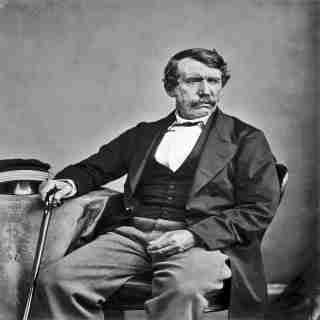 "[I am] serving Christ when shooting a buffalo for my men or taking an observation, [even if some] will consider it not sufficiently or even at all missionary."
With four theatrical words, "Dr. Livingstone, I presume?"—words journalist Henry Morton Stanley rehearsed in advance—David Livingstone became immortal. Stanley stayed with Livingstone for five months and then went off to England to write his bestseller, How I Found Livingstone. Livingstone, in the meantime, got lost again—in a swamp literally up to his neck. Within a year and a half, he died in a mud hut, kneeling beside his cot in prayer.
Berlin Congress spurs African independent churches
The whole civilized world wept. They gave him a 21-gun salute and a hero's funeral among the saints in Westminster Abbey. "Brought by faithful hands over land and sea," his tombstone reads, "David Livingstone: missionary, traveler, philanthropist. For 30 years his life was spent in an unwearied effort to evangelize the native races, to explore the undiscovered secrets, and to abolish the slave trade." He was Mother Teresa, Neil Armstrong, and Abraham Lincoln rolled into one.
Highway man
At age 25, after a childhood spent working 14 hours a day in a cotton mill, followed by learning in class and on his own, Livingstone was captivated by an appeal for medical missionaries to China. As he trained, however, the door to China was slammed shut by the Opium War. Within six months, he met Robert Moffat, a veteran missionary of southern Africa, who enchanted him with tales of his remote station, glowing in the morning sun with "the smoke of a thousand villages where no missionary had been before."
For ten years, Livingstone tried to be a conventional missionary in southern Africa. He opened a string of stations in "the regions beyond," where he settled down to station life, teaching school and superintending the garden. After four years of bachelor life, he married his "boss's" daughter, Mary Moffat.
From the beginning, Livingstone showed signs of restlessness. After his only convert decided to return to polygamy, Livingstone felt more called than ever to explore. During his first term in South Africa, Livingstone made some of the most prodigious—and most dangerous—explorations of the nineteenth century. His object was to open a "Missionary Road"—"God's Highway," he also called it—1,500 miles north into the interior to bring "Christianity and civilization" to unreached peoples.
Explorer for Christ
On these early journeys, Livingstone's interpersonal quirks were already apparent. He had the singular inability to get along with other Westerners. He fought with missionaries, fellow explorers, assistants, and (later) his brother Charles. He held grudges for years. He had the temperament of a book-reading loner, emotionally inarticulate except when he exploded with Scottish rage. He held little patience for the attitudes of missionaries with "miserably contracted minds" who had absorbed "the colonial mentality" regarding the natives. When Livingstone spoke out against racial intolerance, white Afrikaners tried to drive him out, burning his station and stealing his animals.
He also had problems with the London Missionary Society, who felt that his explorations were distracting him from his missionary work. Throughout his life, however, Livingstone always thought of himself as primarily a missionary, "not a dumpy sort of person with a Bible under his arms, [but someone] serving Christ when shooting a buffalo for my men or taking an observation, [even if some] will consider it not sufficiently or even at all missionary."
Though alienated from the whites, the natives loved his common touch, his rough paternalism, and his curiosity. They also thought he might protect them or supply them with guns. More than most Europeans, Livingstone talked to them with respect, Scottish laird to African chief. Some explorers took as many as 150 porters when they traveled; Livingstone traveled with 30 or fewer.
On an epic, three-year trip from the Atlantic Ocean to the Indian Ocean (reputedly the first by a European) Livingstone was introduced to the 1,700-mile-long Zambezi. The river was also home to Victoria Falls, Livingstone's most awe-inspiring discovery. The scene was "so lovely," he later wrote, that it "must have been gazed upon by angels in their flight."
Despite its beauty, the Zambezi was a river of human misery. It linked the Portuguese colonies of Angola and Mozambique, the main suppliers of slaves for Brazil, who in turn sold to Cuba and the United States. Though Livingstone was partially driven by a desire to create a British colony, his primary ambition was to expose the slave trade and cut it off at the source. The strongest weapon in this task, he believed, was Christian commercial civilization. He hoped to replace the "inefficient" slave economy with a capitalist economy: buying and selling goods instead of people.
The ill-fated Zambezi expedition
After a brief heroic return to England, Livingstone returned to Africa, this time to navigate 1,000 miles up the Zambezi in a brass-and-mahogany steamboat to establish a mission near Victoria Falls. The boat was state-of-the-art technology but proved too frail for the expedition. It leaked horribly after repeatedly running aground on sandbars.
Livingstone pushed his men beyond human endurance. When they reached a 30-foot waterfall, he waved his hand, as if to wish it away, and said, "That's not supposed to be there." His wife, who had just given birth to her sixth child, died in 1862 beside the river, only one of several lives claimed on the voyage. Two years later, the British government, which had no interest in "forcing steamers up cataracts," recalled Livingstone and his mission party.
A year later, he was on his way back to Africa again, this time leading an expedition sponsored by the Royal Geographical Society and wealthy friends. "I would not consent to go simply as a geographer," he emphasized, but as biographer Tim Jeal wrote, "It would be hard to judge whether the search for the Nile's source or his desire to expose the slave trade was his dominant motive." The source of the Nile was the great geographical puzzle of the day. But more important to Livingstone was the possibility of proving that the Bible was true by tracing the African roots of Judaism and Christianity.
For two years he simply disappeared, without a letter or scrap of information. He reported later that he had been so ill he could not even lift a pen, but he was able to read the Bible straight through four times. Livingstone's disappearance fascinated the public as much as Amelia Earhart's a few generations later.
When American journalist Henry Stanley found Livingstone, the news exploded in England and America. Papers carried special editions devoted to the famous meeting. In August 1872, in precarious health, Livingstone shook Stanley's hand and set out on his final journey.
When Livingstone had arrived in Africa in 1841, it was as exotic as outer space, called the "Dark Continent" and the "White Man's Graveyard." although the Portuguese, Dutch, and English were pushing into the interior, African maps had blank unexplored areas—no roads, no countries, no landmarks. Livingstone helped redraw the maps, exploring what are now a dozen countries, including South Africa, Rwanda, Angola, and the Republic of the Congo (formerly Zaire). And he made the West aware of the continuing evil of African slavery, which led to its being eventually outlawed.
"[I am] serving Christ when shooting a buffalo for my men or taking an observation, [even if some] will consider it not sufficiently or even at all missionary."
With four theatrical words, "Dr. Livingstone, I presume?"—words journalist Henry Morton Stanley rehearsed in advance—David Livingstone became immortal. Stanley stayed with Livingstone for five months and then went off to England to write his bestseller, How I Found Livingstone. Livingstone, in the meantime, got lost again—in a swamp literally up to his neck. Within a year and a half, he died in a mud hut, kneeling beside his cot in prayer.
Berlin Congress spurs African independent churches
The whole civilized world wept. They gave him a 21-gun salute and a hero's funeral among the saints in Westminster Abbey. "Brought by faithful hands over land and sea," his tombstone reads, "David Livingstone: missionary, traveler, philanthropist. For 30 years his life was spent in an unwearied effort to evangelize the native races, to explore the undiscovered secrets, and to abolish the slave trade." He was Mother Teresa, Neil Armstrong, and Abraham Lincoln rolled into one.
Highway man
At age 25, after a childhood spent working 14 hours a day in a cotton mill, followed by learning in class and on his own, Livingstone was captivated by an appeal for medical missionaries to China. As he trained, however, the door to China was slammed shut by the Opium War. Within six months, he met Robert Moffat, a veteran missionary of southern Africa, who enchanted him with tales of his remote station, glowing in the morning sun with "the smoke of a thousand villages where no missionary had been before."
For ten years, Livingstone tried to be a conventional missionary in southern Africa. He opened a string of stations in "the regions beyond," where he settled down to station life, teaching school and superintending the garden. After four years of bachelor life, he married his "boss's" daughter, Mary Moffat.
From the beginning, Livingstone showed signs of restlessness. After his only convert decided to return to polygamy, Livingstone felt more called than ever to explore. During his first term in South Africa, Livingstone made some of the most prodigious—and most dangerous—explorations of the nineteenth century. His object was to open a "Missionary Road"—"God's Highway," he also called it—1,500 miles north into the interior to bring "Christianity and civilization" to unreached peoples.
Explorer for Christ
On these early journeys, Livingstone's interpersonal quirks were already apparent. He had the singular inability to get along with other Westerners. He fought with missionaries, fellow explorers, assistants, and (later) his brother Charles. He held grudges for years. He had the temperament of a book-reading loner, emotionally inarticulate except when he exploded with Scottish rage. He held little patience for the attitudes of missionaries with "miserably contracted minds" who had absorbed "the colonial mentality" regarding the natives. When Livingstone spoke out against racial intolerance, white Afrikaners tried to drive him out, burning his station and stealing his animals.
He also had problems with the London Missionary Society, who felt that his explorations were distracting him from his missionary work. Throughout his life, however, Livingstone always thought of himself as primarily a missionary, "not a dumpy sort of person with a Bible under his arms, [but someone] serving Christ when shooting a buffalo for my men or taking an observation, [even if some] will consider it not sufficiently or even at all missionary."
Though alienated from the whites, the natives loved his common touch, his rough paternalism, and his curiosity. They also thought he might protect them or supply them with guns. More than most Europeans, Livingstone talked to them with respect, Scottish laird to African chief. Some explorers took as many as 150 porters when they traveled; Livingstone traveled with 30 or fewer.
On an epic, three-year trip from the Atlantic Ocean to the Indian Ocean (reputedly the first by a European) Livingstone was introduced to the 1,700-mile-long Zambezi. The river was also home to Victoria Falls, Livingstone's most awe-inspiring discovery. The scene was "so lovely," he later wrote, that it "must have been gazed upon by angels in their flight."
Despite its beauty, the Zambezi was a river of human misery. It linked the Portuguese colonies of Angola and Mozambique, the main suppliers of slaves for Brazil, who in turn sold to Cuba and the United States. Though Livingstone was partially driven by a desire to create a British colony, his primary ambition was to expose the slave trade and cut it off at the source. The strongest weapon in this task, he believed, was Christian commercial civilization. He hoped to replace the "inefficient" slave economy with a capitalist economy: buying and selling goods instead of people.
The ill-fated Zambezi expedition
After a brief heroic return to England, Livingstone returned to Africa, this time to navigate 1,000 miles up the Zambezi in a brass-and-mahogany steamboat to establish a mission near Victoria Falls. The boat was state-of-the-art technology but proved too frail for the expedition. It leaked horribly after repeatedly running aground on sandbars.
Livingstone pushed his men beyond human endurance. When they reached a 30-foot waterfall, he waved his hand, as if to wish it away, and said, "That's not supposed to be there." His wife, who had just given birth to her sixth child, died in 1862 beside the river, only one of several lives claimed on the voyage. Two years later, the British government, which had no interest in "forcing steamers up cataracts," recalled Livingstone and his mission party.
A year later, he was on his way back to Africa again, this time leading an expedition sponsored by the Royal Geographical Society and wealthy friends. "I would not consent to go simply as a geographer," he emphasized, but as biographer Tim Jeal wrote, "It would be hard to judge whether the search for the Nile's source or his desire to expose the slave trade was his dominant motive." The source of the Nile was the great geographical puzzle of the day. But more important to Livingstone was the possibility of proving that the Bible was true by tracing the African roots of Judaism and Christianity.
For two years he simply disappeared, without a letter or scrap of information. He reported later that he had been so ill he could not even lift a pen, but he was able to read the Bible straight through four times. Livingstone's disappearance fascinated the public as much as Amelia Earhart's a few generations later.
When American journalist Henry Stanley found Livingstone, the news exploded in England and America. Papers carried special editions devoted to the famous meeting. In August 1872, in precarious health, Livingstone shook Stanley's hand and set out on his final journey.
When Livingstone had arrived in Africa in 1841, it was as exotic as outer space, called the "Dark Continent" and the "White Man's Graveyard." although the Portuguese, Dutch, and English were pushing into the interior, African maps had blank unexplored areas—no roads, no countries, no landmarks. Livingstone helped redraw the maps, exploring what are now a dozen countries, including South Africa, Rwanda, Angola, and the Republic of the Congo (formerly Zaire). And he made the West aware of the continuing evil of African slavery, which led to its being eventually outlawed.
Kneeling Among Lions - Learning to Pray Like Daniel
Tucked away in the book of Daniel, sandwiched between stories about fiery furnaces and lions on the one hand, and visions of statues, beasts, and rising kings on the other, is an extended prayer with a shockingly immediate answer. Daniel 9 contains an extended, earnest, and heartfelt prayer by the prophet. And before he even says “Amen,” the angel Gabriel is standing before him, ready to give insight and understanding to the broken-hearted prophet. What did Daniel pray that caused God to immediately dispatch an angel with an answer? And can Daniel’s prayer instruct us today in how to pray? Plot Against Prayer Daniel’s prayer is a dated prayer. “In the first year of Darius the son of Ahasuerus” (Daniel 9:1). And the particular timing mentioned draws attention to one of the most famous stories in the Bible. At the end of Daniel 5, Darius the Mede conquers the Chaldeans and dethrones Belshazzar. In chapter 6, he appoints 120 local rulers as governors over his kingdom, with high officials overseeing them. Daniel is one of these high officials. Indeed, he is distinguished above all of the high officials because of the excellent spirit (or is it Spirit?) residing in him (Daniel 6:1–3). Darius plans to elevate Daniel over all the other officials, provoking them to jealousy. They then plot to find fault with Daniel in hopes of bringing him down. After examining his life, they conclude, “We shall not find any ground for complaint against this Daniel unless we find it in connection with the law of his God” (Daniel 6:5). Soon enough, they do find a ground for complaint against Daniel — his habits of prayer. Daniel’s custom is to pray three times per day with an open window facing Jerusalem. The jealous officials manipulate Darius into passing an irrevocable decree against praying to anyone except the king (Daniel 6:6–9). And Daniel’s defiance of this decree famously lands him in the lions’ den (Daniel 6:10–16). What is the relevance for the prayer of Daniel 9? It’s likely that Daniel 9 is the sort of prayer that Daniel was praying with that famous window open. What’s more, if we’re attentive to the whole Scriptures, we can better understand why Daniel was praying with a window open facing Jerusalem. Solomon, Jeremiah, and Daniel In 1 Kings 8, Solomon is dedicating the temple of the Lord. As he nears the end of his prayer, he contemplates the possibility (and even likelihood) that the people of Israel will sin grievously against God. When they do, God will, in fulfillment of the warnings of Deuteronomy, give them over to their enemies so that Israel will be carried captive into a foreign land. Nevertheless, God will remain faithful to his promises and his people, even as he sends them into exile. In Solomon’s request, notice the specific direction his exiled people ought to pray: Yet if they turn their heart in the land to which they have been carried captive, and repent and plead with you in the land of their captors, saying, “We have sinned and have acted perversely and wickedly,” if they repent with all their heart and with all their soul in the land of their enemies, who carried them captive, and pray to you toward their land, which you gave to their fathers, the city that you have chosen, and the house that I have built for your name, then hear in heaven your dwelling place their prayer and their plea, and maintain their cause and forgive your people who have sinned against you, and all their transgressions that they have committed against you, and grant them compassion in the sight of those who carried them captive, that they may have compassion on them (for they are your people, and your heritage, which you brought out of Egypt, from the midst of the iron furnace). (1 Kings 8:47–51) Solomon specifically mentions repenting and praying from exile toward Israel, toward Jerusalem. Thus, Daniel’s actions make perfect sense. He is following Solomon’s instructions in hope that God will have compassion and restore his people. Beyond Solomon’s dedication, the immediate cause of Daniel’s prayer is Jeremiah’s prophecy concerning the seventy weeks. Recorded in Jeremiah 25, the prophet rebukes Israel for her stubbornness and promises God’s judgment through Nebuchadnezzar, king of Babylon, who will lay waste to Israel. Babylon will be triumphant for seventy years, after which God will bring judgment upon them for their own sins. Daniel has this prophecy in mind when he offers his own prayer of repentance (Daniel 9:2). Lessons from Daniel’s Prayer These particulars matter. Daniel offered this prayer at a specific moment in redemptive history, under the covenant that God made with Moses, during the time when Jerusalem was the center of the spiritual universe. Today we are in a different redemptive era, under the new covenant, when the heavenly Jerusalem is the center of the universe. Nonetheless, there are truths that span the covenants. Despite our differences in time, redemptive era, location, and circumstances, Daniel’s prayer was still “written for our instruction, that . . . we might have hope” (Romans 15:4). So how does Daniel’s prayer give us hope? Confess Clearly First, Daniel says “Amen” to God’s judgment. Daniel’s prayer is fundamentally a prayer of confession and repentance. Again and again, Daniel acknowledges the sin of God’s people. “We have sinned. We have done wrong. We have acted wickedly. We have rebelled. We have turned aside from your commandments. We have not listened to your prophets. We have committed treachery. We have not obeyed your voice.” Twenty times, Daniel acknowledges that Israel has sinned. You will look in vain for any rationalizations in this prayer. Daniel is not asking God to excuse Israel’s sin; he is asking God to forgive Israel’s sin. And forgiveness begins with saying “Amen” to God’s judgment. “Daniel teaches us to mince no words in confession, to use no euphemisms, to soft-pedal no transgressions.” And this instructs us. We all are prone to justify and rationalize our sin, to ask God to excuse us for what we’ve done, rather than asking him to forgive us for what we’ve done. But Daniel teaches us to mince no words in confession, to use no euphemisms, to soft-pedal no transgressions; indeed, the great variety of terms for sin and wickedness in his prayer teaches us to labor to be clear before God about the precise ways that we have fallen short of his standards. Remember Specifically Second, Daniel remembers God’s word and God’s works. In confessing, Daniel directly quotes Deuteronomy 7:9, and frames his prayer by Israel’s failure to obey the law of Moses (Daniel 9:11). In punishing Israel, God is simply confirming the oaths and curses he laid down in Deuteronomy 28. Even more than that, Daniel remembers the great works of God, especially the exodus, when God brought his people out of Egypt with a mighty hand (Daniel 9:15). “God is pleased with Bible-shaped and Scripture-saturated prayers.” This too instructs us. God is pleased with Bible-shaped and Scripture-saturated prayers. It is good and right for us to orient our confession, our repentance, and our supplications in light of God’s laws, his promises, and his warnings. By using Scripture to frame our own prayers, we approach God in a way that he has established, with words that he has inspired, and thus we have greater confidence that he will hear and answer. Plead Confidently Third, Daniel pleads for God’s mercy. Even as he says “Amen” to the judgment of God, Daniel appeals to Yahweh’s mercy and forgiveness (Daniel 9:9). Daniel knows that judgment is not God’s final word. And thus, he asks for God to again shine his face on his sanctuary (Daniel 9:17), and to turn aside his anger that has cast his people into exile. In doing so, Daniel demonstrates his deep faith in Yahweh’s fundamental character toward his people: he is a God compassionate and merciful, slow to anger, and abounding in steadfast love (Exodus 34:6–7). We too can approach God’s throne with confidence because we know it is a throne of grace. Whatever chastisement and discipline he brings, mercy reigns in the heart of God. He will by no means clear the guilty, but he loves to forgive those who turn to him in humble faith. Unifying Thread Finally, what ties these elements together is God’s righteousness — his unswerving commitment to uphold the glory of his name. Underneath Daniel’s “Amen” to God’s judgment, underneath Daniel’s remembrance of God’s word and works, and underneath Daniel’s appeal to God’s mercy is Daniel’s sure faith that God is uppermost in God’s affections. To the Lord belongs righteousness, and therefore he has punished his people (Daniel 9:7). His judgment is a fulfillment of his commitment to his word; he will not overlook transgressions against his law (Daniel 9:11–12). He is righteous to bring this judgment. But more than that, he is righteous in showing mercy. Daniel appeals to God’s love for his name. God made a name for himself in delivering Israel from Egypt (Daniel 9:15). And now, Daniel roots his plea for mercy in God’s righteousness (Daniel 9:16). Israel has become a byword; the nations mock at the once-great nation and the once-great city of Jerusalem. But this nation and this city are called by the name of Yahweh. And therefore, Daniel’s final plea is not based on Israel’s righteousness, but on God’s name. Now therefore, O our God, listen to the prayer of your servant and to his pleas for mercy, and for your own sake, O Lord, make your face to shine upon your sanctuary, which is desolate. O my God, incline your ear and hear. Open your eyes and see our desolations, and the city that is called by your name. For we do not present our pleas before you because of our righteousness, but because of your great mercy. O Lord, hear; O Lord, forgive. O Lord, pay attention and act. Delay not, for your own sake, O my God, because your city and your people are called by your name. (Daniel 9:17–19) So too for us. When we approach God, we do not come based on our righteousness. How could we? Instead, we beg God to act on our behalf for his own sake. Indeed, as those who live under God’s new covenant, we appeal to him in the name of his Son Jesus. We plead for God to hear and forgive and pay attention and act on our behalf because we are called by the name of his Son, the great and awesome God who keeps covenant and steadfast love with his blood-bought people.