
GIP Library icon

Women Of Influence And Distinction Women Of Influence And Distinction

Women Of Influence And Distinction Order Printed Copy

  • Author: Betsy E Caram
  • Size: 628KB | 112 pages
  • |
Continue with
Google Twitter
LOG IN TO REVIEW
About the Book


"Women of Influence and Distinction" by Betsy E. Caram is a collection of biographical profiles highlighting the accomplishments and contributions of influential women in various fields. The book showcases their inspiring stories and showcases how these women have made a lasting impact on society.

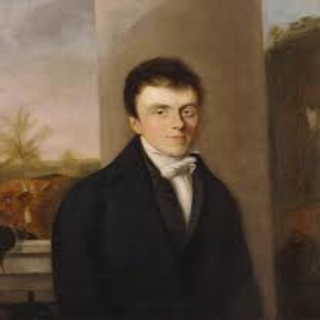
Andrew Fuller

Andrew Fuller Fuller was born in Soham, Cambridgeshire, England, where in 1775 he was ordained pastor of the Baptist church. Originally schooled in the hyper-Calvinist theology then prevalent in parts of the Particular Baptist denomination, he became convinced in 1775 that the hyper-Calvinist position was not scriptural. In 1785 he published The Gospel Worthy of All Acceptation, which did much to prepare his denomination for accepting this missionary obligation. As pastor in Kettering, Northamptonshire, from 1783, Fuller became firm friends with John Sutcliff of Olney, John Ryland of Northampton, and later the young William Carey. The strengthening missionary vision of this group bore fruit on October 2, 1792, when the Particular Baptist Society for Propagating the Gospel among the Heathen (later known as the Baptist Missionary Society) was formed in the home of one of Fuller’s deacons in Kettering. Fuller was appointed secretary. Until his death he combined the demands of a busy pastorate with managing the affairs of the BMS. He traveled extensively to raise funds for the society, especially in Scotland, which he visited five times. Brian Stanley, “Fuller, Andrew,” in Biographical Dictionary of Christian Missions, ed. Gerald H. Anderson (New York: Macmillan Reference USA, 1998), 230-231. This article is reprinted from Biographical Dictionary of Christian Missions, Macmillan Reference USA, copyright © 1998 Gerald H. Anderson, by permission of Macmillan Reference USA, New York, NY. All rights reserved. Pastor, apologist, and promoter of missions Though not university trained, Andrew Fuller was recognized by his contemporaries as the preeminent Baptist theologian of their day and was awarded honorary doctor of divinity degrees by both Princeton (1798) and Yale (1805). Fuller’s published works, preaching ministry and churchmanship was, perhaps, the primary mediating agency between the transatlantic evangelical revival and the English Particular (or “Calvinist”) Baptists who had distanced themselves from what was largely at the start an Anglican renewal movement. Fuller was also well known as a co-founder of the Baptist Missionary Society (or, the Particular Baptist Society for the Propagation of the Gospel Amongst the Heathen [est. 1792]), on whose behalf he itinerated regularly in the British Isles, lobbied the East India Company, and wrote numerous letters and magazine articles during his twenty-two year tenure as its first general secretary. He was an opponent of the British slave trade and, though a dissenting non-Anglican, an acquaintance of William Wilberforce and other members of the Clapham sect, who were key allies in Parliament. He was a pastors’ pastor who exerted no small influence for evangelical doctrine and a missionary vision through the many ordination sermons he preached. From 1782 until his death in 1815 he served as pastor of the Kettering Baptist Church and was frequent chairman of the Northamptonshire Association, a consortium which included the likes of William Carey, Samuel Pearce, John Sutcliffe, and John Ryland, Jr. Fuller was born in 1754 at Wicken, Cambridgeshire, to non-conformist parents who worked a dairy farm. In 1775, six years after his own conversion experience, he was inducted as pastor of the forty-seven member church in Soham, where he had received his baptism and was a member. In 1776 he married his first wife, Sarah Gardiner, with whom he had eleven children, only three surviving beyond early childhood. Sarah would die in 1792, less than two months before the founding of the British Missionary Society (BMS). During this seven year pastorate, Fuller immersed himself in the literary culture of Anglo-American evangelical Calvinism. He cultivated his theological perspective and ministry philosophy by ardently studying the Scriptures alongside the works of the Reformers, seventeenth-century Puritans (especially John Owen), early English Baptists like John Bunyan and John Gill, as well as the writings of American Congregationalist philosopher-theologian and pastor, Jonathan Edwards. Fuller also acknowledged in his most popular book, The Gospel Worthy of All Acceptation (1781), the influence of the lives of John Eliot and David Brainerd, both late missionaries to the native Americans. The Gospel Worthy was Fuller’s remonstration against the hyper-Calvinism that negated the propriety of evangelistic appeals. By the 1790s, evangelical (or “strict”) Calvinism was known in England as “Fullerism” (vs. “High” or hyper-Calvinism). The Gospel its Own Witness (1800) was Fuller’s refutation of Deism. Fuller gained a reputation by these two books, especially, for publically, clearly and systematically opposing in print whatever widely held doctrines he believed were undermining the church and its mission. In the Northamptonshire Assocation Fuller was a member of a thriving intellectual community most influenced by Edwards. In 1784 John Sutcliff initiated a “concerts of prayer” movement similar to the program suggested by Edwards in An Humble Attempt to Promote Explicit Agreement and Visible Union of God’s People in Extraordinary Prayer (1748). Baptist congregations prayed monthly for the spread of the gospel and the kingdom of Christ to the ends of the earth through all denominations. In 1791, Sutcliff, Fuller and Samuel Pearce each preached at significant events (Sutcliff and Fuller at the association meeting of pastors, Pearce at William Carey’s ordination) on the duty of the church to evangelize the whole inhabitable globe. Fuller based his appeal on the eternal truth of the gospel, the eternal relevance of the gospel, the eternal power of the gospel, and the circumstances of the age that made missionary endeavors possible and obligatory.(1) Carey’s much touted association sermon from Isaiah 54:2-3 in May of 1792 did not arise in a vacuum. The influence was mutual between Carey and Fuller, both being influenced by Robert Hall, Sr. and Samuel Pearce (who had been inspired by the Methodist Thomas Coke in Birmingham). On October 2, 1792, the BMS was formed with Fuller its first secretary and the assumption that its support would come largely from the churches of the Northamptonshire Association. When the society sent Carey and John Thomas to India the following year, Fuller preached their commissioning service from John 20:21 (“As the Father has sent me, even so I [Christ] am sending you.”). Fuller believed the mission’s raison d’être was the uniqueness of Christ and Christian responsibility to proclaim him. Bible translation and evangelism should take priority. Hindus were not desiring or seeking the Christian Scriptures. But to ignore and neglect anyone in an unconverted state is inconsistent with the love of God and man. In addition, God had promised the messiah the inheritance of the nations (An Apology for the Late Christian Missions to India, 1808). The church is obligated to employ means and make an effort as the means God uses to fulfill that promise to Christ. Obstacles are merely a test to sincerity of faith. Fuller spent up to ten hours per day in correspondence and reporting for the BMS. He contributed articles to Evangelical Magazine, Missionary Magazine, Quarterly Magazine, Protestant Dissenters’ Magazine, Biblical Magazine, and Theological Miscellany. He sought financial support via letters and by an average of three months of vigorous itineration each year among various evangelical churches in Scotland, Ireland, Wales and England. John Ryland, Jr. wrote of Fuller’s style, that he, “…always disliked violent pressing for contributions, and attempting to outvie other societies: he chose rather to tell a plain, unvarnished tale; and he generally told it with good effect.”(2) Through written correspondence he “pastored” the missionaries in the field while maintaining a decentralized approach to mission administration. He believed the missionaries were more capable of governing themselves and that the time required for correspondence made central control impractical anyway. The security of the unlicensed Baptist missionary society’s place in the British Empire was frequently tenuous up to 1813. Fuller occasionally had to petition Parliament or the Board of Control for continued tolerance of the BMS. Muslim irritation at the Christian missionary presence and the conversion of some Indians from Islam had been blamed for the Vellore Mutiny of 1806. Thomas Twining had openly claimed efforts at conversion were contradictory to “the mild and tolerant spirit of Christianity.” Fuller responded to Twining and other English defenders of Hinduism with his three-part Apology for the Late Christian Missions to India (1808) in which he argued for a toleration of religion that allows all religious views as well as efforts to persuade through reasonable means. He attributed several social ills, like ritual infanticide and sati, to Hinduism, and commended the missionaries for trying to put an end to such practices. Fuller was also a critic of the “detestable traffic” of the African slave trade, asserting it made England deserving of ruin at the hands of the French (from whose invasion he urged prayer that God would mercifully protect England). The prosperity of the empire should not come at the expense of other human beings. Patriotism must “harmonize” with “good will toward [other] men.”(3) On the other hand, Fuller often counseled BMS missionaries not to become “entangled” in political concerns which were “only affairs of this life” and endangered colonial toleration of the mission.(4) Because Jesus accomplished “moral revolution” in the heart, loyalty to the British government, rather than republicanism, should be encouraged as far as it is compatible with Christian commitments.(5) Fuller, the pastor of families in England and abroad, counseled missionary families to nurture a deep spirituality for the sake of attaining the character commensurate with the nature of the gospel and their mission. Fuller knew the vicissitudes of even the Christian heart, and the “spiritual advantage” of engaging in mission. Reflecting in his diary on July 18, 1794, he wrote: Within the last year or two, we have formed a missionary society; and have been enabled to send out two of our brethren to the East Indies. My heart has been greatly interested in this work. Surely I never felt more genuine love to God and to his cause in my life. I bless God that his work has been a means of reviving my soul. If nothing comes of it, I and many others have obtained a spiritual advantage.(6) Fuller died in 1815. The epitaph stone for Fuller in the Kettering meeting house says he devoted his life for the prosperity of the BMS.(7) One biographer has said Fuller “lived and died a martyr to the mission.”(8) After December, 1794, he was assisted in life by his second wife, Ann Coles. Fuller also spent himself itinerating for the British and Foreign Bible Society after it was founded in 1804. His many occasional writings and sermon manuscripts reveal a love for the gospel message itself and the life-orienting impact of Bible texts such as Matthew 28:16-20 and Mark 16:15-16; John 12:36 and 20:21; and Romans 10:9, 14-17. Fuller is noted today for making a significant contribution to the revitalization of Particular (Calvinist) Baptist life in late eighteenth century England as well as for being a key figure in the historic turn toward a proliferation of free Protestant missionary societies at the beginning of the Great Century.

Fasting for Beginners

Chances are you are among the massive majority of Christians who rarely or never fast. It’s not because we haven’t read our Bibles or sat under faithful preaching or heard about the power of fasting, or even that we don’t genuinely want to do it. We just never actually get around to putting down the fork. Part of it may be that we live in a society in which food is so ubiquitous that we eat not only when we don’t need to, but sometimes even when we don’t want to. We eat to share a meal with others, to build or grow relationships (good reasons), or just as a distraction from responsibility. And of course, there are our own cravings and aches for comfort that keep us from the discomfort of fasting. Not So Fast Fasting is voluntarily going without food — or any other regularly enjoyed, good gift from God — for the sake of some spiritual purpose. It is markedly counter-cultural in our consumerist society, like abstaining from sex until marriage. If we are to learn the lost art of fasting and enjoy its fruit, it will not come with our ear to the ground of society, but with Bibles open. Then, the concern will not be whether we fast, but when. Jesus assumes his followers will fast, and even promises it will happen. He doesn’t say “if,” but “when you fast” (Matthew 6:16). And he doesn’t say his followers might fast, but “they will” (Matthew 9:15). “Fasting is markedly counter-cultural in our consumerist society, like abstaining from sex until marriage.” We fast in this life because we believe in the life to come. We don’t have to get it all here and now, because we have a promise that we will have it all in the coming age. We fast from what we can see and taste, because we have tasted and seen the goodness of the invisible and infinite God — and are desperately hungry for more of him. Radical, Temporary Measure Fasting is for this world, for stretching our hearts to get fresh air beyond the pain and trouble around us. And it is for the battle against the sin and weakness inside us. We express our discontent with our sinful selves and our longing for more of Christ. When Jesus returns, fasting will be done. It’s a temporary measure, for this life and age, to enrich our joy in Jesus and prepare our hearts for the next — for seeing him face to face. When he returns, he will not call a fast, but throw a feast; then all holy abstinence will have served its glorious purpose and be seen by all for the stunning gift it was. Until then, we will fast. How to Start Fasting Fasting is hard. It sounds much easier in concept than it proves to be in practice. It can be surprising how on-edge we feel when we miss a meal. Many an idealistic new fast-er has decided to miss a meal and only found our belly drove us to make up for it long before the next mealtime came. Fasting sounds so simple, and yet the world, our flesh, and the devil conspire to introduce all sorts of complications that keep it from happening. In view of helping you start down the slow path to good fasting, here are six simple pieces of advice. These suggestions might seem pedantic, but the hope is that such basic counsel can serve those who are new at fasting or have never seriously tried it. 1. Start small. Don’t go from no fasting to attempting a weeklong. Start with one meal; maybe fast one meal a week for several weeks. Then try two meals, and work your way up to a daylong fast. Perhaps eventually try a two-day juice fast. A juice fast means abstaining from all food and beverage, except for juice and water. Allowing yourself juice provides nutrients and sugar for the body to keep you operating, while also still feeling the effects from going without solid food. It’s not recommended that you abstain from water during a fast of any length. 2. Plan what you’ll do instead of eating. Fasting isn’t merely an act of self-deprivation, but a spiritual discipline for seeking more of God’s fullness. Which means we should have a plan for what positive pursuit to undertake in the time it normally takes to eat. We spend a good portion of our day with food in front of us. One significant part of fasting is the time it creates for prayer and meditation on God’s word or some act of love for others. Before diving headlong into a fast, craft a simple plan. Connect it to your purpose for the fast. Each fast should have a specific spiritual purpose. Identify what that is and design a focus to replace the time you would have spent eating. Without a purpose and plan, it’s not Christian fasting; it’s just going hungry. 3. Consider how it will affect others. Fasting is no license to be unloving. It would be sad to lack concern and care for others around us because of this expression of heightened focus on God. Love for God and for neighbor go together. Good fasting mingles horizontal concern with the vertical. If anything, others should even feel more loved and cared for when we’re fasting. So as you plan your fast, consider how it will affect others. If you have regular lunches with colleagues or dinners with family or roommates, assess how your abstaining will affect them, and let them know ahead of time, instead of just being a no-show, or springing it on them in the moment that you will not be eating. Also, consider this backdoor inspiration for fasting: If you make a daily or weekly practice of eating with a particular group of friends or family, and those plans are interrupted by someone’s travel or vacation or atypical circumstances, consider that as an opportunity to fast, rather than eating alone. 4. Try different kinds of fasting. The typical form of fasting is personal, private, and partial, but we find a variety of forms in the Bible: personal and communal, private and public, congregational and national, regular and occasional, absolute and partial. In particular, consider fasting together with your family, small group, or church. Do you share together in some special need for God’s wisdom and guidance? Is there an unusual difficulty in the church, or society, for which you need God’s intervention? Do you want to keep the second coming of Christ in view? Plead with special earnestness for God’s help by linking arms with other believers to fast together. 5. Fast from something other than food. Fasting from food is not necessarily for everyone. Some health conditions keep even the most devout from the traditional course. However, fasting is not limited to abstaining from food. As Martyn Lloyd-Jones said, “Fasting should really be made to include abstinence from anything which is legitimate in and of itself for the sake of some special spiritual purpose.” If the better part of wisdom for you, in your health condition, is not to go without food, consider fasting from television, computer, social media, or some other regular enjoyment that would bend your heart toward greater enjoyment of Jesus. Paul even talks about married couples fasting from sex “for a limited time, that you may devote yourselves to prayer” (1 Corinthians 7:5). 6. Don’t think of white elephants. “Without a purpose and plan, it’s not Christian fasting; it’s just going hungry.” When your empty stomach starts to growl and begins sending your brain every “feed me” signal it can, don’t be content to let your mind dwell on the fact that you haven’t eaten. If you make it through with an iron will that says no to your stomach, but doesn’t turn your mind’s eye elsewhere, it says more about your love for food than your love for God. Christian fasting turns its attention to Jesus or some great cause of his in the world. Christian fasting seeks to take the pains of hunger and transpose them into the key of some eternal anthem, whether it’s fighting against some sin, or pleading for someone’s salvation, or for the cause of the unborn, or longing for a greater taste of Jesus. Article by David Mathis Executive Editor, desiringGod.org

Feedback
Suggestionsuggestion box
x