

Others like fight like a girl Features >>

Girls With Swords

It's Not How You Look, It's What You See
Lioness Arising
Nurture: Give And Get What You Need To Flourish

Out Of Control And Loving It
The True Measure Of A Woman

You Are Not What You Weigh
The Amazing Discernment Of Women

The Well-Watered Woman
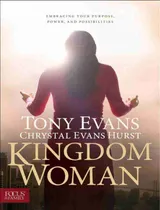
Kingdom Woman: Embracing Your Purpose
About the Book
"Fight Like a Girl" by Lisa Bevere is a Christian book that challenges women to embrace their unique God-given strengths and use them to fight against the spiritual battles they face in their lives. The author empowers women to be bold, courageous, and confident in their identity as daughters of God, inspiring them to fight for their families, communities, and faith with strength and grace.
Steven Curtis Chapman
 Steven Curtis Chapman is an American Christian musician, singer, song writer, record producer, actor, author and social activist. He is the only artist in the history of music to have won 56 Gospel Music Association Dove Awards and is also a proud receiver of 5 Grammy Awards. His music is known for being a unique cross between country music, soft rock and orchestrated pop, which made him a prominent artist in the contemporary Christian music circuit of the 1980s. Chapman grew up in a humble environment where he found his calling for music, owing to his father’s inclination towards country music. He learnt to play instruments like guitar and piano just by hanging around in his father’s music store, listening to him play along with his friends. He took up music seriously when he moved to Nashville and got recognized by Sparrow Records, a company he stayed with for a long period in his career. He has released 19 studio albums and has sold over 10 million albums until now. Chapman is a family oriented person just like his father and has a big family comprising of his wife Mary Beth and 3 biological and 2 adopted children. He is a vocal advocate for adoption and has worked socially to eradicate the problem of youth violence.
Childhood & Early Life
Steven Curtis Chapman was born on November 21, 1962 in Paducah, Kentucky, to Herb and Judy Chapman. His father was a country singer and songwriter, who turned down opportunities to become a successful singer to concentrate on his family. His mother was a stay-at-home mom.
His father owned a music store, a business he managed from his basement and used to play music with his friends. Such creative environment at home influenced Chapman’s life from very early on and he bought his first guitar at 6.
Chapman joined as a pre-med student at Georgetown College in Kentucky but after few semesters he moved to Anderson College, Indiana. But he ultimately dropped the idea of studying and went to Nashville to pursue his first love, music.
During 1980s, he wrote a song ‘Built to Last’, which gained huge popularity after getting recorded by a gospel group ‘The Imperials’. The success of the song fetched Chapman a songwriting deal with Sparrow Records.
Career
Chapman’s first official album ‘First Hand’ was released in 1987. The album was an instant hit with singles like ‘Weak Days’ and topped at number 2 on the Contemporary Christian Music chart. The album had a mix of country music with soft rock and pop.
In 1988, following the success of his first album, Chapman released ‘Real Life Conversations’. Its hit single ‘His Eyes’ received the ‘Contemporary Recorded Song of the Year’ award from the ‘Gospel Music Association’. He co-wrote it with James Isaac Elliot.
After a few years, he made a swift turn to mainstream music with his album ‘The Great Adventure’ in 1992. It earned him two Grammy awards for the album and for the title song of the album.
After gaining consistent success with albums like ‘Heaven in the Real World (1994), ‘Signs of Life (1996) and ‘Speechless (1999), Chapman’s next great album ‘Declaration’ came out in 2001, for which he toured 70 cities.
In 2003, ‘All About Love’ was released and it ranked at Top 15 on the Christian Music charts. It was released under Sparrow Records and Chapman very humbly credited his wife Mary Beth for being the inspiration for his album.
‘All Things New’ was released in 2004 and the album added another Grammy to Chapman’s proud award collection. This time he received it in the category of Best Pop/Contemporary Gospel Album. It was also nominated for the Dove Award.
In 2005, ‘All I Really Want for Christmas’ was released, which was Chapman’s another successful Christmas album after ‘The Music of Christmas’. It had traditional holiday tunes and favorites like ‘Go Tell It on the Mountain’ and Silver Bells’.
Chapman took his music to greater levels by taking his concert to South Korea for the U.S. troops who were serving there in 2006. It was the first Christian concert that ever performed for the American army in that country.
In 2007, he released ‘This Moment’ which included hit singles like ‘Cinderella’, for which he was chosen for WOW Hits 2009. He also went on his ‘Winter Jam’ tour and took his sons’, Caleb and Will’s band along.
‘Beauty Will Rise’, Chapman’s seventeenth album, was released in 2009. It is said that he wrote the songs of the album after getting inspired by his daughter Maria Sue’s sad and untimely demise. It included songs like ‘Meant to Be’ and ‘Re:creation’.
In 2012, Chapman finally parted ways with Sparrow Records, the record company that he remained loyal to for so many years. He was signed on by Sony’s Provident Label Group and came out with a Christmas album called ‘JOY’.
‘The Glorious Unfolding’ was released in 2013 under Reunion Records and it peaked on number 27 on the Billboard 200 and was number 1 Top Christian Album. The album was produced by Chapman himself and Brent Milligan.
Major Works
Chapman’s ‘The Great Adventure’ in 1992 was a turning point in his musical career because until now he was making soft and contemporary country music but with ‘The Great Adventure’ he targeted the mainstream audience and tasted huge commercial success for the first time.
Awards & Achievements
Chapman is the winner of five Grammy awards for albums like ‘For the Sake of the Call’ ‘The Great Adventure’ ‘The Live Adventure’, ‘Speechless’ and ‘All Things New’. He has also received 56 Gospel Music Association Dove Awards, more than any other artist.
Personal Life & Legacy
Chapman got married to Mary Beth in 1984 after they first met at Anderson University in Indiana. They have three biological children: Emily, Caleb and Will and three adopted children: Shaohannah, Stevey and Maria, together.
In 2008, Chapman’s youngest son Will ran over his car by accident on his adopted daughter Maria Sue Chunxi Chapman. She was running towards him to meet him but he did not see her and she was pronounced dead on arrival at the hospital.
Trivia
Chapman’s wife Mary Beth Chapman has written and released a book about losing her youngest daughter called ‘Choosing to SEE: A Journey of Struggle and Hope’.
Chapman and his wife have written three children's books with adoption themes: ‘Shaoey And Dot: Bug Meets Bundle’ (2004), ‘Shaoey and Dot: The Christmas Miracle’ (2005), and ‘Shaoey and Dot: A Thunder and Lightning Bug Story’ (2006).
He has received an Honorary Doctorate of Music from Anderson University.
Steven Curtis Chapman is an American Christian musician, singer, song writer, record producer, actor, author and social activist. He is the only artist in the history of music to have won 56 Gospel Music Association Dove Awards and is also a proud receiver of 5 Grammy Awards. His music is known for being a unique cross between country music, soft rock and orchestrated pop, which made him a prominent artist in the contemporary Christian music circuit of the 1980s. Chapman grew up in a humble environment where he found his calling for music, owing to his father’s inclination towards country music. He learnt to play instruments like guitar and piano just by hanging around in his father’s music store, listening to him play along with his friends. He took up music seriously when he moved to Nashville and got recognized by Sparrow Records, a company he stayed with for a long period in his career. He has released 19 studio albums and has sold over 10 million albums until now. Chapman is a family oriented person just like his father and has a big family comprising of his wife Mary Beth and 3 biological and 2 adopted children. He is a vocal advocate for adoption and has worked socially to eradicate the problem of youth violence.
Childhood & Early Life
Steven Curtis Chapman was born on November 21, 1962 in Paducah, Kentucky, to Herb and Judy Chapman. His father was a country singer and songwriter, who turned down opportunities to become a successful singer to concentrate on his family. His mother was a stay-at-home mom.
His father owned a music store, a business he managed from his basement and used to play music with his friends. Such creative environment at home influenced Chapman’s life from very early on and he bought his first guitar at 6.
Chapman joined as a pre-med student at Georgetown College in Kentucky but after few semesters he moved to Anderson College, Indiana. But he ultimately dropped the idea of studying and went to Nashville to pursue his first love, music.
During 1980s, he wrote a song ‘Built to Last’, which gained huge popularity after getting recorded by a gospel group ‘The Imperials’. The success of the song fetched Chapman a songwriting deal with Sparrow Records.
Career
Chapman’s first official album ‘First Hand’ was released in 1987. The album was an instant hit with singles like ‘Weak Days’ and topped at number 2 on the Contemporary Christian Music chart. The album had a mix of country music with soft rock and pop.
In 1988, following the success of his first album, Chapman released ‘Real Life Conversations’. Its hit single ‘His Eyes’ received the ‘Contemporary Recorded Song of the Year’ award from the ‘Gospel Music Association’. He co-wrote it with James Isaac Elliot.
After a few years, he made a swift turn to mainstream music with his album ‘The Great Adventure’ in 1992. It earned him two Grammy awards for the album and for the title song of the album.
After gaining consistent success with albums like ‘Heaven in the Real World (1994), ‘Signs of Life (1996) and ‘Speechless (1999), Chapman’s next great album ‘Declaration’ came out in 2001, for which he toured 70 cities.
In 2003, ‘All About Love’ was released and it ranked at Top 15 on the Christian Music charts. It was released under Sparrow Records and Chapman very humbly credited his wife Mary Beth for being the inspiration for his album.
‘All Things New’ was released in 2004 and the album added another Grammy to Chapman’s proud award collection. This time he received it in the category of Best Pop/Contemporary Gospel Album. It was also nominated for the Dove Award.
In 2005, ‘All I Really Want for Christmas’ was released, which was Chapman’s another successful Christmas album after ‘The Music of Christmas’. It had traditional holiday tunes and favorites like ‘Go Tell It on the Mountain’ and Silver Bells’.
Chapman took his music to greater levels by taking his concert to South Korea for the U.S. troops who were serving there in 2006. It was the first Christian concert that ever performed for the American army in that country.
In 2007, he released ‘This Moment’ which included hit singles like ‘Cinderella’, for which he was chosen for WOW Hits 2009. He also went on his ‘Winter Jam’ tour and took his sons’, Caleb and Will’s band along.
‘Beauty Will Rise’, Chapman’s seventeenth album, was released in 2009. It is said that he wrote the songs of the album after getting inspired by his daughter Maria Sue’s sad and untimely demise. It included songs like ‘Meant to Be’ and ‘Re:creation’.
In 2012, Chapman finally parted ways with Sparrow Records, the record company that he remained loyal to for so many years. He was signed on by Sony’s Provident Label Group and came out with a Christmas album called ‘JOY’.
‘The Glorious Unfolding’ was released in 2013 under Reunion Records and it peaked on number 27 on the Billboard 200 and was number 1 Top Christian Album. The album was produced by Chapman himself and Brent Milligan.
Major Works
Chapman’s ‘The Great Adventure’ in 1992 was a turning point in his musical career because until now he was making soft and contemporary country music but with ‘The Great Adventure’ he targeted the mainstream audience and tasted huge commercial success for the first time.
Awards & Achievements
Chapman is the winner of five Grammy awards for albums like ‘For the Sake of the Call’ ‘The Great Adventure’ ‘The Live Adventure’, ‘Speechless’ and ‘All Things New’. He has also received 56 Gospel Music Association Dove Awards, more than any other artist.
Personal Life & Legacy
Chapman got married to Mary Beth in 1984 after they first met at Anderson University in Indiana. They have three biological children: Emily, Caleb and Will and three adopted children: Shaohannah, Stevey and Maria, together.
In 2008, Chapman’s youngest son Will ran over his car by accident on his adopted daughter Maria Sue Chunxi Chapman. She was running towards him to meet him but he did not see her and she was pronounced dead on arrival at the hospital.
Trivia
Chapman’s wife Mary Beth Chapman has written and released a book about losing her youngest daughter called ‘Choosing to SEE: A Journey of Struggle and Hope’.
Chapman and his wife have written three children's books with adoption themes: ‘Shaoey And Dot: Bug Meets Bundle’ (2004), ‘Shaoey and Dot: The Christmas Miracle’ (2005), and ‘Shaoey and Dot: A Thunder and Lightning Bug Story’ (2006).
He has received an Honorary Doctorate of Music from Anderson University.
God Can Meet Us in the Ashes
Strict practitioners would not have approved of my methods, but on one long ago mid-winter Wednesday, I smeared ashes on the foreheads of my two preschoolers and myself. An offering of the hardwood that had heated our home the day before, these ashes were not “ceremonially correct” in any way. At the time, I did not know that traditional Ash Wednesday ashes come from the remains of Palm Sunday palms. I did not even know about the forty days of Lent to follow. However, I did know about sin — my own and my children’s. We were in “time out” season with one of our sons. At our wits’ end, we had exhausted Dr. Dobson, Elisabeth Elliot, and every parenting resource available in the nineties. “Why is it so hard to be good?” our little Dobson-buster would ask. His younger brother’s eyes would fill with tears whenever they were caught in collaborative naughtiness. In this parenting pressure cooker, maternal apologies had become a daily occurrence. I was hoping to model repentance — while at the same time atoning for sharp words and a short fuse. “I was wrong; please forgive me” were the words through which my sons were learning that their mother had not outgrown the struggle against sin. Ash Wednesday gives Christians an opportunity to grow in our understanding of where to take that struggle. Reclaiming Lent for Christ Historically, our earliest Protestant ancestors revolted against the idea of Lenten practices, and with good reason. In the pre-Reformation mind, penitence, ashes, and self-denial had become ends in themselves. Gradually, however, a biblical understanding of lament has re-entered Christian orthodoxy, anchored in an embrace of our fallen-ness. Ashes on the forehead rightly represent our need to “repent in dust and ashes” (Job 42:5–6), and our identity as “a people of unclean lips [who] dwell in the midst of a people of unclean lips” (Isaiah 6:5). Jesus pronounced a blessing upon those who recognize their poverty of spirit and mourn the effects of sin on their life and in the world (Matthew 5:3–4). Grounded in gospel truth that prompts genuine penitence without crippling guilt and deep conviction without devastating shame, Ash Wednesday invites the believer to a renewed awe of our great salvation. While there is no merit in the wearing of ashes, a season of mourning leading up to Easter may actually enhance our celebration of Resurrection Sunday. A Wednesday to Teach In my challenging season of parenting, Ash Wednesday became a visual aid, a teaching tool to reassure my young sons that our sin does not signal the end of God’s love for us. In our home, hymns around the breakfast table always matched the season, and one year, we learned all four verses of a “cross hymn” in the weeks leading up to Easter. Rich hymns of the faith offer deep gospel truth that requires explanation (but not dilution) for little singers: When I survey the wondrous cross On which the Prince of Glory died, All the vain things that charm me most I sacrifice them to His blood. The vain-ness of the “vain things” Isaac Watts wrote about becomes abundantly clear when we remember that nothing lasts forever. “Remember that you are dust” is the lyric of Ash Wednesday. God made us from dust, and our bodies do not live forever. This is a dying world we inhabit: everything from goldfish to grandfathers eventually stops living. And we mourn the loss. Without becoming morbid or frightening, we can prepare our children for the inevitability of death by putting it in the context of the gospel. Thomas á Kempis prescribed a regular pondering of and preparation for death as a route to happiness. Author Gary Thomas suggests that we present-day believers ought to join á Kempis in allowing the reality of death to act “like a filter, helping us to hold on to the essential and let go of the trivial.” For believers, the “essential” is the eternal, and the eternal comes to us through the cross. The paradox of death leading to rebirth only appears to be a contradiction. All of Christ’s gifts are given to us through death — his death. And it will only be through a different death — our death — that we will finally receive the fullness of life that Jesus died to impart. A Wednesday to Remember My sons and I stood before a mirror together, the three of us with our smudged foreheads. We talked about our struggle to obey God and our sadness over sin — the sin that causes mayhem in our home, hurt feelings between brothers, and, worst of all, separation from a God who loves us. When a little boy is struggling with disobedience, even as a preschooler, he already feels the grit and grind of life on a fallen planet. He may not be able to comprehend sin’s cosmic scale: “For the creation was subjected to futility, not willingly, but because of him who subjected it, in hope. . .” (Romans 8:20). But he is already well-acquainted with the collective groaning, and can love the truth about the hope of our future deliverance from the struggle: “. . . that the creation itself will be set free from its bondage to corruption and obtain the freedom of the glory of the children of God” (Romans 8:21). Reading selected, age-appropriate portions of the crucifixion story from Luke 22 and thinking about Jesus’s willingness to endure the weight of all the sins of the entire world on his body provides a focus for the wearing of our ashes as a symbol of our grief — mourning that we have sinned and caused division from God and sadness over the suffering Jesus endured when he died in our place. A Wednesday to Rejoice If good behavior is all I have to bring to Jesus, he cannot help me. The warm welcome of the gospel on a frigid day in early spring takes into account a little boy’s hopelessness in the face of temptation. Our sin does not signal the end of our relationship with God. It’s a beginning, for it turns out that weakness is a powerful claim upon divine mercy. Learning to hate sin at a young age, to war against it, and to receive God’s forgiveness is a celebratory milestone. There is a reason to rejoice because of Christ’s obedience to all that God commanded. Then, his love in paying the penalty for our failure to obey gives us a reason for hope, even against the backdrop of my own parenting fiascos and my sons’ serial naughtiness. God knows well the stuff we are made of. “He remembers that we are dust” (Psalm 103:14). As a loving heavenly Father, he longs to supply every need for righteous living — in fact it is only his righteousness that will suffice. This orientation provides a solid foundation for a lifelong relationship built on the assurance that God’s purposes will not be thwarted by my sin. He delights to meet me and my children in the ashes. Article by Michele Morin