

Others like the true measure of a woman Features >>

The Well-Watered Woman

The Resolution For Women

The Proverbs 31 Woman

The Daughters Of Philip

Esther: The Beauty Of Courageous Submission

The Confident Woman: Start Today Living Boldly And Without Fear

A Jewel In His Crown: Rediscovering Your Value As A Woman Of Excellence

Girls With Swords

Woman To Woman

Kingdom Woman: Embracing Your Purpose
About the Book
"The True Measure of a Woman" by Lisa Bevere is a Christian book that explores what it means to be a woman of God. Bevere challenges readers to look beyond society's definitions of success and beauty, and instead focus on cultivating inner qualities such as strength, character, and wisdom. Through personal anecdotes and biblical teachings, she encourages women to embrace their unique purpose and identity in Christ. Ultimately, Bevere argues that the true measure of a woman is found in her relationship with God and her commitment to living out His calling on her life.
Kenneth E. Hagin
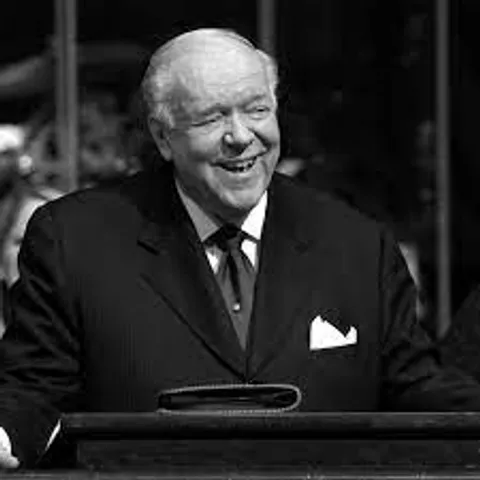 Rev. Kenneth Erwin Hagin was born on Aug. 20, 1917, in McKinney, Texas. Rev. Hagin was sickly as a child, suffering from a deformed heart and an incurable blood disease. He was not expected to live and became bedfast at age 15. In April 1933 during a dramatic conversion experience, he reported dying three times in 10 minutes, each time seeing the horrors of hell and then returning to life.
In August 1934, Rev. Hagin was miraculously healed, raised off a deathbed by the power of God and the revelation of faith in God’s Word. Jesus appeared to Rev. Hagin eight times over the next several years in visions that changed the course of his ministry. In 1967, he began a regular radio broadcast that continues today as Rhema for Today.
In 1968 Rev. Hagin published the first issues of The Word of Faith. That magazine, now produced nine times a year, has a circulation of over 200,000. The publishing outreach he founded, Faith Library Publications, has circulated worldwide more than 75 million copies of books by Rev. Hagin, Kenneth W. Hagin, Lynette Hagin, Craig W. Hagin, and several other authors. Faith Library Publications also has produced millions of audio and video teachings.
Other outreaches of Kenneth Hagin Ministries include Rhema Praise, a weekly television broadcast hosted by Revs. Kenneth and Lynette Hagin; Rhema Correspondence Bible School; Rhema Alumni Association; Rhema Ministerial Association International; the Rhema Prayer and Healing Center; and the Rhema prison ministry.
In 1974 Rev. Hagin founded what is now Rhema Bible Training College. The school has campuses all over the world and continues to expand.
Until shortly before his death, Rev. Hagin continued to travel and teach throughout the United States and into Canada conducting All Faiths’ Crusades and other special meetings.
Known as the “father of the modern faith movement,” Rev. Hagin was a dynamic preacher, teacher, and prophet. His teachings and books are filled with vivid stories that show God’s power and truth working in his life and the lives of others. He will be remembered not only as a great minister but as a great family man—for his family was his heart. He was there at every milestone ready to talk, to answer, to pray. He was a man whose belly laugh filled the room at the sight of one of his grandchildren or great-grandchildren.
Rev. Kenneth Erwin Hagin was born on Aug. 20, 1917, in McKinney, Texas. Rev. Hagin was sickly as a child, suffering from a deformed heart and an incurable blood disease. He was not expected to live and became bedfast at age 15. In April 1933 during a dramatic conversion experience, he reported dying three times in 10 minutes, each time seeing the horrors of hell and then returning to life.
In August 1934, Rev. Hagin was miraculously healed, raised off a deathbed by the power of God and the revelation of faith in God’s Word. Jesus appeared to Rev. Hagin eight times over the next several years in visions that changed the course of his ministry. In 1967, he began a regular radio broadcast that continues today as Rhema for Today.
In 1968 Rev. Hagin published the first issues of The Word of Faith. That magazine, now produced nine times a year, has a circulation of over 200,000. The publishing outreach he founded, Faith Library Publications, has circulated worldwide more than 75 million copies of books by Rev. Hagin, Kenneth W. Hagin, Lynette Hagin, Craig W. Hagin, and several other authors. Faith Library Publications also has produced millions of audio and video teachings.
Other outreaches of Kenneth Hagin Ministries include Rhema Praise, a weekly television broadcast hosted by Revs. Kenneth and Lynette Hagin; Rhema Correspondence Bible School; Rhema Alumni Association; Rhema Ministerial Association International; the Rhema Prayer and Healing Center; and the Rhema prison ministry.
In 1974 Rev. Hagin founded what is now Rhema Bible Training College. The school has campuses all over the world and continues to expand.
Until shortly before his death, Rev. Hagin continued to travel and teach throughout the United States and into Canada conducting All Faiths’ Crusades and other special meetings.
Known as the “father of the modern faith movement,” Rev. Hagin was a dynamic preacher, teacher, and prophet. His teachings and books are filled with vivid stories that show God’s power and truth working in his life and the lives of others. He will be remembered not only as a great minister but as a great family man—for his family was his heart. He was there at every milestone ready to talk, to answer, to pray. He was a man whose belly laugh filled the room at the sight of one of his grandchildren or great-grandchildren.
what would judas do
Wednesday plants the suicidal seed of Holy Week: betrayal. Before there could be a Garden, there had to be a seed — the inception of insurrection. Jesus gloriously paid for our redemption with blood, but his blood was murderously bought with money. The promised Savior sold for just thirty pieces of silver. Jesus had taught his disciples, including the one who would betray him, “No one can serve two masters, for either he will hate the one and love the other, or he will be devoted to the one and despise the other. You cannot serve God and money” (Matthew 6:24). No one. Not Judas. Not you or me. The Love of Money Murdered Jesus The Pharisees loved money (Luke 16:14), feared men (Matthew 26:5), and hated Jesus (Matthew 26:4). That formula may be lived out before you more than you realize. The love of money often looks merely practical. The fear of men can hide behind masks. But the Bible is clear: If you love money and fear men, you cannot love God or escape hell (Luke 16:13; John 5:44) — and you become a card-carrying member of the crowd who crucified the Author of life (Acts 3:15). The cross — that horrifying drama of hatred — was only a symptom of the Pharisees’ craving for money, approval, and power. It was as if they bought a billboard to advertise their love for money, and set on a hill for all to see. But they would never do something so obvious. What would the people say? They “feared the people” (Luke 22:2). In fact, the people’s love for Jesus was half the reason the religious leaders hated him so much. The authorities were cowards with cravings. They had to find a way to kill him quietly (Matthew 26:3–5). They had to find a way to murder an innocent man without losing any esteem or influence. First they needed an insider — someone close enough to Jesus to betray him, but far enough from Jesus to betray him. In other words, they needed a perp dressed like the Pope. “Then one of the twelve, whose name was Judas Iscariot, went to the chief priests and said, ‘What will you give me if I deliver him over to you?’” (Matthew 26:14–15). “When they heard it, they were glad and promised to give him money” (Mark 14:11). They found their man, someone who loved money as much as they did, someone who was willing to offend and ostracize even his closest friends for a pay day. The market had opened against the Messiah, and Judas was there to profit. As Randy Alcorn writes, “Satan works on the assumption that every person has a price. Often, unfortunately, he is right. Many people are willing to surrender themselves and their principles to whatever god will bring them the greatest short-term profit” ( Money, Possessions, and Eternity , 41). Judas sold out the Savior, and for just thirty pieces of silver (Matthew 26:15). The Love of Money Makes a Name If you love money — value money and what it can buy above all else — you cannot love God. You will hate him, maybe quietly or privately and hypocritically — but you will hate him. And that hatred will mark you and follow you everywhere. That kind of divine rejection and betrayal renames a person. It defines you. For example, look at how Judas is talked about in the Gospels. “ . . . Simon the Zealot, and Judas Iscariot, who betrayed him .” (Matthew 10:4) “Judas, who would betray him , answered, ‘Is it I, Rabbi?’ He said to him, ‘You have said so.’” (Matthew 26:25) “ . . . and Judas Iscariot, who betrayed him .” (Mark 3:19) “ . . . and Judas the son of James, and Judas Iscariot, who became a traitor .” (Luke 6:16) “But Judas Iscariot, one of his disciples ( he who was about to betray him ), said,” (John 12:4). “He spoke of Judas the son of Simon Iscariot, for he, one of the Twelve, was going to betray him .” (John 6:71) “Judas, who betrayed him , was standing with them.” (John 18:5) Instead of being a faithful disciple guiding people to follow Jesus, he “became a guide to those who arrested Jesus” (Acts 1:16). What will be the testimony of your life — of your spending and giving? Will it be clear to others that you used what God had given you to lead others to his Son, or will it be plain that you surrendered to the gods of the material and drew people away from Jesus? Did you guide the blind to sight, or help blind them to death? The Love of Money Leads to Regret Judas’s affair did not fair so well for him. “Then when Judas, his betrayer, saw that Jesus was condemned, he changed his mind and brought back the thirty pieces of silver to the chief priests and the elders” (Matthew 27:3). Drowning in shame, he screamed for a refund. Confronted with the horror of his exchange, the money had lost its allure. What have I done?! What awful trade have I made?! Take it all back, and give me Jesus! There was no turning back for Judas, no return policy on this rejection. He killed himself in the overwhelming waves of regret and remorse (Matthew 27:5). However, there is time to turn back for you. Luke quotes Jesus for the greedy today, “Take care, and be on your guard against all covetousness, for one’s life does not consist in the abundance of his possessions” (Luke 12:15). When life begins to seem like one long mission to make more money, someone is lying to you. Wake up and give back the silver before it crucifies you. John Piper writes, “When you are dying . . . money walks away from you. It abandons you. It will not go with you to help you. And nothing that you bought with it can go either” ( Money, Sex, and Power , 65). And again later, “[The love of money] substitutes a dollar bill for the divine” (71). The love of money leads only to regret and loss. Reject Judas, Receive Joy Ask yourself what Judas would do in your situation. How would he feel about your current income, shopping habits, and retirement savings? How uneasy would he be about your generosity? Does your budget begin to look like his, just two thousand years later? Refuse to follow Judas in his betrayal, and reject all that money promises to be in place of God. Find your security and satisfaction in something supernatural, eternal, and free. Piper goes on, reflecting on Paul in Philippians 4:11–13, When the stock market goes up or he gets a bonus, he says, I find Jesus more precious and valuable and satisfying than my increasing money . And when the stock market goes down or he faces a pay cut, he says, I find Jesus more precious and valuable and satisfying than all that I have lost . The glory and beauty and worth and preciousness of Christ is the secret of contentment that keeps money from controlling him. ( Money, Sex, and Power , 65) When our joy is no longer in our money but rather is in God . . . our money becomes the visible extension of joy in God, directed toward others. . . . Treasuring God above all things turns money into the currency of worship and love. ( Money, Sex, and Power , 123) Instead of surrendering to our cravings for more, let’s pour ourselves, every penny, into telling the world God is our treasure — right now, later in retirement, and forever in eternity — and spending whatever it takes to bring others into that joy and security with us.