
Others like the true nature of god Features >>





-160.webp)
About the Book
"The True Nature Of God" by Andrew Wommack explores the character and attributes of God, emphasizing his love, grace, and desire to have a relationship with his children. Wommack challenges traditional beliefs that portray God as harsh or punitive, offering a fresh perspective on the nature of God as a loving father who wants the best for his creation. He encourages readers to deepen their understanding of God's true nature and experience the freedom and joy that comes from knowing and walking in relationship with him.
A.W. Tozer (Aiden Wilson Tozer)
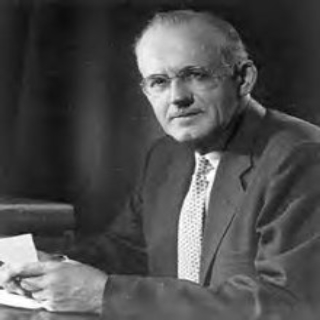 Early life
Tozer hailed from a tiny farming community in western La Jose, Pennsylvania. He was converted to Christianity as a teenager in Akron, Ohio: While on his way home from work at a tire company, he overheard a street preacher say, "If you don't know how to be saved ... just call on God, saying, 'Lord, be merciful to me a sinner.'" Upon returning home, he climbed into the attic and heeded the preacher's advice.
Pastor
In 1919, five years after his conversion and without formal education in Christian theology, Tozer accepted an offer to serve as pastor of his first church. That began 44 years of ministry associated with the Christian and Missionary Alliance (C&MA), a Protestant Evangelical denomination, 33 of them serving as a pastor in several different congregations (his first, a small storefront church in Nutter Fort, West Virginia). Later, he served thirty years (1928 to 1959) as the pastor of Southside Alliance Church in Chicago; the final years of his life he spent as pastor of Avenue Road Church in Toronto, Ontario, Canada. Observing contemporary Christian living, Tozer felt that the church was on a dangerous course toward compromising with "worldly" concerns.
Born into poverty, Tozer was self-educated and taught himself what he missed in high school and university.
Author
Tozer began writing in 1931 for the denominational magazine of the Christian and Missionary Alliance, Alliance Weekly (now Alliance Life), which became the platform from which his writing career emerged. He later wrote the monthly column “There’s Truth in It” (1936–37) and “A Word in Season” (1944–46). In May 1950, he became the editor of the Alliance Weekly, a position he filled until his death in 1963.
At the urging of David W. Fant, publications secretary of the C&MA, Tozer wrote biographies of A. B. Simpson (1943) and Robert A. Jaffray (1947). It was the publication of his third book, The Pursuit of God (1948), that made Tozer a household name among evangelicals. In addition to the 12 books he published in his lifetime, more than 40 other books have been compiled from his magazine features, editorials, and transcribed sermons.
During his lifetime, Tozer’s works were published by Christian Publications, Inc., the denominational press operated by the C&MA. The publishing house declared bankruptcy in 2006 and was purchased by WingSpread Publishers of Camp Hill, Pennsylvania.[8] In November 2013, Moody Publishers acquired Wingspread from parent company Zur Ltd., a transaction that included more than 60 Tozer books and pamphlets. Some of Tozer’s works are now in the public domain and have been issued by multiple publishers.
Personal life
Tozer had seven children, six sons and a daughter. Living a simple and non-materialistic lifestyle, he and his wife, Ada Cecelia Pfautz, never owned a car, preferring bus and train travel. Even after becoming a well-known Christian author, Tozer signed away much of his royalties to those who were in need.
Prayer was of vital personal importance for Tozer. "His preaching as well as his writings were but extensions of his prayer life," comments his biographer, James L. Snyder, in the book In Pursuit of God: The Life Of A.W. Tozer. "He had the ability to make his listeners face themselves in the light of what God was saying to them," writes Snyder.
Death and legacy
Tozer died on May 13, 1963, after suffering a heart attack. He was buried in Chicago, and later the family had his remains reinterred at Ellet Cemetery, Akron, Ohio. A simple marker reads: A. W. Tozer—A Man of God. The Alliance Weekly ran a memorial issue with numerous tributes and excerpts. The same issue also featured “God’s Greatest Gift to Man," a transcription of his final sermon. A few months prior to his death, Tozer had submitted the manuscript to The Christian Book of Mystical Verse, which was released in 1964 as his final book. His official publisher, Christian Publications, released many titles after his death, based on his magazine articles and sermon transcriptions. These continue in print with Moody Publishers. Several other publishers have released his public domain works.
In 2000, The Pursuit of God was named to Christianity Today’s list of 100 “Books of the Century.” In 2006, Knowledge of the Holy was named in “The Top 50 Books That Have Shaped Evangelicals.” Contemporary Christian music artist Lauren Barlow of BarlowGirl later published a compilation of stories told by 59 artists, writers, and leaders about A.W. Tozer’s personal inspiration.
Early life
Tozer hailed from a tiny farming community in western La Jose, Pennsylvania. He was converted to Christianity as a teenager in Akron, Ohio: While on his way home from work at a tire company, he overheard a street preacher say, "If you don't know how to be saved ... just call on God, saying, 'Lord, be merciful to me a sinner.'" Upon returning home, he climbed into the attic and heeded the preacher's advice.
Pastor
In 1919, five years after his conversion and without formal education in Christian theology, Tozer accepted an offer to serve as pastor of his first church. That began 44 years of ministry associated with the Christian and Missionary Alliance (C&MA), a Protestant Evangelical denomination, 33 of them serving as a pastor in several different congregations (his first, a small storefront church in Nutter Fort, West Virginia). Later, he served thirty years (1928 to 1959) as the pastor of Southside Alliance Church in Chicago; the final years of his life he spent as pastor of Avenue Road Church in Toronto, Ontario, Canada. Observing contemporary Christian living, Tozer felt that the church was on a dangerous course toward compromising with "worldly" concerns.
Born into poverty, Tozer was self-educated and taught himself what he missed in high school and university.
Author
Tozer began writing in 1931 for the denominational magazine of the Christian and Missionary Alliance, Alliance Weekly (now Alliance Life), which became the platform from which his writing career emerged. He later wrote the monthly column “There’s Truth in It” (1936–37) and “A Word in Season” (1944–46). In May 1950, he became the editor of the Alliance Weekly, a position he filled until his death in 1963.
At the urging of David W. Fant, publications secretary of the C&MA, Tozer wrote biographies of A. B. Simpson (1943) and Robert A. Jaffray (1947). It was the publication of his third book, The Pursuit of God (1948), that made Tozer a household name among evangelicals. In addition to the 12 books he published in his lifetime, more than 40 other books have been compiled from his magazine features, editorials, and transcribed sermons.
During his lifetime, Tozer’s works were published by Christian Publications, Inc., the denominational press operated by the C&MA. The publishing house declared bankruptcy in 2006 and was purchased by WingSpread Publishers of Camp Hill, Pennsylvania.[8] In November 2013, Moody Publishers acquired Wingspread from parent company Zur Ltd., a transaction that included more than 60 Tozer books and pamphlets. Some of Tozer’s works are now in the public domain and have been issued by multiple publishers.
Personal life
Tozer had seven children, six sons and a daughter. Living a simple and non-materialistic lifestyle, he and his wife, Ada Cecelia Pfautz, never owned a car, preferring bus and train travel. Even after becoming a well-known Christian author, Tozer signed away much of his royalties to those who were in need.
Prayer was of vital personal importance for Tozer. "His preaching as well as his writings were but extensions of his prayer life," comments his biographer, James L. Snyder, in the book In Pursuit of God: The Life Of A.W. Tozer. "He had the ability to make his listeners face themselves in the light of what God was saying to them," writes Snyder.
Death and legacy
Tozer died on May 13, 1963, after suffering a heart attack. He was buried in Chicago, and later the family had his remains reinterred at Ellet Cemetery, Akron, Ohio. A simple marker reads: A. W. Tozer—A Man of God. The Alliance Weekly ran a memorial issue with numerous tributes and excerpts. The same issue also featured “God’s Greatest Gift to Man," a transcription of his final sermon. A few months prior to his death, Tozer had submitted the manuscript to The Christian Book of Mystical Verse, which was released in 1964 as his final book. His official publisher, Christian Publications, released many titles after his death, based on his magazine articles and sermon transcriptions. These continue in print with Moody Publishers. Several other publishers have released his public domain works.
In 2000, The Pursuit of God was named to Christianity Today’s list of 100 “Books of the Century.” In 2006, Knowledge of the Holy was named in “The Top 50 Books That Have Shaped Evangelicals.” Contemporary Christian music artist Lauren Barlow of BarlowGirl later published a compilation of stories told by 59 artists, writers, and leaders about A.W. Tozer’s personal inspiration.
The Difficult Habit of Quiet
The habit of quiet may be harder today than ever before. Don’t get me wrong: it’s always been hard. The rise and spread of technology, however, tends to crowd out quiet even more. Now that we can carry the whole wide and wild world in our pockets, it’s that much harder to keep the world at bay. Our phones always promise another update to see, image to like, website to visit, game to play, text to read, stream to watch, forecast to monitor, podcast to download, headline to scan, article to skim, score to check, price to compare. That kind of access, and semblance of control, can begin to make quiet moments feel like wasted ones. Who could sit and be still while so much life rushes by? Even if we don’t immediately pick up our phones, we’re often still held captive by them, wondering what new they might hold — what we might be missing. As hard as quiet might be to come by, however, it’s still a life-saving, soul-strengthening habit for any human soul. The God who made this wide and wild world, and who molded our finite and fragile frames, says of us, “In quietness and in trust shall be your strength” (Isaiah 30:15). In days filled with noise, do you still find time to be this kind of strong? Or has stress and distraction slowly eroded your spiritual health? How often do you stop to be quiet? What God Does with Quiet What kind of quietness produces strength? Not all quietness does. We could sell our televisions, give away our phones, move to the countryside, and still be as weak as ever. No, “in quietness and in trust shall be your strength.” The quiet we need is a quiet filled with God. Quietness becomes strength only when our stillness says that we need him. Be still, and know that I am God. I will be exalted among the nations, I will be exalted in the earth! (Psalm 46:10) This still, trusting quietness defies self-reliance. Quietness can preach reality to our souls like few habits can. It says that he is God, and we are not; he knows all, and we know little; he is strong, and we are weak. Quietness widens our eyes to the bigness of God and the smallness of us. It brings us low enough to see how high and wise and worthy he is. You can begin to see why quietness can be so hard. It’s deeply (sometimes ruthlessly) humbling. For it to say something true and beautiful about God, it first says something true and devastating about us. Our quietness says, “Without him, you can do nothing.” Our refusal to be quiet, on the other hand, says, “I can do a whole lot on my own” — and that feels good to hear. It just robs us of the real strength and help we might have found. God strengthens the quiet with his strength, because quietness turns weakness and neediness into worship (2 Corinthians 12:9–10). We get the strength and help and joy; he gets the glory. But You Were Unwilling The context of Isaiah’s words, however, is not inspiring, but sobering. God says to his people, “In returning and rest you shall be saved; in quietness and in trust shall be your strength.” But you were unwilling . . . (Isaiah 30:15–16) Quietness would have made them strong, but they wouldn’t have it. Assyria was bearing down on Judah, threatening to crush them as it had crushed many before them. And how do God’s people respond? “Ah, stubborn children,” declares the Lord, “who carry out a plan, but not mine, and who make an alliance, but not of my Spirit, that they may add sin to sin; who set out to go down to Egypt, without asking for my direction.” (Isaiah 30:1–2) Even after watching him deliver them so many times before, they cast his plan aside and made their own. They sought help, but not from him. They went back to Egypt (of all places!) and asked those who had enslaved and oppressed them to protect them. And they didn’t even stop to ask what God thought. They did, and did, and did, at every turn refusing to stop, be quiet, and receive the strength and support of God. I would rush to help you, God says, but you were unwilling. You weren’t patient or humble enough to receive my help. “How often do we choose activity over quietness, distraction over meditation, ‘productivity’ over prayer?” Why would they refuse the sovereign help of God? Deep down, we know why. Because they felt safer doing what they could do on their own than they did waiting to see what God might do. How often do we do the same? How often do we choose activity over quietness, distraction over meditation, “productivity” over prayer? How often do we try to solve our problems without slowing down enough to first seek God? Consequences of Avoiding Quiet Self-reliance is, of course, not as productive as it promises to be — at least not in the ways we would want. The people’s refusal to be quiet and ask God for help not only cut them off from his strength, but also invited other painful consequences. First, the sin of self-reliance breeds more sin. Again, God says in verse 1, “‘Ah, stubborn children,’ declares the Lord, ‘who carry out a plan, but not mine, and who make an alliance, but not of my Spirit, that they may add sin to sin.” The more we refuse the strength of God, the more we invite temptations to sin. Quiet keeps us close to God and aware of him. A scarcity of quiet pushes him to the margins of our hearts, making room for Satan to plant and tend lies within us. Second, their refusal to be quiet before God made them vulnerable to irrational fear. Because they fought in their own strength, the Lord says, “A thousand shall flee at the threat of one; at the threat of five you shall flee” (Isaiah 30:17). A lone soldier will send a thousand into a panic. The whole nation will crumble and surrender to just five men. In other words, you will be controlled and oppressed by irrational fears. You’ll run away when no one’s chasing you. You’ll lose sleep when there’s nothing to worry about. And right when you’re about to experience a breakthrough, you’ll despair and give up. Fears swell and flourish as long as God remains small and peripheral. Quiet time with God, however, scatters those fears by enlarging and inflaming our thoughts of him. The weightiest warning, however, comes in verse 13: those who forsake God’s word, God’s help, God’s way invite sudden ruin. “This iniquity shall be to you like a breach in a high wall, bulging out and about to collapse, whose breaking comes suddenly, in an instant.” Confidence in self drove a crack in the strongholds around them — a crack that grew and spread until the walls collapsed on top of them. All because they refused to embrace quiet and trust God. “In quietness and trust would be our strength; in busyness and pride will be our downfall.” For Judah, ruin meant falling into the cruel hands of the Assyrians. The walls will fall differently for us, but fall they will, if we let busyness and noise keep us from dependence. In quietness and trust would be our strength; in busyness and pride will be our downfall. Mercy for the Self-Reliant In the rhythms of our lives, do we make time to be quiet before God? Do we expect God to do more for us while we sit and pray than we can do by pushing through without him? If verse 15 humbles us — “But you were unwilling . . .” — verse 18 should humble us all the more. As Judah hurries and worries and strategizes and plans and recruits help and works overtime, all the while avoiding God, how does God respond to them? What is he doing while they refuse to stop doing and be quiet? Therefore the Lord waits to be gracious to you, and therefore he exalts himself to show mercy to you. For the Lord is a God of justice; blessed are all those who wait for him. (Isaiah 30:18) While we refuse to wait for him, God waits to be gracious to us. He’s not watching to see if he’ll be forced to show us mercy; he wants to show us mercy. The God of heaven, the one before time, above time, and beyond time, waits for us to ask for help. He loves to hear the sound of quiet trust. Blessed — happy — are those who wait for him, who know their need for him, who ask him for help, who find their strength in his strength, who learn to be and stay quiet before him. Article by Marshall Segal