
Others like words Features >>
Plans, Purposes And Pursuits
Six Steps To Excellence In Ministry

The Bible Way To Receive The Holy Spirit

Bible Foods That Heal
The Healing Anointing
The Believer's Authority
The Present-Day Ministry Of Jesus Christ

Seven Vital Steps To Receiving The Holy Spirit
The Life Of Obedience
The Gift Of Prophecy
About the Book
"Words" by Kenneth Hagin delves into the power of words and how they can impact our lives, relationships, and circumstances. Hagin emphasizes the importance of speaking positive, faith-filled words in order to manifest blessings and experience God's promises. The book serves as a practical guide on how to use our words to shape our reality and live a life of abundance and joy.
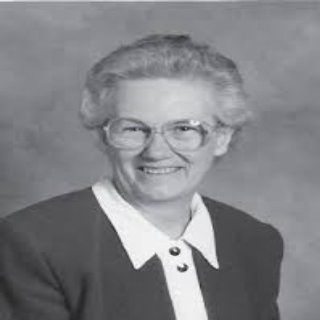
Maria Woodworth-Etter
Maria Woodworth-Etter’s Early life
Maria’s early life was plagued with tragedies. Her father died of sunstroke when she was 11 years old leaving her mother with eight children to provide for. She married at 16 but fought a continual battle with ill-health, losing five of her six children. During her sickness she had visions of children in heaven and the lost suffering in hell.
She promised God, that if He would heal her, she would serve Him completely. She asked God for same apostolic power He gave the disciples and was gloriously baptized in the Holy Spirit. “It felt like liquid fire, and there were angels all around.”
The call to preach
Despite her personal struggles with ‘women in ministry’ and the prevailent hostile attitudes to female preachers, she felt compelled by God to accept the invitation to preach in the United Brethren in Christ (Friends) in 1876 and later associated with the Methodist Holiness church.
Evangelism with signs and wonders
Though simply evangelistic in the early days she was unusually successful and in 1885 supernatural signs began to accompany her ministry. Her ministry resurrected dead churches, brought salvation to thousands of unconverted and encouraged believers to seek a deeper walk with God.
She descibes one of her meetings
She described an 1883 meeting in Fairview, Ohio: “I felt impressed God was going to restore love and harmony in the church..… All present came to the altar, made a full consecration, and prayed for a baptism of the Holy Ghost and fire. That night it came. Fifteen same to the altar screaming for mercy.
Men and women fell and lay like dead. I felt it was the work of God, but did not know how to explain it or what to say. I was a little frightened . . . after lying for two hours all, one after another, sprang to their feet as quick as a flash with shining faces and shouted all over the house. I had never seen such bright conversions or such shouting….
The ministers and old saints wept and praised the Lord …..they said it was the Pentecost power, that the Lord was visiting them in great mercy and power …..(they) experienced visions of heaven and hell, collapsed on the floor as if they’d been shot or had died.” Subsequently, thousands were healed of a wide variety of sicknesses and diseases and many believers, even ministers, received mighty baptisms of the Holy Spirit. She soon became a national phenomenon.
1,000 seater tent
In 1889, she purchased a tent that could seat eight thousand people and set it up in Oakland, California. “The power of God was over all the congregation; and around in the city of Oakland. The Holy Ghost would fall on the people while we were preaching. The multitude would be held still, like as though death was in their midst.
Many of the most intelligent and best dressed men would fall back in their seats, with their hands held up to God. being held under the mighty power of God. Men and women fell, all over the tent, like trees in a storm; some would have visions of God. Most all of them came out shouting the praises of God.”
She declared that if 19th-century believers would meet God’s conditions, as the 120 did on the Day of Pentecost, they would have the same results. “A mighty revival would break out that would shake the world, and thousands of souls would be saved. The displays of God’s power on the Day of Pentecost were only a sample of what God designed should follow through the ages. Instead of looking back to Pentecost, let us always be expecting it to come, especially in these days.”
Her views of Pentecostalism
Initially she had grave concerns about the burgeoning Pentecostal movement, mainly because of some unbalanced teaching and reported extremism. Soon she came to believe it was an authentic move of the Holy Spirit and was enthusiastically welcomed within its ranks. She became both a model and a mentor for the fledgling movement. This association elicited another wave of revival between 1912 and her death in 1924 as she ministered throughout the country and her books were read across the world.
Etter Tabenacle
In 1918, she built Etter Tabernacle as her home church base and affiliated with the Assemblies of God. In her closing years she still ministered with a powerful anointing despite struggling with gastritis and dropsy. On occasion she would be carried to the podium, preach with extraordinary power, then be carried home again!
Her demise
Her health continued to decline and she died on September 16, 1924. She is buried in a grave in Indianapolis next to her daughter and son-in-law. Her inscription reads “Thou showest unto thousands lovingkindness.”
In conclusion
Without doubt Maria Woodworth-Etter was an amazing woman blessed with an astonishing ministry. Rev. Stanley Smith – one of the famous “Cambridge Seven” and for many years a worker with “The China Inland Mission” wrote this about her autobiography:
“I cannot let this opportunity go by without again bringing to the notice of my readers, ‘Acts of the Holy Ghost,’ or ‘Life and Experiences of Mrs. M. B. Woodworth-Etter.’ It is a book I value next to the Bible. In special seasons of waiting on God I have found it helpful to have the New Testament on one side of me and Mrs. Etter’s book on the other; this latter is a present-day record of ‘the Acts’ multiplied.
Mrs. Etter is a woman who has had a ministry of healing since 1885, her call as an evangelist being some years previous to this. I venture to think that this ministry is unparalleled in the history of the Church, for which I give all the glory to the Lord Jesus Christ, as Mrs. Etter would, I know, wish me to do. This ministry should be made known, for the glory of the Triune God and the good of believers.”
We agree and pray that such an anointing will rest upon God’s end-time people so that ‘this Gospel of the Kingdom will be preached in all the world before the end comes!’ Matthew 24:14
Tony Cauchi
Telling the Gospel Through Story
Steve was a house painter from England vacationing at a beach in the Philippines with his family. I happened to be staying at the same resort. One day during a conversation that began to turn toward spiritual things, Steve said, "I've talked to numerous religious leaders but they've never been able to answer my questions satisfactorily. So I've given up on religion and am trying to live a good life." "What were your questions?" I asked. "The main one is, why is the world so unfair? Why is there pain and suffering and why doesn't God, if there is a God, do something about it?" "Could I have a go at sharing something I've learned about these things using a story from the Bible?" I asked. "I don't believe the Bible." "That's no problem. I hope you'll find the story helpful anyway." We started with Genesis 1 and God's intentions for his world. The story concluded, "Then God said, 'Let us make people in our image. He made a man out of the dust of the earth and God breathed his spirit into the man. So Adam became a living being. Later God put Adam to sleep and took one of his ribs and made a wife, Eve, for him. God said, 'Rule over the animals … multiply and fill the earth.' Finally God looked at everything he had made and blessed it. He said, 'It is very good.' On the seventh day God rested from his work because he had completed the work of creation." Soon Steve's two children and his son's girlfriend casually drifted over to listen. I filled them in on the story so far and continued by explaining the beginning of pain and trouble in the world from Genesis 3. I mentioned the story's strange hint of hope when God says to Adam and Eve, "The snake and the descendants of the woman will be at war. The snake will strike her descendant's heel, but one day a descendent will crush the head of the snake." During the discussion one of my listeners said, "I know you're going to say that Jesus is the one coming to crush the snake's head, but how will he do it?" "Can I tell you a few more stories before Jesus?" I replied. "That will make everything clearer." So we continued on through the stories of Abraham, the exodus and the rest of the Old Testament. Each story set up the one that followed it so my audience would understand the nature of the human problem and how desperately we needed a Savior. My listeners peppered me with questions, and we discussed them one by one. Most often I asked them a question in return, and they found themselves answering their own questions based on what they'd already learned. Sometimes I said, "That will be answered in an upcoming story." Finally, after about an hour, we reached the end of the Old Testament. "Come on," they begged. "Don't leave us in suspense. Tell us how Jesus saves!" Outside our open-air dining room, the beach beckoned. It was a perfect day for snorkeling, and this family had come from winter-bound England to play in the sun. Their holiday was almost finished—but today the beach might as well not have existed. We continued through Jesus' birth and ministry. Finally we reached his death and resurrection. "Do you remember what the temple curtain in the Old Testament symbolized?" I asked. "The separation between God and people," said one. "What was the only way people could be forgiven and continue to be friends with God?" "A representative had to prepare himself carefully and then kill a perfect sacrifice and take its blood through the curtain," another responded. "So what did it mean when the temple curtain split from top to bottom just when Jesus died?" They started hesitantly, saying, "I guess it means … that because Jesus died … the barrier between us and God has been dealt with." Then they concluded in a rush, "So we can once again be friends with God." "So Jesus was like that perfect sacrifice," one said. "Yes, but he was also the representative," chimed in another. At last I called an end to the storying before we'd exhausted ourselves and lost the joy of discovery. Two days later as the family was departing, Steve said, "I'm going home to find my Bible. If those religious experts had told me such relevant stories, I would have happily gone to their church and wouldn't have given up searching." How did I get involved with Bible storying? I was a reluctant starter. As a teenager, the child of missionaries, I had heard about chronological Bible storying. My impression was that it was best suited for illiterate tribal peoples. When I became a missionary myself, my context was different. I did church planting with OMF International among working-class people in modern, industrialized southern Taiwan. Nearly everyone could read, although a large portion of the population chose to learn in ways other than via the printed word. I taught the Bible in a wide range of situations, from one-to-one evangelism and discipling to Bible study groups, training seminars and public teaching. I used many stories to illustrate my teaching. Constant feedback and self-evaluation helped improve my teaching, but I never thought to change my basic communication building blocks. God obviously had a different plan! In 2004 I observed a six-hour OMF training seminar in which the leader told stories from Genesis to the ascension. I enjoyed the stories personally, but I still didn't think they suited my style. I was already a reasonable communicator and believed it would be a huge challenge to adapt my teaching style. Simply put, change of this magnitude seemed like too much work. So I learned to tell the creation story with reluctance. The next step was to find someone who would listen to it. I chose a busy photo-developing shop for my first attempt—a decision that, looking back, may not have been wise. I didn't do a particularly good job with the story. And a constant flow of customers meant numerous interruptions. What astounded me was the response of the hearer. She loved the story and wanted to hear more. Suddenly I was no longer having to initiate gospel conversations. Instead people were asking me to tell them about the Bible. The adventure of a lifetime had started. The wonderful thing about storying is that it's far more than a quick telling of the good news. We Christians often want our evangelistic methods to be time-efficient and produce guaranteed results. But evangelism should not be hurried. People who have heard and discussed many stories come to Christ more prepared than those who are evangelized in other ways. In one sense, you could say that storying is "discipling people to conversion." If you're reading this, then you're probably already committed to communicating the gospel in the best way possible. You long to see Jesus glorified, with your family, friends and neighbors part of that crowd rejoicing around the throne (Rev 7:10, 12). Learning to story is worth the investment in time and energy. I often see hope dawning on people's faces as they're trained in this method. They're delighted to discover that they've found a simple, biblical tool almost anyone can learn. If you've been frustrated that people don't seem interested in hearing the gospel, you may be amazed at how well storying works. I've found it to be more fruitful and effective than many other approaches to evangelism. It's a natural, appealing way to communicate the gospel, and once you get started, people actually want to hear more. Storying has great potential to help many people come to know God. Christine Dillon