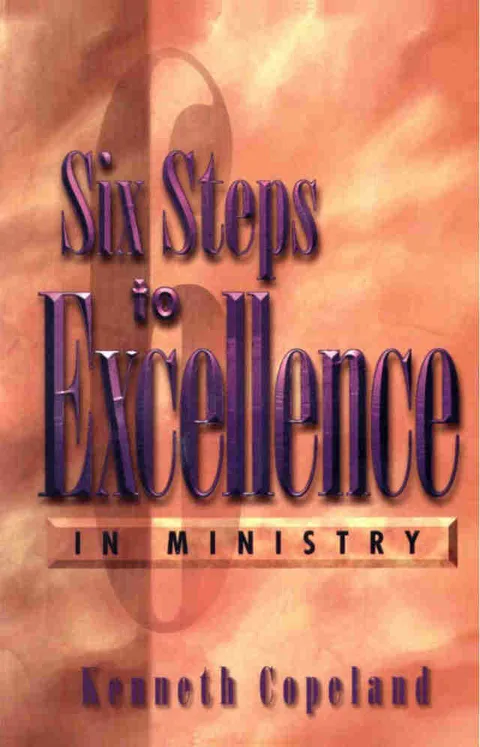

Six Steps To Excellence In Ministry Order Printed Copy
- Author: Kenneth Copeland
- Size: 1.87MB | 72 pages
- |
Others like six steps to excellence in ministry Features >>
Steps To The Anointing
Excellency Of Wisdom
Seven Vital Steps To Receiving The Holy Spirit

Lost And Found - Finding Hope In The Detours Of Life
20 Marching Orders To Fulfil Your Destiny
How Can I Be Filled With The Holy Spirit
Gifts Of The Spirit
-160.webp)
Uprooting The Spirit Of Fear
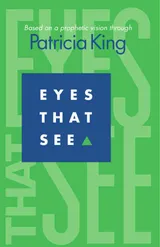
Eyes That See
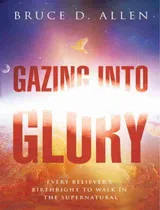
Gazing Into Glory
About the Book
"Six Steps to Excellence in Ministry" by Kenneth Copeland offers practical guidance and insights for individuals seeking to excel in their ministry work. The book outlines six key steps, including developing a strong prayer life, building faith, walking in love, and maintaining consistency in one's ministry efforts. Through a combination of biblical teachings and personal anecdotes, Copeland empowers readers to grow in their spiritual journey and make a lasting impact in their ministry work.
Steven Curtis Chapman
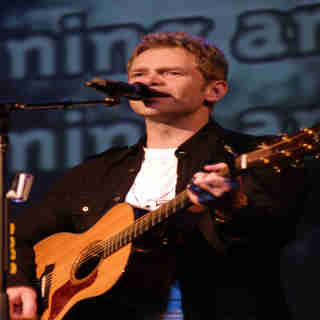 Steven Curtis Chapman is an American Christian musician, singer, song writer, record producer, actor, author and social activist. He is the only artist in the history of music to have won 56 Gospel Music Association Dove Awards and is also a proud receiver of 5 Grammy Awards. His music is known for being a unique cross between country music, soft rock and orchestrated pop, which made him a prominent artist in the contemporary Christian music circuit of the 1980s. Chapman grew up in a humble environment where he found his calling for music, owing to his father’s inclination towards country music. He learnt to play instruments like guitar and piano just by hanging around in his father’s music store, listening to him play along with his friends. He took up music seriously when he moved to Nashville and got recognized by Sparrow Records, a company he stayed with for a long period in his career. He has released 19 studio albums and has sold over 10 million albums until now. Chapman is a family oriented person just like his father and has a big family comprising of his wife Mary Beth and 3 biological and 2 adopted children. He is a vocal advocate for adoption and has worked socially to eradicate the problem of youth violence.
Childhood & Early Life
Steven Curtis Chapman was born on November 21, 1962 in Paducah, Kentucky, to Herb and Judy Chapman. His father was a country singer and songwriter, who turned down opportunities to become a successful singer to concentrate on his family. His mother was a stay-at-home mom.
His father owned a music store, a business he managed from his basement and used to play music with his friends. Such creative environment at home influenced Chapman’s life from very early on and he bought his first guitar at 6.
Chapman joined as a pre-med student at Georgetown College in Kentucky but after few semesters he moved to Anderson College, Indiana. But he ultimately dropped the idea of studying and went to Nashville to pursue his first love, music.
During 1980s, he wrote a song ‘Built to Last’, which gained huge popularity after getting recorded by a gospel group ‘The Imperials’. The success of the song fetched Chapman a songwriting deal with Sparrow Records.
Career
Chapman’s first official album ‘First Hand’ was released in 1987. The album was an instant hit with singles like ‘Weak Days’ and topped at number 2 on the Contemporary Christian Music chart. The album had a mix of country music with soft rock and pop.
In 1988, following the success of his first album, Chapman released ‘Real Life Conversations’. Its hit single ‘His Eyes’ received the ‘Contemporary Recorded Song of the Year’ award from the ‘Gospel Music Association’. He co-wrote it with James Isaac Elliot.
After a few years, he made a swift turn to mainstream music with his album ‘The Great Adventure’ in 1992. It earned him two Grammy awards for the album and for the title song of the album.
After gaining consistent success with albums like ‘Heaven in the Real World (1994), ‘Signs of Life (1996) and ‘Speechless (1999), Chapman’s next great album ‘Declaration’ came out in 2001, for which he toured 70 cities.
In 2003, ‘All About Love’ was released and it ranked at Top 15 on the Christian Music charts. It was released under Sparrow Records and Chapman very humbly credited his wife Mary Beth for being the inspiration for his album.
‘All Things New’ was released in 2004 and the album added another Grammy to Chapman’s proud award collection. This time he received it in the category of Best Pop/Contemporary Gospel Album. It was also nominated for the Dove Award.
In 2005, ‘All I Really Want for Christmas’ was released, which was Chapman’s another successful Christmas album after ‘The Music of Christmas’. It had traditional holiday tunes and favorites like ‘Go Tell It on the Mountain’ and Silver Bells’.
Chapman took his music to greater levels by taking his concert to South Korea for the U.S. troops who were serving there in 2006. It was the first Christian concert that ever performed for the American army in that country.
In 2007, he released ‘This Moment’ which included hit singles like ‘Cinderella’, for which he was chosen for WOW Hits 2009. He also went on his ‘Winter Jam’ tour and took his sons’, Caleb and Will’s band along.
‘Beauty Will Rise’, Chapman’s seventeenth album, was released in 2009. It is said that he wrote the songs of the album after getting inspired by his daughter Maria Sue’s sad and untimely demise. It included songs like ‘Meant to Be’ and ‘Re:creation’.
In 2012, Chapman finally parted ways with Sparrow Records, the record company that he remained loyal to for so many years. He was signed on by Sony’s Provident Label Group and came out with a Christmas album called ‘JOY’.
‘The Glorious Unfolding’ was released in 2013 under Reunion Records and it peaked on number 27 on the Billboard 200 and was number 1 Top Christian Album. The album was produced by Chapman himself and Brent Milligan.
Major Works
Chapman’s ‘The Great Adventure’ in 1992 was a turning point in his musical career because until now he was making soft and contemporary country music but with ‘The Great Adventure’ he targeted the mainstream audience and tasted huge commercial success for the first time.
Awards & Achievements
Chapman is the winner of five Grammy awards for albums like ‘For the Sake of the Call’ ‘The Great Adventure’ ‘The Live Adventure’, ‘Speechless’ and ‘All Things New’. He has also received 56 Gospel Music Association Dove Awards, more than any other artist.
Personal Life & Legacy
Chapman got married to Mary Beth in 1984 after they first met at Anderson University in Indiana. They have three biological children: Emily, Caleb and Will and three adopted children: Shaohannah, Stevey and Maria, together.
In 2008, Chapman’s youngest son Will ran over his car by accident on his adopted daughter Maria Sue Chunxi Chapman. She was running towards him to meet him but he did not see her and she was pronounced dead on arrival at the hospital.
Trivia
Chapman’s wife Mary Beth Chapman has written and released a book about losing her youngest daughter called ‘Choosing to SEE: A Journey of Struggle and Hope’.
Chapman and his wife have written three children's books with adoption themes: ‘Shaoey And Dot: Bug Meets Bundle’ (2004), ‘Shaoey and Dot: The Christmas Miracle’ (2005), and ‘Shaoey and Dot: A Thunder and Lightning Bug Story’ (2006).
He has received an Honorary Doctorate of Music from Anderson University.
Steven Curtis Chapman is an American Christian musician, singer, song writer, record producer, actor, author and social activist. He is the only artist in the history of music to have won 56 Gospel Music Association Dove Awards and is also a proud receiver of 5 Grammy Awards. His music is known for being a unique cross between country music, soft rock and orchestrated pop, which made him a prominent artist in the contemporary Christian music circuit of the 1980s. Chapman grew up in a humble environment where he found his calling for music, owing to his father’s inclination towards country music. He learnt to play instruments like guitar and piano just by hanging around in his father’s music store, listening to him play along with his friends. He took up music seriously when he moved to Nashville and got recognized by Sparrow Records, a company he stayed with for a long period in his career. He has released 19 studio albums and has sold over 10 million albums until now. Chapman is a family oriented person just like his father and has a big family comprising of his wife Mary Beth and 3 biological and 2 adopted children. He is a vocal advocate for adoption and has worked socially to eradicate the problem of youth violence.
Childhood & Early Life
Steven Curtis Chapman was born on November 21, 1962 in Paducah, Kentucky, to Herb and Judy Chapman. His father was a country singer and songwriter, who turned down opportunities to become a successful singer to concentrate on his family. His mother was a stay-at-home mom.
His father owned a music store, a business he managed from his basement and used to play music with his friends. Such creative environment at home influenced Chapman’s life from very early on and he bought his first guitar at 6.
Chapman joined as a pre-med student at Georgetown College in Kentucky but after few semesters he moved to Anderson College, Indiana. But he ultimately dropped the idea of studying and went to Nashville to pursue his first love, music.
During 1980s, he wrote a song ‘Built to Last’, which gained huge popularity after getting recorded by a gospel group ‘The Imperials’. The success of the song fetched Chapman a songwriting deal with Sparrow Records.
Career
Chapman’s first official album ‘First Hand’ was released in 1987. The album was an instant hit with singles like ‘Weak Days’ and topped at number 2 on the Contemporary Christian Music chart. The album had a mix of country music with soft rock and pop.
In 1988, following the success of his first album, Chapman released ‘Real Life Conversations’. Its hit single ‘His Eyes’ received the ‘Contemporary Recorded Song of the Year’ award from the ‘Gospel Music Association’. He co-wrote it with James Isaac Elliot.
After a few years, he made a swift turn to mainstream music with his album ‘The Great Adventure’ in 1992. It earned him two Grammy awards for the album and for the title song of the album.
After gaining consistent success with albums like ‘Heaven in the Real World (1994), ‘Signs of Life (1996) and ‘Speechless (1999), Chapman’s next great album ‘Declaration’ came out in 2001, for which he toured 70 cities.
In 2003, ‘All About Love’ was released and it ranked at Top 15 on the Christian Music charts. It was released under Sparrow Records and Chapman very humbly credited his wife Mary Beth for being the inspiration for his album.
‘All Things New’ was released in 2004 and the album added another Grammy to Chapman’s proud award collection. This time he received it in the category of Best Pop/Contemporary Gospel Album. It was also nominated for the Dove Award.
In 2005, ‘All I Really Want for Christmas’ was released, which was Chapman’s another successful Christmas album after ‘The Music of Christmas’. It had traditional holiday tunes and favorites like ‘Go Tell It on the Mountain’ and Silver Bells’.
Chapman took his music to greater levels by taking his concert to South Korea for the U.S. troops who were serving there in 2006. It was the first Christian concert that ever performed for the American army in that country.
In 2007, he released ‘This Moment’ which included hit singles like ‘Cinderella’, for which he was chosen for WOW Hits 2009. He also went on his ‘Winter Jam’ tour and took his sons’, Caleb and Will’s band along.
‘Beauty Will Rise’, Chapman’s seventeenth album, was released in 2009. It is said that he wrote the songs of the album after getting inspired by his daughter Maria Sue’s sad and untimely demise. It included songs like ‘Meant to Be’ and ‘Re:creation’.
In 2012, Chapman finally parted ways with Sparrow Records, the record company that he remained loyal to for so many years. He was signed on by Sony’s Provident Label Group and came out with a Christmas album called ‘JOY’.
‘The Glorious Unfolding’ was released in 2013 under Reunion Records and it peaked on number 27 on the Billboard 200 and was number 1 Top Christian Album. The album was produced by Chapman himself and Brent Milligan.
Major Works
Chapman’s ‘The Great Adventure’ in 1992 was a turning point in his musical career because until now he was making soft and contemporary country music but with ‘The Great Adventure’ he targeted the mainstream audience and tasted huge commercial success for the first time.
Awards & Achievements
Chapman is the winner of five Grammy awards for albums like ‘For the Sake of the Call’ ‘The Great Adventure’ ‘The Live Adventure’, ‘Speechless’ and ‘All Things New’. He has also received 56 Gospel Music Association Dove Awards, more than any other artist.
Personal Life & Legacy
Chapman got married to Mary Beth in 1984 after they first met at Anderson University in Indiana. They have three biological children: Emily, Caleb and Will and three adopted children: Shaohannah, Stevey and Maria, together.
In 2008, Chapman’s youngest son Will ran over his car by accident on his adopted daughter Maria Sue Chunxi Chapman. She was running towards him to meet him but he did not see her and she was pronounced dead on arrival at the hospital.
Trivia
Chapman’s wife Mary Beth Chapman has written and released a book about losing her youngest daughter called ‘Choosing to SEE: A Journey of Struggle and Hope’.
Chapman and his wife have written three children's books with adoption themes: ‘Shaoey And Dot: Bug Meets Bundle’ (2004), ‘Shaoey and Dot: The Christmas Miracle’ (2005), and ‘Shaoey and Dot: A Thunder and Lightning Bug Story’ (2006).
He has received an Honorary Doctorate of Music from Anderson University.
he carried a cross through the empire - ignatius of antioch (35–107)
Shaded from the heat of a Syrian summer, an old man sits in shackles, speaking earnestly to a secretary. His words mingle conviction and compassion, like a father to his children. In the next room, ten of emperor Trajan’s legionaries drink off another day’s pay. For them, the road from Antioch to the Roman Colosseum will be long, but it is better than being sent a second time into the Dacian wars. It is August, AD 107. The prisoner’s name is Ignatius. Before his arrest just weeks ago, he was the bishop of Antioch. After the Apostles As Ignatius travels to the Colosseum, the church sits in a precarious spot. Ignatius’s mentor, the apostle John, has recently died. For the first time, there is no living witness to the resurrected Jesus. No leader who can comfort or correct the course of the church with apostolic authority. And yet the need for both comfort and correction is great. From outside the church, Roman society marginalizes Christians as “atheists” (those who do not acknowledge the Roman gods), and the authorities respond to rumors of strange rites in Christian worship with intensifying cycles of persecution. External pressure exposes internal fault lines among those claiming to follow in The Way. Doctrinal deviation creeps in, questioning the truth of the incarnation (Docetism) or requiring adherence to the law of Moses (Ebionism). Behavioral aberration crops up, as some take the name of Christian but remain complacent in patterns in sin. Errors in both doctrine and practice multiply as the church continues to expand across the reaches of the Roman Empire. All of which serves to highlight the question of authority. The old ways of answering this question are gone: Christ has ascended, and his apostles have been martyred. The new and perpetual authorities are not yet in place: a creedal consensus on the faith, a recognition of the canon of Scripture, and the biblical structure of the church all remain undetermined. Seven Last Letters At just over seventy years old, Ignatius steps into this crucial moment in the life of the church by writing letters addressed to seven congregations along his route to Rome. His public ministry through these seven letters has been compared to a meteor, his brightest moment coming as he “blazes briefly through our atmosphere before dying in a shower of fire” ( Apostolic Fathers , 166). But Ignatius is much more concerned about his role as a pastor than as a martyr. As he writes, he cares more about the churches’ discipleship than his own death. He may, therefore, be better pictured like a weaver’s shuttle, carrying the thread of Christlikeness from east to west behind him as he passes through the empire, binding the churches together in the beautiful truths of the Christian life. The pattern he weaves, from the threads of his concern for the church as well as reflection on his own situation, is centered on the cross of Christ in at least five ways. 1. Branches of the Cross First, and foundationally, the cross was central to the earthly ministry of the Lord Jesus. Ignatius presented the cross as capturing the essence of Jesus’s life in this world. This acute moment of passive obedience was the consummation of lifelong humiliation. Jesus was, from first to last, “a man of sorrows and acquainted with grief” (Isaiah 53:3). This broad view of the sufferings Jesus endured — “in every respect” (Hebrews 4:15) — opens wide the door for Ignatius, as well as those to whom he writes, to share in the sufferings of Christ. In a stunning adaptation of Jesus’s words from John 15, Ignatius writes, “If anyone is the Father’s planting, they appear as branches of the cross.” To be branches in the vine, to have his life in us, means that we must “die into his sufferings,” not only as martyrs but in our mundane life as disciples (3.1). 2. Foolishly Different Hope Second, the cross is central to the Christian proclamation of the gospel. In the gospel announcement of “Christ for us,” the “passion has been made clear to us,” and we, in turn, must make it clear to others (6.7). Ignatius celebrates the saving power that was released at Calvary: we escape death in Christ’s death; we receive the new birth only because he died on our behalf. Furthermore, as a community of the redeemed, the ministry life of the church is shaped by the crucifixion. Ignatius pictures the cross as a crane lifting living stones into the temple of God (1.9). It is this cross-shaped congregation that is regularly re-formed around the broken body and spilled blood at the Lord’s Table (1.20), proclaiming the Lord’s death until he comes. This is why the church must reject those who soften the weak and foolish offense of the cross. “[Be] deaf whenever anyone speaks to you apart from Jesus Christ — really born, really persecuted, really crucified, really raised” (3.9). Otherwise — if our hope is not evidently and “foolishly” different than that of this world — someone “might praise me but blaspheme my Lord” by denying that he was God in the flesh (6.5). 3. Greatest When Most Hated Third, the cross is central to Christian discipleship. This is true for Ignatius as he is on the way to Rome to “die for [Christ] as he died for us” (4.6). His caravan has become a classroom — “I am just now learning to be a true disciple” (1.3). But Christian discipleship is deeper and wider than the spiritual gift of martyrdom. It is wider because it applies to every believer — we are all to bear “the stamp of God” rather than “the stamp of the world” (2.5). And it is deeper because the cross places a claim on the whole of our life; once we have “taken on new life through the blood of God,” our new and “righteous nature” delights to reflect the cruciform character of God in Christ. The Spirit of Christ within us enables us to imitate him rather than the world. In response to their anger, be gentle; in response to their boasts, be humble; in response to their slander, offer prayers; in response to their errors, be steadfast in the faith; in response to their cruelty, be civilized; do not be eager to imitate them . . . [instead] let us be eager to be imitators of the Lord, to see who can be the more wronged, who the more cheated, who the more rejected, in order that no weed of the devil may be found among you. (1.10) As he wrote to the church in Rome, “Christianity is greatest [most like Jesus] when it is hated by the world” (4.3). 4. Doorway to God Fourth, the cross is central to Ignatius’s longing to commune with Christ. One of the most striking aspects of these letters is the way Ignatius pleads with the believers in Rome not to interfere with his impending martyrdom out of misplaced concern. Reflecting the way Christ has turned life and death upside down, he writes, “do not hinder me from entering into life, and do not desire my death” (4.6). Ignatius’s journey to the Colosseum is, in a tangible way, a journey into the presence of God. “To be nearer to the sword is to be nearer to God” (4.2). Yet even on the way, communion with Christ in his sufferings has turned the chains draping his body into “spiritual pearls” carried “in Christ” (1.11). In this, Ignatius sets himself as an example for us to imitate. We too must “stand firm, like an anvil being struck by a hammer” (7.3). We too are storm-tossed ships still on the way to the harbor. We too “lack many things so that we may not lack God” (3.5). And yet we do not lose heart because, as the persecuted church gathers together, Christ himself is present among his people. And Christ is he “than whom nothing is better” (2.6). Indeed, “nothing is better than him” (7.1). Because of his cross, we die into his sufferings. But because of his resurrection, suffering has turned into birth pangs, the grave has been turned into a womb, and death is a doorway into life full and everlasting. 5. Scripture Unlocked Fifth, and perhaps most immediately relevant for twenty-first-century disciples who seek to follow Ignatius as he follows Christ, the cross is central to his interpretation of Scripture. Rejecting the accusation that a crucified Messiah is unknown in Israel’s Scripture, Ignatius installs the Christ of the Gospels as the “unalterable archives” out of which the wisdom of God is to be read. The lens through which the Old Testament can be rightly understood must be the person and work of Christ (5.9). For the church in the first century and the twenty-first century, Christ is known, proclaimed, worshiped, and followed as he stands forth from the Book of God, unlocked by the key of his cross and resurrection. Christ of His Cross In considering the example of Ignatius, we can receive encouragement from his faithful witness. The testimony of his life did not seep into the sand of the Colosseum to be lost but, spread through his seven letters, watered the church. We can rejoice in the Spirit-led process by which the canon of Scripture was not only recognized but was faithfully summarized in the creeds of the church, providing us with firm ground on which to stand. Most of all, however, our attention must be drawn to the cross Ignatius carried across the empire, and to which he called the church. In many ways beyond those few listed here, the Christ of this cross is our hope, our joy, and our life.
-480.webp)