
How Can I Be Filled With The Holy Spirit Order Printed Copy
- Author: Herb Vander
- Size: 591KB | 34 pages
- |
Others like how can i be filled with the holy spirit Features >>

Explaining Baptism With The Holy Spirit

Seven Vital Steps To Receiving The Holy Spirit
Sweet Influence Of The Holy Spirit

How To Resist The Devil

Filled With The Spirit
Baptism In The Holy Spirit

The Code Of The Holy Spirit

The Person And Work Of The Holy Spirit
How To Know The Will Of God

7 Things The Holy Spirit Will Do For You
About the Book
"How Can I Be Filled with the Holy Spirit" by Herb Vander is a practical guide for Christians seeking a deeper, more intimate relationship with the Holy Spirit. The book offers insights and techniques for inviting the Holy Spirit into one's life, transforming daily experiences, and empowering spiritual growth. Vander provides biblical teachings and personal anecdotes to help readers understand the importance of the Holy Spirit and how they can experience His presence in their lives.
Smith Wigglesworth
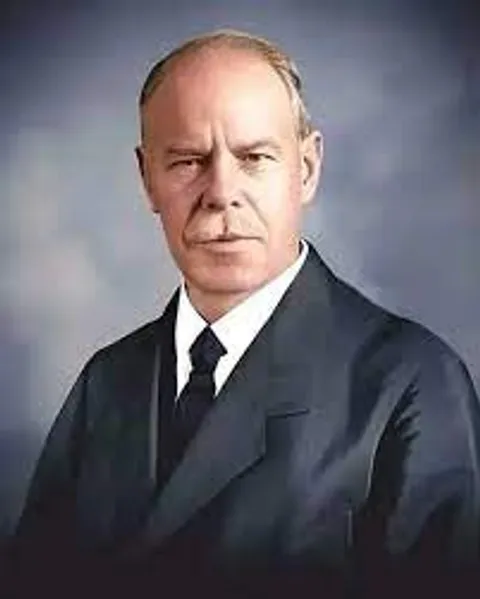 Smith Wigglesworth was born in 1859 to a very poor family. His father did manual labor, for very little pay. Smith himself went to work at the age of six to help with the family income. At six he was pulling turnips and at seven he was working in a woolen mill twelve hours a day. His parents did not know God, but Smith hungered in his heart to know Him. Even as a youngster he would pray in the fields. His grandmother was the critical Christian in his life. She was a Wesleyan Methodist and would take Smith to meetings with her. At one of these meetings there was a song being sung about Jesus as the lamb and Smith came into the realization of God's love for him and his decision to believe Christ for his salvation was decided that day. He was immediately filled with the desire to evangelize and led his own mother to Christ.
Smith has various church experiences as he was growing up. He first went to an Episcopal church and then at thirteen a Wesleyan Methodist church. When he was sixteen he became involved in the Salvation Army. He felt deeply called to fast and pray for lost souls. He saw many people come to Christ. At seventeen a mentor shared with him about water baptism and he decided to be baptized. The Salvation Army was experiencing a tremendous level of the power of God in those days. He describes meetings where "many would be prostrated under the power of the Spirit, sometimes for as long as twenty-four hours at a time." They would pray and fast and cry out for the salvation of fifty or a hundred people for the week and they would see what they had prayed for.
At eighteen Smith left the factory and became a plumber. He moved to Liverpool when he was twenty and continued to work during the day and minister during his free time. He felt called to minister to young people and brought them to meetings. These were destitute and ragged children, whom he would often feed and care for. Hundreds were saved. Smith was often asked to speak in Salvation meetings and he would break down and weep under the power of God. Many would come to repentance in those meetings through this untrained man. At twenty-three he returned back Bradford and continued his work with the Salvation Army.
In Bradford Smith met Mary Jane Featherstone, known as Polly, the daughter of a temperance lecturer. She left home and went to Bradford to take a servants job. One night she was drawn to a Salvation Army meeting. She listened to the woman evangelist, Gipsy Tillie Smith, and gave her heart to Christ. Smith was in that meeting and saw her heart for God. Polly became an enthusiastic Salvationsist and was granted a commission by General Booth. They developed a friendship, but Polly went to Scotland to help with a new Salvationist work. She eventually moved back to Bradford and married Smith, who was very much in love with her.
The couple worked together to evangelize the lost. They opened a small church in a poor part of town. Polly would preach and Smith would make the altar calls. For a season, however, Smith became so busy with his plumbing work that his evangelistic fervor began to wane. Polly continued on, bringing Smith to conviction. One day while Smith was working in the town of Leeds he heard of a divine healing meeting. He shared with Polly about it. She needed healing and so they went to a meeting, and Polly was healed.
Smith struggled with the reality of healing, while being ill himself. He decided to give up the medicine that he was taking and trust God. He was healed. They had five children, a girl and four boys. One morning two of the boys were sick. The power of God came and they prayed for the boys and they were instantly healed. Smith struggled with the idea that God would use him to heal the sick in general. He would gather up a group of people and drive them to get prayer in Leeds. The leaders of the meeting were going to a convention and left Smith in charge. He was horrified. How could he lead a meeting about divine healing? He tried to pass it off to someone else but could not. Finally he led the meeting and several people were healed. That was it. From then on Smith began to pray for people for healing.
Smith had another leap to make. He had heard about the Pentecostals who were being baptized in the Holy Spirit. He went to meetings and was so hungry for God he created a disturbance and church members asked him to stop. He went to prayer and prayed for four days. Finally he was getting ready to head home and the vicar's wife prayed for him and he fell under the power of God and spoke in tongues. Everything changed after that. He would walk by people and they would come under the conviction of the Holy Spirit and be saved. He began to see miracles and healings and the glory of God would fall when he prayed and preached.
Smith had to respond to the many calls that came in and gave up his business for the ministry. Polly unexpectedly died in 1913, and this was a real blow to Smith. He prayed for her and commanded that death release her. She did arise but said "Smith - the Lord wants me." His heartbroken response was "If the Lord wants you, I will not hold you". She had been his light and joy for all the years of their marriage, and he grieved deeply over the loss. After his wife was buried he went to her grave, feeling like he wanted to die. When God told him to get up and go Smith told him only if you "give to me a double portion of the Spirit – my wife’s and my own – I would go and preach the Gospel. God was gracious to me and answered my request.” His daughter Alice and son-in-law James Salter began to travel with him to handle his affairs.
Smith would pray and the blind would see, and the deaf were healed, people came out of wheelchairs, and cancers were destroyed. One remarkable story is when He prayed for a woman in a hospital. While he and a friend were praying she died. He took her out of the bed stood her against the wall and said "in the name of Jesus I rebuke this death". Her whole body began to tremble. The he said "in the name of Jesus walk", and she walked. Everywhere he would go he would teach and then show the power of God. He began to receive requests from all over the world. He taught in Europe, Asia, New Zealand and many other areas. When the crowds became very large he began a "wholesale healing". He would have everyone who needed healing lay hands on themselves and then he would pray. Hundreds would be healed at one time.
Over Smith's ministry it was confirmed that 14 people were raised from the dead. Thousands were saved and healed and he impacted whole continents for Christ. Smith died on March 12, 1947 at the funeral of his dear friend Wilf Richardson. His ministry was based on four principles " First, read the Word of God. Second, consume the Word of God until it consumes you. Third believe the Word of God. Fourth, act on the Word."
Smith Wigglesworth was born in 1859 to a very poor family. His father did manual labor, for very little pay. Smith himself went to work at the age of six to help with the family income. At six he was pulling turnips and at seven he was working in a woolen mill twelve hours a day. His parents did not know God, but Smith hungered in his heart to know Him. Even as a youngster he would pray in the fields. His grandmother was the critical Christian in his life. She was a Wesleyan Methodist and would take Smith to meetings with her. At one of these meetings there was a song being sung about Jesus as the lamb and Smith came into the realization of God's love for him and his decision to believe Christ for his salvation was decided that day. He was immediately filled with the desire to evangelize and led his own mother to Christ.
Smith has various church experiences as he was growing up. He first went to an Episcopal church and then at thirteen a Wesleyan Methodist church. When he was sixteen he became involved in the Salvation Army. He felt deeply called to fast and pray for lost souls. He saw many people come to Christ. At seventeen a mentor shared with him about water baptism and he decided to be baptized. The Salvation Army was experiencing a tremendous level of the power of God in those days. He describes meetings where "many would be prostrated under the power of the Spirit, sometimes for as long as twenty-four hours at a time." They would pray and fast and cry out for the salvation of fifty or a hundred people for the week and they would see what they had prayed for.
At eighteen Smith left the factory and became a plumber. He moved to Liverpool when he was twenty and continued to work during the day and minister during his free time. He felt called to minister to young people and brought them to meetings. These were destitute and ragged children, whom he would often feed and care for. Hundreds were saved. Smith was often asked to speak in Salvation meetings and he would break down and weep under the power of God. Many would come to repentance in those meetings through this untrained man. At twenty-three he returned back Bradford and continued his work with the Salvation Army.
In Bradford Smith met Mary Jane Featherstone, known as Polly, the daughter of a temperance lecturer. She left home and went to Bradford to take a servants job. One night she was drawn to a Salvation Army meeting. She listened to the woman evangelist, Gipsy Tillie Smith, and gave her heart to Christ. Smith was in that meeting and saw her heart for God. Polly became an enthusiastic Salvationsist and was granted a commission by General Booth. They developed a friendship, but Polly went to Scotland to help with a new Salvationist work. She eventually moved back to Bradford and married Smith, who was very much in love with her.
The couple worked together to evangelize the lost. They opened a small church in a poor part of town. Polly would preach and Smith would make the altar calls. For a season, however, Smith became so busy with his plumbing work that his evangelistic fervor began to wane. Polly continued on, bringing Smith to conviction. One day while Smith was working in the town of Leeds he heard of a divine healing meeting. He shared with Polly about it. She needed healing and so they went to a meeting, and Polly was healed.
Smith struggled with the reality of healing, while being ill himself. He decided to give up the medicine that he was taking and trust God. He was healed. They had five children, a girl and four boys. One morning two of the boys were sick. The power of God came and they prayed for the boys and they were instantly healed. Smith struggled with the idea that God would use him to heal the sick in general. He would gather up a group of people and drive them to get prayer in Leeds. The leaders of the meeting were going to a convention and left Smith in charge. He was horrified. How could he lead a meeting about divine healing? He tried to pass it off to someone else but could not. Finally he led the meeting and several people were healed. That was it. From then on Smith began to pray for people for healing.
Smith had another leap to make. He had heard about the Pentecostals who were being baptized in the Holy Spirit. He went to meetings and was so hungry for God he created a disturbance and church members asked him to stop. He went to prayer and prayed for four days. Finally he was getting ready to head home and the vicar's wife prayed for him and he fell under the power of God and spoke in tongues. Everything changed after that. He would walk by people and they would come under the conviction of the Holy Spirit and be saved. He began to see miracles and healings and the glory of God would fall when he prayed and preached.
Smith had to respond to the many calls that came in and gave up his business for the ministry. Polly unexpectedly died in 1913, and this was a real blow to Smith. He prayed for her and commanded that death release her. She did arise but said "Smith - the Lord wants me." His heartbroken response was "If the Lord wants you, I will not hold you". She had been his light and joy for all the years of their marriage, and he grieved deeply over the loss. After his wife was buried he went to her grave, feeling like he wanted to die. When God told him to get up and go Smith told him only if you "give to me a double portion of the Spirit – my wife’s and my own – I would go and preach the Gospel. God was gracious to me and answered my request.” His daughter Alice and son-in-law James Salter began to travel with him to handle his affairs.
Smith would pray and the blind would see, and the deaf were healed, people came out of wheelchairs, and cancers were destroyed. One remarkable story is when He prayed for a woman in a hospital. While he and a friend were praying she died. He took her out of the bed stood her against the wall and said "in the name of Jesus I rebuke this death". Her whole body began to tremble. The he said "in the name of Jesus walk", and she walked. Everywhere he would go he would teach and then show the power of God. He began to receive requests from all over the world. He taught in Europe, Asia, New Zealand and many other areas. When the crowds became very large he began a "wholesale healing". He would have everyone who needed healing lay hands on themselves and then he would pray. Hundreds would be healed at one time.
Over Smith's ministry it was confirmed that 14 people were raised from the dead. Thousands were saved and healed and he impacted whole continents for Christ. Smith died on March 12, 1947 at the funeral of his dear friend Wilf Richardson. His ministry was based on four principles " First, read the Word of God. Second, consume the Word of God until it consumes you. Third believe the Word of God. Fourth, act on the Word."
every day’s a bad day - how ecclesiastes taught me to enjoy life
After decades of ministry, what is one piece of advice I wish I had received as a young woman? Study the book of Ecclesiastes. Ecclesiastes has shown me the secret of enjoying life, even in the midst of trouble. It has rescued me from disillusionment when labors I thought were fruitful appeared to be for naught. When friends have turned their backs, Ecclesiastes has helped me guard against bitterness. It has cured me of setting my hope on a particular outcome, and protected me from becoming bewildered and disheartened by bad news. In short, Ecclesiastes made me a realist, and yet I’m happier than ever before. This collection of wisdom has become (as it is for J.I. Packer, whose writings introduced me to Ecclesiastes) my favorite book of the Bible, and one I regret not studying sooner. If you get the wisdom here while you are still young, it will prepare you for real life. It clears away false assumptions with which we sometimes read the rest of Scripture. Even if you find Ecclesiastes when you are older, it sure explains a lot. You learn that life didn’t go sideways; it was already crooked (Ecclesiastes 1:15). Ecclesiastes paints an unvarnished picture of real life, but its heavy shadows help you see the light of real joy. Bad Days Are Normal To begin with, Ecclesiastes tells us what life is really like. “It is an unhappy business that God has given to the children of man to be busy with” (Ecclesiastes 1:13). This is the way life really is, for all of us. Because of that first fatal sin, God cursed the ground and imposed hardship on Adam’s offspring (Genesis 3:16–19). The curse has affected all of us who live “under the sun” (Ecclesiastes 1:3). Christians are not exempt. The curse has also infected all of man’s work, “the toil at which he toils” (Ecclesiastes 1:3). Life is a burdensome task, a frustrating occupation, a grueling grind. It is an unhappy business. And God made it this way. Our problem is that we don’t really believe life is an unhappy business. We think if we work hard, we’ll eventually succeed. We imagine suffering is short-term, pain is the exception to the rule, and failure merely the prelude to victory. These illusions leave us blindsided by setbacks, devastated by failure and loss, bewildered by trials, confused by pain. This isn’t the way things were supposed to go! We talk about having “a bad day” as if it should be one in a thousand, but Ecclesiastes (and really the rest of Scripture, when you read it right side up) tells us that they are all bad. Daily work under the sun is an unhappy business. The sooner we face the fact that we live and work in a sin-cursed world, the more realistic and stable we will be. We will stop expecting things to always get better. We won’t be so surprised when they sometimes get worse. We no longer fear bad news: not because we hope it’s not coming, but because we know it is coming (Psalm 112:7; Ecclesiastes 12:1). Get Ecclesiastes, and we can learn to meet life’s unhappy business with pluck and humor. We won’t be so quick to doubt God, and we will finally have a settled peace in our heart. As my family reminds each other (with a smile) when faced with some new unhappy business, “That’s Ecclesiastes!” In other words, God can be trusted; he told us this was going to happen. Blessings You Cannot Count Ecclesiastes teaches us how to enjoy life , in the midst of our unhappy business. For while all humankind labors under the effects of the fall, to those God has called according to his purpose, he gives joy . “There is nothing better for a person than that he should eat and drink and find enjoyment in his toil. This also, I saw, is from the hand of God. . . . For to the one who pleases him God has given wisdom and knowledge and joy” (Ecclesiastes 2:24, 26). God’s gifts of enjoyment aren’t random; they are from his hand . As it says in James, “Every good gift and every perfect gift is from above, coming down from the Father of lights” (James 1:17). God blesses the Christian’s toil with enjoyment. Every feeling of satisfaction in a made bed, a mopped floor, and an organized closet is from the hand of God . Happiness in a deadline met, a budget balanced, or a report filed comes down from the Father of lights . Pleasure in a delicious meal, and in the dishes all cleaned and put away? You guessed it: from the hand of God . How about the relief of solving a problem, the delight of reading a book to your children, the blessing of easing your husband’s troubles? The fresh breeze through the open windows on carpool morning, the delightful lunch with friends, the sweet feeling of a comfortable bed at night — all of these moments of enjoyment in our work are gifts from the gracious hand of God . When you start to look for God’s gifts of joy, the ratio of troubles to joys becomes astonishingly unbalanced, leaning heavily in favor of joy. As my husband likes to say, good gifts are raining down upon us from the hand of God, every day, all day long. We can find enjoyment in our toil if only we would take the time to see, and give thanks to God. Consider: what is one way you can remind yourself to enjoy the gifts from God’s hand today? You will find that it is a happy unhappy business that God has given to those who please him. The Final Commendation Finally, Ecclesiastes helps us to see beyond our unhappy business . Even if your friends walk away, your business fails, or you are forced to move to a smaller home, you can persevere, because the final value of your work is not found in this life. “For God will bring every deed into judgment, with every secret thing, whether good or evil” (Ecclesiastes 12:14). In other words, it is not left to us, here and now, to determine the ultimate value of our work. As Jeremiah Burroughs says, we are simply called to “perform the duties of [our] present circumstances,” trusting God who will ultimately judge the fruitfulness of our work and give us our heavenly reward. This means that no matter how much heart you poured into a failed friendship, how much creativity you invested in a business you have to close, or how much effort you put into the home you have to leave, your work for the Lord is never a net loss. Which is why Paul can exhort us to “Be steadfast, immovable, always abounding in the work of the Lord, knowing that in the Lord your labor is not in vain” (1 Corinthians 15:58). Life under the sun is brutal, and it shows no signs of getting any easier. Our work is cursed and will often, more likely than not, fail on some human level. But the godly woman can face the future with peace and confidence; she even “laughs at the time to come” (Proverbs 31:25). For the same God who told us that life is hard has told us that he is near (Psalm 34:18). Through faith in Christ we can enjoy God’s fatherly gifts, abound in the work he has called us to, and look forward to the day when — oh, amazing grace! — we receive our commendation from God (1 Corinthians 4:5).