
GIP Library icon

LOG IN TO REVIEW
About the Book


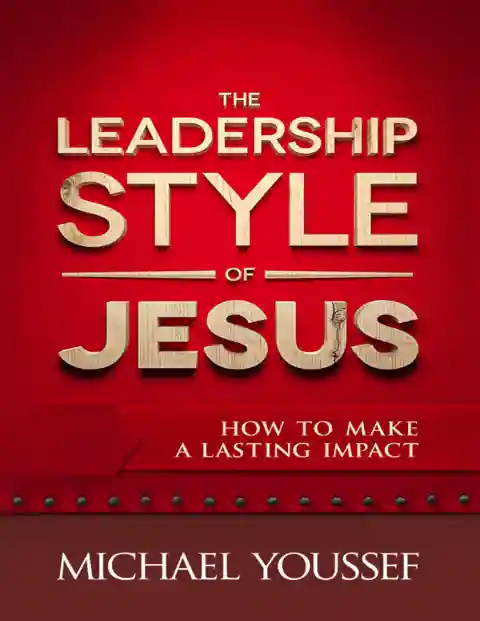
"The Leadership Style of Jesus" by Michael Youssef explores the leadership qualities and principles exemplified by Jesus Christ in the New Testament. Youssef examines Jesus' servant leadership, humility, compassion, and integrity, offering insights on how individuals can apply these principles in their own leadership roles. Ultimately, the book emphasizes the timeless wisdom found in Jesus' leadership approach and its relevance for contemporary leaders.

Lee Strobel
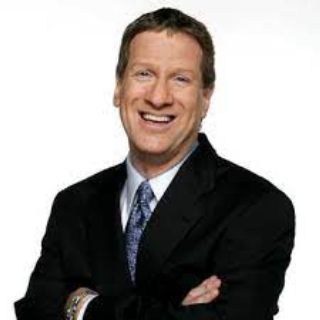
Lee Strobel Lee Strobel (Lee Patrick Strobel) is a former American investigative journalist and a Christian Author who has written several books, including four which received ECPA (Evangelical Christian Publishers Association) Christian Book Awards (1994, 1999, 2001, 2005) and a series which addresses challenges to the veracity of Christianity. He is a former host of the television program called Faith Under Fire on PAX TV and he runs a video apologetic web site. Lee Strobel Age He was born on January 25, 1952 in Arlington Heights, Illinois, U.S. Lee Strobel Family | Chicago Tribune Less information has been revealed about his father, mother and siblings if he has any. He attended the University of Missouri where he received a Journalism degree. He later earned his Masters of Studies in Law degree from Yale Law School. He became a journalist for the Chicago Tribune and other newspapers for 14 years. The UPI Illinois Editors Association newspaper award program gave him a first place for public service (the Len H. Small Memorial award) for his coverage of the Pinto crash trial of Ford Motor in Winamac, Indiana in 1980. Later, he became the assistant managing editor of the Daily Herald, before leaving journalism in 1987. Lee Strobel Wife | Daughter He married Leslie Strobel and they are blessed with two children; a son called Kyle who is an an Assistant Professor of Spiritual Theology and Formation at the Talbot School of Theology and a daughter called Alison who is a novelist. Lee Strobel Church He was an atheist when he began investigating the Biblical claims about Christ after his wife’s conversion. Prompted by the results of his investigation, he became a Christian on November 8, 1981. He was a teaching pastor of Willow Creek Community Church in South Barrington, Illinois, from 1987 to 2000, before shifting his focus to writing and producing his TV show, Faith Under Fire. He later was awarded an honorary doctoral degree by Southern Evangelical Seminary in recognition of his contributions to Christian apologetics in 2007. Lee Strobel Books He has written several books just to list a few. 1998 – The Case for Christ: A Journalist’s Personal Investigation of the Evidence for Jesus 2000 – The Case for Faith: A Journalist Investigates the Toughest Objections to Christianity 2004 – The Case for a Creator 2005 – The Case for Christmas: A Journalist Investigates the Identity of the Child in the Manger 2007 – The Case for the Real Jesus 2013 – The Case for Grace: A Journalist Explores the Evidence of Transformed Lives 2014 – The Case for Christianity Answer Book 2015 – The Case for Hope: Looking Ahead with Courage and Confidence 2018 – The Case for Miracles: A Journalist Investigates Evidence for the Supernatural Lee Strobel Net Worth From his work as a former investigative journalist and from his work as a Christian apologetic author, he has gained a great fortune. Besides that, he lives with his wife in his home that he bought. He has an estimated net worth of $8 million. Lee Strobel Movie His movies include; 2004 – Jesus: Fact or Fiction. 2007 – Jesus: The Great Debate. 2017 – The Case for Christ Lee Strobel The Case For Christ The Case For Christ is one of the books that Lee has written. This book summarizes Lee’s interviews with thirteen evangelical Christian scholars—Craig Blomberg, Bruce Metzger, Edwin Yamauchi, John McRay, Gregory Boyd, Ben Witherington III, Gary Collins, D. A. Carson, Louis Lapides, Alexander Metherell, William Lane Craig, Gary Habermas, and J. P. Moreland—in which they defend their views regarding the historical reliability of the New Testament. His personal encounters with these scholars and their beliefs led to the 2017 film of the same name. Lee Strobel The Case For Miracles The Case for Miracles: A Journalist Investigates Evidence for the Supernatural is one of the books that he has written. This book starts with an unlikely interview in which America’s foremost skeptic builds a seemingly persuasive case against the miraculous. But then Strobel travels the country to quiz scholars to see whether they can offer solid answers to atheist objections. Along the way, he encounters astounding accounts of healings and other phenomena that simply cannot be explained away by naturalistic causes. The book features the results of exclusive new scientific polling that shows miracle accounts are much more common than people think. Lee Strobel Testimony This is a summary of the detailed transcript of his testimony; For most of my life I was an atheist. I thought the idea of an all-loving, all-powerful creator of the universe–I thought it was stupid. I mean, my background is in journalism and law. I tend to be a skeptical person. I was the legal editor of the Chicago Tribune. So I needed evidence before I’d believe anything. One day my wife came up to me–she’d been agnostic–and she said after a period of spiritual investigation she had decided to become a follower of Jesus Christ. And I thought, you know, this is the worst possible news I could get. I thought she was going to turn into some sexually repressed prude who was going to spend all her time serving the poor in skid row somewhere. I thought this was the end of our marriage. But in the ensuing months, I saw positive changes in her values, in her character, in the way she related to me and the children. It was winsome; and it was attractive; and it made me want to check things out. So I went to church one day, ah, mainly to see if I could get her out of this cult that she had gotten involved in. But I heard the message of Jesus articulated for the first time in a way that I could understand it. That forgiveness is a free gift, and that Jesus Christ died for our sins, that we might spend eternity with Him. And I walked out saying–I was still an atheist–but also saying, ā€œIf this is true, this has huge implications for my life.ā€ And so I used my journalism training and legal training to begin an investigation into whether there was any credibility to Christianity or to any other world faith system for that matter. Lee Strobel The Case For Easter The Case for Easter: A Journalist Investigates the Evidence for the Resurrection is one of his books that answers the following questions. Did Jesus of Nazareth really rise from the dead?Of the many world religions, only one claims that its founder returned from the grave. The resurrection of Jesus Christ is the very cornerstone of Christianity. But a dead man coming back to life? In our sophisticated age, when myth has given way to science, who can take such a claim seriously? Some argue that Jesus never died on the cross. Conflicting accounts make the empty tomb seem suspect. And post-crucifixion sightings of Jesus have been explained in psychological terms.How credible is the evidence for—and against—the resurrection? and many others. Lee Strobel Quotes ā€œOnly in a world where faith is difficult can faith exist.ā€ ā€œIf your friend is sick and dying, the most important thing he wants is not an explanation; he wants you to sit with him. He’s terrified of being alone more than anything else. So, God has not left us alone.ā€ ā€œFaith is only as good as the one in whom it’s invested.ā€ ā€œTo be honest, I didn’t want to believe that Christianity could radically transform someone’s character and values. It was much easier to raise doubts and manufacture outrageous objections that to consider the possibility that God actually could trigger a revolutionary turn-around in such a depraved and degenerate life.ā€ ā€œAbruptly, Templeton cut short his thoughts. There was a brief pause, almost as if he was uncertain whether he should continue. ā€˜Uh … but … no,’ he said slowly, ā€˜he’s the most …’ He stopped, then started again. ā€˜In my view,’ he declared, ā€˜he is the most important human being who ever existed.’ That’s when Templeton uttered the words I neer expected to hear from him. ā€˜ And if I may put it this way,’ he said in a voice that began to crack, ā€˜I … miss … him!’ With that tears flooded his eyes. He turned his head and looked downward, raising his left hand to shield his face from me. His shoulders bobbed as he wept.ā€ Lee Strobel Website His website is leestrobel.com

Blessed Are the Unoffendable

I remember the flush of embarrassment that came to my face as I realized that my friend was letting me know I hadn’t been invited to be a part of the group of women she was meeting with regularly — and not by accident. I tried to navigate the moment, relieving the tension by telling her not to worry about it. I let her know that my plate was full with doctors’ appointments and kids’ activities. ā€œI couldn’t join the group even if I were asked!ā€ I laughed, doing all I could to keep her from feeling sorry for me. And my words were true. I really did have a plate too full to add anything else. I really didn’t want her to worry about it. Yet my hot cheeks and thumping heart told the secret I was trying to conceal — I was fighting the impulse to take offense. Shutting the Gates I knew well enough how destructive becoming offended can be. Proverbs 18:19 says, ā€œA brother offended is more unyielding than a strong city.ā€ What horrible strength there is in taking up an offense! Offended people can become unassailable. Recalcitrant. Too hard-hearted to hear an appeal. When we are offended, we believe ourselves to have the moral high ground; therefore, we feel justified in making the one who has offended us a villain. I thought I was on the inside of this particular group of friends, only to discover I was not. My sense of where I fit in with others was challenged in a painful way. I could choose to accept it with goodwill toward these sisters and lean on my Savior who has called me his friend, or I could get tough — hard as nails — like an unyielding strong city whose gates have been shut and whose pride has locked out the offending parties. ā€œOffended people become unassailable. Recalcitrant. Too hard-hearted to hear an appeal.ā€ The Scriptures show us many instances of Jesus causing offense. He offends his hometown crowd. He offends Pharisees and scribes. He is the stone of stumbling and rock of offense. This is no big surprise to Christians. We aren’t shocked that the Pharisees or the hometown crowd are resentful and outraged by his superior understanding and his mighty deeds. From our vantage point, it isn’t too hard to see that when Jesus challenges their view of reality, he’s always right. We can see their blind spots and pride and how that pride makes them easily offended. But it’s much harder to spot the pride when we’re the one being offended, and when the offender is someone other than the perfect Jesus. The Drug of Offendedness What do we do when we’re offended by one another? What do we do if the offense given or taken is a result of carelessness, or thin skin, or personality differences, or unintentionally missing the mark, or sinfulness in ourselves or others? First, remember that when others are offensive in a truly sinful way, their offense is against God first and foremost. Sin against us feels personal, because it often is personal. But it’s significantly more personal to God, who doesn’t just relate to us, but who created us. God is patient with those who have offended his holiness. But he will not wait forever. And for those who are united to his Son through faith, their offenses against him have been extinguished at the cross. Second, it is good to remember that God has made a way for us to deal with a legitimate offense. We can follow the instructions of our Lord and go to that person directly in the hopes of gaining our brother (Matthew 18:15). We don’t ever need to stay offended. Even when we don’t gain our brother by going to him, we don’t have to live in our offended state; we can lay that down at the cross. And laying our offense there, we can take a posture that is eager for reconciliation, should God grant it. But what about when there is no intentional or discernible sin? What about the kind of situation that I found myself in — the one where I had not been sinned against, yet my hurt feelings were poised to harden into offendedness? It helps to acknowledge that taking offense is a powerful drug. It’s a powerful drug precisely because it gives us power. Remember the proverb — the offended brother is more unyielding than a strong city! ā€œTaking offense is a powerful drug. It’s a powerful drug precisely because it gives us power.ā€ When we turn hurt feelings into offendedness, we go from vulnerable to impenetrable. When we’re hurt by someone else’s words or actions, it’s tempting to try to protect ourselves with anger or self-righteousness that masquerades as having been offended. It’s easier to imagine the ones who have hurt us as villains rather than own that our hurt often has to do with our insecurities and fragility more than with the objective sinfulness of others. Good Sense and Glory Proverbs 19:11 says, ā€œGood sense makes one slow to anger, and it is his glory to overlook an offense.ā€ Good sense and glory are in short supply these days. Rather than slow down and give our rational minds a chance to inform our wildly thumping hearts, we let our feelings inform our response. Rather than overlook an offense, we go conjuring them up from every possible infraction, mounting chips on our shoulders. Everything another person says that we disagree with is a devilish opportunity for taking up an offense. Anything another person does that is different than how we would do it strengthens the resolve of the unyielding, hardened heart. Too often, we can’t merely disagree with people; we are personally offended by the words, opinions, and actions of others, even when they have no bearing on our personal lives. And if we can’t find a way to be personally offended ourselves, too many have begun taking up an offense on behalf of another. Rather than cover an offense in the interest of love and refusing to repeat a matter (Proverbs 17:9), the society around us urges us to lend and borrow offenses as a currency of backward virtue. Blessed Are the Unoffendable There is more than insecurity and fragility underneath our proclivity to take up an offense, although those problems are constantly feeding it. At root, our easily offended hearts are full of pride and idolatry. We have set ourselves as the standard of what is right and good and what must be honored — any perceived challenge to that assumption results in anger, resentment, and the taking up of an offense. But we’re not the standard; God is — which is wonderful news for sinners. Because he is the standard, because only he can see into hearts and discern the motives of each of us, we can be free to assume the best of others, trusting that he will judge perfectly in the end. We can have the good sense to be slow to anger. We can become gloriously unoffendable. Won’t you lay down the offendedness you’ve nursed against others, and rest in the salvation of the God who is slow to anger and abounding in steadfast love? He is patient in delaying judgment, but judgment will come. Today is the day to crucify the counterfeit power of offendedness and take hold of the gospel — which is the power of God for salvation to all who believe (Romans 1:16). Article by Abigail Dodds

Feedback
Suggestionsuggestion box
x