

Others like walking in divine favor Features >>







About the Book
"Walking in Divine Favor" by Jerry Savelle explores how individuals can experience the abundant blessings and favor of God in their lives by following biblical principles and developing a strong faith. Savelle emphasizes the importance of believing in God's promises and aligning one's thoughts and actions with His will to receive His favor. The book offers practical guidance and inspirational stories to help readers cultivate a deeper relationship with God and experience His favor in all areas of their lives.
Nik Ripken
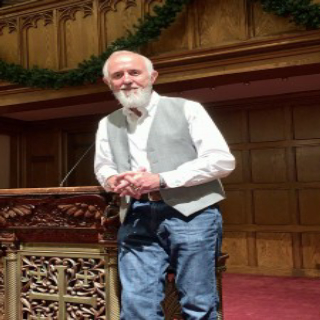 Nik and Ruth, with 3 children, served for over 32 years obeying Christ’s command to share Jesus across the globe. After 7 years in Malawi & South Africa, they moved to Nairobi, Kenya to begin work among the Somali people (1991-1997). Since that time (1998-2013) they have journeyed globally among people whom, when they gave their lives to Jesus, faced increasing persecution for their faith.
The Ripkens and their teams served throughout the Horn of Africa within famine and war zones; resettling refugees, providing famine relief, and operating mobile medical clinics. Formerly Muslims, many Somali believers, suffered for their faith. Most were martyred. Near the end of the Ripken’s tenure among the Somalis, their 16-year-old son died of an asthma attack on Easter Sunday morning. He’s buried at the school from which the other Ripken children graduated.
One year later, the Holy Spirit led the Ripkens to begin a global pilgrimage to learn from believers in persecution how to recapture a biblical missiology of witness and house-church planting in the midst of persecution and martyrdom. Most of all, believers in persecution modeled for the Ripkens how to trust Jesus completely. Many of these lessons have been lost or forgotten by the church in the West.
Currently the Ripkens have interviewed over 600 believers in persecution, exceeding 72 countries. Sitting at their feet, the Ripkens learned from the suffering church how to thrive amidst suffering, not merely survive. The Ripkens, using everything they’ve learned from believers in persecution are creating resources as gifts from the church to the church. To date they have created articles, books, a music CD, a documentary, workshops, and other tools that allow the church in persecution to teach the church in the West about its biblical heritage of both crucifixion and resurrection. A teaching DVD is included in future plans. All these tools are designed to challenge believers to boldly follow Jesus, sharing their faith with others-no matter the cost.
Nik and Ruth, with 3 children, served for over 32 years obeying Christ’s command to share Jesus across the globe. After 7 years in Malawi & South Africa, they moved to Nairobi, Kenya to begin work among the Somali people (1991-1997). Since that time (1998-2013) they have journeyed globally among people whom, when they gave their lives to Jesus, faced increasing persecution for their faith.
The Ripkens and their teams served throughout the Horn of Africa within famine and war zones; resettling refugees, providing famine relief, and operating mobile medical clinics. Formerly Muslims, many Somali believers, suffered for their faith. Most were martyred. Near the end of the Ripken’s tenure among the Somalis, their 16-year-old son died of an asthma attack on Easter Sunday morning. He’s buried at the school from which the other Ripken children graduated.
One year later, the Holy Spirit led the Ripkens to begin a global pilgrimage to learn from believers in persecution how to recapture a biblical missiology of witness and house-church planting in the midst of persecution and martyrdom. Most of all, believers in persecution modeled for the Ripkens how to trust Jesus completely. Many of these lessons have been lost or forgotten by the church in the West.
Currently the Ripkens have interviewed over 600 believers in persecution, exceeding 72 countries. Sitting at their feet, the Ripkens learned from the suffering church how to thrive amidst suffering, not merely survive. The Ripkens, using everything they’ve learned from believers in persecution are creating resources as gifts from the church to the church. To date they have created articles, books, a music CD, a documentary, workshops, and other tools that allow the church in persecution to teach the church in the West about its biblical heritage of both crucifixion and resurrection. A teaching DVD is included in future plans. All these tools are designed to challenge believers to boldly follow Jesus, sharing their faith with others-no matter the cost.
the sluggard in me - four lies that lead to lazy
Come, follow closely, and gaze for a moment upon a rare creature in his native habitat. There he is, drooling upon his pillow an hour before lunchtime, creaking over the bedsprings like a door on its hinges. “How long will you lie there? When will you arise from your sleep?” his mother shouts from the kitchen. Quiet, now: she has roused him. Here he comes, stumbling into his chair, and begins to feed. “What’s wrong with a little sleep, a little slumber?” he mumbles between mouthfuls. A dozen handfuls later, however, he stops, his hand submerged in his cereal like a sunk boat. He breathes heavily, chin against his chest, and begins to snore again. Meet the sluggard (Proverbs 26:14; 6:9–10; 19:24). He is a figure of “tragi-comedy,” Derek Kidner writes ( Proverbs , 39): comedy, because the sluggard’s laziness makes him ludicrous; tragedy, because only sin could so debase a man. The image of God was never meant to yawn through life. Yet those who are paying attention will also see something more in this tragi-comic sloth: themselves. We all have an inner sluggard, counseling us to sleep when we should rise, rest when we should work, eat when we should move. “The wise man,” Kidner goes on to write, knows that the sluggard is no freak, but, as often as not, an ordinary man who has made too many excuses, too many refusals, and too many postponements. It has all been as imperceptible, and as pleasant, as falling asleep. (40) We don’t need to look far, then, to see the sluggard in his native habitat. We only need to hear his “excuses,” “refusals,” and “postponements,” and then listen for their inner echo. ‘I need just a little more.’ A little sleep, a little slumber, a little folding of the hands to rest. (Proverbs 6:10; 24:33) The words sit in the mouth of the sluggard more than once in Proverbs. They are, perhaps, his motto, his favorite response to the wisdom of the diligent. “Early to rest, early to rise . . .” they tell him; “A little sleep, a little slumber . . .” he answers. “An ordinary man becomes a sluggard one small surrender at a time.” Sluggishness often hides beneath that eminently reasonable phrase “just a little more.” What harm could a little do? What’s one more snooze cycle? What’s one more show? What’s one more refreshing of the timeline? Not much, in itself: but much indeed when piled atop ten thousand other littles and one mores . They may seem like “small surrenders” (to use a phrase from Bruce Waltke, Proverbs , 131) — and they are. But an ordinary man becomes a sluggard one small surrender at a time. How do the wise respond? They know that diligent Christians are not a special species of saint. Like the sluggard, the diligent daily face unpleasant tasks. Unlike the sluggard, the diligent speak a different motto: “A little labor, a little energy, a little moving of the hands to work.” Instead of building a stack of small surrenders, they build a stack of small successes — taking little step by little step in the strength that God supplies. Over time, how we handle little is no little matter. Little drudgeries, little tasks, little opportunities: these are the moments when the sluggard gains ground in our souls, or loses it. ‘There’s always tomorrow.’ The sluggard does not plow in the autumn; he will seek at harvest and have nothing. (Proverbs 20:4) Often enough, “just a little more” achieves the sluggard’s purpose. But if, for some reason, his conscience should protest, he has another word at his disposal that rarely fails: tomorrow . Autumn was the season for plowing and planting in ancient Israel, and summer the season for harvest. We don’t know exactly why the sluggard took it easy while his neighbors plowed their fields. Maybe the difficulty of the task daunted him, or maybe, as the King James Version suggests, the season’s chill deterred him: “The sluggard will not plow by reason of the cold .” Either way, he no doubt fell asleep on many autumn nights warmed by the thought, “There’s always tomorrow” — until one day he woke up in winter. When the sluggard finally arrived at his chosen tomorrow , the time for plowing and planting had escaped his grasp. How often have we too discovered that tomorrow is too late? The conversation we should have initiated yesterday proves more awkward today. The essay we should have begun last week overwhelms us this week. The forgiveness we should have sought last month feels harder to seek this month. Autumn has passed, winter has come, and opportunity has slipped through our fingers. The wise learn to take the farmer’s view of life: when the time comes to plow, a farmer pays more attention to the season than to his feelings. And when the time comes to tackle our own difficult tasks, the wise do the same. ‘I would be putting myself at risk.’ There is a lion outside! I shall be killed in the streets! (Proverbs 22:13; see also 26:13) Indulging a bad excuse is a little like feeding a pigeon: give bread to one, and twenty more will soon coo at your feet. Bad excuses breed bad excuses — and even worse excuses over time. And so, when a friend, family member, or boss refuses to entertain the sluggard’s littles and tomorrows , he takes more radical measures: “Haven’t you seen the lion roaming the streets? I’ll die!” Did any sluggard ever attempt such an excuse? Maybe. “Laziness is a great lion-maker,” says Charles Spurgeon. “He who does little dreams much. His imagination could create not only a lion but a whole menagerie of wild beasts” (“One Lion: Two Lions: No Lion at All”). For our own purposes, however, we can consider a tamer version of the sluggard’s beast: “I would be putting myself at risk.” To our inner sluggard, a scratch in the throat is cause for a sick day, a little tiredness is reason to nap instead of mow, and a long day at work is justification for skipping small group. After all, our bodies and minds need the rest, don’t they? Care is required here, of course. Some people really do work their bodies into the dust, forsaking the rest God gives and “eating the bread of anxious toil” (Psalm 127:2). The sluggard, however, is prone to label as “anxious toil” any work that meets with inner resistance. He forgets that overcoming such resistance is part of what makes diligence diligence . God made our bodies to bend and strain, our minds to crank and labor, our souls to strive and press. The lion called “Lazy” will counsel us to avoid the strain, but diligence will slay the lion. ‘What do you know about the pressures I’m under?’ The sluggard is wiser in his own eyes than seven men who can answer sensibly. (Proverbs 26:16) Confront a sluggard in his sluggishness, and you may find that he has a penchant for euphemisms. “He has no idea that he is lazy,” writes Kidner on Proverbs 26:13–16. He is not a shirker but a “realist” (13); not self-indulgent but “below his best in the morning” (14); his inertia is “an objection to being hustled” (15); his mental indolence a fine “sticking to his guns” (16). ( Proverbs , 156) Our own sluggishness, then, often appears in our defenses against the charge. Once, as a single man, I told a mentor, “I need more time to myself.” “You don’t need it,” he responded. Immediately, I raised the drawbridge, manned the ramparts, and launched inward mortars against the attack. What could he, a husband and father of three, possibly know about the pressures I was under? The self-defense is laughable now, but back then, wise in my own eyes, I couldn’t accept that much of what I called “alone time” was better labeled “sluggishness.” The sluggard sees his own work as the hardest work, his own excuses as the best excuses, his own diversions as the most reasonable diversions — no matter what his friends, wife, or pastor may say. But the wise learn to develop a self-distrustful posture. Rather than responding to requests or challenges with an inward Don’t you see my burdens? they remember their proneness to folly, and learn to call the sluggard by his real name. The Christian and the Sluggard Between the Christian and the sluggard, Spurgeon says, “there should be as wide a division as between the poles.” He’s right. “Christian” and “sluggard” go together like “husband” and “playboy,” like “judge” and “thief”: the latter destroys the integrity of the former. “In Christ we find our pattern for work. In Christ we find our power for work. And in Christ the sluggard dies.” And why? Because Christians belong to Jesus Christ, and Jesus Christ was not sluggish. He was no workaholic, of course: he could feast, rest, sleep, and develop deep relationships. But oh did he work. In the Gospels we find not the sluggishness but “the steadfastness of Christ” (2 Thessalonians 3:5): the diligence of one who never entertained “just a little more” or “tomorrow,” but worked while it was day (John 9:4). He plowed in the autumn cold of life, forsaking every excuse not to save us. And he never cried “lion!” though he walked into the den (Psalm 22:21). Therefore, the apostle Paul can say to the sluggish, “Such persons we command and encourage in the Lord Jesus Christ to do their work” (2 Thessalonians 3:12). In Christ we find our pattern for work. In Christ we find our power for work. And in Christ the sluggard dies.