
Others like the 5 levels of leadership Features >>
The Gifts Of Imperfection: Embrace Who You Are
The Rules Of Life
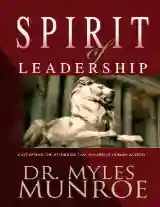
The Spirit Of Leadership
The Jelly Effect: How To Make Your Communication Stick
The Greatest Salesman In The World - Part 1
The 7 Habits Of Highly Effective People
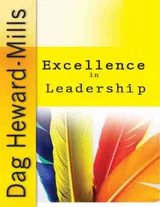
Excellence In Leadership
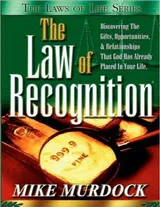
The Law Of Recognition
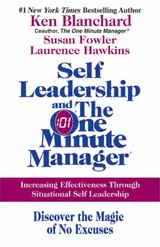
Self Leadership And The One Minute Manager
Servant Leadership
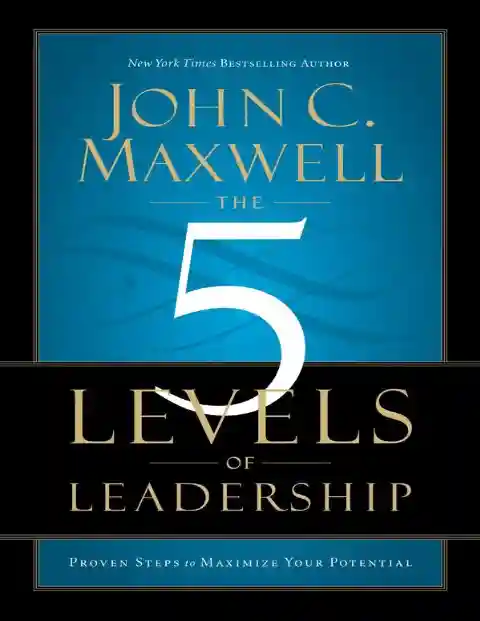
About the Book
"The 5 Levels of Leadership" by John C. Maxwell outlines a leadership model based on five levels: Position, Permission, Production, People Development, and Pinnacle. The book explores how leaders can progress through these levels to become more effective in leading and influencing others, emphasizing the importance of relationships, trust, and continuous growth in leadership. It provides practical advice and insights for developing leadership skills and advancing to higher levels of leadership effectiveness.
Cornelius Van Til
Cornelius Van Til (May 3, 1895 – April 17, 1987) was a Dutch-American reformed philosopher and theologian, who is credited as being the originator of modern presuppositional apologetics.
Biography
Van Til (born Kornelis van Til in Grootegast, Netherlands) was the sixth son of Ite van Til, a dairy farmer, and his wife Klasina van der Veen. At the age of ten, he moved with his family to Highland, Indiana. He was the first of his family to receive a higher education. In 1914 he attended Calvin Preparatory School, graduated from Calvin College, and attended one year at Calvin Theological Seminary, where he studied under Louis Berkhof, but he transferred to Princeton Theological Seminary and later graduated with his PhD from Princeton University.
He began teaching at Princeton Seminary, but shortly went with the conservative group that founded Westminster Theological Seminary, where he taught for forty-three years. He taught apologetics and systematic theology there until his retirement in 1972 and continued to teach occasionally until 1979. He was also a minister in the Christian Reformed Church in North America and in the Orthodox Presbyterian Church from the 1930s until his death in 1987, and in that denomination, he was embroiled in a bitter dispute with Gordon Clark over God's incomprehensibility known as the Clark–Van Til Controversy.
Work
Van Til drew upon the works of Dutch Calvinist philosophers such as D. H. Th. Vollenhoven, Herman Dooyeweerd, and Hendrik G. Stoker and theologians such as Herman Bavinck and Abraham Kuyper to devise a novel Reformed approach to Christian apologetics, one that opposed the traditional methodology of reasoning on the supposition that there is a neutral middle-ground, upon which the non-Christian and the Christian can agree. His contribution to the Neo-Calvinist approach of Dooyeweerd, Stoker and others, was to insist that the "ground motive" of a Christian philosophy must be derived from the historical terms of the Christian faith. In particular, he argued that the Trinity is of indispensable and insuperable value to a Christian philosophy.
In Van Til: The Theologian, John Frame, a sympathetic critic of Van Til, claims that Van Til's contributions to Christian thought are comparable in magnitude to those of Immanuel Kant in non-Christian philosophy. He indicates that Van Til identified the disciplines of systematic theology and apologetics, seeing the former as a positive statement of the Christian faith and the latter as a defense of that statement – "a difference in emphasis rather than of subject matter." Frame summarizes Van Til's legacy as one of new applications of traditional doctrines:
Unoriginal as his doctrinal formulations may be, his use of those formulations – his application of them – is often quite remarkable. The sovereignty of God becomes an epistemological, as well as a religious and metaphysical principle. The Trinity becomes the answer to the philosophical problem of the one and the many. Common grace becomes the key to a Christian philosophy of history. These new applications of familiar doctrines inevitably increase [Christians'] understanding of the doctrines themselves, for [they] come thereby to a new appreciation of what these doctrines demand of [them].
Similarly, Van Til's application of the doctrines of total depravity and the ultimate authority of God led to his reforming of the discipline of apologetics. Specifically, he denied neutrality on the basis of the total depravity of man and the invasive effects of sin on man's reasoning ability and he insisted that the Bible, which he viewed as a divinely inspired book, be trusted preeminently because he believed the Christian's ultimate commitment must rest on the ultimate authority of God. As Frame says elsewhere, "the foundation of Van Til's system and its most persuasive principle" is a rejection of autonomy since "Christian thinking, like all of the Christian life, is subject to God's lordship". However, it is this very feature that has caused some Christian apologists to reject Van Til's approach. For instance, D. R. Trethewie describes Van Til's system as nothing more than "a priori dogmatic transcendental irrationalism, which he has attempted to give a Christian name to."
Kuyper–Warfield synthesis
It is claimed that Fideism describes the view of fellow Dutchman Abraham Kuyper, whom Van Til claimed as a major inspiration. Van Til is seen as taking the side of Kuyper against his alma mater, Princeton Seminary, and particularly against Princeton professor B. B. Warfield. But Van Til described his approach to apologetics as a synthesis of these two approaches: "I have tried to use elements both of Kuyper's and of Warfield's thinking." Greg Bahnsen, a student of Van Til and one of his most prominent defenders and expositors, wrote that "A person who can explain the ways in which Van Til agreed and disagreed with both Warfield and Kuyper, is a person who understands presuppositional apologetics."
With Kuyper, Van Til believed that the Christian and the non-Christian have different ultimate standards, presuppositions that color the interpretation of every fact in every area of life. But with Warfield, he believed that a rational proof for Christianity is possible: "Positively Hodge and Warfield were quite right in stressing the fact that Christianity meets every legitimate demand of reason. Surely Christianity is not irrational. To be sure, it must be accepted on faith, but surely it must not be taken on blind faith. Christianity is capable of rational defense." And like Warfield, Van Til believed that the Holy Spirit will use arguments against unbelief as a means to convert non-believers.
Van Til sought a third way from Kuyper and Warfield. His answer to the question "How do you argue with someone who has different presuppositions?" is the transcendental argument, an argument that seeks to prove that certain presuppositions are necessary for the possibility of rationality. The Christian and non-Christian have different presuppositions, but, according to Van Til, only the Christian's presuppositions allow for the possibility of human rationality or intelligible experience. By rejecting an absolutely rational God that determines whatsoever comes to pass and presupposing that some non-rational force ultimately determines the nature of the universe, the non-Christian cannot account for rationality. Van Til claims that non-Christian presuppositions reduce to absurdity and are self-defeating. Thus, non-Christians can reason, but they are being inconsistent with their presuppositions when they do so. The unbeliever's ability to reason is based on the fact that, despite what he believes, he is God's creature living in God's world.
Hence, Van Til arrives at his famous assertion that there is no neutral common ground between Christians and non-Christians because their presuppositions, their ultimate principles of interpretation, are different; but because non-Christians act and think inconsistently with regard to their presuppositions, common ground can be found. The task of the Christian apologist is to point out the difference in ultimate principles, and then show why the non-Christian's reduce to absurdity.
Transcendental argument
The substance of Van Til's transcendental argument is that the doctrine of the ontological Trinity, which is concerned with the reciprocal relationships of the persons of the Godhead to each other without reference to God's relationship with creation, is the aspect of God's character that is necessary for the possibility of rationality. R. J. Rushdoony writes, "The whole body of Van Til's writings is given to the development of this concept of the ontological Trinity and its philosophical implications." The ontological Trinity is important to Van Til because he can relate it to the philosophical concept of the "concrete universal" and the problem of the One and the many.
For Van Til, the ontological Trinity means that God's unity and diversity are equally basic. This is in contrast with non-Christian philosophy in which unity and diversity are seen as ultimately separate from each other:
The whole problem of knowledge has constantly been that of bringing the one and the many together. When man looks about him and within him, he sees that there is a great variety of facts. The question that comes up at once is whether there is any unity in this variety, whether there is one principle in accordance with which all these many things appear and occur. All non-Christian thought, if it has utilized the idea of a supra-mundane existence at all, has used this supra-mundane existence as furnishing only the unity or the a priori aspect of knowledge, while it has maintained that the a posteriori aspect of knowledge is something that is furnished by the universe.
Pure unity with no particularity is a blank, and pure particularity with no unity is chaos. Frame says that a blank and chaos are "meaningless in themselves and impossible to relate to one another. As such, unbelieving worldviews always reduce to unintelligible nonsense. This is, essentially, Van Til's critique of secular philosophy (and its influence on Christian philosophy)."
Karl Barth
Van Til was also a strident opponent of the theology of Karl Barth, and his opposition led to the rejection of Barth's theology by many in the Calvinist community. Despite Barth's assertions that he sought to base his theology solely on the 'Word of God', Van Til believed that Barth's thought was syncretic in nature and fundamentally flawed because, according to Van Til, it assumed a Kantian epistemology, which Van Til argued was necessarily irrational and anti-Biblical.
Influence
Many recent theologians have been influenced by Van Til's thought, including John Frame, Greg Bahnsen, Rousas John Rushdoony, Francis Schaeffer, as well as many of the current faculty members of Westminster Theological Seminary, Reformed Theological Seminary, and other Calvinist seminaries. He was also the personal mentor of K. Scott Oliphint late in life.
keep him from his knees
My Dear Globdrop, Most regretfully did I receive your last letter. Slumped over at my desk for nearly the entire day, I failed to detect the slightest evidence of rational thought. You coughed and sneezed all over the page and still thought to send it, did you? Next time you desire to unclutter the pockets of your mind, rifle through the lint and half-gnawed bones with one of your peers instead of your superior officer. The only nugget I found (and I admit to having slogged through only half of the small booklet you called a letter) was the bit about your man’s resolves to “give more time to prayer.” I hope, for your sake, that you have not applied standard protocol to such a vile practice. In other pursuits, we consider it sport to let the game run free for a bit. We allow the patients to exercise new levels of self-control, discipline, purity, and the like. The joy they feel when they assume themselves finally free heightens our fun when, to their horror and despair, we recapture them in old habits. And this is not just for entertainment: The last state becomes worse than the first. The merry-go-round of failure weakens their will to fight back, and soon, they won’t attempt to run free even when the door is flung open. Their fresh starts make for more bitter endings. But we do not trifle with prayer, ever . Have you forgotten that one stands on the other side of them, listening ? Keep the Prey from Prayer This ought to be painfully apparent. Would you allow an all-but-conquered army, surrounded and besieged, to send out even one letter pleading for reinforcements? Would you not hunt that messenger down, put arrows in his back, and burn the letter? It is bad enough that our bitter Enemy — I have it on credible report — actually wants  to help them. No, silence toward the Enemy is hell’s only policy. You must silence him as soon as possible. A few pointers. 1. Distract him in his closet. This first step is almost too simple to be devious: show him his surroundings. When he has time to sit and observe — something he otherwise would rarely do — show him everything. The more bothersome, the better. Let him hear that horrid Mr. Snoodle bark at a squirrel down the street. Let him see the mailman walk irreverently across his yard. Let him notice the chipped paint upon the windowsill, the small crack in the ceiling fan, the children’s play toys left disobediently about on the carpet. Once he is divided, end the affair promptly with something he can quickly do — he should clean the dishes or vacuum the carpet. Assure him, of course, that this will only be a temporary detour that will allow for greater focus. Send him away after anything and everything. 2. Remind him of righteous deeds to do. Now, don’t be afraid to use even — and my pen recoils to write it — “righteous distractions.” This, I hope you can finally begin to appreciate, reveals how much we loathe the time he spends upon his knees — that place where all horrid events begin. Get him to say, as one of their generals has said, You wouldn’t believe how many good things keep me from praying — not sin. Sin does not keep me from praying; righteousness keeps me from praying: answering holy emails or just checking out one more piece of relevant news to pray about. . . . It’s not evil that keeps us from praying; it’s good things. So — only in times of deepest desperation, mind you — suggest a million fine deeds he could otherwise be doing: a friend could use an encouraging text message. The elderly man next store could use his driveway shoveled. Perhaps he ought to call and check in with that sister who is struggling. We can destroy those resolves in due time. The act at hand, the speaking directly with the Enemy, stands priority. Without refueling, they can only get only so far. 3. Remind him how little he has prayed. Perhaps you naively assume that this misses the point — why remind a starving man that he has not eaten enough bread? But this squanders an opportunity. If he is set on yelping to the Enemy, prostrating himself on the floor like a spaniel, two courses of action can proceed: either he gets fed and returns to the banquet over and over again — and we lose him  — or we spoil the bread in his mouth by inducing a sense of guilt . Instead of allowing him to begin where he is  — one meal at a time, as it were — suggest all the ways he falls short of where he should be by now . As he finally begins to intercede for his sister, ask, Why have you waited so long?  Should he pray for our humans to follow the Enemy, inquire, Why were you unbothered by their plight till now?  If he begins that wretched way he taught them, “My Father,” let the name turn to guilt before he finishes: Do other sons fail so much at prayer?  Ten minutes of prayer seems like such a weak window for someone who has been a Christian so long. A steady diet of shame turns prayer inward ¬— a gaze into the mirror at imperfections, not a gaze at the Enemy or his alleged perfections. Make prayer a reminder of everything your man is not, rather than a communing with all the Enemy is. Press blame upon him, and he soon may return to his unencumbered, guilt-free starvation. 4. Remind him that he is free  from taking prayer too seriously. Label all prayer habits as legalism. Planning to spend thirty minutes in prayer a day? That is law, not grace. Where — be sure to ask him — does the Bible say he needs  to wake up at 6:30 in the morning? Anyone who tells him he must  spend time communing with the Enemy doesn’t know what freedom  the Enemy affords. Tell them that he is perfectly free  to be prayerless before the Enemy — of course, by this we mean that he is free to stand clueless, weaponless, and defenseless before us. Let him be regular in checking social media, regular in watching his shows, regular in playing Ultimate Frisbee and going to concerts, regular in walking the dog, eating, sleeping, and playing the saxophone — but make the idea that he might be regular in prayer works based . Keep him from prayer, and he shall surely become prey. 5. Remind him of tomorrow. He works hard after all. Working two jobs. Busy with countless Christian activities. What does the Enemy really expect of him? The Enemy’s Son sought to rouse his drowsy disciples to their prayer posts on the night everything changed, but he couldn’t . They were too tired to “watch and pray that they may not enter into temptation.” The spirit may have been willing, but the flesh was weak. We licked our lips as their eyelids drooped. You can always pray tomorrow morning  was our lullaby. A little sleep, a little slumber, a little tapping of the alarm clock, and we shall come upon them like a thief in the night. Lead Them into Temptation The Enemy instructs them to pray that they might not enter into temptation  — I hope you see the seriousness by now. He even commands them to pray daily with the wretched words, “Lead us not into temptation.” Keep them from all of this. Leave them over-busy and exhausted, pushing prayer to the bookends of their days until it is little more than a half-conscious moan or sigh. At all costs, do not let them truly believe that God is and, most of all, that he rewards those who seek him — with himself. Your tried and tempted uncle, Grimgod