
Others like the apostolic fathers i Features >>
The Apostolic Fathers II

Hearts Of Fire - Eight Women In The Underground Church And Their Stories Of Costly Faith
The Heroic Boldness Of Martin Luther

The Untold Story Of A Young Billy Graham

The Keys Of This Blood: The Struggle For World Dominion Between Pope John Paul II, Mikhail Gorbachev And The Capitalist West
God's Generals: The Martyrs
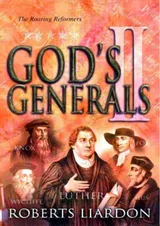
God's Generals: The Roaring Reformers

The Collected Letters Of C.S. Lewis Volume 2

Paul - A Biography
-160.webp)
God's Generals (William Branham)
About the Book
"The Apostolic Fathers I" by Bart D. Ehrman is a collection of early Christian writings from the late first and early second centuries. These texts serve as valuable primary sources for understanding the beliefs, practices, and struggles of the early Christian community. Ehrman provides translations and commentary on these texts, shedding light on key themes such as martyrdom, church leadership, and the relationship between Christianity and the Roman Empire.
David Brainerd
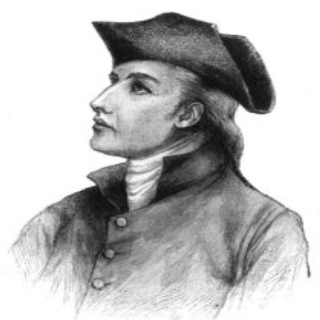 Born to a farming family in Haddam, Connecticut, Brainerd soon turned his aspirations to the clergy and a life of study. The early death of his parents, combined with a naturally melancholy personality, caused him to be morose and to fixate on the brevity of life, so that his religious life was characterized by prolonged depressions punctuated by ecstatic experiences of God. He began to study for the ministry at Yale College in 1739. During his first year he showed signs of the tuberculosis that was to end his life prematurely. During the following year, the New Light preaching of George Whitefield and other itinerants such as Gilbert Tennent and James Davenport gained many adherents at the college, including Brainerd, and he became involved in a separate church founded by students. In November 1741 he was reported as saying that one of the local ministers who was a college tutor had “no more grace than a chair.” Determined to snuff out the New Light among the students, the Yale Corporation, led by its rector, Thomas Clap, expelled Brainerd for refusing to make a public confession.
Officially barred from the ministry, Brainerd nonetheless became an itinerant preacher, filling pulpits of New Light sympathizers throughout New England and New York. In the process he gained the admiration of many clergymen, including Jonathan Dickinson, a Presbyterian minister of New Jersey and commissioner of the Society in Scotland for Propagating Christian Knowledge. Dickinson in 1742 first proposed that Brainerd become a missionary. To prepare himself, in 1743 Brainerd went to work with John Sargeant, missionary to the Stockbridge Indians. He was ordained by the Presbytery of New York in 1744. From 1743 to 1747 he ministered to the Indians in western Massachusetts, eastern New York, the Lehigh region of Pennsylvania, and central New Jersey. At the New Jersey Bethel mission (near Cranbury), he achieved his most notable successes. Out of his experiences here came the publication of two installments of his journals that described both the revivals among the Delaware Indians and his own spiritual turmoil and exultation.
Brainerd preaching to the Indians for all of his zeal, however, Brainerd’s constitution could not stand up to the hardships of wilderness living. In April 1747, seriously weakened by tuberculosis, he left New Jersey for the home of his friend Jonathan Edwards in Northampton, Massachusetts, where he died in October.
In 1749 Edwards published An Account of the Life of the Late Reverend Mr. David Brainerd, drawn from Brainerd’s extensive diaries and supplemented by Edwards’s own commentary. Edwards sought to portray Brainerd as a model of Christian saintliness who manifested his faith in good works and self-sacrifice, expurgating many passages that recorded Brainerd’s depressions and enthusiasms. Over the centuries, this work has achieved international fame, has gone through countless printings, and has inspired many missionaries in pursuing their call.
Minkema, Kenneth P., “Brainerd, David,” in Biographical Dictionary of Christian Missions, ed. Gerald H. Anderson (New York: Macmillan Reference USA, 1998), 84-5.
This article is reprinted from Biographical Dictionary of Christian Missions, Macmillan Reference USA, copyright © 1998 Gerald H. Anderson, by permission of Macmillan Reference USA, New York, NY. All rights reserved.
Born to a farming family in Haddam, Connecticut, Brainerd soon turned his aspirations to the clergy and a life of study. The early death of his parents, combined with a naturally melancholy personality, caused him to be morose and to fixate on the brevity of life, so that his religious life was characterized by prolonged depressions punctuated by ecstatic experiences of God. He began to study for the ministry at Yale College in 1739. During his first year he showed signs of the tuberculosis that was to end his life prematurely. During the following year, the New Light preaching of George Whitefield and other itinerants such as Gilbert Tennent and James Davenport gained many adherents at the college, including Brainerd, and he became involved in a separate church founded by students. In November 1741 he was reported as saying that one of the local ministers who was a college tutor had “no more grace than a chair.” Determined to snuff out the New Light among the students, the Yale Corporation, led by its rector, Thomas Clap, expelled Brainerd for refusing to make a public confession.
Officially barred from the ministry, Brainerd nonetheless became an itinerant preacher, filling pulpits of New Light sympathizers throughout New England and New York. In the process he gained the admiration of many clergymen, including Jonathan Dickinson, a Presbyterian minister of New Jersey and commissioner of the Society in Scotland for Propagating Christian Knowledge. Dickinson in 1742 first proposed that Brainerd become a missionary. To prepare himself, in 1743 Brainerd went to work with John Sargeant, missionary to the Stockbridge Indians. He was ordained by the Presbytery of New York in 1744. From 1743 to 1747 he ministered to the Indians in western Massachusetts, eastern New York, the Lehigh region of Pennsylvania, and central New Jersey. At the New Jersey Bethel mission (near Cranbury), he achieved his most notable successes. Out of his experiences here came the publication of two installments of his journals that described both the revivals among the Delaware Indians and his own spiritual turmoil and exultation.
Brainerd preaching to the Indians for all of his zeal, however, Brainerd’s constitution could not stand up to the hardships of wilderness living. In April 1747, seriously weakened by tuberculosis, he left New Jersey for the home of his friend Jonathan Edwards in Northampton, Massachusetts, where he died in October.
In 1749 Edwards published An Account of the Life of the Late Reverend Mr. David Brainerd, drawn from Brainerd’s extensive diaries and supplemented by Edwards’s own commentary. Edwards sought to portray Brainerd as a model of Christian saintliness who manifested his faith in good works and self-sacrifice, expurgating many passages that recorded Brainerd’s depressions and enthusiasms. Over the centuries, this work has achieved international fame, has gone through countless printings, and has inspired many missionaries in pursuing their call.
Minkema, Kenneth P., “Brainerd, David,” in Biographical Dictionary of Christian Missions, ed. Gerald H. Anderson (New York: Macmillan Reference USA, 1998), 84-5.
This article is reprinted from Biographical Dictionary of Christian Missions, Macmillan Reference USA, copyright © 1998 Gerald H. Anderson, by permission of Macmillan Reference USA, New York, NY. All rights reserved.
the bride satan loves to insult
My Dear Globdrop, I’ve had the misfortune of receiving the protestation you called a letter. My favorite line was when you asked how we (your superiors) could expect you (a mere afterthought) to damn souls with all those bombs exploding night and day outside your barracks? You assume Glubgore and our Cannon Battalion are engaged in endless target practice. This, your great error, is somewhat understandable. Headquarters may have, I admit, exaggerated our current position in the war. They did not want to unsettle morale, you see, and thus their reports these past centuries make it perhaps unthinkable that the unpleasant tremor at our gates could be, in reality, the Enemy’s troops firing upon us. But so it is. The humans, though mostly harmless, can make a great deal of noise. They press at the door; their cannons knock. Now, you mustn’t lose your nerve, nephew. I remember my initial discomfort when Screwtape allowed me my first gaze over the wall, writing, “we see her spread out through all time and space and rooted in eternity, terrible as an army with banners .” “That,” Screwtape confessed, “is a spectacle which makes our boldest tempters uneasy .” Although you might assume that we stand in a defensive position, two thousand years have passed, nephew, and our flag still flies firmly overhead. And firm overhead it shall always fly. The Enemy shall not advance; noise is all we need fear. Why? Screwtape alluded to one of the main reasons in his very next sentence: “But fortunately it is quite invisible to these humans.” They cannot see themselves as we do. Where might we be if they did? The Church (Invisible) When the humans look about them in the pews, what do they see? Do they see what we see: handfuls of saints dressed in their Enemy’s blinding armor — golden helmets, shields, and swords — a horror which makes even our boldest tempters tense? When they gather, what do they hear? You complain of all the blasts and screams of warfare — but do they? Do they hear that cloud of witnesses behind them, the living saints beside them, their dreadful Commander before them urging them onwards? May it never be! They mean to take up that barren banner, The Church Triumphant , but we must show them other, more accurate, slogans. The Church Insignificant Even their best soldiers can be deceived into looking at his clumsy comrades with unimpressed glances. As he looks about the congregation at our bitterest foes, show him the Arnett family sneaking into church late (once again); let him catch a whiff of silly Mr. Jones who always smells of his cats; amplify the joyful noise of always-out-of-tune Mrs. Johnson upon him; extinguish any belief that he could possibly be in the presence of anything grand. Wonder loud enough for him to overhear: How could this group possibly be a threat to all that is wrong with the world? The Enemy, in his matchless arrogance, helps us on this point by choosing mostly the weak, lowly, despised of the world. He wages his warfare with the ducks and squirrels, leaving us the lions and bears. By fighting with these blunt spoons, of course, he means to make fools of us. The Church Impotent Periodically, place upon your man’s mind doubt as to how these people’s bumbling prayers, their simple faith, their small acts of love, and ordinary obedience — spurred on somehow by something like that man’s preaching — could really make any difference at all in the world. Ask him how could this ragtag assembly of misfit toys really be the grand temple of the Spirit of the living God? Is this really God’s great response to evil? Old widow Ortiz cannot even see the words in her Bible anymore — should she have anything to do with our undoing? Highlight all the real (worldly) movements for change happening outside the narrow confines of the so-called “buttress of truth.” Enflame the itch to bring about real change, and allow him to recognize the impotence of the church to engage in anything of real importance. Make him clamor to combat the earthly darkness with more of the same, never the cosmic powers behind it. The Church Dying Next, you must show the church severely wounded. Show her dying out. Of course, to our shame, she has been “dying” now for centuries, and yet never “dead.” The humans, unversed in history, do not consider how vexing this has been to us. The more we have mauled her in the Roman Coliseum, or burned her to light the streets, or cut off heads on foreign beaches, the larger she grew. When we persecute her most violently, our gates begin to shake most forcefully. She is never fiercer, we almost discovered too late, than when covered in her own blood. We contend with a warrior, nephew, who gains more arms, ears, and eyes with each swipe at her. Even when the age of our persecution is bloodiest, she seems the healthier for it in the end. Who is this that grows stronger when wounded? The humans must never know. The Church Hideous Make it sport — especially among the most spiritual — to insult the church. Call her a whore in as many ways as you can devise. The Enemy, as pointless as it was, claims to have given himself up for her to dress her in the finest clothes and beautify her completely. He claims her as his family , his own body, his bride, and boasts to have “filled her with his Spirit,” “reformed her ways of life,” and “made her precious to him” (all Enemy propaganda, of course). We cannot allow these lies to take hold. Don’t let them think well of her. The church, with all her reported crusades, abuses, divorces, racism, pornography, adultery, and deformity (this among the “professed” church, of course) is to be apologized for profusely. Suggest, and this constantly, that there is not an actual difference from those who belong to the Enemy and those who belong to us. Don’t let them see that sickening splendor, that horrid stateliness, that perverse potency, that actual transformation in them that has stood despite all our missiles throughout the ages. Play the Devil Globdrop, though this army has proven an inconvenience for us, though it may appear we fight with our backs temporarily against the wall, to guarantee our campaign, we must keep their blood from stirring at a sight of themselves as eternity sees them. Veil who they are and the effect of what they accomplish while continuing to unveil the oddities, the annoyances, the awful mundaneness of the day-to-day and the week-to-week. Assure your man that this mission is small, the stakes smaller, and those with him the smallest of all — hardly anything to take too seriously. Nothing of value transpires during their prayers, their sermons, their evangelism, their gatherings — at least, nothing to outweigh the afternoon sports game. Your Concerned Uncle, Grimgod