
GIP Library icon

LOG IN TO REVIEW

No comment! Reading in progess...

- karigidi ayodele (2 months ago)

About the Book


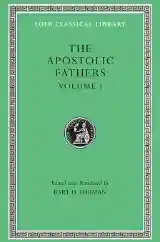
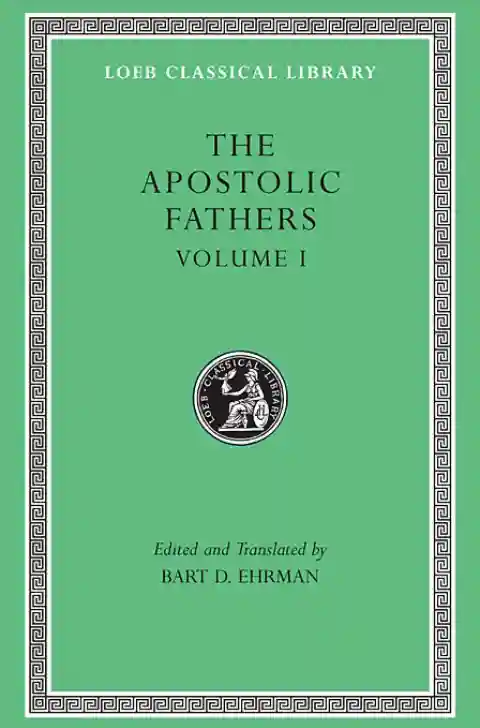
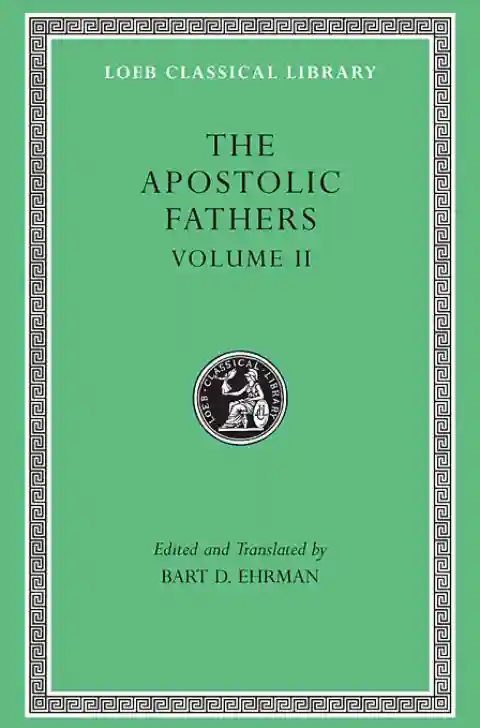
"The Apostolic Fathers" by Bart D. Ehrman is a comprehensive collection of early Christian writings from the 1st and 2nd centuries that provide insights into the beliefs, practices, and organization of the early church. Ehrman explores the historical context and theological themes of these writings, shedding light on the development of Christianity in its formative years.

Richard Wurmbrand

Richard Wurmbrand Richard Wurmbrand (1909 – 2001) was born in 1909 in Bucharist in the country of Romania. He was the youngest of four boys born in a Jewish family. He lived with his family in Istanbul for a short time. When he was 9, his father died and the Wurmbrands returned to Romania when he was 15. He was sent to study Marxism in Moscow. When he returned, he was already a Comintern Agent. A Comintern Agent was a member of the Communist International Organisation which intended to fight: Like other Romanian Communists, he was arrested and released several times. He married Sabina Oster on 26th October 1936. Wurmbrand and his wife went to live in an isolated village high in the mountains of Romania. But, as a athiest there was no peace to be found in his heart. So one day, when his heart was in a state of turmoil he cried out: “God, if perchance you exist, it is Your duty to reveal yourself to me.” Shorthly after he prayed that prayer, he met a German carpenter in his village who gave him a bible. The carpenter and his wife had been praying earnestly that God would bring a Jew to his village, because the carpenter wanted to bring a Jew to Christ, because Jesus was a Jew. So the carpenter gave him a Bible to read. Wurmbrand said, when he opened that Bible he could not stop weeping. He had read the Bible before but it had meant nothing to him. This time when he opened the Bible he could barely read it because of the copious amount of tears that filled his eyes. Sometime later he found out the carpenter and his wife had been praying earnestly for him. Wurnbrand said that every word that he read were like flames of love burning in his heart. He realized for the first ime in his life that there was a God of love who loved him, even though he had beeen living a bad life and had nurtured a hated towards the concept of a ‘loving’ God. The Power of Intercessory Prayer But now for the first time he knew that Jesus had suffered at the cross of Calvary for his sins and he was loved and accepted of God. Richard and his wife became believers in Jesus the Messiah. All the hatred that he had formerly held toward God was washed away under the blood of Christ and Richard and his wife Sabrina were born of the Spirit. That is the power of intercessory prayer! Richard prepared himself for the ministry. He was ordained as an Anglican minister in 1938 at the start of world war 2. Both Richard and his wife were arrested several times. They were beaten and hauled before a Nazi court. They suffered under the Nazi regime throughout world war 2. But Richard said, it was only a taste of what was to come. Russian Troups Enter Romania Towards the end of world war 2, Richard Wurmbrand became a Lutheran and he pastored a Lutheran church in Romania. But, the same year, 1 million Russian troups entered and occupied the entire territory of Romania. Within a very short space of time the Communists took over Romania. The reign of terror began. Out of fear 4,000 priests, pastors & ministers became Communists overnight. They confessed their allegience and loyalty to the new Communist Government because they all feared for their survival. Romania’s Resistance Harsh persecutions of any enemies of the Communist government started with the Soviet occupation in 1945. The Soviet army behaved as an occupation force (although theoretically it was an ally against Nazi Germany), and could arrest virtually anyone at will. Shortly after Soviet occupation, ethnic Germans (who were Romanian citizens and had been living as a community in Romania for 800 years) were deported to the Donbas coal mines. Despite the King’s protest, who pointed out that this was against international law, an estimated 70,000 men and women were forced to leave their homes, starting in January 1945, before the war had even ended. They were loaded in cattle cars and put to work in the Soviet mines for up to ten years as “reparations”, where about one in five died from disease, accidents and malnutrition. Once the Communist government became more entrenched, the number of arrests increased. All strata of society were involved, but particularly targeted were the pre-war elites, such as intellectuals, clerics, teachers, former politicians (even if they had left-leaning views) and anybody who could potentially form the nucleus of anti-Communist resistance. The existing prisons were filled with political prisoners, and a new system of forced labor camps and prisons was created, modeled after the Soviet Gulag. Some of the most notorious prisons included Sighet, Gherla, Piteşti and Aiud, and forced labor camps were set up at lead mines and in the Danube Delta. Underground Church Richard and his wife knew that Christianity and Communism were totally opposed to each other. They knew that a true follower of Christ cannot compromise. So they created an “Underground Church” movement to preach the pure gospel of Christ and to reach out to the unsaved people of Romania and secondly to reach out secretly to the Russian soldiers. They secretly printed thousands of Bibles and Christian literature and distributed it to the Russian soldiers. Many of the Russian soldiers were convicted and they gave their life to Christ. So the underground church grew. But, in 1948 the Secret Police arrested Wurmbrand and he was placed in solitary confinement for 3 years. He was then transferred to a group cell for the next five years. Whilst in prison he continued to win the other prisoners to Christ. After 8 years in prison he was released and he immediately resumed his work with the undergound church. A few years later, 1959, he was arrested again and was sentenced to 25 years in prison. However, after spending 5 years in prison an organisation called the Christian Alliance negotiated with the Communist Government and they managed to secure his release for a fee of $10,000. They quickly got Richard Wurmbrand out of Romania and took him to England, then to the USA. In 1966, Richard was called to Washington DC to give his testimony before the United States Senate. He took off his shirt to show the Senate the scars and the wounds that he received whilst he served time in prison under the Communist Government in Romania. The newspapers throughout the USA, Europe and Asia carried his story all across the world. Christian leaders called him the “Voice of the Underground Church.” In 1967, with a $100 old typewriter and 500 names and addresses, Richard Wurmbrand published the first issue of THE VOICE OF THE MARTYRS newsletter. This newsletter was dedicated to communicating the testimonies and trails facing our brothers and sisters in restricted nations worldwide. Richard wrote: “The message I bring from the Underground Church is: “Don’t abandon us!” “Don’t forget us!” “Don’t write us off!” “Give us the tools we need! We will pay the price for using them!” “This is the message I have been charged to deliver to the free church.” Richard Wurmbrand and his wife travelled throughout the world to establish a network of over 30 offices. Their primary aim was to call Christians to shoulder their responsibility and to demonstrate the real substance of their faith by supporting their brothers and sisters in Christ who are being persecuted in heathen lands. The VOICE OF THE MARTYRS newsletter continues to inform, and lead to action, Christians throughout the free world of the plight of those who suffer for their faith in Jesus Christ. Throughout their network of offices around the world, the newsletter is published in over 30 different languages. To this cause, VOICE OF THE MARTYRS presses on, serving in nearly 40 countries around the world where our brothers and sisters are systematically persecuted. The writer of the Book of Hebrews brings a convicting word to the Christian church: ” Remember them that are in bonds, as bound with them; and them that suffer adversity, as being yourselves also in the body.” (Hebrews 13:3) We have a responsibility to those who suffer for their faith in Christ. Today, there is an estimated 200 million Christians in heathen nations who are suffering persecution for their faith in Christ.

‘One Another’ Your One and Only

What’s your favorite charge, or piece of counsel, you have heard in a wedding homily? Any Christian minister who has performed a wedding knows the challenge and opportunity of that moment. We have a precious few minutes to capture the moment and hang out a vision for the newlyweds to pursue for the rest of their days. On more than one occasion, I have surprised the couple with this charge: “Enjoy this day with everything you have, and when it is over, in one way, pretend like it never happened.” You can probably imagine their facial expressions. If it weren’t such a formal moment, I’m sure they would interrupt, “What do you mean, ‘Pretend like it never happened’? We’ve been waiting for this day for so long!” After a brief pause to allow their curiosity to grow, I go on to explain the wisdom behind my intentionally provocative words. The key to understanding the charge is in the phrase “in one way.” Kissing Pursuit Goodbye I am not charging couples to pretend like their wedding day never happened in every way, or even in most ways. Marriage brings many new and wonderful realities that are to be embraced with joyful seriousness. That said, I have observed that kissing the bride is often followed by kissing goodbye a way of loving each other. For so many, the wedding day marks the end of a way of relating that can be best characterized as the pursuit. While the specific practices may differ from one couple to another, the principle often remains the same: the dating days are characterized by a pursuit of the one we love, but as the months and years pass, the pursuit sadly gets left behind. It’s often replaced by a new “married” way of relating that could be characterized as existing together. This far-too-common pattern of relating can be summarized: Pursue. Catch. Exist. “Kissing the bride is often followed by kissing goodbye a way of loving each other.” While this dynamic of existing together often becomes the norm, what if there were another way? What if the transition from singleness to marriage should be and could be summarized differently? Consider this: Pursue. Catch. Pursue. I choose the phrases “should be” and “could be” because I am convinced that many spouses either lack a vision for why they should keep pursuing each other or they lack practical help in how to make it a reality (or both!). Why We Pursue Before rushing to discuss how we love one another, the Christian spouse would be well served to first clarify why. This question finds its answer in the way we are loved by God. God’s love for us establishes the bullseye for how we seek to love one another. We are called to love just as God loves us (John 13:15; Ephesians 4:32; 5:29). And this is clear: we are loved by a pursue-catch-pursue God. David captured God’s never-ending pursuit when he declared, “Surely goodness and mercy shall follow [or pursue] me all the days of my life, and I shall dwell in the house of the Lord forever” (Psalm 23:6). David rejoices in the reality that God’s pursuit wasn’t only to get him into his house, but it continues while he lives there. The apostle Paul gives an even longer view of the “hound of heaven” when he declares that for all eternity God will be showing “the immeasurable riches of his grace in kindness toward us in Christ Jesus” (Ephesians 2:7). Our God is ever in pursuit, and we are to follow his lead in the way we love — and first and foremost in the way we love our spouse. It’s worth clarifying that our goal is reflection, not perfection. None of us can perfectly love a spouse like Jesus does in all ways and at all times. While perfection is not the expectation, Spirit-filled followers of Christ should expect to consistently grow in our ability to reflect the love of God to our one and only. Consistent over Elaborate When I encourage couples to keep pursuing each other, I can already hear the objections, as if the idea is something out of a fairy tale, rather than one rooted in reality. “We can’t do that.” “We don’t have the time or the money for that.” “We have jobs, kids, responsibilities, and more often than not feel like we are being crushed each day.” “There’s just no way we can pursue one another like when we were dating and engaged.” These objections might be more valid if the call were to consistently pursue each other in elaborate ways. While elaborate pursuits have their place in a marriage, that’s not the first type of pursuit that couples should focus on. To put it in a phrase: consistent is greater than elaborate. Think about the love ethos of your marriage like building a fire. Before we add the large (elaborate) pieces of firewood, we first build a base of heat through placing many tiny sticks, twigs, and leaves. In fact, if we try to place a large piece of firewood too early, it will do the opposite of what we want. Instead of igniting the fire, it will put it out. The same is true in our marriages. When we neglect the small and consistent daily acts of pursuit, our elaborate attempts will often backfire. (Yes, I speak from personal experience.) The marriage that keeps the fire burning through each passing age and life stage is one in which both spouses commit to consistently, even daily, pursue one another. Little More Kindness Many spouses think too much about pursuing in elaborate ways and too little about consistent, everyday expressions of love. Our consumer-driven society leads us to focus on holidays and special days, when what our marriages often need most is a little more kindness and thoughtfulness each and every day. What if the missing piece in your marriage has little to do with figuring out how to love your spouse differently than everyone else? What if the secret to a better marriage is in learning to love your spouse just like you are called to love everyone else? I have often heard people say, “The Bible doesn’t give much guidance about marriage.” While the Bible may not speak exclusively about the relationship between husbands and wives as often as we’d like, it says a great deal about how we are to treat one another in Christ. God has given us dozens of specific “one another” commands in the mouth of Jesus and the letters of the apostles. He calls us to be kind to one another (Ephesians 4:32), serve one another (Galatians 5:13), forgive one another (Colossians 3:13), encourage one another (Hebrews 3:13), honor one another (Romans 12:10), live in harmony with one another (Romans 12:16), pray for one another (James 5:16), and submit to one another (Ephesians 5:21) — just to name a few. “Husbands and wives, you are called to ‘one another’ your ‘one and only.’” Husbands and wives, you are called to one-another your one-and-only. These small, seemingly simple expressions of intentional and authentic interest in your spouse, expressed consistently over time, can radically alter the culture of your marriage. First Steps Toward Each Other Sadly, many spouses seem content to take the “one another” commands out into the world during the day, but then leave them on the front porch as they walk into the home. How tragic would it be to have a Christian home with defined callings for husband and wife but without consistent and discernible Christlike love? God does not mean for a few explicit passages about marriage to replace all of God’s commands for how we treat one another. No, our one-and-only should be the first person we one-another. Our marriage love will be kindled by first committing to love our special one as we are called to love everyone. For many of us, this process begins with repentance. We have demanded to receive one-and-only love from our spouse, yet neglected to give one-another love to our spouse. If this is you, seek God’s help, ask your spouse to forgive you, and find a list of the “one another” commands in the New Testament. Read prayerfully over them and look for a few that the Holy Spirit presses on your heart to begin focusing on even this week. As you begin to one-another your one-and-only, you will be laying kindling and blowing oxygen on the fires of your marriage. Article by Matt Bradner

Feedback
Suggestionsuggestion box
x