-by-franklin-hall.webp)

Atomic Power With God (Through Fastng And Prayer) Order Printed Copy
- Author: Franklin Hall
- Size: 5.52MB | 41 pages
- |
Others like atomic power with god (through fastng and prayer) Features >>
Praying Your Way Out Of Bondage
On Prayer
Responding To Spontaneous Burden

Revive Thy Work
-160.webp)
Carriers Of The Glory (Becoming A Friend Of The Holy Spirit)
The Hidden Power Of Prayer And Fasting
Ten Ways God Speaks
-160.webp)
Hi God, It's Me Again (What To Pray When You Don't Know What To Say)
Understanding The Power Of Praise
Only Believe
About the Book
"Atomic Power With God" by Franklin Hall explores the spiritual benefits and power that can be achieved through fasting and prayer. Hall discusses how fasting and prayer can help individuals tap into God's power and experience spiritual breakthroughs in their lives. The book emphasizes the importance of discipline, faith, and surrender in achieving a deeper connection with God and experiencing His miraculous power.
Hannah More
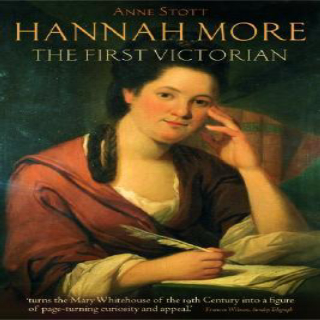 Beyond any doubt, Hannah More was the most influential female member of the Society for Effecting the Abolition of the African Slave Trade. She was educated at Bristol, an important slave-trading town, and began to publish her writing in the 1760s, while she was still a teenager. Her first play, The Inflexible Captive, was staged at Bath in 1775. Later in the 1770s, and for much of the 1780s, she spent time in London and made the acquaintance of many important political and society figures, including Samuel Johnson, Edmund Burke, and Elizabeth Montagu. Her play Percy was produced by David Garrick in 1777, and Fatal Falsehood was staged in 1779, but she came to regard the theatre as morally wrong, especially after the death of her mentors; Garrick and Johnson. She turned to religious writing, beginning with her Sacred Dramas in 1782. In 1784-5, she 'discovered' Ann Yearsley, the so-called 'poetical milkmaid of Bristol', whose poems More helped to publish, although the two later fell out.
In the 1780s, More widened her circle to include religious and philanthropic figures, including John Newton, Beilby Porteus and William Wilberforce. In the summer of 1786, she spent time with Sir Charles and Lady Margaret Middleton at the their home in Teston in Kent. Among their guests were the local vicar James Ramsay and a young Thomas Clarkson, both of whom were central to the early abolition campaign. More and Clarkson met again in Bristol in 1787, while he was on his fact-finding mission to the city, but they did not become close. However, in the same year More met Wilberforce, and their friendship was to become a deep and lasting one. More contributed much to the running of the newly-founded Abolition Society including, in February 1788, her publication of Slavery, a Poem which has been recognised as one of the more important slavery poems of the abolition period. Her relationship with members of the society, especially Wilberforce, was close. For example, she spent the summer of 1789 holidaying with Wilberforce in the Peak District - planning for the abolition campaign, at that time at its height, formed a great deal of their conversation.
By the mid-1790s, More had become closely involved with the 'Clapham Sect' of evangelical Christians, many of whom were involved in the abolition campaign. The group centred on Henry Thornton's home in Clapham and included Wilberforce, James Stephen, and Zachary Macaulay, among others. Throughout the 1790s, she wrote a number of religious tracts, known as the Cheap Repository Tracts, that eventually led to the formation of the Religious Tracts Society. Several of the Tracts oppose slavery and the slave trade, in particular, the poem The Sorrows of Yamba; or, The Negro Woman's Lamentation, which appeared in November 1795 and which was co-authored with Eaglesfield Smith. However, the tracts have also been noted for their encouragement of social quietism in an age of revolution. She continued to oppose slavery throughout her life, but at the time of the Abolition Bill of 1807, her health did not permit her to take as active a role in the movement as she had done in the late 1780s, although she maintained a correspondence with Wilberforce and others. In her later life, she dedicated much time to religious writing. Nevertheless, her most popular work was a novel, Coelebs in Search of a Wife, which appeared in two volumes in 1809 (and which ran to nine editions in 1809 alone). In the 1820s she grew gradually less well, and decreased - but did not entirely halt - the amount of writing she produced. On her death in 1833, she left more than £30,000 to charities and religious societies (equivalent to about £2,000,000 or $3,000,000 in 2004).
© Brycchan Carey 2004
Beyond any doubt, Hannah More was the most influential female member of the Society for Effecting the Abolition of the African Slave Trade. She was educated at Bristol, an important slave-trading town, and began to publish her writing in the 1760s, while she was still a teenager. Her first play, The Inflexible Captive, was staged at Bath in 1775. Later in the 1770s, and for much of the 1780s, she spent time in London and made the acquaintance of many important political and society figures, including Samuel Johnson, Edmund Burke, and Elizabeth Montagu. Her play Percy was produced by David Garrick in 1777, and Fatal Falsehood was staged in 1779, but she came to regard the theatre as morally wrong, especially after the death of her mentors; Garrick and Johnson. She turned to religious writing, beginning with her Sacred Dramas in 1782. In 1784-5, she 'discovered' Ann Yearsley, the so-called 'poetical milkmaid of Bristol', whose poems More helped to publish, although the two later fell out.
In the 1780s, More widened her circle to include religious and philanthropic figures, including John Newton, Beilby Porteus and William Wilberforce. In the summer of 1786, she spent time with Sir Charles and Lady Margaret Middleton at the their home in Teston in Kent. Among their guests were the local vicar James Ramsay and a young Thomas Clarkson, both of whom were central to the early abolition campaign. More and Clarkson met again in Bristol in 1787, while he was on his fact-finding mission to the city, but they did not become close. However, in the same year More met Wilberforce, and their friendship was to become a deep and lasting one. More contributed much to the running of the newly-founded Abolition Society including, in February 1788, her publication of Slavery, a Poem which has been recognised as one of the more important slavery poems of the abolition period. Her relationship with members of the society, especially Wilberforce, was close. For example, she spent the summer of 1789 holidaying with Wilberforce in the Peak District - planning for the abolition campaign, at that time at its height, formed a great deal of their conversation.
By the mid-1790s, More had become closely involved with the 'Clapham Sect' of evangelical Christians, many of whom were involved in the abolition campaign. The group centred on Henry Thornton's home in Clapham and included Wilberforce, James Stephen, and Zachary Macaulay, among others. Throughout the 1790s, she wrote a number of religious tracts, known as the Cheap Repository Tracts, that eventually led to the formation of the Religious Tracts Society. Several of the Tracts oppose slavery and the slave trade, in particular, the poem The Sorrows of Yamba; or, The Negro Woman's Lamentation, which appeared in November 1795 and which was co-authored with Eaglesfield Smith. However, the tracts have also been noted for their encouragement of social quietism in an age of revolution. She continued to oppose slavery throughout her life, but at the time of the Abolition Bill of 1807, her health did not permit her to take as active a role in the movement as she had done in the late 1780s, although she maintained a correspondence with Wilberforce and others. In her later life, she dedicated much time to religious writing. Nevertheless, her most popular work was a novel, Coelebs in Search of a Wife, which appeared in two volumes in 1809 (and which ran to nine editions in 1809 alone). In the 1820s she grew gradually less well, and decreased - but did not entirely halt - the amount of writing she produced. On her death in 1833, she left more than £30,000 to charities and religious societies (equivalent to about £2,000,000 or $3,000,000 in 2004).
© Brycchan Carey 2004
Why Not Giving Can Hurt You
I have this one friend, everywhere she goes, she gives gifts. Roses to teachers, journals to me, and flowers to so many. She is gifted in gifts. Is she trying to make me look bad? She is so impressive! I am normally the one loaded with 2 kids, a purse loaded with the rock of baby wipes and a to-do list times one thousand. Getting out to buy gifts feels as impossible as moving a herd of animals through the eye of a needle. Giving is something I always want to do, but it takes a back seat to my life. It's something that I love to get, but have a hard time extending. I know it blesses, but it also heightens my stresses. Yet, research has proven that giving: - increases the health of those with chronic illnesses (Stephen Post, Why Good Things Happen to Good People) - decreases the risk of dying in the elderly after volunteering (Doug Oman, University of California, Berkeley) - lowers stress and blood pressure. Clearly giving is a great thing. The more we outpour the more that inpours to us. A woman came with a special sealed jar. It contained very expensive perfume made out of pure nard. She broke the jar open and poured the perfume on Jesus’ head. Mk. 14:3 This woman outpoured a ton - a year's worth of salary. Her deep sacrifice was a true outpouring of her heart. There is no mention of the kids screaming at home, the wipes in her bag or the lists of things she had to do, she just poured out. When we keep our eyes on Jesus, suddenly our excuses grow small and our causes grow big. This woman poured out great love through this great gift, a great sacrifice for a great God and a great example for the great, great, great...grandchildren of Jesus today. What would happen if we poured out like she did? Might Jesus say to us: She has done a beautiful thing to me... Mark 14:6 Might our name be more greatly etched into the world and eternity? What she has done will be told anywhere the good news is preached all over the world. It will be told in memory of her.” Mk 14:9 As she stood...weeping, she began to wet his feet with her tears. Then she wiped them with her hair, kissed them and poured perfume on them. Lu. 7:38 When we pour, like this woman and then our hearts melt like wax. The wick of our pride, selfishness and complacency melt down to the ground, leaving us on our knees, where we receive and give our very best. We take our hair and we wipe the feet of others. We get into the nitty gritty of grime, into the places where it feels uncomfortable, into the places where we prepare others for a new life. It's in the offering of our greatest - in the wiping of the dirty - that we get to kiss the feet of the one who walked into desolate dry hearts to make abundant new life. When we touch these needy, unseen and untouchable places with our greatest gift, love, we find our hearts are restored. We find it's so much less about the other and so much more about Jesus reconfiguring our vision. We find deeper connection with the recipient and with the one who is all sufficient. Giving is the only gift that hands back more than we could ever hand out. It's one of the only ways to get more than you ever asked for. Kelly Balarie