
Others like on prayer Features >>



-160.webp)
-160.webp)
About the Book
"On Prayer" by Charles G. Finney is a comprehensive guide to developing a meaningful and effective prayer life. Finney explores the importance of prayer, how to pray effectively, common obstacles to prayer, and strategies for cultivating a consistent prayer practice. The book emphasizes the power of prayer in connecting with God, accessing divine guidance, and transforming lives. It offers practical advice and inspiration for individuals seeking to deepen their relationship with God through prayer.
David Livingstone
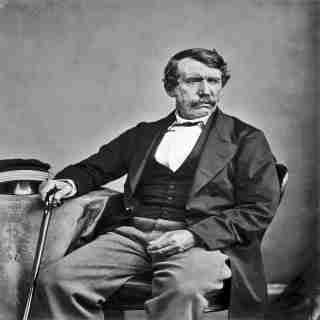 "[I am] serving Christ when shooting a buffalo for my men or taking an observation, [even if some] will consider it not sufficiently or even at all missionary."
With four theatrical words, "Dr. Livingstone, I presume?"—words journalist Henry Morton Stanley rehearsed in advance—David Livingstone became immortal. Stanley stayed with Livingstone for five months and then went off to England to write his bestseller, How I Found Livingstone. Livingstone, in the meantime, got lost again—in a swamp literally up to his neck. Within a year and a half, he died in a mud hut, kneeling beside his cot in prayer.
Berlin Congress spurs African independent churches
The whole civilized world wept. They gave him a 21-gun salute and a hero's funeral among the saints in Westminster Abbey. "Brought by faithful hands over land and sea," his tombstone reads, "David Livingstone: missionary, traveler, philanthropist. For 30 years his life was spent in an unwearied effort to evangelize the native races, to explore the undiscovered secrets, and to abolish the slave trade." He was Mother Teresa, Neil Armstrong, and Abraham Lincoln rolled into one.
Highway man
At age 25, after a childhood spent working 14 hours a day in a cotton mill, followed by learning in class and on his own, Livingstone was captivated by an appeal for medical missionaries to China. As he trained, however, the door to China was slammed shut by the Opium War. Within six months, he met Robert Moffat, a veteran missionary of southern Africa, who enchanted him with tales of his remote station, glowing in the morning sun with "the smoke of a thousand villages where no missionary had been before."
For ten years, Livingstone tried to be a conventional missionary in southern Africa. He opened a string of stations in "the regions beyond," where he settled down to station life, teaching school and superintending the garden. After four years of bachelor life, he married his "boss's" daughter, Mary Moffat.
From the beginning, Livingstone showed signs of restlessness. After his only convert decided to return to polygamy, Livingstone felt more called than ever to explore. During his first term in South Africa, Livingstone made some of the most prodigious—and most dangerous—explorations of the nineteenth century. His object was to open a "Missionary Road"—"God's Highway," he also called it—1,500 miles north into the interior to bring "Christianity and civilization" to unreached peoples.
Explorer for Christ
On these early journeys, Livingstone's interpersonal quirks were already apparent. He had the singular inability to get along with other Westerners. He fought with missionaries, fellow explorers, assistants, and (later) his brother Charles. He held grudges for years. He had the temperament of a book-reading loner, emotionally inarticulate except when he exploded with Scottish rage. He held little patience for the attitudes of missionaries with "miserably contracted minds" who had absorbed "the colonial mentality" regarding the natives. When Livingstone spoke out against racial intolerance, white Afrikaners tried to drive him out, burning his station and stealing his animals.
He also had problems with the London Missionary Society, who felt that his explorations were distracting him from his missionary work. Throughout his life, however, Livingstone always thought of himself as primarily a missionary, "not a dumpy sort of person with a Bible under his arms, [but someone] serving Christ when shooting a buffalo for my men or taking an observation, [even if some] will consider it not sufficiently or even at all missionary."
Though alienated from the whites, the natives loved his common touch, his rough paternalism, and his curiosity. They also thought he might protect them or supply them with guns. More than most Europeans, Livingstone talked to them with respect, Scottish laird to African chief. Some explorers took as many as 150 porters when they traveled; Livingstone traveled with 30 or fewer.
On an epic, three-year trip from the Atlantic Ocean to the Indian Ocean (reputedly the first by a European) Livingstone was introduced to the 1,700-mile-long Zambezi. The river was also home to Victoria Falls, Livingstone's most awe-inspiring discovery. The scene was "so lovely," he later wrote, that it "must have been gazed upon by angels in their flight."
Despite its beauty, the Zambezi was a river of human misery. It linked the Portuguese colonies of Angola and Mozambique, the main suppliers of slaves for Brazil, who in turn sold to Cuba and the United States. Though Livingstone was partially driven by a desire to create a British colony, his primary ambition was to expose the slave trade and cut it off at the source. The strongest weapon in this task, he believed, was Christian commercial civilization. He hoped to replace the "inefficient" slave economy with a capitalist economy: buying and selling goods instead of people.
The ill-fated Zambezi expedition
After a brief heroic return to England, Livingstone returned to Africa, this time to navigate 1,000 miles up the Zambezi in a brass-and-mahogany steamboat to establish a mission near Victoria Falls. The boat was state-of-the-art technology but proved too frail for the expedition. It leaked horribly after repeatedly running aground on sandbars.
Livingstone pushed his men beyond human endurance. When they reached a 30-foot waterfall, he waved his hand, as if to wish it away, and said, "That's not supposed to be there." His wife, who had just given birth to her sixth child, died in 1862 beside the river, only one of several lives claimed on the voyage. Two years later, the British government, which had no interest in "forcing steamers up cataracts," recalled Livingstone and his mission party.
A year later, he was on his way back to Africa again, this time leading an expedition sponsored by the Royal Geographical Society and wealthy friends. "I would not consent to go simply as a geographer," he emphasized, but as biographer Tim Jeal wrote, "It would be hard to judge whether the search for the Nile's source or his desire to expose the slave trade was his dominant motive." The source of the Nile was the great geographical puzzle of the day. But more important to Livingstone was the possibility of proving that the Bible was true by tracing the African roots of Judaism and Christianity.
For two years he simply disappeared, without a letter or scrap of information. He reported later that he had been so ill he could not even lift a pen, but he was able to read the Bible straight through four times. Livingstone's disappearance fascinated the public as much as Amelia Earhart's a few generations later.
When American journalist Henry Stanley found Livingstone, the news exploded in England and America. Papers carried special editions devoted to the famous meeting. In August 1872, in precarious health, Livingstone shook Stanley's hand and set out on his final journey.
When Livingstone had arrived in Africa in 1841, it was as exotic as outer space, called the "Dark Continent" and the "White Man's Graveyard." although the Portuguese, Dutch, and English were pushing into the interior, African maps had blank unexplored areas—no roads, no countries, no landmarks. Livingstone helped redraw the maps, exploring what are now a dozen countries, including South Africa, Rwanda, Angola, and the Republic of the Congo (formerly Zaire). And he made the West aware of the continuing evil of African slavery, which led to its being eventually outlawed.
"[I am] serving Christ when shooting a buffalo for my men or taking an observation, [even if some] will consider it not sufficiently or even at all missionary."
With four theatrical words, "Dr. Livingstone, I presume?"—words journalist Henry Morton Stanley rehearsed in advance—David Livingstone became immortal. Stanley stayed with Livingstone for five months and then went off to England to write his bestseller, How I Found Livingstone. Livingstone, in the meantime, got lost again—in a swamp literally up to his neck. Within a year and a half, he died in a mud hut, kneeling beside his cot in prayer.
Berlin Congress spurs African independent churches
The whole civilized world wept. They gave him a 21-gun salute and a hero's funeral among the saints in Westminster Abbey. "Brought by faithful hands over land and sea," his tombstone reads, "David Livingstone: missionary, traveler, philanthropist. For 30 years his life was spent in an unwearied effort to evangelize the native races, to explore the undiscovered secrets, and to abolish the slave trade." He was Mother Teresa, Neil Armstrong, and Abraham Lincoln rolled into one.
Highway man
At age 25, after a childhood spent working 14 hours a day in a cotton mill, followed by learning in class and on his own, Livingstone was captivated by an appeal for medical missionaries to China. As he trained, however, the door to China was slammed shut by the Opium War. Within six months, he met Robert Moffat, a veteran missionary of southern Africa, who enchanted him with tales of his remote station, glowing in the morning sun with "the smoke of a thousand villages where no missionary had been before."
For ten years, Livingstone tried to be a conventional missionary in southern Africa. He opened a string of stations in "the regions beyond," where he settled down to station life, teaching school and superintending the garden. After four years of bachelor life, he married his "boss's" daughter, Mary Moffat.
From the beginning, Livingstone showed signs of restlessness. After his only convert decided to return to polygamy, Livingstone felt more called than ever to explore. During his first term in South Africa, Livingstone made some of the most prodigious—and most dangerous—explorations of the nineteenth century. His object was to open a "Missionary Road"—"God's Highway," he also called it—1,500 miles north into the interior to bring "Christianity and civilization" to unreached peoples.
Explorer for Christ
On these early journeys, Livingstone's interpersonal quirks were already apparent. He had the singular inability to get along with other Westerners. He fought with missionaries, fellow explorers, assistants, and (later) his brother Charles. He held grudges for years. He had the temperament of a book-reading loner, emotionally inarticulate except when he exploded with Scottish rage. He held little patience for the attitudes of missionaries with "miserably contracted minds" who had absorbed "the colonial mentality" regarding the natives. When Livingstone spoke out against racial intolerance, white Afrikaners tried to drive him out, burning his station and stealing his animals.
He also had problems with the London Missionary Society, who felt that his explorations were distracting him from his missionary work. Throughout his life, however, Livingstone always thought of himself as primarily a missionary, "not a dumpy sort of person with a Bible under his arms, [but someone] serving Christ when shooting a buffalo for my men or taking an observation, [even if some] will consider it not sufficiently or even at all missionary."
Though alienated from the whites, the natives loved his common touch, his rough paternalism, and his curiosity. They also thought he might protect them or supply them with guns. More than most Europeans, Livingstone talked to them with respect, Scottish laird to African chief. Some explorers took as many as 150 porters when they traveled; Livingstone traveled with 30 or fewer.
On an epic, three-year trip from the Atlantic Ocean to the Indian Ocean (reputedly the first by a European) Livingstone was introduced to the 1,700-mile-long Zambezi. The river was also home to Victoria Falls, Livingstone's most awe-inspiring discovery. The scene was "so lovely," he later wrote, that it "must have been gazed upon by angels in their flight."
Despite its beauty, the Zambezi was a river of human misery. It linked the Portuguese colonies of Angola and Mozambique, the main suppliers of slaves for Brazil, who in turn sold to Cuba and the United States. Though Livingstone was partially driven by a desire to create a British colony, his primary ambition was to expose the slave trade and cut it off at the source. The strongest weapon in this task, he believed, was Christian commercial civilization. He hoped to replace the "inefficient" slave economy with a capitalist economy: buying and selling goods instead of people.
The ill-fated Zambezi expedition
After a brief heroic return to England, Livingstone returned to Africa, this time to navigate 1,000 miles up the Zambezi in a brass-and-mahogany steamboat to establish a mission near Victoria Falls. The boat was state-of-the-art technology but proved too frail for the expedition. It leaked horribly after repeatedly running aground on sandbars.
Livingstone pushed his men beyond human endurance. When they reached a 30-foot waterfall, he waved his hand, as if to wish it away, and said, "That's not supposed to be there." His wife, who had just given birth to her sixth child, died in 1862 beside the river, only one of several lives claimed on the voyage. Two years later, the British government, which had no interest in "forcing steamers up cataracts," recalled Livingstone and his mission party.
A year later, he was on his way back to Africa again, this time leading an expedition sponsored by the Royal Geographical Society and wealthy friends. "I would not consent to go simply as a geographer," he emphasized, but as biographer Tim Jeal wrote, "It would be hard to judge whether the search for the Nile's source or his desire to expose the slave trade was his dominant motive." The source of the Nile was the great geographical puzzle of the day. But more important to Livingstone was the possibility of proving that the Bible was true by tracing the African roots of Judaism and Christianity.
For two years he simply disappeared, without a letter or scrap of information. He reported later that he had been so ill he could not even lift a pen, but he was able to read the Bible straight through four times. Livingstone's disappearance fascinated the public as much as Amelia Earhart's a few generations later.
When American journalist Henry Stanley found Livingstone, the news exploded in England and America. Papers carried special editions devoted to the famous meeting. In August 1872, in precarious health, Livingstone shook Stanley's hand and set out on his final journey.
When Livingstone had arrived in Africa in 1841, it was as exotic as outer space, called the "Dark Continent" and the "White Man's Graveyard." although the Portuguese, Dutch, and English were pushing into the interior, African maps had blank unexplored areas—no roads, no countries, no landmarks. Livingstone helped redraw the maps, exploring what are now a dozen countries, including South Africa, Rwanda, Angola, and the Republic of the Congo (formerly Zaire). And he made the West aware of the continuing evil of African slavery, which led to its being eventually outlawed.
Food Rules
A graduate student sits at a booth with friends, his second drink near empty. “Can I refill you?” the waiter asks. A mother sees the chocolate as she reaches for her youngest’s sippy cup. She tries not to eat sugar in the afternoons, but she’s tired and stressed, and the children aren’t looking. A father comes back to the kitchen after putting the kids down. Dinner is done, but the leftover pizza is still sitting out. The day has drained him, and another few pieces seem harmless. Compared to the battles many fight — against addiction, against pornography, against anger, against pride — scenarios such as these may seem too trivial for discussion. Don’t we have bigger sins to worry about than the gluttony of secret snacks and third helpings? And yet, food is a bigger battleground than many recognize. Do you remember Moses’s terse description of the world’s first sin? She took of its fruit and ate , and she also gave some to her husband who was with her, and he ate . (Genesis 3:6) Murder did not bar Adam and Eve from paradise — nor did adultery, theft, lying, or blasphemy. Eating did. Our first parents ate their way out of Eden. And in our own way, so do we. Garden of Eating Food problems, whether large (buffet binging) or small (hidden, uncontrolled snacking), go back to the beginning. Our own moments before the refrigerator or the cupboard can, in some small measure, reenact that moment by the tree. And apart from well-timed grace from God, we often respond in one of two ungodly ways. “Our first parents ate their way out of Eden. And in our own way, so do we.” Some, like Adam and Eve, choose to indulge . They sense, on some level, that to eat is to quiet the voice of conscience and weaken the walls of self-control (Proverbs 25:28). They would recognize, if they stopped to ponder and pray, that this “eating is not from faith” (Romans 14:23). But they neither stop, nor ponder, nor pray. Instead, they tip their glass for another drink, snatch and swallow the chocolate, grab a few more slices. Wisdom’s protest avails little against the suggestion of “just one more.” “Since Eden,” Derek Kidner writes, “man has wanted the last ounce out of life, as though beyond God’s ‘enough’ lay ecstasy, not nausea” ( Proverbs , 152). And so, the indulgent drink and grab and sip and snack, forgetting that their grasping leads them, not deeper into Eden’s heart, but farther outside Eden’s walls, where, nauseous and bloated, they bow to the god called “belly” (Philippians 3:19; see also Romans 16:18). Meanwhile, others choose to deny . Their motto is not “Eat, drink, be merry” (Luke 12:19), but “Do not handle, do not taste, do not touch” (Colossians 2:21). They frantically count calories, buy scales, and build their lives on the first floor of the food pyramid. Though they may not impose their diets on others, at least for themselves they “require abstinence from foods that God created to be received with thanksgiving” (1 Timothy 4:3) — as if one should see Eden’s lawful fruit and say, “I’m good with grass.” If our God-given appetites are a stallion, some let the horse run unbridled, while others prefer to shut him up in a stable. Still others, of course, alternate (sometimes wildly) between the two. In Christ, however, God teaches us to ride. Appetite Redeemed Paul’s familiar command to “be imitators of me, as I am of Christ” (1 Corinthians 11:1) comes, surprisingly enough, in the context of food (see 1 Corinthians 8–10, especially 8:7–13 and 10:14–33). And the Gospels tell us why: in Jesus, we find appetite redeemed. “The Son of Man came eating and drinking,” Jesus says of himself (Matthew 11:19) — and he wasn’t exaggerating. Have you ever noticed just how often the Gospels mention food? Jesus’s first miracle multiplied wine (John 2:1–11); two of his most famous multiplied bread (Matthew 14:13–21; 15:32–39). He regularly dined as a guest at others’ homes, whether with tax collectors or Pharisees (Mark 2:13–17; Luke 14:1). He told parables about seeds and leaven, feasts and fattened calves (Matthew 13:1–9, 33; Luke 14:7–11; 15:11–32). When he met his disciples after his resurrection, he asked, “Have you anything here to eat?” (Luke 24:41) — another time, he took the initiative and cooked them breakfast himself (John 21:12). No wonder he thought it good for us to remember him over a meal (Matthew 26:26–29). And yet, for all of his freedom with food, he was no glutton or drunkard. Jesus could feast, but he could also fast — even for forty days and forty nights when necessary (Matthew 4:2). At meals, you never get the sense that he was preoccupied with his plate; rather, God and neighbor were his constant concern (Mark 2:13–17; Luke 7:36–50). And so, when the tempter found him in his weakness, and suggested he make bread to break his fast, our second Adam gave a resolute no (Matthew 4:3–4). Here is a man who knows how to ride a stallion. While some indulged, and others denied, our Lord Jesus directed his appetite. Meeting Eden’s Maker If we are going to imitate Jesus in his eating, we will need more than the right food rules. Adam and Eve did not fall, you’ll remember, for lack of a diet. No, we imitate Jesus’s eating only as we enjoy the kind of communion he had with the Father. This touches the root of the failure at the tree, doesn’t it? Before Eve reached for the fruit, she let the serpent cast a shadow over her Father’s face. She let him convince her that the God of paradise, as Sinclair Ferguson writes, “was possessed of a narrow and restrictive spirit bordering on the malign” ( The Whole Christ , 80). The god of the serpent’s beguiling was a misanthrope deity, one who kept his best fruit on forbidden trees. And so, Eve reached. But through Jesus Christ, we meet God again: the real Maker of Eden, and the only one who can break and tame our appetites. Here is the God who made all the earth’s food; who planted trees on a hundred hills and said, “Eat!” (Genesis 2:16); who feeds his people from “the abundance of [his] house,” and gives “them drink of the river of [his] delights” (Psalm 36:8); who does not withhold anything good from his own (Psalm 84:11); and who, in the fullness of time, withheld not even the greatest of all goods: his beloved Son (Romans 8:32). “We eat, drink, and abstain to the glory of God only when we, like Jesus, taste God himself as our choicest food.” Unlike Adam and Eve, Jesus ate (and abstained) in the presence of this unfathomably good God. And so, when he ate, he gave thanks to the Giver (Matthew 14:19; 1 Corinthians 11:24). When he ran up against his Father’s “You shall not eat,” he did not silence conscience or discard self-control, but feasted on something better than bread alone (Matthew 4:4). “My food,” he told his disciples, “is to do the will of him who sent me and to accomplish his work” (John 4:34). He knew there was a time to eat and a time to abstain, and that both times were governed by the goodness of God. We eat, drink, and abstain to the glory of God only when we, like Jesus, taste God himself as our choicest food (1 Corinthians 10:31; Psalm 34:8). Direct Your Appetite Admittedly, the line between just enough and too much is a blurry one, and even the most mature can fail to notice that border until they’ve eaten beyond it. Even still, between the overflowing plate of indulgence and the empty plate of denial is a third plate, one we increasingly discern and choose as the Spirit refines our heart’s palate. Here, we neither indulge nor deny our appetites, but like our Lord Jesus, we direct them. So then, there you are, ready to grab another portion, take another drink, down another handful, though your best spiritual wisdom dictates otherwise. You are ready, in other words, to reach past God’s “enough” once again. What restores your sanity in that moment? Not repeating the rules with greater fervor, but following the rules back to the mouth of an infinitely good God. When you sense that you have reached God’s “enough” — perhaps through briefly stopping, pondering, praying — you have reached the wall keeping you from leaving the Eden of communion with Christ, that Food better than all food (John 4:34). And so, you walk away, perhaps humming a hymn to the God who is good: Thou art giving and forgiving, Ever blessing, ever blest, Wellspring of the joy of living, Ocean depth of happy rest! This is the Maker of Eden, the God and Father of our Lord Jesus Christ. And if the real God is this good, then we need not grasp for what he has not given.