
Others like prayer warrior Features >>
Just Enough Light For The Step I'm On

I Talk To God About How I Feel
Lord, I Want To Be Whole
30 Days To Becoming A Woman Of Prayer
The Prayer Warrior's Way
The Power Of A Praying Woman
-160.webp)
Praying God's Will For Your Life
The Power Of A Praying Nation

Prayer For Patient Waiting - II Thessalonians 3:5
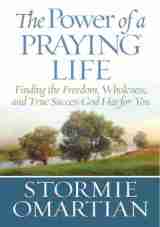
The Power Of A Praying Life
About the Book
"Prayer Warrior" by Stormie Omartian provides practical guidance on how to become more effective in prayer warfare. The book explains the importance of prayer in spiritual battles and offers insights on how to pray strategically, confidently, and persistently. Omartian shares personal stories and powerful prayers to help readers deepen their relationship with God and experience the power of prayer in their lives.
Amy Carmichael
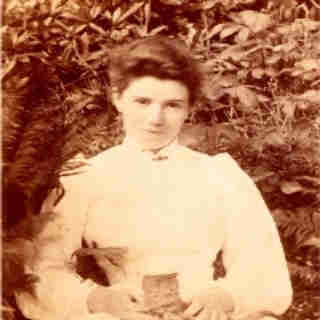 Born in Belfast Ireland, to a devout family of Scottish ancestry, Carmichael was educated at home and in England, where she lived with the familt of Robert Wilson after her father’s death. While never officially adopted, she used the hyphenated name Wilson-Carmichael as late as 1912. Her missionary call came through contacts with the Keswick movement. In 1892 she volunteered to the China Inland Mission but was refused on health grounds. However, in 1893 she sailed for Japan as the first Keswick missionary to join the Church Missionary Society (CMS) work led by Barclay Buxton. After less than two years in Japan and Ceylon, she was back in England before the end of 1894. The next year she volunteered to the Church of England Zenana Missionary Society, and in November 1895 she arrived in South India, never to leave. While still learning the difficult Tamil language, she commenced itinerant evangelism with a band of Indian Christian women, guided by the CMS missionary Thomas Walker. She soon found herself responsible for Indian women converts, and in 1901, she, the Walkers, and their Indian colleagues settled in Dohnavur. During her village itinerations, she had become increasingly aware of the fact that many Indian children were dedicated to the gods by their parents or guardians, became temple children, and lived in moral and spiritual danger. It became her mission to rescue and raise these children, and so the Dohnavur Fellowship came into being (registered 1927). Known at Dohnavur as Amma (Mother), Carmichael was the leader, and the work became well known through her writing. Workers volunteered and financial support was received, though money was never solicited. In 1931 she had a serious fall, and this, with arthritis, kept her an invalid for the rest of her life. She continued to write, and identified leaders, missionary and Indian, to take her place. The Dohnavur Fellowship still continues today.
Jocelyn Murray, “Carmichael, Amy Beatrice,” in Biographical Dictionary of Christian Missions, ed. Gerald H. Anderson (New York: Macmillan Reference USA, 1998), 116.
This article is reprinted from Biographical Dictionary of Christian Missions, Macmillan Reference USA, copyright © 1998 Gerald H. Anderson, by permission of Macmillan Reference USA, New York, NY. All rights reserved.
“Ammai” of orphans and holiness author
Amy Carmichael was born in Ireland in 1867, the oldest of seven children. As a teen, she attended a Wesleyan Methodist girls boarding school, until her father died when she was 18. Carmichael twice attended Keswick Conventions and experienced a holiness conversion which led her to work among the poor in Belfast. Through the Keswick Conventions, Carmichael met Robert Wilson. He developed a close relationship with the young woman, and invited her to live with his family. Carmichael soon felt a call to mission work and applied to the China Inland Mission as Amy Carmichael-Wilson. Although she did not go to China due to health reasons, Carmichael did go to Japan for a brief period of time. There she dressed in kimonos and began to learn Japanese. Her letters home from Japan became the basis for her first book, From Sunrise Land. Carmichael left Japan due to health reasons, eventually returning to England. She soon accepted a position with the Church of England’s Zenana Missionary Society, serving in India. From 1895 to 1925, her work with orphans in Tinnevelly (now Tirunelveli) was supported by the Church of England. After that time, Carmichael continued her work in the faith mission style, establishing an orphanage in Dohnavur. The orphanage first cared for girls who had been temple girls, who would eventually become temple prostitutes. Later the orphanage accepted boys as well.
Carmichael never returned to England after arriving in India. She wrote prolifically, publishing nearly 40 books. In her personal devotions, she relied on scripture and poetry. She wrote many of her own poems and songs. Carmichael had a bad fall in 1931, which restricted her movement. She stayed in her room, writing and studying. She often quoted Julian of Norwich when she wrote of suffering and patience. Many of Carmichael’s books have stories of Dohnavur children, interspersed with scripture, verses, and photographs of the children or nature. Carmichael never directly asked for funding, but the mission continued to be supported through donations. In 1951 Carmichael died at Dohnavur. Her headstone is inscribed “Ammai”, revered mother, which the children of Dohnavur called Carmichael.
Carmichael’s lengthy ministry at Dohnavur was sustained through her strong reliance upon scripture and prayer. Her early dedication to holiness practices and her roots in the Keswick tradition helped to guide her strong will and determination in her mission to the children of southern India.
by Rev. Lisa Beth White
Born in Belfast Ireland, to a devout family of Scottish ancestry, Carmichael was educated at home and in England, where she lived with the familt of Robert Wilson after her father’s death. While never officially adopted, she used the hyphenated name Wilson-Carmichael as late as 1912. Her missionary call came through contacts with the Keswick movement. In 1892 she volunteered to the China Inland Mission but was refused on health grounds. However, in 1893 she sailed for Japan as the first Keswick missionary to join the Church Missionary Society (CMS) work led by Barclay Buxton. After less than two years in Japan and Ceylon, she was back in England before the end of 1894. The next year she volunteered to the Church of England Zenana Missionary Society, and in November 1895 she arrived in South India, never to leave. While still learning the difficult Tamil language, she commenced itinerant evangelism with a band of Indian Christian women, guided by the CMS missionary Thomas Walker. She soon found herself responsible for Indian women converts, and in 1901, she, the Walkers, and their Indian colleagues settled in Dohnavur. During her village itinerations, she had become increasingly aware of the fact that many Indian children were dedicated to the gods by their parents or guardians, became temple children, and lived in moral and spiritual danger. It became her mission to rescue and raise these children, and so the Dohnavur Fellowship came into being (registered 1927). Known at Dohnavur as Amma (Mother), Carmichael was the leader, and the work became well known through her writing. Workers volunteered and financial support was received, though money was never solicited. In 1931 she had a serious fall, and this, with arthritis, kept her an invalid for the rest of her life. She continued to write, and identified leaders, missionary and Indian, to take her place. The Dohnavur Fellowship still continues today.
Jocelyn Murray, “Carmichael, Amy Beatrice,” in Biographical Dictionary of Christian Missions, ed. Gerald H. Anderson (New York: Macmillan Reference USA, 1998), 116.
This article is reprinted from Biographical Dictionary of Christian Missions, Macmillan Reference USA, copyright © 1998 Gerald H. Anderson, by permission of Macmillan Reference USA, New York, NY. All rights reserved.
“Ammai” of orphans and holiness author
Amy Carmichael was born in Ireland in 1867, the oldest of seven children. As a teen, she attended a Wesleyan Methodist girls boarding school, until her father died when she was 18. Carmichael twice attended Keswick Conventions and experienced a holiness conversion which led her to work among the poor in Belfast. Through the Keswick Conventions, Carmichael met Robert Wilson. He developed a close relationship with the young woman, and invited her to live with his family. Carmichael soon felt a call to mission work and applied to the China Inland Mission as Amy Carmichael-Wilson. Although she did not go to China due to health reasons, Carmichael did go to Japan for a brief period of time. There she dressed in kimonos and began to learn Japanese. Her letters home from Japan became the basis for her first book, From Sunrise Land. Carmichael left Japan due to health reasons, eventually returning to England. She soon accepted a position with the Church of England’s Zenana Missionary Society, serving in India. From 1895 to 1925, her work with orphans in Tinnevelly (now Tirunelveli) was supported by the Church of England. After that time, Carmichael continued her work in the faith mission style, establishing an orphanage in Dohnavur. The orphanage first cared for girls who had been temple girls, who would eventually become temple prostitutes. Later the orphanage accepted boys as well.
Carmichael never returned to England after arriving in India. She wrote prolifically, publishing nearly 40 books. In her personal devotions, she relied on scripture and poetry. She wrote many of her own poems and songs. Carmichael had a bad fall in 1931, which restricted her movement. She stayed in her room, writing and studying. She often quoted Julian of Norwich when she wrote of suffering and patience. Many of Carmichael’s books have stories of Dohnavur children, interspersed with scripture, verses, and photographs of the children or nature. Carmichael never directly asked for funding, but the mission continued to be supported through donations. In 1951 Carmichael died at Dohnavur. Her headstone is inscribed “Ammai”, revered mother, which the children of Dohnavur called Carmichael.
Carmichael’s lengthy ministry at Dohnavur was sustained through her strong reliance upon scripture and prayer. Her early dedication to holiness practices and her roots in the Keswick tradition helped to guide her strong will and determination in her mission to the children of southern India.
by Rev. Lisa Beth White
why god’s will isn’t always clear
If God wants us to “walk in a manner worthy of the Lord, fully pleasing to him” (Colossians 1:10), why doesn’t he give us more specific guidance in our decisions? The Spontaneous 95% Consider all of the decisions you make during a typical day. Most are quick and spur-of-the-moment. John Piper estimates “that a good 95% of [our] behavior [we] do not premeditate. That is, most of [our] thoughts, attitudes, and actions are spontaneous.” That’s true. And it’s a bit unnerving when you think about it. The majority of the decisions that end up becoming the bricks in the building of our lives are just “spillover from what’s inside.” Even if we do stop and pray about such decisions, it is very rare that we discern God’s specific leading regarding what we should wear, what or where we should eat, if we should respond to this instance of our child’s sin with correction or forbearance, if we should put off that time-consuming errand till tomorrow, or whether we should check our email again . The Massive 5% But what about the other 5% of our decisions? Some of these are massive and life-shaping. Should I marry this person? How much money should I give away and where? How much should we save for retirement? Should we adopt a child? Should I pursue a different vocation? Should we homeschool or not? Should I pursue chemo or an alternative cancer treatment? Should we buy this home? Which college should I attend? Is it time to put my elderly parent in a nursing home? Should I go to the mission field? Shouldn’t we expect God to direct us more explicitly in these? A Concealing Design “God doesn’t always make his will clear because he values our being transformed more than our being informed.” The answer is no, not necessarily. Why? Well, the short answer is because he is God, and we are not. “It is the glory of God to conceal things” (Proverbs 25:2). His wisdom and knowledge are unfathomably deep, his judgments are unsearchable, and his ways are inscrutable (Romans 11:33). Considering all the factors in play in the universe, it is likely no exaggeration that there are trillions of reasons for why God directs the course of our lives, and he prefers to carry out his purposes in ways that confound, surprise, and humble humans, angels, and demons. There is a tremendous glory that God displays when, without tipping his hand to us in advance, we suddenly recognize that he was working his will all along when we couldn’t see it. And he is also merciful to withhold information from us that he knows we aren’t ready to know, even if we think we really want to. A Revealing Design But one reason why God usually doesn’t give us specific guidance in our sometimes perplexing decisions is that he places a higher priority on our being transformed than our being informed in order that we will be conformed to the image of Jesus (Romans 8:29). That’s why Paul writes, Do not be conformed to this world, but be transformed by the renewal of your mind, that by testing you may discern what is the will of God, what is good and acceptable and perfect. (Romans 12:2) What does this mean? It means that God has a design in the difficulty of our discerning. The motives and affections of our hearts, or “renewed minds,” are more clearly revealed in the testing of ambiguous decision-making. In Scripture, God reveals to us everything we need to know to live godly lives (2 Peter 1:3) and to “be complete [and] equipped for every good work” (2 Timothy 3:16–17). But the Father is not seeking workers, but worshipers (John 4:23). And he knows that if he made his will for our specific decisions more explicit more often, we would tend to focus more on what we do rather than what we love . Like the Pharisees, we would tend to focus more on our actions, rather than our affections. But in decisions that require discernment, the wheat is distinguished from the tares. When we’re not quite sure, we end up making decisions based on what we really love. If deep down we love the world, this will become apparent in the pattern of decisions that we make over time — we will conform to this world. But if we really love Jesus, we will increasingly love what he loves — we will be transformed by renewed minds. And our love for him and his kingdom will be revealed in the pattern of small and large decisions that we make. The Pattern of Our Decisions I say “pattern of decisions” because all of us sin and make mistakes. But conformity to the world or to Jesus is most clearly seen in the pattern of decisions we make over time. “Conformity to the world or to Jesus is most clearly seen in the pattern of decisions we make over time.” That’s one reason why God makes us wrestle with uncertainty. He wants us to mature and have our “powers of discernment trained by constant practice to distinguish good from evil” (Hebrews 5:14). The wonderful thing to remember in all of our decisions is that Jesus is our Good Shepherd. He laid down his life for us so that all of our sins are covered — including every sinful or defective decision. He will never leave us or forsake us. He has a staff long enough to pull us out of every hole and a rod to guide us back when we stray. And someday, if we truly seek to love him and trust him, we will see that he really was leading us through the confusing terrain of difficult decisions all along.
-480.webp)