
GIP Library icon

LOG IN TO REVIEW
About the Book


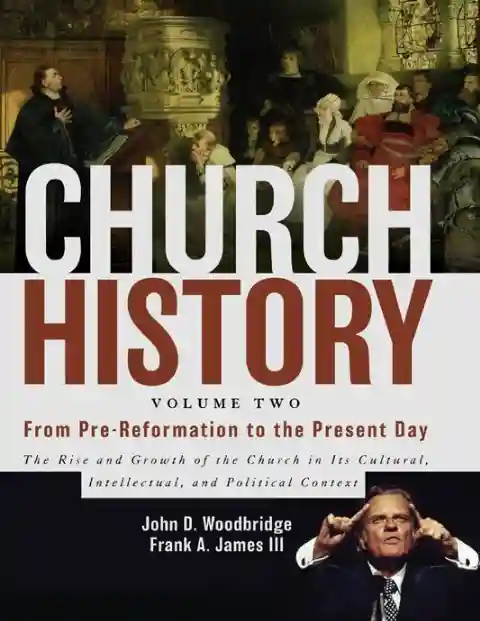
"Church History - From Pre-Reformation To The Present Day" provides a comprehensive overview of the history of the Christian church from its early beginnings to modern times. The authors, John D. Woodbridge and Frank A. James III, cover key events, figures, and theological developments in a clear and engaging manner, making it an accessible resource for students and general readers interested in the history of Christianity.

Sophie Scholl

Sophie Scholl Sophia Scholl was a German student, active in the White Rose – a non-violent resistance group to Hitler and the Nazi party. In 1943, she was caught delivering anti-war propaganda and, with her brother Hans Scholl, was executed for high treason. Sophie Scholl has become an important symbol of anti-Nazi resistance in Germany. Sophie Scholl was born in Forchtenberg, Germany on 9 May 1921. She was the fourth out of six children. Her father Robert was the Burgermeister (Mayor) of Forchtenberg am Kocher, in Baden-Württemberg. She was brought up as a Lutheran Christian, and her childhood was relatively happy and carefree. However, in 1933, Hitler came to power and began controlling all aspects of German society. Initially, Sophie was unaffected, but her father and brothers were critical of the Nazi regime and this political criticism filtered through to leave a strong impression on the young Sophie. At the age of twelve, she joined a pseudo-Nazi organisation, the League of German Girls. Initially, Sophie enjoyed the activities of the group, and she was promoted to Squad Leader. However, after her initial enthusiasm with the activities of the group, Sophie became uneasy about the conflict between her conscience and the creeping Nazi ideology of the organisation. In 1935, Nuremberg Laws were passed which increased the discrimination against Jews, banning them from many public places. Sophie complained when two of her young Jewish friends were barred from joining the League of German Girls. She was also reprimanded for reading from the ‘Book of Songs’ by the banned Jewish writer Heinrich Heine. Scholl indicated her rebelliousness by replying, that Heine was essential for understanding German literature. These incidents and the bans against Jews led to Sophie taking a much more critical attitude to the Nazi regime. She began choosing friends more carefully – people who were politically sympathetic to her viewpoint. In 1937, her brothers and some of her friends were arrested for participating in the German Youth Movement. This incident left a strong impression on Sophie and helped to crystallise her opposition to the Nazi regime. In 1942, her father was later sent to prison for making a critical remark about Hitler. He referred to Hitler as “God’s Scourge.” Sophie was an avid reader and developed an interest in philosophy and theology. She developed a strong Christian faith which emphasised the underlying dignity of every human being. This religious faith proved an important cornerstone of her opposition to the increasingly all-pervading Nazi ideology of German society. Sophie also developed a talent for art – drawing and painting, and she became acquainted with artistic circles which, in Nazi terms, were labelled degenerate. In 1940, after the start of the Second World War, she graduated from her Secondary School and became a kindergarten teacher at the Frobel Institute. However, in 1941, she was conscripted into the auxiliary war service working as a nursery teacher in Blumberg. Sophie disliked the military regime of war service and started to become involved in passive resistance to the war effort. After six months in the National Labour Service, in May 1942, she enrolled in the University of Munich as a student of biology and philosophy. With her brother Hans, she became associated with a group of friends who shared similar artistic and cultural interests but also developed shared political views, which increasingly opposed the Nazi regime they lived in. She came into contact with philosophers such as Theodor Haecker, who posed questions of how individuals should behave under a dictatorship. The White Rose Movement The White Rose was an informal group who sought to oppose the war and Nazi regime. It was founded in early 1942 by Hans Scholl, Willia Graf and Christoph Probst. They wrote six anti-Nazi resistance leaflets and distributed them across Munich. Initially, Sophie was not aware of the group, but when she found out her brother’s activities, she was keen to take part. Sophie participated in distributing leaflets and carrying messages. As a woman, she was less likely to be stopped by the SS. The leaflets of the White Rose contained messages, such as “Nothing is so unworthy of a nation as allowing itself to be governed without opposition by a clique that has yielded to base instinct…Western civilization must defend itself against fascism and offer passive resistance, before the nation’s last young man has given his blood on some battlefield.” However, there was a pervasive police state which kept a high degree of surveillance on any resistance activity. After leaflets had been found at the University of Munich, the local Gestapo stepped up its efforts to catch the resistors. Hans, Willi and Alex also began painting anti-Nazi slogans on buildings in Munich. On 18 February 1943, Sophie and other members of the White Rose were arrested for distributing anti-war leaflets. The leaflets were seen by Jakob Schmidt, a local Nazi party member. Sophie and Hans were interrogated by Nazi officials and, despite trying to protect each other, just four days later were sent to court. The trial was presided over by Roland Freisler, chief justice of the People’s Court of the Greater German Reich. Freisler was an ardent Nazi; with great vigour and a manic intensity, he frequently roared denunciations at the accused. Despite the hostility and appearing in court with a broken leg after her interrogation. Sophie replied to the court: “Somebody, after all, had to make a start. What we wrote and said is also believed by many others. They just don’t dare express themselves as we did.” She also said: “You know the war is lost. Why don’t you have the courage to face it?” No defence witnesses were called and, after a very short trial, the judge passed a guilty verdict, with a sentence of death. The sentence was to be carried out early the next morning by guillotine. Walter Roemer, the chief of the Munich district court, supervised the execution, he later described Sophie’s courage in facing her execution. He reports that Sophie’s last words were: “How can we expect righteousness to prevail when there is hardly anyone willing to give himself up individually to a righteous cause. Such a fine, sunny day, and I have to go, but what does my death matter, if through us, thousands of people are awakened and stirred to action?” The guards were impressed with the courage of the resistors and relaxed the rules to allow Hans, Christoph and Sophie to meet before their execution. After the execution of Sophie, Hans and Christoph, the Gestapo continued their relentless investigation. Other members of the White Rose were caught and executed. Many students from the University of Hamburg were either executed or sent to concentration camps. Legacy of Sophie Scholl In a poll to find the greatest German, Sophie and her brother were voted to be fourth. Amongst the young generation, under 40, they were the most popular. On February 22, 2003, a bust of Sophie Scholl was unveiled by the government of Bavaria in the Walhalla temple. In 2005, a movie about Sophie Scholl’s last days was made featuring Julia Jentsch (Sophie Scholl: The Final Days) Motivations of Sophie Scholl Several factors inspired Sophie Scholl to take part in this highly dangerous resistance. Firstly, her family shared a dislike of the Nazi regime. Both her brothers and father had been arrested for making critical comments. Her father said to the family: “What I want for you is to live in uprightness and freedom of spirit, no matter how difficult that proves to be,” (link) She lived in a family environment which encouraged opposition to Hitler. Sophie had a strong Christian faith and was motivated after hearing speeches by anti-Nazi pastors. She read two volumes of Cardinal John Henry Newman’s sermons which made a strong impression on Sophie, especially his sermon on the ‘theology of conscience.’ During her interrogation, she referred to this ideology as a defence. “I am, now as before, of the opinion that I did the best that I could do for my nation. I, therefore, do not regret my conduct and will bear the consequences that result from my conduct.” Official examination transcripts (February 1943); Bundesarchiv Berlin, ZC 13267, Bd. 3 Her boyfriend Fritz Hartnagel was on the Eastern Front; he reported to Sophie the dreadful conditions of war, the German failure at Stalingrad and also witnessing war crimes undertaken by German and SS forces. Reports of mass killings of Jews were also widely shared amongst members of the White Rose. This features in the second White Rose pamphlet. “Since the conquest of Poland 300,000 Jews have been murdered, a crime against human dignity…Germans encourage fascist criminals if no chord within them cries out at the sight of such deeds. An end in terror is preferable to terror without end.” Sophie Scholl and other members of the White Rose remain a potent symbol of how people can take a courageous action to resist, even the most brutal totalitarian regime. Citation: Pettinger, Tejvan. “Biography of Sophie Scholl”, Oxford, UK – www.biographyonline.net. Published 12th Aug 2014. Last updated 8th March 2017.

witnessing with gospel tracts

Gospel tracts and pamphlets are very important tools in evangelism. The printing press was a wonderful gift from God and has been used greatly for the glory of Jesus Christ. The printed page can greatly multiply our efforts in the service of the Lord and tracts can oftentimes go places where we cannot go. Be Careful About the Message The first consideration in the use of Gospel tracts is to be certain that the content is scriptural. There are three problems with many gospel tracts: 1. Many tracts do not contain a clear and biblical presentation of the gospel. Many refer to salvation in an unscriptural and confusing manner, such as "asking Jesus into my heart" or "giving my life to Christ." Salvation is not to give one's life to Christ, but is to trust the finished atonement of Christ. Nowhere in the New Testament do we see the Lord Jesus or the Apostles telling people to give their lives to Christ or to ask Jesus into their hearts. We need to follow the Bible very carefully in the terminology we use so that people are not confused and so they do not make false professions of faith. 2. The second serious drawback is that most tracts do not deal with repentance. Most don't even mention the word or even hint at the concept, yet the Lord Jesus Christ and His apostles preached repentance plainly and demanded it from those who would be saved. Salvation only comes by "repentance toward God, and faith toward our Lord Jesus Christ" (Acts 20:21). Any presentation of the gospel should include the fact that God "now commandeth all men every where to repent" (Acts 17:30). Whether or not the word "repentance" is used in a gospel tract, the idea should be. What is repentance? It is a turning, a change of direction (1 Thess. 1:9). When I receive Jesus Christ as my Lord and Savior, I am turning my back to the old life. 3. Another problem is that many simply do not give enough information. Large numbers of people in North America today are as ignorant of the true God of the Bible and of the basics of the Gospel of the Lord Jesus Christ as any Hindu in darkest Asia. It is crucial that we begin with the basics with these people, and that we explain biblical terms thoroughly, otherwise, when they hear terms such as "saved," "believe," "Christ," "God," "sin," they won't have the proper idea of what we are talking about, and any "profession" they make will be empty. The following are a few examples of gospel tracts that include repentance: "The Bridge to Eternal Life." This full-color pamphlet is also illustrated. [Detroit Baptist Theological Seminary, Majestic Media, 810-725-5800] "Have You Considered This?" [Dennis Costella, Fundamental Evangelistic Association, 1476 W. Herndon, Suite 104 Fresno, CA 93711, 559-438-0080. [Also available online at https://www.feasite.org/Tracts/fbconsdr.htm] "I'm a Pretty Good Person" is one of the many tracts published by the Fellowship Tract League. It is a good tract to show people that their good works and religion won't take them to heaven. [available from Sermon and Song Ministries, P.O. Box 109, Ravenna, OH 44266, www.sermonandsong.org; also available from Fellowship Tract League, P.O. Box 164, Lebanon, OH 45036, 513-494-1075, http://www.fellowshiptractleague.org/] "The Little Red Book." This 12-page pamphlet is illustrated and has been effective. [Little Red Book, P.O. Box 341, N. Greece, NY 14515 or P.O. Box 7195, Greensboro, NC 27417, LRB@frontiernet.net, 585-225-0715] "The Most Important Thing You Must Consider." This tract is strong on God's holiness and just punishment of sin and the necessity of repentance. [Faith Baptist Church, 105-01 37th Avenue, Corona, NY 11368 718-457-5651, http://www.studygodsword.com/fbcpress/tracts.html] "What Is Your Life?" This pamphlet is illustrated. [Operation Somebody Cares, 1131 Brentwood Drive, Collinsville, VA 24078, 276-647-5328, http://www.operationsomebodycares.com] "What Must I Do to Be Saved" by the late Evangelist John R. Rice. [Sword of the Lord, Box 1099, Murfreesboro, TN 37130. 800-247-9673, booksales@swordofthelord.com] "Why Should I Let You into My Heaven?" [Dean Myers, deanmyers2@juno.com] Liberty Baptist Church in Greenville, Michigan, has a wide range of helpful Gospel tracts. [Pastor Mike Austin, Liberty Baptist Church, 11845 W. Carson City Road, Greenville, MI 48838. 616-754-7151, pastor@libertygospeltracts.com, http://www.libertygospeltracts.com/] Mercy and Truth Ministries has some interesting small tracts. One is titled "You Can Get to Heaven from ---------" and an edition can be obtained for each state in the U.S. [Mercy and Truth Ministries, Lawrence, KS 66049, 875-887-2203] Pilgrim Fundamental Baptist Press publishes a tract that is designed to leave with a tip after a meal. On the outside it says, "Thank you and here are 2 tips for you!" On the inside it states that Tip #1 is a monetary token of appreciation for your service, and Tip #2 is a Gospel tract that explains how to be saved. It is large enough to hold a standard tract. [Pilgrim Fundamental Baptist Press, P.O. Box 1832, Elkton, MD 21922] Things to Remember When Passing Out Tracts Giving out tracts is something every born again believer can do, young or old. 1. Remember that it is each believer's responsibility to give out the gospel (see Matt. 28:19-20; Mk. 16:15; Luke 24:45-48; Acts 1:8; 2 Cor. 5:17-21; Phil. 2:16; 2 Tim. 4:5). 2. Remember that by giving out the gospel you are offering the greatest gift in the world. When we give out the gospel we are offering dead people life; we are offering poor people riches; we are offering sick people healing; we are offering lost people salvation. 3. It is wise to read the tracts first yourself before giving them out to others. This way you will know exactly what it says and you can refer to it when you talk to people. Also, by first reading tracts before giving them away you can see if the tract contains something that is not true or leaves out something important such as repentance. 4. Make a commitment to give out so many tracts each week. 5. Always be pleasant and polite. Remember that you are a complete stranger to the people you are approaching. Ask kindly, "May I give you something special to read?" or "I have some Good News for You" or "May I give you something that has been a blessing in my own life?" If they are busy ask them to put it in their pocket and read at home. 6. Keep in mind that the goal is not merely to give out tracts but to find opportunities to witness to people about the Lord Jesus Christ with the goal of leading them to salvation. Use the tracts to open the conversation, and when you find someone who is interested take the time to talk further with him and see if he or she is willing to meet again. We must remember that it is not enough to give out tracts; the objective is to see people come to Christ and baptized and discipled (Matt. 28:19-20). 7. Don't get upset or discouraged if someone says something against Jesus and the Bible or they mock you and what you are doing. "For unto you it is given in the behalf of Christ, not only to believe on him, but also to suffer for his sake" (Phil. 1:29; see also Matt. 5:11-12; Jn. 15:20; Luke 9:26). 8. Give out tracts to those who look like they might be interested and to those who don't. We cannot look upon the hearts of men and we cannot know who God might be dealing with. Jesus said preach the gospel to every creature (Mk. 16:15). "In the morning sow thy seed, and in the evening withhold not thine hand: for thou knowest not whether shall prosper, either this or that, or whether they both shall be alike good" (Ecc. 11:6). Ecclesiastes 11:1 says, "Cast thy bread upon the waters: for thou shalt find it after many days." This refers to the custom of casting seed on the marshy ground after a river such as the Nile had overflowed its banks, trusting that the seed will take root and bring forth a crop. "When the waters receded, the grain in the alluvial soil sprang up. 'Waters' express the seemingly hopeless character of the recipients of the charity; but it shall prove at last to have been not thrown away" (Jamieson, Fausset, Brown). 9. Be sure there is a name and address stamped on each tract so that if someone is interested they have a contact for further help. A gospel correspondence course is a good way to follow up on tract distribution. See the section on correspondence courses in our book "Ideas for Evangelism" for suggestions. This seems to be more effective in some places than others, but we have personally seen much fruit by this means. 10. One of the most important things about tract distribution is faithfulness and persistence. Some may be thrown away but others may find them. We have a man in our church who first got interested in Christ by reading a tract that was given to his friend. This has happened many times. God wants faithful workers. Don't get discouraged if nothing seems to be happening. We must do this work by faith, not by sight. Keep your eyes on the Lord and trust Him to accomplish His will and to give fruit and just continue to give out the gospel. "But this I say, He which soweth sparingly shall reap also sparingly; and he which soweth bountifully shall reap also bountifully" (2 Cor. 9:6). "Moreover it is required in stewards, that a man be found faithful" (1 Cor. 4:2). 11. Remember that our real enemy in tract distribution is not people, but the devil. He is the god of this world who is blinding the minds of the unbelievers (2 Cor. 4:4). Thus we must have on the whole armor of God as we go about this important work (Eph. 6:11-12). 12. Pray much for your tract distribution, both before and after. Pray that God will open the eyes of the people so that they desire to know Him and that they will read and understand the tracts. Updated July 21, 2008. First published January 15, 1998 by David Cloud, Fundamental Baptist Information Service, P.O. Box 610368, Port Huron, MI 48061. Used with permission.

Feedback
Suggestionsuggestion box
x