

-160.webp)


About the Book
"Authentically Izzy" is a contemporary romance novel by Pepper Basham that tells the story of Izzy, a woman struggling to find her true self amidst the expectations of her family and society. When she meets a charming musician named Miles, Izzy begins to confront her insecurities and embrace her authenticity. As their relationship deepens, Izzy must decide if she is willing to take a chance on love and be true to herself.
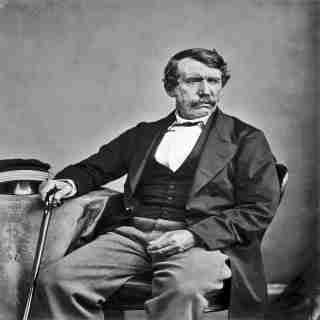
David Livingstone
 "[I am] serving Christ when shooting a buffalo for my men or taking an observation, [even if some] will consider it not sufficiently or even at all missionary."
With four theatrical words, "Dr. Livingstone, I presume?"—words journalist Henry Morton Stanley rehearsed in advance—David Livingstone became immortal. Stanley stayed with Livingstone for five months and then went off to England to write his bestseller, How I Found Livingstone. Livingstone, in the meantime, got lost again—in a swamp literally up to his neck. Within a year and a half, he died in a mud hut, kneeling beside his cot in prayer.
Berlin Congress spurs African independent churches
The whole civilized world wept. They gave him a 21-gun salute and a hero's funeral among the saints in Westminster Abbey. "Brought by faithful hands over land and sea," his tombstone reads, "David Livingstone: missionary, traveler, philanthropist. For 30 years his life was spent in an unwearied effort to evangelize the native races, to explore the undiscovered secrets, and to abolish the slave trade." He was Mother Teresa, Neil Armstrong, and Abraham Lincoln rolled into one.
Highway man
At age 25, after a childhood spent working 14 hours a day in a cotton mill, followed by learning in class and on his own, Livingstone was captivated by an appeal for medical missionaries to China. As he trained, however, the door to China was slammed shut by the Opium War. Within six months, he met Robert Moffat, a veteran missionary of southern Africa, who enchanted him with tales of his remote station, glowing in the morning sun with "the smoke of a thousand villages where no missionary had been before."
For ten years, Livingstone tried to be a conventional missionary in southern Africa. He opened a string of stations in "the regions beyond," where he settled down to station life, teaching school and superintending the garden. After four years of bachelor life, he married his "boss's" daughter, Mary Moffat.
From the beginning, Livingstone showed signs of restlessness. After his only convert decided to return to polygamy, Livingstone felt more called than ever to explore. During his first term in South Africa, Livingstone made some of the most prodigious—and most dangerous—explorations of the nineteenth century. His object was to open a "Missionary Road"—"God's Highway," he also called it—1,500 miles north into the interior to bring "Christianity and civilization" to unreached peoples.
Explorer for Christ
On these early journeys, Livingstone's interpersonal quirks were already apparent. He had the singular inability to get along with other Westerners. He fought with missionaries, fellow explorers, assistants, and (later) his brother Charles. He held grudges for years. He had the temperament of a book-reading loner, emotionally inarticulate except when he exploded with Scottish rage. He held little patience for the attitudes of missionaries with "miserably contracted minds" who had absorbed "the colonial mentality" regarding the natives. When Livingstone spoke out against racial intolerance, white Afrikaners tried to drive him out, burning his station and stealing his animals.
He also had problems with the London Missionary Society, who felt that his explorations were distracting him from his missionary work. Throughout his life, however, Livingstone always thought of himself as primarily a missionary, "not a dumpy sort of person with a Bible under his arms, [but someone] serving Christ when shooting a buffalo for my men or taking an observation, [even if some] will consider it not sufficiently or even at all missionary."
Though alienated from the whites, the natives loved his common touch, his rough paternalism, and his curiosity. They also thought he might protect them or supply them with guns. More than most Europeans, Livingstone talked to them with respect, Scottish laird to African chief. Some explorers took as many as 150 porters when they traveled; Livingstone traveled with 30 or fewer.
On an epic, three-year trip from the Atlantic Ocean to the Indian Ocean (reputedly the first by a European) Livingstone was introduced to the 1,700-mile-long Zambezi. The river was also home to Victoria Falls, Livingstone's most awe-inspiring discovery. The scene was "so lovely," he later wrote, that it "must have been gazed upon by angels in their flight."
Despite its beauty, the Zambezi was a river of human misery. It linked the Portuguese colonies of Angola and Mozambique, the main suppliers of slaves for Brazil, who in turn sold to Cuba and the United States. Though Livingstone was partially driven by a desire to create a British colony, his primary ambition was to expose the slave trade and cut it off at the source. The strongest weapon in this task, he believed, was Christian commercial civilization. He hoped to replace the "inefficient" slave economy with a capitalist economy: buying and selling goods instead of people.
The ill-fated Zambezi expedition
After a brief heroic return to England, Livingstone returned to Africa, this time to navigate 1,000 miles up the Zambezi in a brass-and-mahogany steamboat to establish a mission near Victoria Falls. The boat was state-of-the-art technology but proved too frail for the expedition. It leaked horribly after repeatedly running aground on sandbars.
Livingstone pushed his men beyond human endurance. When they reached a 30-foot waterfall, he waved his hand, as if to wish it away, and said, "That's not supposed to be there." His wife, who had just given birth to her sixth child, died in 1862 beside the river, only one of several lives claimed on the voyage. Two years later, the British government, which had no interest in "forcing steamers up cataracts," recalled Livingstone and his mission party.
A year later, he was on his way back to Africa again, this time leading an expedition sponsored by the Royal Geographical Society and wealthy friends. "I would not consent to go simply as a geographer," he emphasized, but as biographer Tim Jeal wrote, "It would be hard to judge whether the search for the Nile's source or his desire to expose the slave trade was his dominant motive." The source of the Nile was the great geographical puzzle of the day. But more important to Livingstone was the possibility of proving that the Bible was true by tracing the African roots of Judaism and Christianity.
For two years he simply disappeared, without a letter or scrap of information. He reported later that he had been so ill he could not even lift a pen, but he was able to read the Bible straight through four times. Livingstone's disappearance fascinated the public as much as Amelia Earhart's a few generations later.
When American journalist Henry Stanley found Livingstone, the news exploded in England and America. Papers carried special editions devoted to the famous meeting. In August 1872, in precarious health, Livingstone shook Stanley's hand and set out on his final journey.
When Livingstone had arrived in Africa in 1841, it was as exotic as outer space, called the "Dark Continent" and the "White Man's Graveyard." although the Portuguese, Dutch, and English were pushing into the interior, African maps had blank unexplored areas—no roads, no countries, no landmarks. Livingstone helped redraw the maps, exploring what are now a dozen countries, including South Africa, Rwanda, Angola, and the Republic of the Congo (formerly Zaire). And he made the West aware of the continuing evil of African slavery, which led to its being eventually outlawed.
"[I am] serving Christ when shooting a buffalo for my men or taking an observation, [even if some] will consider it not sufficiently or even at all missionary."
With four theatrical words, "Dr. Livingstone, I presume?"—words journalist Henry Morton Stanley rehearsed in advance—David Livingstone became immortal. Stanley stayed with Livingstone for five months and then went off to England to write his bestseller, How I Found Livingstone. Livingstone, in the meantime, got lost again—in a swamp literally up to his neck. Within a year and a half, he died in a mud hut, kneeling beside his cot in prayer.
Berlin Congress spurs African independent churches
The whole civilized world wept. They gave him a 21-gun salute and a hero's funeral among the saints in Westminster Abbey. "Brought by faithful hands over land and sea," his tombstone reads, "David Livingstone: missionary, traveler, philanthropist. For 30 years his life was spent in an unwearied effort to evangelize the native races, to explore the undiscovered secrets, and to abolish the slave trade." He was Mother Teresa, Neil Armstrong, and Abraham Lincoln rolled into one.
Highway man
At age 25, after a childhood spent working 14 hours a day in a cotton mill, followed by learning in class and on his own, Livingstone was captivated by an appeal for medical missionaries to China. As he trained, however, the door to China was slammed shut by the Opium War. Within six months, he met Robert Moffat, a veteran missionary of southern Africa, who enchanted him with tales of his remote station, glowing in the morning sun with "the smoke of a thousand villages where no missionary had been before."
For ten years, Livingstone tried to be a conventional missionary in southern Africa. He opened a string of stations in "the regions beyond," where he settled down to station life, teaching school and superintending the garden. After four years of bachelor life, he married his "boss's" daughter, Mary Moffat.
From the beginning, Livingstone showed signs of restlessness. After his only convert decided to return to polygamy, Livingstone felt more called than ever to explore. During his first term in South Africa, Livingstone made some of the most prodigious—and most dangerous—explorations of the nineteenth century. His object was to open a "Missionary Road"—"God's Highway," he also called it—1,500 miles north into the interior to bring "Christianity and civilization" to unreached peoples.
Explorer for Christ
On these early journeys, Livingstone's interpersonal quirks were already apparent. He had the singular inability to get along with other Westerners. He fought with missionaries, fellow explorers, assistants, and (later) his brother Charles. He held grudges for years. He had the temperament of a book-reading loner, emotionally inarticulate except when he exploded with Scottish rage. He held little patience for the attitudes of missionaries with "miserably contracted minds" who had absorbed "the colonial mentality" regarding the natives. When Livingstone spoke out against racial intolerance, white Afrikaners tried to drive him out, burning his station and stealing his animals.
He also had problems with the London Missionary Society, who felt that his explorations were distracting him from his missionary work. Throughout his life, however, Livingstone always thought of himself as primarily a missionary, "not a dumpy sort of person with a Bible under his arms, [but someone] serving Christ when shooting a buffalo for my men or taking an observation, [even if some] will consider it not sufficiently or even at all missionary."
Though alienated from the whites, the natives loved his common touch, his rough paternalism, and his curiosity. They also thought he might protect them or supply them with guns. More than most Europeans, Livingstone talked to them with respect, Scottish laird to African chief. Some explorers took as many as 150 porters when they traveled; Livingstone traveled with 30 or fewer.
On an epic, three-year trip from the Atlantic Ocean to the Indian Ocean (reputedly the first by a European) Livingstone was introduced to the 1,700-mile-long Zambezi. The river was also home to Victoria Falls, Livingstone's most awe-inspiring discovery. The scene was "so lovely," he later wrote, that it "must have been gazed upon by angels in their flight."
Despite its beauty, the Zambezi was a river of human misery. It linked the Portuguese colonies of Angola and Mozambique, the main suppliers of slaves for Brazil, who in turn sold to Cuba and the United States. Though Livingstone was partially driven by a desire to create a British colony, his primary ambition was to expose the slave trade and cut it off at the source. The strongest weapon in this task, he believed, was Christian commercial civilization. He hoped to replace the "inefficient" slave economy with a capitalist economy: buying and selling goods instead of people.
The ill-fated Zambezi expedition
After a brief heroic return to England, Livingstone returned to Africa, this time to navigate 1,000 miles up the Zambezi in a brass-and-mahogany steamboat to establish a mission near Victoria Falls. The boat was state-of-the-art technology but proved too frail for the expedition. It leaked horribly after repeatedly running aground on sandbars.
Livingstone pushed his men beyond human endurance. When they reached a 30-foot waterfall, he waved his hand, as if to wish it away, and said, "That's not supposed to be there." His wife, who had just given birth to her sixth child, died in 1862 beside the river, only one of several lives claimed on the voyage. Two years later, the British government, which had no interest in "forcing steamers up cataracts," recalled Livingstone and his mission party.
A year later, he was on his way back to Africa again, this time leading an expedition sponsored by the Royal Geographical Society and wealthy friends. "I would not consent to go simply as a geographer," he emphasized, but as biographer Tim Jeal wrote, "It would be hard to judge whether the search for the Nile's source or his desire to expose the slave trade was his dominant motive." The source of the Nile was the great geographical puzzle of the day. But more important to Livingstone was the possibility of proving that the Bible was true by tracing the African roots of Judaism and Christianity.
For two years he simply disappeared, without a letter or scrap of information. He reported later that he had been so ill he could not even lift a pen, but he was able to read the Bible straight through four times. Livingstone's disappearance fascinated the public as much as Amelia Earhart's a few generations later.
When American journalist Henry Stanley found Livingstone, the news exploded in England and America. Papers carried special editions devoted to the famous meeting. In August 1872, in precarious health, Livingstone shook Stanley's hand and set out on his final journey.
When Livingstone had arrived in Africa in 1841, it was as exotic as outer space, called the "Dark Continent" and the "White Man's Graveyard." although the Portuguese, Dutch, and English were pushing into the interior, African maps had blank unexplored areas—no roads, no countries, no landmarks. Livingstone helped redraw the maps, exploring what are now a dozen countries, including South Africa, Rwanda, Angola, and the Republic of the Congo (formerly Zaire). And he made the West aware of the continuing evil of African slavery, which led to its being eventually outlawed.
God Always Sets the Table
Perhaps no act of divine provision comes and goes so quietly, so predictably, so almost imperceptibly, like our next meal. Now, for millions of people around the world, the weighty miracle is felt and revered. Unlike many of us, when they pray, “Give us this day our daily bread” (Matthew 6:11), they truly do not know if and how that bread will come. They wait for food like many of us never have. When they lie down at night, having eaten enough to quiet their aching stomachs, they marvel that they did not starve today — that God fed them enough to sustain them for another 24 long hours. How slow the rest of us can be to marvel while we eat. We forget to eat. We sometimes think of meals as interruptions to an otherwise productive day. We miss the wonder, like watching three blazing sunrises every day, that the God of heaven and earth feeds us. He Brings Forth Food Psalm 104 does not miss the dumbfounding beauty of daily bread: You cause the grass to grow for the livestock and plants for man to cultivate, that he may bring forth food from the earth and wine to gladden the heart of man, oil to make his face shine and bread to strengthen man’s heart. (Psalm 104:14–15) You, O God, stretch out the infinite heavens as if it were just a tent (Psalm 104:2). You set the layers of the earth on its foundations, carefully wrapping core with mantle, and mantle with 25,000 miles of crust (Psalm 104:5). You lift the mountains with your hands, some of them 20,000 feet high, and you carve out the depths and crevices of all the valleys (Psalm 104:8). And you feed us. Our next meal stands there right alongside Mount Everest, the Grand Canyon, and the Andromeda Galaxy, among the most breathtaking wonders anywhere in creation. Have you, like me, missed the spectacular mystery laid on the plate before you? Food Is No Footnote Jesus sees what the psalmist saw, the God-sized wonder baked into life-sustaining bread. When he teaches his disciples to pray, he says, Pray then like this: “Our Father in heaven, hallowed be your name. Your kingdom come, your will be done, on earth as it is in heaven. Give us this day our daily bread . . .” (Matthew 6:9–11) Our Lord moves seamlessly from the reaches of heaven, and the ends of the earth, to the wheat on our plate. The transition is not jarring from the cosmos to the kitchen, even in his extremely concise prayer, because he sees how powerfully God must act in both. “God bakes something of himself — his worth, his mouthwatering glory — into everything we eat.” When we pause to pray and give thanks for the food before us, we have to resist thinking that these moments are trivial, peripheral, forgettable. Every meal, God sets the table. He is hallowing his name, extending his kingdom, and doing his will (among other ways) by providing his people with food. What we eat is not a footnote or afterthought for Jesus. Because he wants his Father to be glorified, he does not take his (or our) daily bread for granted. Two Great Ingredients God mixes at least two great ingredients into mealtime worship: First, he bakes something of himself — his worth, his mouthwatering glory — into everything we eat. Nothing we consume is silent about God. Every bite beckons us to enjoy something sweeter, more satisfying, more soul-sustaining: him. “The creation of food, tongues, and the human digestive system is the product of infinite wisdom knitting the world together in a harmonious whole,” writes Joe Rigney. “The variety of tastes creates categories and gives us edible images of divine things” ( The Things of Earth , 81). Second, when God prepares our food for us, he nourishes and strengthens us to do his will — to eat or drink, or whatever we do, to his glory (1 Corinthians 10:31). Man does not live by bread alone, but he will not live long without bread. God chooses us from among all the people of the earth, despite how little we deserved his love, and makes us his witnesses to the ends of the earth, and — wonder of wonders — he sustains us each and every day, hour by hour, by bringing food forth from the earth. As Rigney goes on to say, “Yes, food is given to us for our enjoyment, to enlarge our categories for knowing God. But food is also God’s way of providing us with energy and strength for the work” (85). If you have lost your sense of the mystery of your meals, remember that this food did not come ultimately from the pantry or the fridge, the grocery store or the farmer’s market, from the butcher or the harvest, but from the mind and heart of God. And he did not entrust us with mouths and meals simply to survive. He wants us to eat for more of him — to experience and enjoy more of him ourselves, and to share more of him in and for the world. My Portion Forever We will not truly wonder at our daily supply of food if we do not treasure God more than food. “My flesh and my heart may fail” — my water may dry up and my bread may not come — “but God is the strength of my heart and my portion forever” (Psalms 73:26). He is my portion — three full meals (and more) for hundreds of thousands of years (and more). Rigney writes, Our sense of hunger and thirst are divinely designed to highlight the soul’s hunger for spiritual food. . . . Apart from our experience of empty stomachs and parched throats, of full bellies, quenched thirsts, and the incredible variety of taste, our spiritual lives would be impoverished, and we would have no real vocabulary for spiritual desire, no mental and emotional framework for engaging with God. (81) God wants what we eat to make us hungry for him . We often eat just to make our hunger go away. What if we ate, instead, to try to taste and see and enjoy the God who feeds us? “Slow down and savor the majesty in your next meal.” Our God came, took on our flesh, and ate among us, saying, “I am the bread of life; whoever comes to me shall not hunger, and whoever believes in me shall never thirst” (John 6:35). Then the bread of life was broken on the cross, spilling the wine of his precious blood for us — the hungry, the ungrateful, the wandering — to bring us into his new covenant (1 Corinthians 11:24–26), and secure a seat for us at “the marriage supper of the Lamb” (Revelation 19:9). Slow down and savor the majesty in your next meal. However incidental it may feel, the food is pointing to the Provider, telling his story, and anticipating the forever feast we will enjoy with him.