

Others like basic christian doctrines Features >>

Manual Of Christian Doctrine
African Christian Theology
%20(Library%20of%20Christian%20Classics)%20by%20John%20Calvin-160.webp)
Library Of Christian Classics
Understanding The Fivefold Ministry
Paul And The Trinity
-160.webp)
Did God Really Command Genocide: Coming To Terms With The Justice Of God

Did God Create Darkness And Evil

Daniel: God's Blueprint For Bible Prophecy

A Peculiar Glory: How The Christian Scriptures Reveal Their Complete Truthfulness

Freedom Of The Will
About the Book
"Basic Christian Doctrines" by C. Barnabas is a comprehensive guide to essential teachings of the Christian faith. The book covers topics such as the Trinity, salvation, the authority of Scripture, and the role of the church. It provides readers with a foundational understanding of key beliefs and practices that are central to the Christian tradition.
William Carey
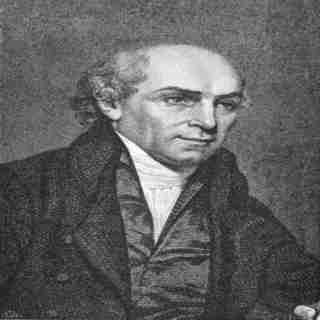 "Expect great things; attempt great things."
At a meeting of Baptist leaders in the late 1700s, a newly ordained minister stood to argue for the value of overseas missions. He was abruptly interrupted by an older minister who said, "Young man, sit down! You are an enthusiast. When God pleases to convert the heathen, he'll do it without consulting you or me."
That such an attitude is inconceivable today is largely due to the subsequent efforts of that young man, William Carey.
Plodder Carey was raised in the obscure, rural village of Paulerpury, in the middle of England. He apprenticed in a local cobbler's shop, where the nominal Anglican was converted. He enthusiastically took up the faith, and though little educated, the young convert borrowed a Greek grammar and proceeded to teach himself New Testament Greek.
When his master died, he took up shoemaking in nearby Hackleton, where he met and married Dorothy Plackett, who soon gave birth to a daughter. But the apprentice cobbler's life was hard—the child died at age 2—and his pay was insufficient. Carey's family sunk into poverty and stayed there even after he took over the business.
"I can plod," he wrote later, "I can persevere to any definite pursuit." All the while, he continued his language studies, adding Hebrew and Latin, and became a preacher with the Particular Baptists. He also continued pursuing his lifelong interest in international affairs, especially the religious life of other cultures.
Carey was impressed with early Moravian missionaries and was increasingly dismayed at his fellow Protestants' lack of missions interest. In response, he penned An Enquiry into the Obligations of Christians to Use Means for the Conversion of the Heathens. He argued that Jesus' Great Commission applied to all Christians of all times, and he castigated fellow believers of his day for ignoring it: "Multitudes sit at ease and give themselves no concern about the far greater part of their fellow sinners, who to this day, are lost in ignorance and idolatry."
Carey didn't stop there: in 1792 he organized a missionary society, and at its inaugural meeting preached a sermon with the call, "Expect great things from God; attempt great things for God!" Within a year, Carey, John Thomas (a former surgeon), and Carey's family (which now included three boys, and another child on the way) were on a ship headed for India.
Stranger in a strange land
Thomas and Carey had grossly underestimated what it would cost to live in India, and Carey's early years there were miserable. When Thomas deserted the enterprise, Carey was forced to move his family repeatedly as he sought employment that could sustain them. Illness racked the family, and loneliness and regret set it: "I am in a strange land," he wrote, "no Christian friend, a large family, and nothing to supply their wants." But he also retained hope: "Well, I have God, and his word is sure."
He learned Bengali with the help of a pundit, and in a few weeks began translating the Bible into Bengali and preaching to small gatherings.
When Carey himself contracted malaria, and then his 5-year-old Peter died of dysentery, it became too much for his wife, Dorothy, whose mental health deteriorated rapidly. She suffered delusions, accusing Carey of adultery and threatening him with a knife. She eventually had to be confined to a room and physically restrained.
"This is indeed the valley of the shadow of death to me," Carey wrote, though characteristically added, "But I rejoice that I am here notwithstanding; and God is here."
Gift of tongues
In October 1799, things finally turned. He was invited to locate in a Danish settlement in Serampore, near Calcutta. He was now under the protection of the Danes, who permitted him to preach legally (in the British-controlled areas of India, all of Carey's missionary work had been illegal).
Carey was joined by William Ward, a printer, and Joshua and Hanna Marshman, teachers. Mission finances increased considerably as Ward began securing government printing contracts, the Marshmans opened schools for children, and Carey began teaching at Fort William College in Calcutta.
In December 1800, after seven years of missionary labor, Carey baptized his first convert, Krishna Pal, and two months later, he published his first Bengali New Testament. With this and subsequent editions, Carey and his colleagues laid the foundation for the study of modern Bengali, which up to this time had been an "unsettled dialect."
Carey continued to expect great things; over the next 28 years, he and his pundits translated the entire Bible into India's major languages: Bengali, Oriya, Marathi, Hindi, Assamese, and Sanskrit and parts of 209 other languages and dialects.
He also sought social reform in India, including the abolition of infanticide, widow burning (sati), and assisted suicide. He and the Marshmans founded Serampore College in 1818, a divinity school for Indians, which today offers theological and liberal arts education for some 2,500 students.
By the time Carey died, he had spent 41 years in India without a furlough. His mission could count only some 700 converts in a nation of millions, but he had laid an impressive foundation of Bible translations, education, and social reform.
His greatest legacy was in the worldwide missionary movement of the nineteenth century that he inspired. Missionaries like Adoniram Judson, Hudson Taylor, and David Livingstone, among thousands of others, were impressed not only by Carey's example, but by his words "Expect great things; attempt great things." The history of nineteenth-century Protestant missions is in many ways an extended commentary on the phrase.
"Expect great things; attempt great things."
At a meeting of Baptist leaders in the late 1700s, a newly ordained minister stood to argue for the value of overseas missions. He was abruptly interrupted by an older minister who said, "Young man, sit down! You are an enthusiast. When God pleases to convert the heathen, he'll do it without consulting you or me."
That such an attitude is inconceivable today is largely due to the subsequent efforts of that young man, William Carey.
Plodder Carey was raised in the obscure, rural village of Paulerpury, in the middle of England. He apprenticed in a local cobbler's shop, where the nominal Anglican was converted. He enthusiastically took up the faith, and though little educated, the young convert borrowed a Greek grammar and proceeded to teach himself New Testament Greek.
When his master died, he took up shoemaking in nearby Hackleton, where he met and married Dorothy Plackett, who soon gave birth to a daughter. But the apprentice cobbler's life was hard—the child died at age 2—and his pay was insufficient. Carey's family sunk into poverty and stayed there even after he took over the business.
"I can plod," he wrote later, "I can persevere to any definite pursuit." All the while, he continued his language studies, adding Hebrew and Latin, and became a preacher with the Particular Baptists. He also continued pursuing his lifelong interest in international affairs, especially the religious life of other cultures.
Carey was impressed with early Moravian missionaries and was increasingly dismayed at his fellow Protestants' lack of missions interest. In response, he penned An Enquiry into the Obligations of Christians to Use Means for the Conversion of the Heathens. He argued that Jesus' Great Commission applied to all Christians of all times, and he castigated fellow believers of his day for ignoring it: "Multitudes sit at ease and give themselves no concern about the far greater part of their fellow sinners, who to this day, are lost in ignorance and idolatry."
Carey didn't stop there: in 1792 he organized a missionary society, and at its inaugural meeting preached a sermon with the call, "Expect great things from God; attempt great things for God!" Within a year, Carey, John Thomas (a former surgeon), and Carey's family (which now included three boys, and another child on the way) were on a ship headed for India.
Stranger in a strange land
Thomas and Carey had grossly underestimated what it would cost to live in India, and Carey's early years there were miserable. When Thomas deserted the enterprise, Carey was forced to move his family repeatedly as he sought employment that could sustain them. Illness racked the family, and loneliness and regret set it: "I am in a strange land," he wrote, "no Christian friend, a large family, and nothing to supply their wants." But he also retained hope: "Well, I have God, and his word is sure."
He learned Bengali with the help of a pundit, and in a few weeks began translating the Bible into Bengali and preaching to small gatherings.
When Carey himself contracted malaria, and then his 5-year-old Peter died of dysentery, it became too much for his wife, Dorothy, whose mental health deteriorated rapidly. She suffered delusions, accusing Carey of adultery and threatening him with a knife. She eventually had to be confined to a room and physically restrained.
"This is indeed the valley of the shadow of death to me," Carey wrote, though characteristically added, "But I rejoice that I am here notwithstanding; and God is here."
Gift of tongues
In October 1799, things finally turned. He was invited to locate in a Danish settlement in Serampore, near Calcutta. He was now under the protection of the Danes, who permitted him to preach legally (in the British-controlled areas of India, all of Carey's missionary work had been illegal).
Carey was joined by William Ward, a printer, and Joshua and Hanna Marshman, teachers. Mission finances increased considerably as Ward began securing government printing contracts, the Marshmans opened schools for children, and Carey began teaching at Fort William College in Calcutta.
In December 1800, after seven years of missionary labor, Carey baptized his first convert, Krishna Pal, and two months later, he published his first Bengali New Testament. With this and subsequent editions, Carey and his colleagues laid the foundation for the study of modern Bengali, which up to this time had been an "unsettled dialect."
Carey continued to expect great things; over the next 28 years, he and his pundits translated the entire Bible into India's major languages: Bengali, Oriya, Marathi, Hindi, Assamese, and Sanskrit and parts of 209 other languages and dialects.
He also sought social reform in India, including the abolition of infanticide, widow burning (sati), and assisted suicide. He and the Marshmans founded Serampore College in 1818, a divinity school for Indians, which today offers theological and liberal arts education for some 2,500 students.
By the time Carey died, he had spent 41 years in India without a furlough. His mission could count only some 700 converts in a nation of millions, but he had laid an impressive foundation of Bible translations, education, and social reform.
His greatest legacy was in the worldwide missionary movement of the nineteenth century that he inspired. Missionaries like Adoniram Judson, Hudson Taylor, and David Livingstone, among thousands of others, were impressed not only by Carey's example, but by his words "Expect great things; attempt great things." The history of nineteenth-century Protestant missions is in many ways an extended commentary on the phrase.
The Power of a Praying Mother
If you follow the greatest men of God back to their beginnings, you will often find yourself in a hidden closet or lonely pew, where a mother kneels to pray. Look behind Augustine, and you will find Monica. Look behind Spurgeon, and you will find Eliza. Look behind Hudson Taylor, and you will find Amelia. And look at each of these mothers, and you will find earnest prayer. Those who know their Bibles should hardly be surprised. Like the star the wise men saw, the stories of God’s redemptive movements often lead us to a home where a woman, hidden from the great ones of the earth, caresses a heel that will one day crush a serpent. In the prayers of a mother, awakenings are born and peoples won, idols are toppled and devils undone, dry bones are raised and prodigals rescued. Again and again, before God laid his hand on a man, he laid it on his mother. Mother of the Kingdom “The dawn of the great new movements of God repeatedly occurs in women’s spaces,” Alastair Roberts writes. The word repeatedly is right. Over and again, redemptive history turns on a flawed but faithful mother bearing a son: Sarah and Isaac, Rebekah and Jacob, Rachel and Joseph, Ruth and Obed, Elizabeth and John, Eunice and Timothy — and, of course, Mary and Jesus. Among all these stories, however, one in particular illustrates the power of a praying mother. The books of 1 and 2 Samuel tell the story of how God turned Israel into a kingdom — how he sought “a man after his own heart” (1 Samuel 13:14) to sit on the throne and begin a royal line that one day would run to Jesus (2 Samuel 7:13–14). But where does this story of a king and a kingdom begin? With one infertile woman, pleading for a son. [Elkanah] had two wives. The name of the one was Hannah, and the name of the other, Peninnah. And Peninnah had children, but Hannah had no children. (1 Samuel 1:2) “If you follow the greatest men of God back to their beginnings, you will often find a mother kneeling to pray.” A barren woman and a fruitful rival: we’ve been here before (Genesis 16:1–6; 30:1–8). The stage is set for God to make a name for himself through a miraculous birth. And prayer will be his appointed means. Hannah’s Prayer Like Hagar before her, Peninnah can’t help pointing the finger at Hannah’s empty womb: “[Hannah’s] rival used to provoke her grievously to irritate her, because the Lord had closed her womb. So it went on year by year” (1 Samuel 1:6–7). But unlike Sarah before her, Hannah turns to God instead of turning against Peninnah. Listen to the simple prayer of a suffering woman, longing for an open womb: O Lord of hosts, if you will indeed look on the affliction of your servant and remember me and not forget your servant, but will give to your servant a son, then I will give him to the Lord all the days of his life, and no razor shall touch his head. (1 Samuel 1:11) We know the rest of the story. The Lord would hear Hannah and give her a son. And her son, Samuel, would establish Israel’s kingdom (1 Samuel 16:10–13), inaugurate the nation’s prophetic line (Acts 3:24; 13:20), and gain a standing beside Moses as a mediator of God’s people (Jeremiah 15:1). Through prayer, Hannah’s once-barren womb bore a son to rescue Israel. What might mothers learn from Hannah’s prayer today? 1. Anguish can be a good teacher. Years of infertility, joined with Peninnah’s mockery, had finally broken the dam of Hannah’s sorrow. The pain of hope deferred flooded her heart, and the flood could not be hidden. “Hannah wept and would not eat. . . . She was deeply distressed” (1 Samuel 1:7, 10). Yet, as so often happens, Hannah’s tears became a trail that led her to her knees. “After they had eaten and drunk in Shiloh, Hannah rose . . . and prayed to the Lord and wept bitterly” (1 Samuel 1:9–10). We don’t know what Hannah’s prayer life was like before this moment. But here, at least, anguish became her best teacher. In a world as broken as ours, anguish hems a mother in, behind and before. Some, like Hannah, feel the peculiar agony of wished-for motherhood. Others, the pain of pregnancy and childbirth itself. And still others, the sorrow of a child who has not yet been born again. What Augustine once said of his mother holds true for many: She wept and wailed, and these cries of pain revealed what there was left of Eve in her, as in anguish she sought the son whom in anguish she had brought to birth. (Confessions, 5.8.15) “Anguish often leads a mother to a prayer God longs to answer.” Anguish, we know, may tempt a mother toward bitterness, as it did both Sarah and Rachel for a time (Genesis 16:5–6; 30:1). But here, Hannah reveals a surprising truth: anguish often leads a mother to a prayer God longs to answer. 2. God delights in open hands. Two words in Hannah’s prayer rise to the surface through repetition: Lord (twice) and its counterpart, servant (three times). In her anguish, she does not forget that God is her Lord, high and wise above her, nor that she is his servant, bound to do his will. The famous words of Mary over a millennium later — “Behold, I am the servant of the Lord” (Luke 1:38) — are an echo of Hannah’s. Hannah’s open hands also appear in her remarkable vow: “If you will . . . give to your servant a son, then I will give him to the Lord all the days of his life, and no razor shall touch his head” (1 Samuel 1:11). Her promise not to cut her son’s hair refers to the Nazirite vow, by which a person’s life was devoted entirely to God (Numbers 6:1–5). Hannah says, in others words, “Give me a son, and I will give him back to you — heart and soul, body and mind, all the days of his life.” In response, God gives her a son to return to God. We should hesitate, of course, before drawing a straight line between a mother’s heart and how God answers her prayers. Some mothers pray with Hannah-like surrender, and still their wombs stay empty, or their children keep walking to the far country. Hannah’s story does teach us, however, that God loves to put gifts in open hands. He delights when a mother, welling up with maternal affection, wells up still more with desire for Christ and his kingdom. In Hannah’s case, her openhanded motherhood allowed Samuel to spend his days at the temple, where, the narrator tells us, “he worshiped the Lord” (1 Samuel 1:28). May God be pleased to do the same for many mothers’ sons. 3. A mother’s prayers can shake the world. The anguished prayer of 1 Samuel 1:11 is not the only prayer we hear from Hannah. When she brings her freshly weaned son to the temple, she prays again, this time soaring with praise (1 Samuel 2:1–10). And as we listen, we quickly realize that the story of Hannah and Samuel reaches far beyond the four walls of a happy home. Consider just her final words, which offer a fitting ending to a massive prayer: The adversaries of the Lord shall be broken to pieces; against them he will thunder in heaven. The Lord will judge the ends of the earth; he will give strength to his king and exalt the power of his anointed. (1 Samuel 2:10) Hannah, carried along by the Spirit, finds herself caught up in something far greater than her own domestic hopes: under God, her son would deliver Israel from its oppressors and establish a kingdom that one day would cover the earth. Hannah had simply prayed for a son — but in return, God answered far bigger than she asked. And so he still does. Eliza Spurgeon and Amelia Taylor prayed for saved sons, scarcely imagining that God would give a preacher to the masses and a missionary to the nations. And though not every son is a Samuel, or a Spurgeon, or a Taylor, who knows what lovers of orphans, or pastors of churches, or seekers of justice, or fathers of lost ones God is right now raising up through a faithful mother on her knees? With a God like ours, we can dare to dream — and pray. Mother for Every Mother The weeping, anxious Hannah of 1 Samuel 1 is not a woman out of a mother’s reach. She was not a well-known woman. She was not a put-together woman. So far as we know, she was not a particularly strong woman. But she was a praying woman. And through her prayers, God showed his great power. The God who crushed the serpent’s head by the woman’s offspring has more victories to win. Jesus dealt the deathblow, the blow no other son could give. But more of the devil’s kingdom needs crushing. And if we look behind the men who lift their heels, we will often find a mother like Hannah: anguished yet openhanded, praying for her boy. Article by Scott Hubbard