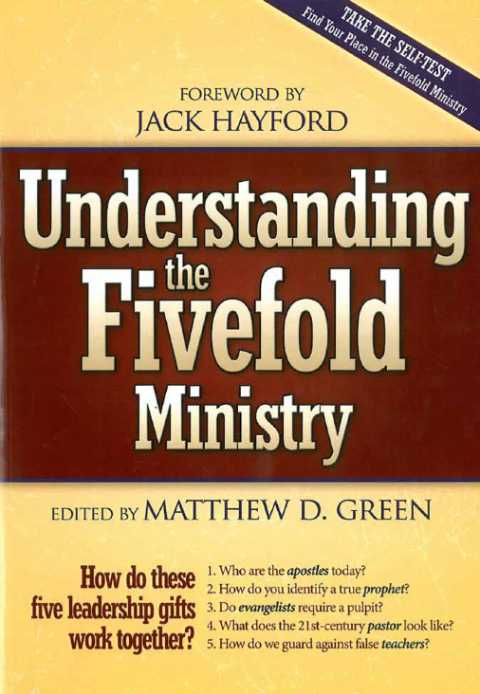

Others like understanding the fivefold ministry Features >>
Reading The Word Of God In The Presence Of God: A Handbook For Biblical Interpretation

Mere Christianity
-160.webp)
Father, Son, And Holy Spirit (Relationships, Roles, And Relevance)

Babylon, Mystery, Religion

Ten Commandments
The Lion And The Lamb
God In The Dock
The Ministry Gifts
Supremacy Of Christ In A Post Modern World
The Holiness Of God
About the Book
"Understanding The Fivefold Ministry" by Matthew Green explores the keys to understanding and operating in the five ministry offices of apostle, prophet, evangelist, pastor, and teacher within the Christian church. The book provides insight into the roles and responsibilities of each office, and how they can work together in harmony to fulfill God's purpose for the church. Through practical examples and biblical teachings, Green offers guidance on how to effectively serve in each ministry role and bring about spiritual growth and transformation within the church community.
Richard Wurmbrand
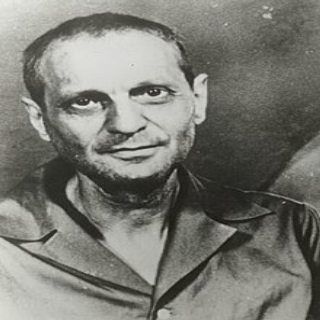 Richard Wurmbrand (1909 – 2001) was born in 1909 in Bucharist in the country of Romania. He was the youngest of four boys born in a Jewish family. He lived with his family in Istanbul for a short time. When he was 9, his father died and the Wurmbrands returned to Romania when he was 15.
He was sent to study Marxism in Moscow. When he returned, he was already a Comintern Agent. A Comintern Agent was a member of the Communist International Organisation which intended to fight:
Like other Romanian Communists, he was arrested and released several times.
He married Sabina Oster on 26th October 1936. Wurmbrand and his wife went to live in an isolated village high in the mountains of Romania. But, as a athiest there was no peace to be found in his heart. So one day, when his heart was in a state of turmoil he cried out:
“God, if perchance you exist, it is Your duty to reveal yourself to me.”
Shorthly after he prayed that prayer, he met a German carpenter in his village who gave him a bible. The carpenter and his wife had been praying earnestly that God would bring a Jew to his village, because the carpenter wanted to bring a Jew to Christ, because Jesus was a Jew. So the carpenter gave him a Bible to read. Wurmbrand said, when he opened that Bible he could not stop weeping. He had read the Bible before but it had meant nothing to him. This time when he opened the Bible he could barely read it because of the copious amount of tears that filled his eyes. Sometime later he found out the carpenter and his wife had been praying earnestly for him. Wurnbrand said that every word that he read were like flames of love burning in his heart. He realized for the first ime in his life that there was a God of love who loved him, even though he had beeen living a bad life and had nurtured a hated towards the concept of a ‘loving’ God.
The Power of Intercessory Prayer
But now for the first time he knew that Jesus had suffered at the cross of Calvary for his sins and he was loved and accepted of God. Richard and his wife became believers in Jesus the Messiah. All the hatred that he had formerly held toward God was washed away under the blood of Christ and Richard and his wife Sabrina were born of the Spirit. That is the power of intercessory prayer!
Richard prepared himself for the ministry. He was ordained as an Anglican minister in 1938 at the start of world war 2. Both Richard and his wife were arrested several times. They were beaten and hauled before a Nazi court. They suffered under the Nazi regime throughout world war 2. But Richard said, it was only a taste of what was to come.
Russian Troups Enter Romania
Towards the end of world war 2, Richard Wurmbrand became a Lutheran and he pastored a Lutheran church in Romania. But, the same year, 1 million Russian troups entered and occupied the entire territory of Romania.
Within a very short space of time the Communists took over Romania. The reign of terror began. Out of fear 4,000 priests, pastors & ministers became Communists overnight. They confessed their allegience and loyalty to the new Communist Government because they all feared for their survival.
Romania’s Resistance
Harsh persecutions of any enemies of the Communist government started with the Soviet occupation in 1945. The Soviet army behaved as an occupation force (although theoretically it was an ally against Nazi Germany), and could arrest virtually anyone at will. Shortly after Soviet occupation, ethnic Germans (who were Romanian citizens and had been living as a community in Romania for 800 years) were deported to the Donbas coal mines. Despite the King’s protest, who pointed out that this was against international law, an estimated 70,000 men and women were forced to leave their homes, starting in January 1945, before the war had even ended. They were loaded in cattle cars and put to work in the Soviet mines for up to ten years as “reparations”, where about one in five died from disease, accidents and malnutrition.
Once the Communist government became more entrenched, the number of arrests increased. All strata of society were involved, but particularly targeted were the pre-war elites, such as intellectuals, clerics, teachers, former politicians (even if they had left-leaning views) and anybody who could potentially form the nucleus of anti-Communist resistance. The existing prisons were filled with political prisoners, and a new system of forced labor camps and prisons was created, modeled after the Soviet Gulag. Some of the most notorious prisons included Sighet, Gherla, Piteşti and Aiud, and forced labor camps were set up at lead mines and in the Danube Delta.
Underground Church
Richard and his wife knew that Christianity and Communism were totally opposed to each other. They knew that a true follower of Christ cannot compromise. So they created an “Underground Church” movement to preach the pure gospel of Christ and to reach out to the unsaved people of Romania and secondly to reach out secretly to the Russian soldiers. They secretly printed thousands of Bibles and Christian literature and distributed it to the Russian soldiers. Many of the Russian soldiers were convicted and they gave their life to Christ.
So the underground church grew. But, in 1948 the Secret Police arrested Wurmbrand and he was placed in solitary confinement for 3 years. He was then transferred to a group cell for the next five years. Whilst in prison he continued to win the other prisoners to Christ. After 8 years in prison he was released and he immediately resumed his work with the undergound church. A few years later, 1959, he was arrested again and was sentenced to 25 years in prison. However, after spending 5 years in prison an organisation called the Christian Alliance negotiated with the Communist Government and they managed to secure his release for a fee of $10,000. They quickly got Richard Wurmbrand out of Romania and took him to England, then to the USA.
In 1966, Richard was called to Washington DC to give his testimony before the United States Senate. He took off his shirt to show the Senate the scars and the wounds that he received whilst he served time in prison under the Communist Government in Romania.
The newspapers throughout the USA, Europe and Asia carried his story all across the world. Christian leaders called him the “Voice of the Underground Church.”
In 1967, with a $100 old typewriter and 500 names and addresses, Richard Wurmbrand published the first issue of THE VOICE OF THE MARTYRS newsletter. This newsletter was dedicated to communicating the testimonies and trails facing our brothers and sisters in restricted nations worldwide. Richard wrote:
“The message I bring from the Underground Church is:
“Don’t abandon us!”
“Don’t forget us!”
“Don’t write us off!”
“Give us the tools we need! We will pay the price for using them!”
“This is the message I have been charged to deliver to the free church.”
Richard Wurmbrand and his wife travelled throughout the world to establish a network of over 30 offices. Their primary aim was to call Christians to shoulder their responsibility and to demonstrate the real substance of their faith by supporting their brothers and sisters in Christ who are being persecuted in heathen lands.
The VOICE OF THE MARTYRS newsletter continues to inform, and lead to action, Christians throughout the free world of the plight of those who suffer for their faith in Jesus Christ. Throughout their network of offices around the world, the newsletter is published in over 30 different languages. To this cause, VOICE OF THE MARTYRS presses on, serving in nearly 40 countries around the world where our brothers and sisters are systematically persecuted.
The writer of the Book of Hebrews brings a convicting word to the Christian church:
” Remember them that are in bonds, as bound with them; and them that suffer adversity, as being yourselves also in the body.”
(Hebrews 13:3)
We have a responsibility to those who suffer for their faith in Christ.
Today, there is an estimated 200 million Christians in heathen nations who are suffering persecution for their faith in Christ.
Richard Wurmbrand (1909 – 2001) was born in 1909 in Bucharist in the country of Romania. He was the youngest of four boys born in a Jewish family. He lived with his family in Istanbul for a short time. When he was 9, his father died and the Wurmbrands returned to Romania when he was 15.
He was sent to study Marxism in Moscow. When he returned, he was already a Comintern Agent. A Comintern Agent was a member of the Communist International Organisation which intended to fight:
Like other Romanian Communists, he was arrested and released several times.
He married Sabina Oster on 26th October 1936. Wurmbrand and his wife went to live in an isolated village high in the mountains of Romania. But, as a athiest there was no peace to be found in his heart. So one day, when his heart was in a state of turmoil he cried out:
“God, if perchance you exist, it is Your duty to reveal yourself to me.”
Shorthly after he prayed that prayer, he met a German carpenter in his village who gave him a bible. The carpenter and his wife had been praying earnestly that God would bring a Jew to his village, because the carpenter wanted to bring a Jew to Christ, because Jesus was a Jew. So the carpenter gave him a Bible to read. Wurmbrand said, when he opened that Bible he could not stop weeping. He had read the Bible before but it had meant nothing to him. This time when he opened the Bible he could barely read it because of the copious amount of tears that filled his eyes. Sometime later he found out the carpenter and his wife had been praying earnestly for him. Wurnbrand said that every word that he read were like flames of love burning in his heart. He realized for the first ime in his life that there was a God of love who loved him, even though he had beeen living a bad life and had nurtured a hated towards the concept of a ‘loving’ God.
The Power of Intercessory Prayer
But now for the first time he knew that Jesus had suffered at the cross of Calvary for his sins and he was loved and accepted of God. Richard and his wife became believers in Jesus the Messiah. All the hatred that he had formerly held toward God was washed away under the blood of Christ and Richard and his wife Sabrina were born of the Spirit. That is the power of intercessory prayer!
Richard prepared himself for the ministry. He was ordained as an Anglican minister in 1938 at the start of world war 2. Both Richard and his wife were arrested several times. They were beaten and hauled before a Nazi court. They suffered under the Nazi regime throughout world war 2. But Richard said, it was only a taste of what was to come.
Russian Troups Enter Romania
Towards the end of world war 2, Richard Wurmbrand became a Lutheran and he pastored a Lutheran church in Romania. But, the same year, 1 million Russian troups entered and occupied the entire territory of Romania.
Within a very short space of time the Communists took over Romania. The reign of terror began. Out of fear 4,000 priests, pastors & ministers became Communists overnight. They confessed their allegience and loyalty to the new Communist Government because they all feared for their survival.
Romania’s Resistance
Harsh persecutions of any enemies of the Communist government started with the Soviet occupation in 1945. The Soviet army behaved as an occupation force (although theoretically it was an ally against Nazi Germany), and could arrest virtually anyone at will. Shortly after Soviet occupation, ethnic Germans (who were Romanian citizens and had been living as a community in Romania for 800 years) were deported to the Donbas coal mines. Despite the King’s protest, who pointed out that this was against international law, an estimated 70,000 men and women were forced to leave their homes, starting in January 1945, before the war had even ended. They were loaded in cattle cars and put to work in the Soviet mines for up to ten years as “reparations”, where about one in five died from disease, accidents and malnutrition.
Once the Communist government became more entrenched, the number of arrests increased. All strata of society were involved, but particularly targeted were the pre-war elites, such as intellectuals, clerics, teachers, former politicians (even if they had left-leaning views) and anybody who could potentially form the nucleus of anti-Communist resistance. The existing prisons were filled with political prisoners, and a new system of forced labor camps and prisons was created, modeled after the Soviet Gulag. Some of the most notorious prisons included Sighet, Gherla, Piteşti and Aiud, and forced labor camps were set up at lead mines and in the Danube Delta.
Underground Church
Richard and his wife knew that Christianity and Communism were totally opposed to each other. They knew that a true follower of Christ cannot compromise. So they created an “Underground Church” movement to preach the pure gospel of Christ and to reach out to the unsaved people of Romania and secondly to reach out secretly to the Russian soldiers. They secretly printed thousands of Bibles and Christian literature and distributed it to the Russian soldiers. Many of the Russian soldiers were convicted and they gave their life to Christ.
So the underground church grew. But, in 1948 the Secret Police arrested Wurmbrand and he was placed in solitary confinement for 3 years. He was then transferred to a group cell for the next five years. Whilst in prison he continued to win the other prisoners to Christ. After 8 years in prison he was released and he immediately resumed his work with the undergound church. A few years later, 1959, he was arrested again and was sentenced to 25 years in prison. However, after spending 5 years in prison an organisation called the Christian Alliance negotiated with the Communist Government and they managed to secure his release for a fee of $10,000. They quickly got Richard Wurmbrand out of Romania and took him to England, then to the USA.
In 1966, Richard was called to Washington DC to give his testimony before the United States Senate. He took off his shirt to show the Senate the scars and the wounds that he received whilst he served time in prison under the Communist Government in Romania.
The newspapers throughout the USA, Europe and Asia carried his story all across the world. Christian leaders called him the “Voice of the Underground Church.”
In 1967, with a $100 old typewriter and 500 names and addresses, Richard Wurmbrand published the first issue of THE VOICE OF THE MARTYRS newsletter. This newsletter was dedicated to communicating the testimonies and trails facing our brothers and sisters in restricted nations worldwide. Richard wrote:
“The message I bring from the Underground Church is:
“Don’t abandon us!”
“Don’t forget us!”
“Don’t write us off!”
“Give us the tools we need! We will pay the price for using them!”
“This is the message I have been charged to deliver to the free church.”
Richard Wurmbrand and his wife travelled throughout the world to establish a network of over 30 offices. Their primary aim was to call Christians to shoulder their responsibility and to demonstrate the real substance of their faith by supporting their brothers and sisters in Christ who are being persecuted in heathen lands.
The VOICE OF THE MARTYRS newsletter continues to inform, and lead to action, Christians throughout the free world of the plight of those who suffer for their faith in Jesus Christ. Throughout their network of offices around the world, the newsletter is published in over 30 different languages. To this cause, VOICE OF THE MARTYRS presses on, serving in nearly 40 countries around the world where our brothers and sisters are systematically persecuted.
The writer of the Book of Hebrews brings a convicting word to the Christian church:
” Remember them that are in bonds, as bound with them; and them that suffer adversity, as being yourselves also in the body.”
(Hebrews 13:3)
We have a responsibility to those who suffer for their faith in Christ.
Today, there is an estimated 200 million Christians in heathen nations who are suffering persecution for their faith in Christ.
The Story of Experiencing God
Kareem was a graduate student from North Africa working on a Ph.D. in biology. Bob, his professor, witnessed to him on numerous occasion; but because he was a moral man, Kareem saw no need for a Savior. He did start going to church with Bob though. The church offered a men’s Bible study using Experiencing God: Knowing and Doing the Will of God that I had written with Henry Blackaby. Kareem decided to join. Bob’s first thought was, He’s not even a Christian; this won’t make sense, but next he thought, What could it hurt? About 10 weeks into the study, Kareem came to Bob in the laboratory and said, “I have to confess.” Bob assumed he must have broken some lab equipment. “No, I must confess Christ.” “Kareem,” Bob asked, “all the times I’ve talked with you, you never saw a need for Christ. Why now?” "I see these men in our class are experiencing God," Kareem responded. "I know I can't experience Him that way without a relationship with Him." So, he made a public profession of his faith in Christ. Next, he needed prayer. His parents had arranged his marriage to a woman back home in North Africa. The church prayed. Soon, he began to receive letters from his future bride where she was quoting Scripture to him. She had come to faith in Christ and was praying for Kareem. I don’t know who came to Christ first, but half a world apart, both experienced God. Experiencing God, the Course I first met Henry Blackaby in 1986, as he spoke at a conference in Georgia. Unexpectedly, he was asked to speak on the topic of knowing and doing the will of God. Avery Willis, my manager, and I realized God had entrusted to Henry a very significant message for the body of Christ. We began working with Henry to capture this life-message so it could minister to people far beyond Henry’s ability to present it in person. Henry had studied the way God worked with people throughout Scripture to accomplish His purposes. He used the story of God’s call of Moses at the burning bush to illustrate God’s work in and through an individual to accomplish His purposes. He would draw a diagram and explain the process. We summarized the process in the “Seven Realities of Experiencing God” diagram. In John 5:17, 19-20, Jesus described the way He came to know and do the will of His Father: “My Father is still working, and I am working also. … Truly I tell you, the Son is not able to do anything on his own, but only what he sees the Father doing. For whatever the Father does, the Son likewise does these things. For the Father loves the Son and shows him everything he is doing, and he will show him greater works than these so that you will be amazed.” Henry summed up Jesus’ approach for us: “Look to see where God is working and join Him.” In October 1990, we released the first edition of a work-book titled Experiencing God. We couldn’t have imagined what God would do with this message. In the past 30 years, it has sold more than eight million copies in various English editions. Translated into probably 60 or more languages, Experiencing God has spread all over the world. Trans World Radio even developed the message into radio programs and broadcast them as a radio discipleship tool in Arabic, Spanish, Russian, Chinese, and English. Because the message was so clearly biblical, people of nearly every Christian denomination we know have used it. A Love Relationship Experiencing God isn’t just a course to be studied, however. It’s about a love relationship with a heavenly Father. Reality Two says, “God pursues a continuing love relationship with you that is real and personal.” When Henry and I began teaching Experiencing God, we learned that people who had experienced a poor relationship with an earthly father often had great difficulty getting close to God as their heavenly Father. I began to learn experientially that God can heal the brokenness of the past, set people free from the bondage of their past, and bring them into a vibrant, personal, and intimate love relationship with Himself. One woman who had been abused by her dad said, “It’s like I’ve received a heart transplant.” Her love for God as her Father was transformed. The love relationship is critical for all the other realities. Jesus described the love of the Father for the Son. Because of that love, the Father revealed what He was doing so the Son could be involved in the Father’s work. That’s exactly why we need a healthy love relationship with our Father. He longs to work through us, so we, and those around us, can know God by experience as He accomplishes God-sized things. "People experience God and they tell everybody what God has done. … many have come to faith in Christ as they realized they didn’t have a personal relationship with Him. Others have experienced God’s healing touch and they now experience new dimensions of the abundant life Jesus came to give." Impacting Lives Experiencing God is about a real experience with God. This is one reason it has been so well received. People experience God and they tell everybody what God has done. Like Kareem, many have come to faith in Christ as they realized they didn’t have a personal relationship with Him. Others have experienced God’s healing touch and they now experience new dimensions of the abundant life Jesus came to give. I couldn’t begin to tell you all the ways we’ve seen God work through common ordinary people like us. A huge impact has come in prisons like the Louisiana State Penitentiary at Angola (formerly one of the bloodiest prisons in America). In 1995, inmates began using Experiencing God. A seminary extension program began training them to lead the more than 20 churches within the prison. Inmates began leading other inmates to faith and discipling them. Today more than half the inmates are Christians, and Angola is one of the safest prisons in America. Baylor University Research describes the change as “identity transformation.” Inmates have been rejected, condemned, and cast off by society as worthless. Then they come to faith in Christ and realize God created them for a purpose. They cultivate a relationship with God that changes everything. They realize they have a meaningful purpose for living to minister to others. I met a former diplomat in South Africa who had served at the time Apartheid ended. He had been introduced to this message by some missionaries in another country where he served. He came back to South Africa and began using Experiencing God to train new diplomats who would represent their country through Christ-transformed lives. A South African banker told me about a visitor from another African nation who was planning a military coup to overthrow the corrupt government in his homeland. After the 12-week study of Experiencing God, he sensed God telling him to seek a political and peaceful strategy to spare the lives of the hundreds of thousands of people who would have died in the conflict. One church began 27 ministries after studying Experiencing God. With confirmation from the church body, people realized God was calling them to far more than the traditional church programs. Churches have experienced a new unity. Ordinary people have recognized God’s call, responded to that call, and experienced God working mightily in their businesses, homes, marriages, and communities. By the mid-1990s, international missions leaders identified an “emerging pathway” to the call to missions. Over half the new missionaries testified to sensing God’s call to missions as they studied Experiencing God in church groups. Again, the course isn’t the key. God is the key. We encourage people to enter the love relationship with God, learn to hear His voice, and respond in obedience. God has called people to things we would never have dreamed to ask. Repeating a Tragedy In the early days, I remember standing with Henry Blackaby when a prominent Southern Baptist leader came up with tears steaming down his face. He said, “Henry, if I had only known this 30 years ago my entire ministry would have been different.” All his outward human success didn’t make up for missing out on what he could have experienced of God. I remember one broken pastor weeping as he asked, “Why are we just now being told these things?” Henry responded by encouraging him to rejoice that God has now chosen to reveal these truths. I completed seminary and experienced some failure in ministry as I tried to do things for God. When I met Henry and learned this message, I experienced a 180-degree shift in ministry perspective and fruitfulness as I began to join God in what He was doing. I wished someone had taught me these truths a decade earlier. Not long ago, I introduced Experiencing God to 52 college students who were serving as summer staff for a Christian camp. Many of them were considering missions or ministry as vocations. Of the 52, only two had even heard of the course. On another occasion, I spoke to 35 seminary students, most of whom had never been introduced to this message. I tried to warn them not to follow my path of ministry failure by depending on my human reasoning and resources and missing the experience of God’s presence and fruitfulness. If you've experienced God and understand this message, don’t allow a new generation to miss experiencing Him. If you haven’t experienced God in these real and significant ways, you can start right now. God desires to revive His people as His life flows through them to change the world. Let’s watch to see where God is working around us and join Him. This article was originally published in HomeLife magazine. Claude V. King