GIP Library icon

Did God Really Command Genocide: Coming To Terms With The Justice Of God Did God Really Command Genocide: Coming To Terms With The Justice Of God

Did God Really Command Genocide: Coming To Terms With The Justice Of God Order Printed Copy

  • Author: Paul C., Matthew F.
  • Size: 2.67MB | 255 pages
  • |
Continue with
Google Twitter
LOG IN TO REVIEW
About the Book


"Did God Really Command Genocide" examines the difficult questions surrounding violent passages in the Bible, particularly those where God commands genocide. The authors explore various interpretations and arguments to help readers come to terms with the justice of God and reconcile these challenging passages with their faith.

Charles Wesley
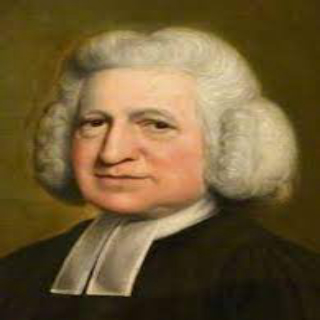
Charles Wesley "O for a thousand tongues to sing / My dear Redeemer's praise / The glories of my God and King, / The triumphs of his grace!" He was said to have averaged 10 poetic lines a day for 50 years. He wrote 8,989 hymns, 10 times the volume composed by the only other candidate (Isaac Watts) who could conceivably claim to be the world's greatest hymn writer. He composed some of the most memorable and lasting hymns of the church: "Hark! The Herald Angels Sing," "And Can It Be," "O for a Thousand Tongues to Sing," "Love Divine, All Loves Excelling," "Jesus, Lover of My Soul," "Christ the Lord Is Risen Today," "Soldiers of Christ, Arise," and "Rejoice! the Lord Is King!" And yet he is often referred to as the "forgotten Wesley." His brother John is considered the organizational genius behind the founding of Methodism. But without the hymns of Charles, the Methodist movement may have gone nowhere. As one historian put it, "The early Methodists were taught and led as much through [Charles's] hymns as through sermons and [John] Wesley's pamphlets." Language scholar Charles Wesley was the eighteenth of Samuel and Susannah Wesley's nineteen children (only 10 lived to maturity). He was born prematurely in December 1707 and appeared dead. He lay silent, wrapped in wool, for weeks. When older, Charles joined his siblings as each day his mother, Susannah, who knew Greek, Latin, and French, methodically taught them for six hours. Charles then spent 13 years at Westminster School, where the only language allowed in public was Latin. He added nine years at Oxford, where he received his master's degree. It was said that he could reel off the Latin poet Virgil by the half hour. It was off to Oxford University next, and to counteract the spiritual tepidity of the school, Charles formed the Holy Club, and with two or three others celebrated Communion weekly and observed a strict regimen of spiritual study. Because of the group's religious regimen, which later included early rising, Bible study, and prison ministry, members were called "methodists." In 1735 Charles joined his brother John (they were now both ordained), to become a missionary in the colony of Georgia—John as chaplain of the rough outpost and Charles as secretary to Governor Oglethorpe. Shot at, slandered, suffering sickness, shunned even by Oglethorpe, Charles could have echoed brother John's sentiments as they dejectedly returned to England the following year: "I went to America to convert the Indians, but, oh, who will convert me?" It turned out to be the Moravians. After returning to England, Charles taught English to Moravian Peter Böhler, who prompted Charles to look at the state of his soul more deeply. During May 1738, Charles began reading Martin Luther's volume on Galatians while ill. He wrote in his diary, "I labored, waited, and prayed to feel 'who loved me, and gave himself for me.'" He shortly found himself convinced, and journaled, "I now found myself at peace with God, and rejoice in hope of loving Christ." Two days later he began writing a hymn celebrating his conversion. Evangelistic preacher At evangelist George Whitefield's instigation, John and Charles eventually submitted to "be more vile" and do the unthinkable: preach outside of church buildings. In his journal entries from 1739 to 1743, Charles computed the number of those to whom he had preached. Of only those crowds for whom he stated a figure, the total during these five years comes to 149,400. From June 24 through July 8, 1738, Charles reported preaching twice to crowds of ten thousand at Moorfields, once called "that Coney Island of the eighteenth century." He preached to 20,000 at Kennington Common plus gave a sermon on justification before the University of Oxford. On a trip to Wales in 1747, the adventurous evangelist, now 40 years old, met 20-year-old Sally Gwynne, whom he soon married. By all accounts, their marriage was a happy one. Charles continued to travel and preach, sometimes creating tension with John, who complained that "I do not even know when and where you intend to go." His last nationwide trip was in 1756. After that, his health led him gradually to withdraw from itinerant ministry. He spent the remainder of his life in Bristol and London, preaching at Methodist chapels. Magnificent obsession Throughout his adult life, Charles wrote verse, predominantly hymns for use in Methodist meetings. He produced 56 volumes of hymns in 53 years, producing in his lyrics what brother John called a "distinct and full account of scriptural Christianity." The Methodists became known (and sometimes mocked) for their exuberant singing of Charles's hymns. A contemporary observer recorded, "The song of the Methodists is the most beautiful I ever heard … They sing in a proper way, with devotion, serene mind and charm." Charles Wesley quickly earned admiration for his ability to capture universal Christian experience in memorable verse. In the following century, Henry Ward Beecher declared, "I would rather have written that hymn of Wesley's, 'Jesus, Lover of My Soul,' than to have the fame of all the kings that ever sat on the earth." The compiler of the massive Dictionary of Hymnology, John Julian, concluded that "perhaps, taking quantity and quality into consideration, [Charles Wesley was] the greatest hymn-writer of all ages."

To Heaven and Back with No Fanfare

Suppose you had an absolutely stunning supernatural experience, like being in a car accident and having an out-of-body experience so that you were sure you had died and gone to heaven for a few minutes before returning to your body and being brought back to life. How would you handle that experience? Most of us would be consumed with telling others about it. We might even write a book about it, and go on a speaking circuit. It’s just too amazing to keep to ourselves. And more than likely we would feel empowered to use that very experience to authorize our views of heaven. We might feel as if this extraordinary experience gave us extraordinary influence. Who could contradict us? We had been there! To Heaven and Back Paul did have an experience something like that. But here’s the amazing thing: He mentions it only one time in his thirteen letters, and he never once makes it the warrant for believing anything he says. In fact, the only reason he brings it up is to say that this kind of privilege is precisely not what he will boast in. Rather, he will boast in his weaknesses. Here’s the experience — he even describes it as if it were another person so as not to exalt himself: I must go on boasting. Though there is nothing to be gained by it, I will go on to visions and revelations of the Lord. I know a man in Christ who fourteen years ago was caught up to the third heaven — whether in the body or out of the body I do not know, God knows. And I know that this man was caught up into paradise — whether in the body or out of the body I do not know, God knows — and he heard things that cannot be told, which man may not utter. On behalf of this man I will boast, but on my own behalf I will not boast, except of my weaknesses. (2 Corinthians 12:1–5) We know he is talking about himself, even though he says, “I know a man . . .” because two verses later he says, “To keep me from becoming conceited because of the surpassing greatness of the revelations, a thorn was given me in the flesh” (2 Corinthians 12:7). So he himself is the one who had this extraordinary experience. It is astonishing that Paul introduces this absolutely stunning experience of being “caught up into paradise” only to give it a passing “boast” and then turn all his attention to the real marks of an apostle — namely, suffering for Christ’s sake. Why Minimize the Marvelous? Paul never mentions this experience again. He does not use it to pull rank. He shifts all the focus off of the dramatic and onto the painful reality of suffering with joy. Why? Because it is merely human to boast about extraordinary experiences like visions and out-of-body encounters with God. It requires no great grace or power of God to boast in things that seem to set you apart as privileged. But to boast about weaknesses, and to be content with insults and hardships and persecutions and calamities — that is not what ordinary sinful humans are like. That requires supernatural grace. This is what Paul wants to focus on as the evidence of his apostleship. In fact, he says that the Lord Jesus gave him a thorn in the flesh (we never know what it is) precisely so that he would be hindered from boasting as a superhero of spiritual experience. When Paul pleaded that Jesus would take the thorn away, the Lord answered, “My grace is sufficient for you, for my power is made perfect in weakness” (2 Corinthians 12:9). So Paul concluded, Therefore I will boast all the more gladly of my weaknesses, so that the power of Christ may rest upon me. For the sake of Christ, then, I am content with weaknesses, insults, hardships, persecutions, and calamities. For when I am weak, then I am strong. (2 Corinthians 12:9–10) Instead of circling back again and again to his once-in-a-lifetime out-of-body experience, Paul mentions it once, and then shifts all the focus onto the truths that people can see and think about and test in his writing and his life. Rooted in Public Reality In other words, the truth of Christianity is not rooted in mystical experiences that only a few people have. It is rooted in God-given revelation through writings that are open for all to see and study and test. It is validated in real lives that others can see and examine. So, instead of directing people to his private experience, Paul says, We behaved in the world with simplicity and godly sincerity, not by earthly wisdom but by the grace of God, and supremely so toward you. For we are not writing to you anything other than what you read and understand and I hope you will fully understand. (2 Corinthians 1:12–13) “The truth of Christianity is not rooted in mystical experiences that only a few people have.” If you were to ask Paul, “How can we share your insight into the mystery of Christ?” he would not answer, “I’m sorry. Those mysteries are reserved for the select few who have rare mystical experiences.” What he would say is this: “When you read this, you can perceive my insight into the mystery of Christ” (Ephesians 3:4). His way of opening heaven was not by appealing to unsharable experiences. His way was by appealing to shareable truths written for all to see and understand and experience. Life on Display Behind these writings he put his own life as evidence of reality. Not his life in the rare moments of mystical experience, but his life as a flesh-and-blood man who had to deal with all the hardships of life and ministry. What you have learned and received and heard and seen in me — practice these things, and the God of peace will be with you. (Philippians 4:9) Brothers, join in imitating me, and keep your eyes on those who walk according to the example you have in us. (Philippians 3:17) Be imitators of me, as I am of Christ. (1 Corinthians 11:1) In other words, Paul’s way of leading us into the truth and glory of Christ was not to talk about his privilege of an out-of-body experience of paradise. Instead, his way was to live an open life of total devotion to Jesus, through much suffering, and to write Spirit-given words (1 Corinthians 2:13) that are open to all — readable, public, ready for all to examine. This is a mark of humble, serious, personal reality. It is unusual, contrary to ordinary human proclivities, attractive. It has won my heart. Article by John Piper

Feedback
Suggestionsuggestion box
x