



About the Book
"Authentically Izzy" is a contemporary romance novel by Pepper Basham that tells the story of Izzy, a woman struggling to find her true self amidst the expectations of her family and society. When she meets a charming musician named Miles, Izzy begins to confront her insecurities and embrace her authenticity. As their relationship deepens, Izzy must decide if she is willing to take a chance on love and be true to herself.
Isaac Watts
"Joy to the world, the Lord is come / Let earth receive her King / Let every heart, prepare him room / And heaven and nature sing."
In his later years, Isaac Watts once complained about hymn singing in church: "To see the dull indifference, the negligent and thoughtless air that sits upon the faces of a whole assembly, while the psalm is upon their lips, might even tempt a charitable observer to suspect the fervency of their inward religion."
He had been bemoaning such since his late teens. His father, tired of his complaints, challenged him to write something better. The following week, the adolescent Isaac presented his first hymn to the church, "Behold the Glories of the Lamb," which received an enthusiastic response. The career of the "Father of English Hymnody" had begun.
Head of a genius
At Isaac's birth in 1674, his father was in prison for his Nonconformist sympathies (that is, he would not embrace the established Church of England). His father was eventually freed (and fathered seven more children), but Isaac respected his courage and remembered his mother's tales of nursing her children on the jail steps.
Young Isaac showed genius early. He was learning Latin by age 4, Greek at 9, French (which he took up to converse with his refugee neighbors) at 11, and Hebrew at 13. Several wealthy townspeople offered to pay for his university education at Oxford or Cambridge, which would have led him into Anglican ministry. Isaac refused and at 16 went to London to study at a leading Nonconformist academy. Upon graduation, he spent five years as a private tutor.
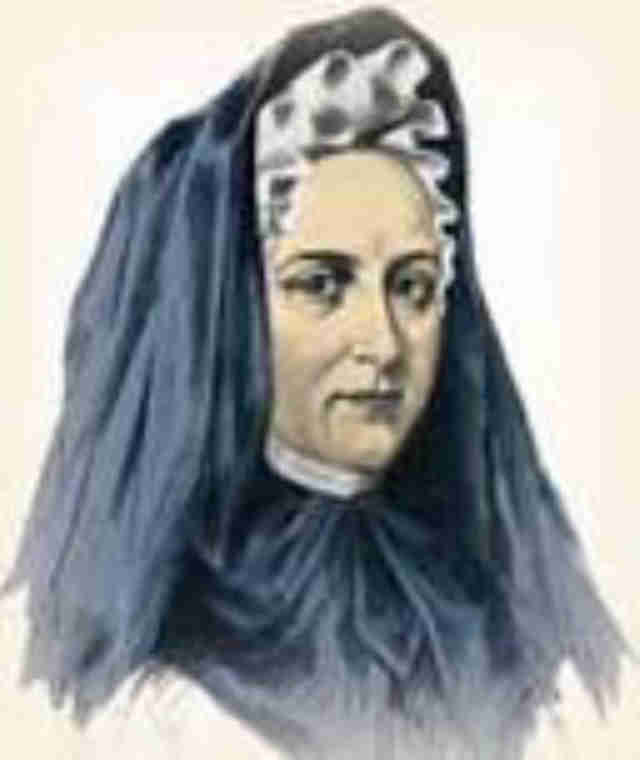
His illness and unsightly appearance took its toll on his personal life. His five-foot, pale, skinny frame was topped by a disproportionately oversized head. Almost every portrait of him depicts him in a large gown with large folds—an apparent attempt by the artists to disguise his homeliness. This was probably the reason for Elizabeth Singer's rejection of his marriage proposal. As one biographer noted, "Though she loved the jewel, she could not admire the casket [case] which contained it."
Though German Lutherans had been singing hymns for 100 years, John Calvin had urged his followers to sing only metrical psalms; English Protestants had followed Calvin's lead.
Watts's 1707 publication of Hymns and Spiritual Songs technically wasn't a collection of hymns or metrical psalms, but it was a collection of consequence. In fact, it contained what would become some of the most popular English hymns of all time, such as "When I Survey the Wondrous Cross."
Watts didn't reject metrical psalms; he simply wanted to see them more impassioned. "They ought to be translated in such a manner as we have reason to believe David would have composed them if he had lived in our day," he wrote. Psalms of David Imitated in the Language of the New Testament followed in 1719.
Many of his English colleagues couldn't recognize these translations. How could "Joy to the World" really be Psalm 98? Or "Jesus Shall Reign Where'er the Sun" be Psalm 72>, or "O God Our Help in Ages Past" be Psalm 90?
Watts was unapologetic, arguing that he deliberately omitted several psalms and large parts of others, keeping portions "as might easily and naturally be accommodated to the various occasions of Christian life, or at least might afford us some beautiful allusions to Christian affairs." Furthermore, where the psalmist fought with personal enemies, Watts turned the biblical invective against spiritual adversaries: sin, Satan, and temptation. Finally, he said, "Where the flights of his faith and love are sublime, I have often sunk the expressions within the reach of an ordinary Christian."
Such looseness brought criticism. "Christian congregations have shut out divinely inspired psalms and taken in Watts's flights of fancy," protested one detractor. Others dubbed the new songs "Watts's whims."
But after church splits, pastor firings, and other arguments, Watts's paraphrases won out. "He was the first who taught the Dissenters to write and speak like other men, by showing them that elegance might consist with piety," wrote the famed lexicographer (and Watts's contemporary) Samuel Johnson.
More than a poet, however, Watts was also a scholar of wide reputation, especially in his later years. He wrote nearly 30 theological treatises; essays on psychology, astronomy, and philosophy; three volumes of sermons; the first children's hymnal; and a textbook on logic that served as a standard work on the subject for generations.
But his poetry remains his lasting legacy and earned him acclaim on both sides of the Atlantic. Benjamin Franklin published his hymnal, Cotton Mather maintained a long correspondence, and John Wesley acknowledged him as a genius—though Watts maintained that Charles Wesley's "Wrestling Jacob" was worth all of his own hymns.
disowned for jesus - what i lost and found in christ
When I left Islam to follow Jesus, I didn’t know what it would cost me. I hadn’t realized what it would take to deny myself, lay my life down, and take up my cross (Matthew 16:24). I wasn’t aware that even the precious relationships of my family should not come between me and following Christ — that I should even hate  my family compared to my love for Jesus (Luke 14:26). But God taught me that if I do take up my cross and lay down my life, then I’ll find my life. Over time, I have come to experience this truth. My life of following Jesus has not been the life I envisioned for myself, but it has become the life I want: a life used for the glory of God as I grow in the knowledge of Christ and make him known to others. That’s what I discovered when I was forced to choose between Jesus and my father. From Iran to Texas I was born in Houston and grew up in a devout Muslim home. My dad was very involved in the Iranian Muslim community. Growing up, I was taught the five pillars of Islam and that if I did them to the best of my ability, then maybe I’d get to heaven. When I was two years old, my family moved to Iran, where my parents are from. But at age six, the Islamic Revolution of the late ’70s hit that country. My father, who was a doctor, had the means to get us out of the country, so our family moved back to Houston. I spoke Farsi, not English, and so God, in his incredible plan, provided a Christian lady who tutored me, teaching me the English language every day by reading books to me. In the second grade, she said to me, “Afshin, I want to give you the most important book that you’ll ever read in life.” As she handed me a small New Testament, she told me that I would not completely understand it now, but asked me to promise to hold onto it until I was older. She gave me that Bible during the Iran hostage crisis, a time during which my family and other Iranians in America were ostracized and hated by many. This lady, however, earned the right to be heard by the way that she loved me, showed me the love of Christ, and poured her life into me. Because the Bible came from her, I believed it was important, and held onto that New Testament. She had planted a seed in my life in the second grade that wouldn’t come to fruition until ten years later. Leaving Islam As a senior in high school, I used the Lord’s name in vain while playing basketball. A guy on the court walked up to me and said, “Hey, that Jesus whose name you just said — he’s my God.” As a Muslim, I’d been taught that Jesus was a prophet, so I thought the guy was nuts. A few days later, while watching TV, I stumbled onto a historical documentary on the life of Jesus, where I heard, “Some worship Jesus as God, and they’re called Christians.” My mind went back to the words of the guy on the basketball court, and the Lord reminded me of the Bible that I’d received ten years earlier. That afternoon, I found that small New Testament at the bottom of my closet and began to read in Matthew. Every day, I’d read under the covers in my bed with a flashlight so that my parents wouldn’t walk in and see what I was doing. Meanwhile, at my high school, a Christian student sat across the table from me at lunch and told me about Jesus. I’d debate against him each day, and then at night I’d go home to read more about his Jesus. One day, I got to the book of Romans, and the third chapter completely changed my life. I read about a righteousness that comes apart from the law, apart from what I do for God. I read that this righteousness comes as a gift to be received by faith. I was struck by Romans 3:22, which says that this righteousness comes to all  who believe. I thought I was born a Muslim and would always be a Muslim, but that verse said that this righteousness was for anyone who believes, of any ethnicity. A couple weeks later, a guy invited me to an evangelistic crusade (always an interesting word for a Muslim!), where I heard the gospel proclaimed and came to faith in Christ. As an aside: I’m often asked what form of evangelism I believe to be most effective. God used evangelism in a variety of forms in my life. He used a teacher loving and tutoring a kid, a guy sharing one-on-one in a cafeteria, a guy speaking up for the name of Christ on a basketball court, an invitation to an evangelistic event, and the preaching of the gospel in a corporate setting. I believe in each of these forms of evangelism because God used each one of them in my own life. Disowned I made my commitment to Christ public at that evangelistic crusade, but driving home from the event is when it hit me: “What am I going to tell my family? What am I going to tell my father?” My father had always been the most important person in my life, the guy I’d always looked up to. I’m ashamed to say that I decided to hide my newfound faith from him and the rest of my family. I would sneak out to go to church, intercept mail from the church I was attending, and hide my Bible. Finally, one day my dad found out. He’d seen my Bible, and he’d also seen other evidences in my life. He sat me down and said, “Son, what’s going on? There’s something different about you.” I said, “Dad, I’m a Christian.” He said, “No, you’re not, young man. you’re a Muslim and you’ll always be a Muslim.” I said, “Dad, the Bible says that if I trust in Christ alone for my salvation, then I’m a Christian — and I do.” My dad said, “Afshin, if you’re going to be a Christian, then you can no longer be my son.” Everything in my flesh wanted to say, “Forget it. I’ll be a Muslim.” I didn’t want to lose the relationship with my dad. So even I was surprised when I opened my mouth and said, “Dad, if I have to choose between you and Jesus, then I choose Jesus. And if I have to choose between my earthly father and my heavenly Father, then I choose my heavenly Father.” My father disowned me on the spot. Not Peace, but a Sword I went upstairs to my room, and in the defining moment of my life, said, “God, how could you do this to me? Jesus, if you’re real, how could you take my dad away from me?” The Lord led me to where Jesus says, “Everyone who acknowledges me before men, I also will acknowledge before my Father who is in heaven, but whoever denies me before men, I also will deny before my Father who is in heaven. Do not think that I have come to bring peace to the earth. I have not come to bring peace, but a sword. For I have come to set a man against his father.” (Matthew 10:32–35) I read this just moments after my dad disowned me, and thought, Whoa! This just happened for me!  Jesus goes on to say, “I have come to set . . . a daughter against her mother, and a daughter-in-law against her mother-in-law. And a person’s enemies will be those of his own household. Whoever loves father or mother more than me is not worthy of me, and whoever loves son or daughter more than me is not worthy of me. And whoever does not take his cross and follow me is not worthy of me. Whoever finds his life will lose it, and whoever loses his life for my sake will find it.” (Matthew 10:35–39) That’s when I first understood what it means to be a follower of Christ. Life Lost and Found I had to lose my father to follow Christ. But I learned firsthand that when you lose your life, you find it. God gave me a roommate in college who was also a former Muslim and was also disowned by his father. After college, God led me to seminary. He provided a businessman in Dallas who paid for my entire seminary degree and a church internship, which eventually led to a position as a college pastor. God gave me a fifteen-year speaking ministry where I traveled all over the United States, preached the gospel, and saw Muslims come to faith in Christ. I have partnered with a ministry that reaches into Iran with the gospel, and have had the privilege of training and equipping Iranian pastors, helping to spread the gospel in the same nation from which my family came. I now pastor a church in Frisco, Texas, where I get to weekly remind our people to count the cost of following Christ. As a result, we have grown, planted three churches, and sent out several missionaries around the world. Finally, I am thrilled to say that my relationship with my dad has been restored, and I continue to pray for his salvation daily. What Has Jesus Cost You? I’m passionate for people to know that there’s a cost to following Jesus. What is it costing you to follow him? It might be that the thing you’re holding onto is the thing that’s keeping you from living for his glory. For me, it was my dad. For you, it might be something else. There is a huge difference between being a follower of Christ and merely giving mental assent to the truths about Jesus. The call of Christ isn’t simply “Believe the right things about me” but “Follow me.” And following Jesus is defined by losing your life. It is laying down your dreams, your pursuits, your idols to grab ahold of the greatest treasure in life: Jesus. When we lose our lives, God will leverage our lives for his glory and for others to know Jesus. There is no greater joy and fulfillment in life than this.