










About the Book
"Redeeming Love" is a Christian historical romance novel that tells the story of Angel, a young woman who was sold into prostitution as a child and struggles to find redemption and love. Set in the 1850s California Gold Rush era, the novel explores themes of faith, forgiveness, and the power of love to heal even the deepest wounds. Through the love and patience of a man named Michael Hosea, Angel is able to find healing and redemption as she learns to accept and believe in the love of God.
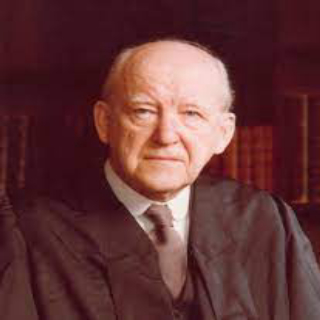
Martin Luther
Martin Luther was a German monk who forever changed Christianity when he nailed his '95 Theses' to a church door in 1517, sparking the Protestant Reformation.
Who Was Martin Luther?
Martin Luther was a German monk who began the Protestant Reformation in the 16th century, becoming one of the most influential and controversial figures in the history of Christianity.
Luther called into question some of the basic tenets of Roman Catholicism, and his followers soon split from the Roman Catholic Church to begin the Protestant tradition. His actions set in motion tremendous reform within the Church.
A prominent theologian, Luther’s desire for people to feel closer to God led him to translate the Bible into the language of the people, radically changing the relationship between church leaders and their followers.
Early Life
Luther was born on November 10, 1483, in Eisleben, Saxony, located in modern-day Germany.
His parents, Hans and Margarette Luther, were of peasant lineage. However, Hans had some success as a miner and ore smelter, and in 1484 the family moved from Eisleben to nearby Mansfeld, where Hans held ore deposits.
Hans Luther knew that mining was a tough business and wanted his promising son to have a better career as a lawyer. At age seven, Luther entered school in Mansfeld.
Education
At 14, Luther went north to Magdeburg, where he continued his studies. In 1498, he returned to Eisleben and enrolled in a school, studying grammar, rhetoric and logic. He later compared this experience to purgatory and hell.
In 1501, Luther entered the University of Erfurt, where he received a degree in grammar, logic, rhetoric and metaphysics. At this time, it seemed he was on his way to becoming a lawyer.
Becoming a Monk
In July 1505, Luther had a life-changing experience that set him on a new course to becoming a monk.
Caught in a horrific thunderstorm where he feared for his life, Luther cried out to St. Anne, the patron saint of miners, “Save me, St. Anne, and I’ll become a monk!” The storm subsided and he was saved.
Most historians believe this was not a spontaneous act, but an idea already formulated in Luther’s mind. The decision to become a monk was difficult and greatly disappointed his father, but he felt he must keep a promise.
Luther was also driven by fears of hell and God’s wrath, and felt that life in a monastery would help him find salvation.
The first few years of monastic life were difficult for Luther, as he did not find the religious enlightenment he was seeking. A mentor told him to focus his life exclusively on Jesus Christ and this would later provide him with the guidance he sought.
Disillusionment with Rome
At age 27, Luther was given the opportunity to be a delegate to a Catholic church conference in Rome. He came away more disillusioned, and very discouraged by the immorality and corruption he witnessed there among the Catholic priests.
Upon his return to Germany, he enrolled in the University of Wittenberg in an attempt to suppress his spiritual turmoil. He excelled in his studies and received a doctorate, becoming a professor of theology at the university (known today as Martin Luther University Halle-Wittenberg).
Through his studies of scripture, Luther finally gained religious enlightenment. Beginning in 1513, while preparing lectures, Luther read the first line of Psalm 22, which Christ wailed in his cry for mercy on the cross, a cry similar to Luther’s own disillusionment with God and religion.
Two years later, while preparing a lecture on Paul’s Epistle to the Romans, he read, “The just will live by faith.” He dwelled on this statement for some time.
Finally, he realized the key to spiritual salvation was not to fear God or be enslaved by religious dogma but to believe that faith alone would bring salvation. This period marked a major change in his life and set in motion the Reformation.
Though Luther intended these to be discussion points, the 95 Theses laid out a devastating critique of the indulgences - good works, which often involved monetary donations, that popes could grant to the people to cancel out penance for sins - as corrupting people’s faith.
Luther also sent a copy to Archbishop Albert Albrecht of Mainz, calling on him to end the sale of indulgences. Aided by the printing press, copies of the 95 Theses spread throughout Germany within two weeks and throughout Europe within two months.
The Church eventually moved to stop the act of defiance. In October 1518, at a meeting with Cardinal Thomas Cajetan in Augsburg, Luther was ordered to recant his 95 Theses by the authority of the pope.
Luther said he would not recant unless scripture proved him wrong. He went further, stating he didn’t consider that the papacy had the authority to interpret scripture. The meeting ended in a shouting match and initiated his ultimate excommunication from the Church.
Excommunication
Following the publication of his 95 Theses, Luther continued to lecture and write in Wittenberg. In June and July of 1519 Luther publicly declared that the Bible did not give the pope the exclusive right to interpret scripture, which was a direct attack on the authority of the papacy.
Finally, in 1520, the pope had had enough and on June 15 issued an ultimatum threatening Luther with excommunication.
On December 10, 1520, Luther publicly burned the letter. In January 1521, Luther was officially excommunicated from the Roman Catholic Church.
Diet of Worms
In March 1521, Luther was summoned before the Diet of Worms, a general assembly of secular authorities. Again, Luther refused to recant his statements, demanding he be shown any scripture that would refute his position. There was none.
On May 8, 1521, the council released the Edict of Worms, banning Luther’s writings and declaring him a “convicted heretic.” This made him a condemned and wanted man. Friends helped him hide out at the Wartburg Castle.
While in seclusion, he translated the New Testament into the German language, to give ordinary people the opportunity to read God’s word.
Lutheran Church
Though still under threat of arrest, Luther returned to Wittenberg Castle Church, in Eisenach, in May 1522 to organize a new church, Lutheranism.
He gained many followers, and the Lutheran Church also received considerable support from German princes.
When a peasant revolt began in 1524, Luther denounced the peasants and sided with the rulers, whom he depended on to keep his church growing. Thousands of peasants were killed, but the Lutheran Church grew over the years.
Katharina von Bora
In 1525, Luther married Katharina von Bora, a former nun who had abandoned the convent and taken refuge in Wittenberg.
Born into a noble family that had fallen on hard times, at the age of five Katharina was sent to a convent. She and several other reform-minded nuns decided to escape the rigors of the cloistered life, and after smuggling out a letter pleading for help from the Lutherans, Luther organized a daring plot.
With the help of a fishmonger, Luther had the rebellious nuns hide in herring barrels that were secreted out of the convent after dark - an offense punishable by death. Luther ensured that all the women found employment or marriage prospects, except for the strong-willed Katharina, who refused all suitors except Luther himself.
The scandalous marriage of a disgraced monk to a disgraced nun may have somewhat tarnished the reform movement, but over the next several years, the couple prospered and had six children.
Katharina proved herself a more than a capable wife and ally, as she greatly increased their family's wealth by shrewdly investing in farms, orchards and a brewery. She also converted a former monastery into a dormitory and meeting center for Reformation activists.
Luther later said of his marriage, "I have made the angels laugh and the devils weep." Unusual for its time, Luther in his will entrusted Katharina as his sole inheritor and guardian of their children.
Anti-Semitism
From 1533 to his death in 1546, Luther served as the dean of theology at University of Wittenberg. During this time he suffered from many illnesses, including arthritis, heart problems and digestive disorders.
The physical pain and emotional strain of being a fugitive might have been reflected in his writings.
Some works contained strident and offensive language against several segments of society, particularly Jews and, to a lesser degree, Muslims. Luther's anti-Semitism is on full display in his treatise, The Jews and Their Lies.
Death
Luther died following a stroke on February 18, 1546, at the age of 62 during a trip to his hometown of Eisleben. He was buried in All Saints' Church in Wittenberg, the city he had helped turn into an intellectual center.
Luther's teachings and translations radically changed Christian theology. Thanks in large part to the Gutenberg press, his influence continued to grow after his death, as his message spread across Europe and around the world.
ready to commit, slow to compare - a recipe for real community
Months ago a young couple visited our church, and we had them over to our home for lunch. As we ate and conversed over meatloaf and mashed potatoes, the young woman peppered me with questions. “So what is community like at your church?” “How many people are in discipleship relationships?” In between questions, she gave us a glowing review of the church they had been a part of in another state. I felt expectations rise as she shared about her close relationship with the pastor’s wife, who happened to live in the apartment above them, and how she popped in on their family at all different times of day. I was beginning to feel like a job description was being offered to me, and our church was being evaluated as to whether we fit the bill. I’m thankful this couple had such a wonderful experience at their former church, but I couldn’t help but wonder how helpful it was to measure everything against their previous experience. Yes, we learn from our past and are blessed when we have great models, but is it helpful to compare communities of faith and assume that one is the ideal model and all others should strive to look the same? “Relationships deepen and grow only when we’re willing to commit time and energy to fostering them.” The conversation about what church community should look like caused me to reflect on different issues I’ve noticed emerging around this important debate. Community Without Commitment Despite all the hype about the importance of community in the body of Christ, there can be a tendency to want all the feelings of community without a firm commitment to a local body of believers. Relationships deepen and grow only when we’re willing to commit time and energy to fostering them (Hebrews 10:24–25). Committing to a Bible study or small group or discipleship relationship often provides the setting to establish community. But if you always have a list of reasons why you don’t have the time, how will the body of Christ you belong to know how to minister to your needs? If having babies or being tired or working late keeps you from faithfully serving your church or being served through a ministry of the church, you’re likely not going to feel well-connected. How will we know how to pray for each other when there isn’t a regular time to meet in a smaller setting and share our joys and burdens of life? If your travel plans or children’s sports schedules consistently have you missing corporate times of worship, you’ll be deprived of not just hearing the word proclaimed, but the interactions that happen in the pews before and after the service. We will never experience true community without a firm, sacrificial commitment to a local body of believers. Community Without Accountability True community also means being transparent enough with your own struggles so that others in the body know how to pray for you (James 5:16). Not everyone in your church needs to know your darkest moments of despair, but do a select few know your battles? Are others free to ask you how you’re faring in your war with pornography, binge eating, or gossip? Or do you meet them with a high wall of defense when they try to speak truth into your life? “We will never experience true community without a firm, sacrificial commitment to a local body of believers. ” When another member in the body has the courage to confront our inconsistency or hold us accountable in a struggle we’re facing, we should ask God to give us grace to receive their words with humility and meekness. Our own pride can tempt us to surround ourselves with people who will affirm our words and actions, instead of challenge us when we turn down the wrong path. There is a temptation to shut people out who are speaking truth into our life by avoiding communication with them: unfriending them on Facebook, turning the other way when you see them at church, or conveniently never finding the time to meet them for coffee. But we’re missing out on what could be a primary means of sanctification in our lives when we refuse to be held accountable by our community of faith. No Perfect Community So, in your search for the church with the perfect community, be willing to accept that community will look different from church to church. Maybe your community was established by a strong relationship with the pastor’s wife at your former church, but be willing to see that your close relationships at your new church could come through an unexpected way: a single woman longing for companionship or perhaps a gray-haired grandma willing to meet you for coffee each week. Instead of sitting on the sidelines comparing and critiquing what your church does or doesn’t have, commit to a ministry of the church to both serve in and be served. Find a smaller group within the body to share life with, study Scripture with, and pray for one another with. And keep the commitments you make. If you sign up for a Bible study that lasts twelve weeks, do your best to commit for the long haul. If you’re feeling disconnected from others within your church, evaluate your own level of involvement. True community is established through faithfulness, commitment, and a humility to both share your struggles and receive counsel. You honor God when you commit to the saints and sinners he has placed in your church family. We Need Each Other “One day we’ll see Jesus together, but we’ll only make it if we push each other to cling to him today.” We might not ever find the perfect community this side of heaven, but our church families are essential for our walk with Jesus. Like Hebrews says, the state of our very souls depends on our community of faith: Take care, brothers, lest there be in any of you an evil, unbelieving heart, leading you to fall away from the living God. But exhort one another every day, as long as it is called “today,” that none of you may be hardened by the deceitfulness of sin. (Hebrews 3:12–13) We need community. We need our brothers and sisters in Christ. However imperfect our church may be, we need our family to point us to the gospel. One day we’ll see Jesus together, but we’ll only make it if we push each other to cling to him today.