

.-160.webp)






About the Book
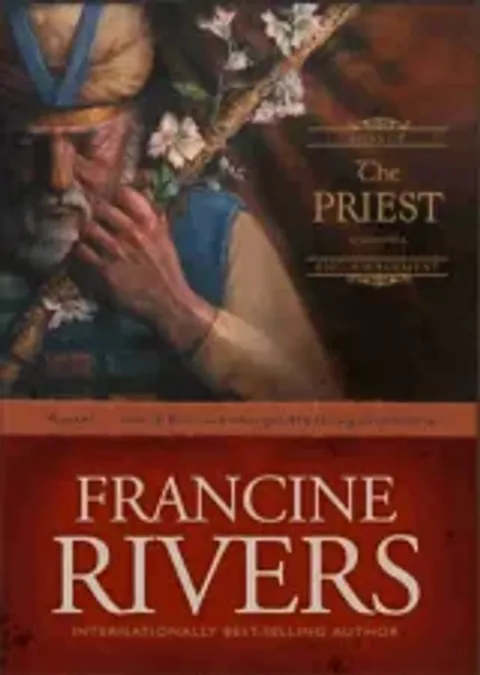
"Unveiled: Tamar" by Francine Rivers is a biblical fiction novel that tells the story of Tamar, the daughter-in-law of Judah from the Old Testament. Through Tamar's journey of heartache, betrayal, and redemption, Rivers explores themes of faith, forgiveness, and the power of God's grace. Tamar's story is revealed in a powerful and emotional retelling that will leave readers inspired and moved by her resilience and unwavering faith in the face of adversity.
Henry Alline
 Henry Alline’s early years
He was born and received his early education in Newport, Rhode Island and his family moved to Nova Scotia in 1760, when he was 12 years old. When he was nine he began to read theological works and became somewhat mystical, but after years of soul-searching and spiritual conflict he was powerfully converted in 1775, simultaneously receiving a call to the ministry.
Alone and desperate he prayed until…’redeeming love broke into my soul… with such power that my whole soul seemed to be melted down with love…and my will turned of choice after the infinite God. A year later he began to preach.
His preaching career
His preaching career lasted until his death eight years later. He was an itinerant preacher in Nova Scotia and Prince Edward Island in an ever-widening circuit, beginning what became known as the ‘New Light’ movement and which is still the greatest revival that Canada has ever seen. He preached the new birth powerfully and effectively and his admirers compared him to George Whitefield and John the Baptist.
Considered an emotional and dangerous fanatic by some and a ‘ravager of congregations,’ the Congregationalists withdrew his right to preach in their churches, so he spoke in barns, houses and the open air. In all he began eight ‘New Light’ Congregational churches based on his non-Arminian but anti-Calvinist views of free-will and predestination, and his strong rejection of outward religious form.
Ironically, despite his indifference regarding baptism, his major 19th century influence was amongst the Baptists of eastern Canada, many of whom were his converts.
Despite possibly unorthodox views and methods, his ministry was without doubt that of an extraordinary revivalist.
Alline’s sermon style was always simple and extemporary, using a few simple, understandable points to help the unchurched to grasp the simple truths of the gospel. As with other itinerant revivalists, his objective was to lead the hearers to a point of decision – to accept or reject Christ as Saviour and Lord, which opened the door to the “new birth.”
Doubtless, his sermons were repeated over time, but he was never in one place long enough for his listeners to notice.
Alline also employed the ministry of prayer and of singing, writing many hymns which were helpful in communicating the gospel. A collection was gathered after his death and was reprinted at least four times in the United States, and several were included in the standard hymnals of the 19th century.
Henry Alline’s early years
He was born and received his early education in Newport, Rhode Island and his family moved to Nova Scotia in 1760, when he was 12 years old. When he was nine he began to read theological works and became somewhat mystical, but after years of soul-searching and spiritual conflict he was powerfully converted in 1775, simultaneously receiving a call to the ministry.
Alone and desperate he prayed until…’redeeming love broke into my soul… with such power that my whole soul seemed to be melted down with love…and my will turned of choice after the infinite God. A year later he began to preach.
His preaching career
His preaching career lasted until his death eight years later. He was an itinerant preacher in Nova Scotia and Prince Edward Island in an ever-widening circuit, beginning what became known as the ‘New Light’ movement and which is still the greatest revival that Canada has ever seen. He preached the new birth powerfully and effectively and his admirers compared him to George Whitefield and John the Baptist.
Considered an emotional and dangerous fanatic by some and a ‘ravager of congregations,’ the Congregationalists withdrew his right to preach in their churches, so he spoke in barns, houses and the open air. In all he began eight ‘New Light’ Congregational churches based on his non-Arminian but anti-Calvinist views of free-will and predestination, and his strong rejection of outward religious form.
Ironically, despite his indifference regarding baptism, his major 19th century influence was amongst the Baptists of eastern Canada, many of whom were his converts.
Despite possibly unorthodox views and methods, his ministry was without doubt that of an extraordinary revivalist.
Alline’s sermon style was always simple and extemporary, using a few simple, understandable points to help the unchurched to grasp the simple truths of the gospel. As with other itinerant revivalists, his objective was to lead the hearers to a point of decision – to accept or reject Christ as Saviour and Lord, which opened the door to the “new birth.”
Doubtless, his sermons were repeated over time, but he was never in one place long enough for his listeners to notice.
Alline also employed the ministry of prayer and of singing, writing many hymns which were helpful in communicating the gospel. A collection was gathered after his death and was reprinted at least four times in the United States, and several were included in the standard hymnals of the 19th century.
What Does Hell Say About God
As children, we love stories. We lie in bed, or curl up on our parent’s knee, as the voice of our mother or father takes us into fictional worlds. We explore Where the Wild Things Are. We join the inquiry, Are You My Mother? We doff our hats with Babar, learn life lessons from Charlotte’s Web, stand with outstretched arms towards The Giving Tree. We wonder what Green Eggs and Ham actually taste like. Then we grow older. But hopefully not too old to pass through wardrobes into Narnia, or dig our five-by-five Holes with Stanley Yelnats, or live in them with The Hobbit. We might imagine seeing color the first time with The Giver or soaring on a Nimbus 2000 with the boy bearing the thunderbolt scar. We humans are creatures of story. As such, we are born with a unique skill: the ability to detect off-notes in narrative. Like the wrong key struck on the piano. Little ones tell their dad, “That’s not how it’s supposed to go!” But sadly, many hear God’s story, and give the same protest when he reads that chapter which spans eternity. Truth Some Hearts Can’t Bear As many wrestle with the existence of hell — or as we ourselves wrestle with it — that innate sense resurfaces. Many read, “These will go away into eternal punishment” — to be tormented with fire and sulfur, day and night, without any reprieve or rest, forever (Matthew 25:46; Revelation 14:9–11) — and reflexively say, “That’s not how it’s supposed to go.” They shake their heads, How is that a good story? Such try to rescue us from orthodoxy with Rob Bell, who writes, Telling a story about a God who inflicts unrelenting punishment on people because they didn’t do or say or believe the correct things in a brief window of time called life isn’t a very good story. (Love Wins, 110) For Bell and company, the lack of a happily ever after for all — or even most — sounds off. Even annihilation, to them, seems like a better ending. A God that would punish humans for an eternity is devastating, crushing, unbearable, traumatizing, terrifying, cruel, wrong, untenable, unacceptable, awful, unlovable. Hear it from Bell, this God is a being that no amount of good music or coffee can cover. “Heaven will not be heaven without the reminder of God’s righteous condemnation.” The challenge, then, is not to merely prove the existence of hell from one’s exegesis, but to answer why God’s story is better than we would have authored — because it is. We must try to reason with the heart, for Jesus taught us an extraordinary truth when he exposed that the mind will misunderstand what the heart detests: “Why do you not understand what I say? It is because you cannot bear to hear my word” (John 8:43). So it is with many today when considering hell. Four Truths About Hell We should not come to this subject lightly. We are talking about a real hell for real people for a real eternity. A place it would have been better to never have been born than to enter. A place of fire. Punishment. Banishment. Outer darkness. Curse. Destruction. Anguish. Second death. A place where worms feast, strong men weep, and teeth gnash. The four letters describe an unending punishment for those we have, for a brief time, known. How Paul considered the lostness of his kinsmen, and how Jesus lamented the unbelief of Israel teaches that we need not lay aside our love for the lost in discussing the eternal lostness being an appropriate punishment for their sin. Consider four truths. 1. Who Will Be in Hell The first consideration is clarifying what sort of creature will be under God’s wrath forever. The little old lady who has shown herself to be a selfless, gentle, patient, forgiving, and amiable neighbor may have a quaint funeral. But the person eulogized is not the person who she truly was nor who she will show herself to be in eternity to come. God has hidden her from us. At death, God repossesses all borrowed virtue, the full torrent of her wicked heart is unleashed. She will be fully given over to her sin (Romans 1:24, 26, 28). The hatred of God, the impatience, the lustful thoughts, the greed, the slander, the viciousness, all will stampede forth. The evil that showed itself in seed form on earth will grow to be forests. The light of common grace will fade from her, and she will be given to the darkness which she so loved (John 3:19). Her full depravity, now exposed, will cause the saints who cared most for her on earth to shudder. Sin, fully enthroned, dehumanizes. We can see ungodliness ripen in our own life span. Little Adolf, sleeping in his crib, becomes Hitler. Jezebel casts aside her dolls to slay prophets. But these do not compare with the change to be seen when hearts fully harden, and they’re faced with the Master they hate. God cut down our life span to prevent such ripening (Genesis 6:3). While citizens of heaven are their most fallen on earth, citizens of hell are their most human. John casts a ray of light upon the tormented in the book of Revelation. These creatures will still hate God, still curse the name of our Lord, still blaspheme the Holy Spirit who eternally dwells within us — even while under the pain of judgment. The fourth angel poured out his bowl on the sun, and it was allowed to scorch people with fire. They were scorched by the fierce heat, and they cursed the name of God who had power over these plagues. They did not repent and give him glory. The fifth angel poured out his bowl on the throne of the beast, and its kingdom was plunged into darkness. People gnawed their tongues in anguish and cursed the God of heaven for their pain and sores. They did not repent of their deeds. (Revelation 16:8–11) Between gnawing themselves in anguish, they still move their chewed tongues to curse our God. “Immortal horrors,” C.S. Lewis rightly called them. Preferring to be scorched than saved, they will share the fate of their father, the devil. What fellowship shall children of light share with these creatures when both are seen as they truly will be? 2. What Hell Says About God Some, like Bell, believe that God cannot be glorified in hell. “The belief that untold masses of people suffering forever doesn’t bring God glory. Restoration brings God glory; eternal torment doesn’t. Reconciliation brings God glory; endless anguish doesn’t. Renewal and return cause God’s greatness to shine through the universe; never-ending punishment doesn’t” (Love Wins, 108). Behold the wisdom of man. To which the apostle Paul responds, What if God, desiring to show his wrath and to make known his power, has endured with much patience vessels of wrath prepared for destruction, in order to make known the riches of his glory for vessels of mercy, which he has prepared beforehand for glory — even us whom he has called, not from the Jews only but also from the Gentiles? (Romans 9:22–24) Hell, like all of creation, tells of the glory of God. Bell says it doesn’t; God says it most certainly does. The Almighty is not embarrassed by it. God’s righteous vengeance against those who exchanged his glory and rejected him for a lifetime will not be conducted in back alleys. He shows his wrath and makes known his power. Why? In order to communicate the full riches of his glory to his children. Contrary to how we might write redemption’s story, the lake of fire warms us with the reminder that our God is powerful, righteously severe, and abundantly merciful toward his own. Heaven will not be heaven, in God’s perfect plan, without the reminder of God’s righteous condemnation — this beyond, even, eternally exposing the scars of Christ. We will be sobered. We will be amazed. We will be thankful for God’s mercy to us. “Hell, like all of creation, tells of the glory of God. The Almighty is not embarrassed by it.” The unredeemed hate this. They begin to gnash their teeth already. Starting with men as the end of all things, they will not allow God the right of his deity: “I will have mercy on whom I have mercy, and I will have compassion on whom I have compassion” (Romans 9:15). They show how presumptuous the creature can be when he tells God that he must save all men; when they are shocked — not that God would have mercy on any, but that he won’t show blood-bought mercy to all. 3. What Hell Says About Christ In all discussions of hell, we must remember that God the Son knows it better than anyone else ever will — including all submerged in it forever. A thousand lifetimes later, no closer to the end than when they began, they shall not inch any closer to saying those words we find upon the Savior’s lips in the Gospels: “It is finished!” (John 19:30). With all the torment they experience, they remain but near the surface of that burning lake which Christ, out of love for his people, plunged to the bottom. When Paul, the apostle who experienced unceasing anguish for his unsaved kinsmen (Romans 9:1–3) and labored for their salvation (Romans 10:1–4), considered the refusal of the creature to his Lord’s hell-assuming love, he said, “If anyone has no love for the Lord, let him be accursed. Our Lord, come!” (1 Corinthians 16:22). In other words, when he considered the refused proposal of Jesus Christ — who did not merely stoop to one knee to ask but stooped to the grave — he said, it is proper for such a one to be damned. Did the King of glory travel from the celestial throne to a beastly stable to the garbage dump of a cross to submerge under the fire of God’s wrath — to be rejected by ants who prefer their lusts, appetites, and self to him? What must be the result when a world scrolls past the King of glory for lives of pornography and ESPN? Hell. God calls to the angels, “Be appalled, O heavens, at this; be shocked, be utterly desolate. . . . They have forsaken me [and now my Son], the fountain of living waters, and hewed out cisterns for themselves, broken cisterns that can hold no water” (Jeremiah 2:12–13). Hades testifies that preferring anything to Christ — not hell itself — is eternally horrifying. 4. What We Learn from Fairy Tales Perhaps we should pay more attention to our children’s stories. The pattern is familiar: The pristine kingdom falls, the land is cursed, evil gains the upper hand. This sets the stage for the hero to defy the curse, and, at great cost to himself (self-sacrifice), conquer the dragon, ushering in the last state that surpasses the first — the light shining best for those who have seen darkness. Yet remember how these stories end: the witch, the monster, the evil king and his henchmen, stand vanquished and banished from the kingdom. Have you ever witnessed a child cry for them? No child I have known protests the demise of Scar, Lord Voldemort, or the Witch-king of Angmar. While the analogy breaks down, as all analogies inevitably do, we should still ask why that is. Because we know the rightness of the villains being punished. We just don’t like the fact that we — and those we love — are by nature the villains of the narrative. Both Old and New Testament writers exalt in something peculiar to our modern ears: God, the man of war, slaying his enemies. Modern man, made more in the image of secular humanism than the Holy One of Israel, wonders, Singing about God’s drowning of Pharaoh’s army in the sea — how can this be? (Exodus 15). Our spiritual ancestors celebrated God’s holiness, his power, and his love to save his people from their enemies — while the Egyptians deemed him unlovable. “We are talking about a real hell for real people for a real eternity.” But is this heartless? Unfeeling? Will we not be able to enjoy heaven while ones we knew are in hell? God’s Book, along with the fairy tales and great epics, teaches us that the death of the wicked defines romances and comedies, not tragedies. One day, the lake of fire will be filled, the evil warlord and all his minions will be conquered, and we will celebrate our King’s victory over those who cursed his Son’s name and devoured his people. When we consider the story of eternity, we must silence that carnal protest that throws God in the dock to give his defense before our felt sensibilities. He is the potter; we are the clay. He is all-wise; we are all-foolish, apart from him. He is the Judge of the world; he will surely do right. And right includes hell; the casting of Sauron and his orcs into the utter darkness of Mount Doom. In so doing, he communicates the full range of his power and glory to his people, the full loveliness of his Son, and the perfect harmony of his purpose and plan — of which the redeemed will not detect a single off-note. Article by Greg Morse