






.-160.webp)

About the Book
"The Last Sin Eater" by Francine Rivers follows the story of Cadi Forbes, a young girl living in a secluded Appalachian community. When her family is torn apart by tragedy, Cadi seeks solace in the forbidden practice of confessing her sins to the "sin eater." As she uncovers long-buried secrets and confronts her own guilt, Cadi discovers the power of forgiveness and redemption. Through her journey, she learns the importance of facing the truth and finding healing in the love of God.
Amy Carmichael
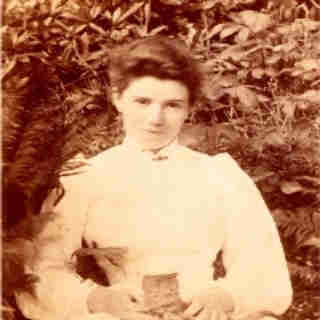 Born in Belfast Ireland, to a devout family of Scottish ancestry, Carmichael was educated at home and in England, where she lived with the familt of Robert Wilson after her father’s death. While never officially adopted, she used the hyphenated name Wilson-Carmichael as late as 1912. Her missionary call came through contacts with the Keswick movement. In 1892 she volunteered to the China Inland Mission but was refused on health grounds. However, in 1893 she sailed for Japan as the first Keswick missionary to join the Church Missionary Society (CMS) work led by Barclay Buxton. After less than two years in Japan and Ceylon, she was back in England before the end of 1894. The next year she volunteered to the Church of England Zenana Missionary Society, and in November 1895 she arrived in South India, never to leave. While still learning the difficult Tamil language, she commenced itinerant evangelism with a band of Indian Christian women, guided by the CMS missionary Thomas Walker. She soon found herself responsible for Indian women converts, and in 1901, she, the Walkers, and their Indian colleagues settled in Dohnavur. During her village itinerations, she had become increasingly aware of the fact that many Indian children were dedicated to the gods by their parents or guardians, became temple children, and lived in moral and spiritual danger. It became her mission to rescue and raise these children, and so the Dohnavur Fellowship came into being (registered 1927). Known at Dohnavur as Amma (Mother), Carmichael was the leader, and the work became well known through her writing. Workers volunteered and financial support was received, though money was never solicited. In 1931 she had a serious fall, and this, with arthritis, kept her an invalid for the rest of her life. She continued to write, and identified leaders, missionary and Indian, to take her place. The Dohnavur Fellowship still continues today.
Jocelyn Murray, “Carmichael, Amy Beatrice,” in Biographical Dictionary of Christian Missions, ed. Gerald H. Anderson (New York: Macmillan Reference USA, 1998), 116.
This article is reprinted from Biographical Dictionary of Christian Missions, Macmillan Reference USA, copyright © 1998 Gerald H. Anderson, by permission of Macmillan Reference USA, New York, NY. All rights reserved.
“Ammai” of orphans and holiness author
Amy Carmichael was born in Ireland in 1867, the oldest of seven children. As a teen, she attended a Wesleyan Methodist girls boarding school, until her father died when she was 18. Carmichael twice attended Keswick Conventions and experienced a holiness conversion which led her to work among the poor in Belfast. Through the Keswick Conventions, Carmichael met Robert Wilson. He developed a close relationship with the young woman, and invited her to live with his family. Carmichael soon felt a call to mission work and applied to the China Inland Mission as Amy Carmichael-Wilson. Although she did not go to China due to health reasons, Carmichael did go to Japan for a brief period of time. There she dressed in kimonos and began to learn Japanese. Her letters home from Japan became the basis for her first book, From Sunrise Land. Carmichael left Japan due to health reasons, eventually returning to England. She soon accepted a position with the Church of England’s Zenana Missionary Society, serving in India. From 1895 to 1925, her work with orphans in Tinnevelly (now Tirunelveli) was supported by the Church of England. After that time, Carmichael continued her work in the faith mission style, establishing an orphanage in Dohnavur. The orphanage first cared for girls who had been temple girls, who would eventually become temple prostitutes. Later the orphanage accepted boys as well.
Carmichael never returned to England after arriving in India. She wrote prolifically, publishing nearly 40 books. In her personal devotions, she relied on scripture and poetry. She wrote many of her own poems and songs. Carmichael had a bad fall in 1931, which restricted her movement. She stayed in her room, writing and studying. She often quoted Julian of Norwich when she wrote of suffering and patience. Many of Carmichael’s books have stories of Dohnavur children, interspersed with scripture, verses, and photographs of the children or nature. Carmichael never directly asked for funding, but the mission continued to be supported through donations. In 1951 Carmichael died at Dohnavur. Her headstone is inscribed “Ammai”, revered mother, which the children of Dohnavur called Carmichael.
Carmichael’s lengthy ministry at Dohnavur was sustained through her strong reliance upon scripture and prayer. Her early dedication to holiness practices and her roots in the Keswick tradition helped to guide her strong will and determination in her mission to the children of southern India.
by Rev. Lisa Beth White
Born in Belfast Ireland, to a devout family of Scottish ancestry, Carmichael was educated at home and in England, where she lived with the familt of Robert Wilson after her father’s death. While never officially adopted, she used the hyphenated name Wilson-Carmichael as late as 1912. Her missionary call came through contacts with the Keswick movement. In 1892 she volunteered to the China Inland Mission but was refused on health grounds. However, in 1893 she sailed for Japan as the first Keswick missionary to join the Church Missionary Society (CMS) work led by Barclay Buxton. After less than two years in Japan and Ceylon, she was back in England before the end of 1894. The next year she volunteered to the Church of England Zenana Missionary Society, and in November 1895 she arrived in South India, never to leave. While still learning the difficult Tamil language, she commenced itinerant evangelism with a band of Indian Christian women, guided by the CMS missionary Thomas Walker. She soon found herself responsible for Indian women converts, and in 1901, she, the Walkers, and their Indian colleagues settled in Dohnavur. During her village itinerations, she had become increasingly aware of the fact that many Indian children were dedicated to the gods by their parents or guardians, became temple children, and lived in moral and spiritual danger. It became her mission to rescue and raise these children, and so the Dohnavur Fellowship came into being (registered 1927). Known at Dohnavur as Amma (Mother), Carmichael was the leader, and the work became well known through her writing. Workers volunteered and financial support was received, though money was never solicited. In 1931 she had a serious fall, and this, with arthritis, kept her an invalid for the rest of her life. She continued to write, and identified leaders, missionary and Indian, to take her place. The Dohnavur Fellowship still continues today.
Jocelyn Murray, “Carmichael, Amy Beatrice,” in Biographical Dictionary of Christian Missions, ed. Gerald H. Anderson (New York: Macmillan Reference USA, 1998), 116.
This article is reprinted from Biographical Dictionary of Christian Missions, Macmillan Reference USA, copyright © 1998 Gerald H. Anderson, by permission of Macmillan Reference USA, New York, NY. All rights reserved.
“Ammai” of orphans and holiness author
Amy Carmichael was born in Ireland in 1867, the oldest of seven children. As a teen, she attended a Wesleyan Methodist girls boarding school, until her father died when she was 18. Carmichael twice attended Keswick Conventions and experienced a holiness conversion which led her to work among the poor in Belfast. Through the Keswick Conventions, Carmichael met Robert Wilson. He developed a close relationship with the young woman, and invited her to live with his family. Carmichael soon felt a call to mission work and applied to the China Inland Mission as Amy Carmichael-Wilson. Although she did not go to China due to health reasons, Carmichael did go to Japan for a brief period of time. There she dressed in kimonos and began to learn Japanese. Her letters home from Japan became the basis for her first book, From Sunrise Land. Carmichael left Japan due to health reasons, eventually returning to England. She soon accepted a position with the Church of England’s Zenana Missionary Society, serving in India. From 1895 to 1925, her work with orphans in Tinnevelly (now Tirunelveli) was supported by the Church of England. After that time, Carmichael continued her work in the faith mission style, establishing an orphanage in Dohnavur. The orphanage first cared for girls who had been temple girls, who would eventually become temple prostitutes. Later the orphanage accepted boys as well.
Carmichael never returned to England after arriving in India. She wrote prolifically, publishing nearly 40 books. In her personal devotions, she relied on scripture and poetry. She wrote many of her own poems and songs. Carmichael had a bad fall in 1931, which restricted her movement. She stayed in her room, writing and studying. She often quoted Julian of Norwich when she wrote of suffering and patience. Many of Carmichael’s books have stories of Dohnavur children, interspersed with scripture, verses, and photographs of the children or nature. Carmichael never directly asked for funding, but the mission continued to be supported through donations. In 1951 Carmichael died at Dohnavur. Her headstone is inscribed “Ammai”, revered mother, which the children of Dohnavur called Carmichael.
Carmichael’s lengthy ministry at Dohnavur was sustained through her strong reliance upon scripture and prayer. Her early dedication to holiness practices and her roots in the Keswick tradition helped to guide her strong will and determination in her mission to the children of southern India.
by Rev. Lisa Beth White
God Will Give You the Energy
Do you “manage” your energy? A growing chorus of experts have been pointing out the limits of managing our time and commending we pay more attention to managing our energy. According to Tony Schwartz, one of the leading voices for energy-management, Between digital technology and rising complexity, there’s more information and more requests coming at us, faster and more relentlessly than ever. Unlike computers, however, human beings aren’t meant to operate continuously, at high speeds, for long periods of time. Rather, we’re designed to move rhythmically between high and low electrical frequencies. Our hearts beat at varying intervals. Our lungs expand and contract depending on demand. It’s not sufficient to be good at inhaling. Indeed, the more deeply you exhale, the calmer and more capable you become. (Tony Schwartz, Manage Your Day-to-Day, 51) I don’t know Schwartz’s religious commitments, but I appreciate the acknowledgment that we are “designed.” Yes, we truly are designed: finite creatures fearfully and wonderfully formed by the infinite Creator. Wisdom entails recognizing that we have limits, and locating them. And yet, as Schwartz continues, “Instead, we live linear lives, progressively burning down our energy reservoirs throughout the day. It’s the equivalent of withdrawing funds from a bank account without ever making a deposit. At some point, you go bankrupt.” Supernatural Work Schwartz’s observation may be insightful, but his solution is thin — and inadequate for those of us who not only acknowledge we’re designed, but claim to know our Designer: “The good news is that we can influence the way we manage our energy. By doing so skillfully, you can get more done in less time, at a higher level of quality, in a more sustainable way.” Many of us may have much to learn about better managing our energy in modern times, but as Christians we have much better and deeper good news to offer than influence, management, and greater productivity. “We are not resigned to our energy ups and downs as entirely the product of natural forces, of cause and effect, of rest and recovery, of nourishment and exercise.” To begin with, we do not see our own energy as a closed system. We are not resigned to our energy ups and downs as entirely the product of natural forces, of cause and effect, of rest and recovery, of nourishment and exercise. The natural factors are important; we minimize and ignore them to our detriment, even peril. But as Christians, we are supernaturalists. We know that our world is not a closed system. Neither is our body. God can, and often does, intervene into the normal course of our lives. Jesus Christ upholds the universe, moment by moment, with his powerful word (Hebrews 1:3; Colossians 1:17). And not only can he uphold, and replenish, our energy with his own, but it’s actually a repeated (and often overlooked) theme in the letters of Paul. Fierce Work Ethic The end of the first chapter of Colossians is where it most recently caught my attention. This is a well-worn passage for many of us in which Paul captures the heart of his ministry as an apostle — which, in this instance, is not distinct to his apostleship but shared by us all in some sense, especially pastors and elders: Him [Christ] we proclaim, warning everyone and teaching everyone with all wisdom, that we may present everyone mature in Christ. For this I toil, struggling with all his energy that he powerfully works within me. (Colossians 1:28–29) Paul had a fierce work ethic. No one in the Scripture talks more about work — and specifically hard work — than the apostle Paul. Maybe he would have acknowledged that he had some unusual wiring. Perhaps it was his life of singleness that freed him for extraordinary ministry output. He not only claimed “far greater labors” than his detractors (2 Corinthians 11:23), but compared himself to the other apostles, saying, “I worked harder than any of them” (1 Corinthians 15:10). Again and again, however, Paul puts his uncommon exertions of energy forward not as an exception to admire but as an example to follow — within the capacity God has given each, and with the understanding that every Christian can grow and expand our capacity for productive labor. Christ Who Energizes As he worked harder than anyone, Paul shared “the secret” of his remarkable energy and contentment “in any and every circumstance” (Philippians 4:12). In Colossians 1:29, he says that he labors “with all his energy that he powerfully works within me,” but Philippians 4:13 explains how: “I can do all things through him who strengthens me.” The him is “the Lord,” meaning Christ, from verse 10, which is why some translations make it plain: “through Christ who strengthens me.” Paul identifies Christ here as the particular person of the Godhead who gives him strength. “Jesus knows what it’s like to press up against the limits of our flesh and blood and the bounds of finitude in our created world.” A quick turn to 1 Timothy 1:12 confirms that Paul indeed has Christ Jesus our Lord specifically in mind as the supplier of his strength: “I thank him who has given me strength, Christ Jesus our Lord.” Similarly, Ephesians 6:10 confirms this connection of human strength provided supernaturally by Christ himself, the God-man — the particular person of the Godhead who Christians confess as “Lord”: “be strong in the Lord and in the strength of his might.” Finally, 2 Timothy 2:1 makes the same connection between spiritual strength and Jesus as the source: “be strengthened by the grace that is in Christ Jesus.” Paul not only claims to be strengthened by divine power — infinitely precious as that is. Paul speaks with more specificity. He testifies to divine-human power, to having Jesus’s own energy — “all his energy” — worked in him, and done so “powerfully,” by Christ himself. With His Own Energy When God strengthens us as Christians — when he shatters unbelieving notions of a closed system, not only supplying energy for us through natural means but by supernatural grace — he does so specifically through our brother and fellow human, Jesus Christ, truly God and truly man. The King of kings and Lord of lords, seated in power as sovereign of the universe, is not only God but man. Humanity sits on heaven’s throne. Jesus knows what it’s like to press up against the limits of our flesh and blood and the bounds of finitude in our created world. He knows what it’s like to have limited capacity, and limited time, and end the day with unfinished tasks. He knows what it’s like to be wearied physically (John 4:6) and what it’s like to need and carve out time for rest (Mark 6:31). He knows what it’s like to have work to accomplish (John 4:34; 5:36; 17:4). He had energy enough to work (almost) tirelessly, even on the Sabbath, when he encountered those in need (Luke 13:14–17; John 5:16–17; Mark 2:27–28). Through his works, his output of human energy, he not only bore witness to his Father (John 5:36; 9:3–5) and demonstrated whose he was (John 8:39–41; 10:25, 32) but also presented himself as the giver and focus of our faith (John 10:37–38; 14:10–11). “No one in the Scripture talks more about work — and specifically hard work — than the apostle Paul.” This same Jesus not only calls us his brothers but also fellow “laborers” (Matthew 9:37–38; Luke 10:7) and bids us to work with the energy we have for the good of others (Matthew 5:16). But he also does not leave us to our own energy. He doesn’t abandon us to what verve we can muster on our own, what we can produce merely through wise (and important) energy-management. He works in us — and does so powerfully, Paul says — to give us his own energy for the work to which he calls us. Ask Him for Energy As Christians, we will do well to learn to steward the energy God gives us naturally through diet, exercise, and rest. It would be irresponsible and foolish for us to treat lightly the God-created gifts of food and sleep, and presume that he will energize us apart from these natural means. But oh, how foolish it would be to ignore or neglect Jesus’s amazing offer: that he himself, the God-man, would work his own powerful energy in us. How could we not make this a regular rhythm of our lives, to both faithfully steward and humbly acknowledge the limits of our own energy, and ask Jesus regularly to fill us with his own energy to fulfill the callings which he’s given us? Here, at last, we can lay down our weary sense of independence, and work hard in the strength he supplies. Article by David Mathis