

Others like the god hater - a novel Features >>



-160.webp)
-160.webp)
-160.webp)
-160.webp)

About the Book
"The God Hater - A Novel" by Bill Myers follows the story of a successful professor named Brady who is forced to confront his own beliefs and prejudices when a mysterious woman appears claiming to be God. As Brady delves into her teachings, he begins to question his atheistic worldview and grapple with the possibility of a higher power. The novel explores themes of faith, redemption, and the power of love to transform even the most hardened hearts.
Jack Coe
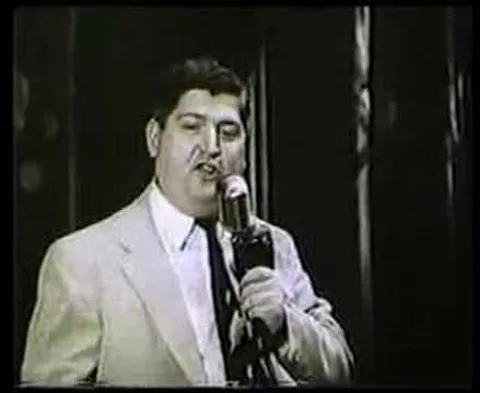 Jack G. Coe was born on March 11, 1918 in Oklahoma City, Oklahoma. His father, George, was a gambler and an alcoholic. His parents, although having been Christians, did not attend church. His grandparents, on his father's side were Christians but they were not able to influence their son's behavior. The couple had seven children in all. When Jack was five his father gambled away all their furniture and their house, leaving his mother Blanche destitute with seven children. They were devastated. His mother tried to make a new life by moving to Pennsylvania, but it was too hard. When Coe's father came to her house promising to change she agreed to reunite. The change did not last, however, and George went back to gambling.
Blanche left George for good, but only took her daughter with her this time. The boys were left with their father, which meant they were essentially left on their own. Often they did not have food to eat. Blanche did return to claim them, but could not care for them on her own. When Jack was nine he and his twelve year old brother was turned over to an orphanage. His older brother ran away, but was hit by a car and died. Jack struggled with rejection and abandonment. At seventeen he left the orphanage and began to drink, becoming an alcoholic like his father. He drank so much he had ulcers and his heart became enlarged. The doctor told him that if he didn't quit drinking he was going to die. Not knowing where else to go he moved to California to be near his mother. When he thought he was near death he promised God he would turn his life around and he was healed for a while. The family moved to Texas and he was drinking again. This time he heard God's voice "This is your last chance". The following Sunday he went to a Nazarene church and accepted Christ. He was radically changed. He went to church meetings almost every night, prayed, and read the Word constantly. After a year and a half he went to a Pentecostal meeting and was filled with the Holy Spirit and had a vision of Jesus.
Jack felt called to the ministry and went to and Assembly of God school called Southwestern Bible Institute, led by P.C. Nelson. He left in 1941 to join the army after the bombing of Pearl Harbor. He was so committed to God's purposes that he went to church every night. His sergeant sent him for psychiatric evaluation This happened several times while he was in the army. One day he was reading a book by P.C. Nelson on Healing when he fell asleep. He had a dream where he saw his sister close to death in a hospital but he saw a bright light come into her room and she was healed. He left immediately to see her and everything was as he'd seen it in a dream. She was healed and he was changed forever.
In 1944 Coe became ill with malaria. He was sent home because the doctors felt they could not help him. He sought the Lord who told him "preach the gospel". God healed him. He went out to preach and three people were saved. That year he was ordained as an Assembly of God minister. His healing experiences caused him to seek God about the gifts of healing. In 1945 he felt God called him to have a healing meeting. He went to Texas and announced in a church that God was going to heal the sick, cause the blind to see, and the deaf to hear. Those were bold words indeed! A woman received her sight that night. His ministry was launched. He began traveling over the country.
In 1946 God spoke to Coe and his wife Juanita to sell their house and start an itinerant ministry. They purchased a beat up truck and a ministry tent and began to live on the road. In 1948 God spoke to Coe to go to Redding, California. A woman, whose leg was about to be amputated, was healed and the news spread throughout the city. God blessed the couple and for the first time had enough money to be ahead on their finances. Healings and miracles regularly occurred in his meetings.
There were some very controversial things about Jack Coe. He believed that he should have a larger tent than other evangelists and went and measured Oral Roberts tent, then he ordered one larger. His style was dramatic and he often hit, slapped, or jerked people. He also would pull people out of wheelchairs. His speaking style was aggressive as he challenged people to believe God. He suggested that people who stood against him would be "struck dead by God". He was anti-medicine and told people not to go to doctors. He also encouraged interracial meetings.
In 1950 Coe began publishing the Herald of Healing magazine. Within six years it was being sent to over 350,000 people. God began to speak to Coe about opening an orphanage. He collected money for the project at every meeting. He sold his own home and began to build the children's home. His own family moved into the partially finished building so they would have a place to live. Coe eventually bought 200 acres outside of Dallas and built four dormitories and established a home farm. They could support 200 abandoned children.
In 1952 Coe began a radio ministry, which eventually was carried on over 100 radio stations. He also began having trouble with the Assembly of God organization. Although initially responsive to suggestions, he felt their goal was to limit the ministry. He suggested that the Assembly of God leadership had lost the belief in the miraculous and felt that they should be replaced. Needless to say this aggravated the situation. In 1953 Coe was expelled from the Assembly of God church. They felt that he was independent, extreme, prone to exaggeration, and they weren't sure about his ministry style. Coe felt that it was an attack against his success. He told people that "one of the officials made the remark to me that he would not rest until every man that was preaching divine healing in a deliverance ministry, separated from the General Council of the Assembly of God."
In 1953 Coe started his own church in Dallas. It was called the Dallas Revival Center. God spoke to him that it was important for those not getting healed to receive teaching about healing from the Word. In 1954 Coe opened a faith home, where people could stay for extended periods of time to receive prayer for healing. Teaching and prayer were given daily. 1956 was a pivotal year. While Coe was preaching in Miami he was arrested for practicing medicine without a license. This brought national attention to him and the ministry, both positive and negative. He was acquitted of practicing medicine without a license when the trial went to court.
At the end of 1956 Coe became ill. He had pushed himself night and day for years. He had poor eating habits and was overweight. He thought it was exhaustion but it was bulbar polio, a form of polio that affects the nerves. He became paralyzed, developed pneumonia, and died December 16, 1956.
Jack G. Coe was born on March 11, 1918 in Oklahoma City, Oklahoma. His father, George, was a gambler and an alcoholic. His parents, although having been Christians, did not attend church. His grandparents, on his father's side were Christians but they were not able to influence their son's behavior. The couple had seven children in all. When Jack was five his father gambled away all their furniture and their house, leaving his mother Blanche destitute with seven children. They were devastated. His mother tried to make a new life by moving to Pennsylvania, but it was too hard. When Coe's father came to her house promising to change she agreed to reunite. The change did not last, however, and George went back to gambling.
Blanche left George for good, but only took her daughter with her this time. The boys were left with their father, which meant they were essentially left on their own. Often they did not have food to eat. Blanche did return to claim them, but could not care for them on her own. When Jack was nine he and his twelve year old brother was turned over to an orphanage. His older brother ran away, but was hit by a car and died. Jack struggled with rejection and abandonment. At seventeen he left the orphanage and began to drink, becoming an alcoholic like his father. He drank so much he had ulcers and his heart became enlarged. The doctor told him that if he didn't quit drinking he was going to die. Not knowing where else to go he moved to California to be near his mother. When he thought he was near death he promised God he would turn his life around and he was healed for a while. The family moved to Texas and he was drinking again. This time he heard God's voice "This is your last chance". The following Sunday he went to a Nazarene church and accepted Christ. He was radically changed. He went to church meetings almost every night, prayed, and read the Word constantly. After a year and a half he went to a Pentecostal meeting and was filled with the Holy Spirit and had a vision of Jesus.
Jack felt called to the ministry and went to and Assembly of God school called Southwestern Bible Institute, led by P.C. Nelson. He left in 1941 to join the army after the bombing of Pearl Harbor. He was so committed to God's purposes that he went to church every night. His sergeant sent him for psychiatric evaluation This happened several times while he was in the army. One day he was reading a book by P.C. Nelson on Healing when he fell asleep. He had a dream where he saw his sister close to death in a hospital but he saw a bright light come into her room and she was healed. He left immediately to see her and everything was as he'd seen it in a dream. She was healed and he was changed forever.
In 1944 Coe became ill with malaria. He was sent home because the doctors felt they could not help him. He sought the Lord who told him "preach the gospel". God healed him. He went out to preach and three people were saved. That year he was ordained as an Assembly of God minister. His healing experiences caused him to seek God about the gifts of healing. In 1945 he felt God called him to have a healing meeting. He went to Texas and announced in a church that God was going to heal the sick, cause the blind to see, and the deaf to hear. Those were bold words indeed! A woman received her sight that night. His ministry was launched. He began traveling over the country.
In 1946 God spoke to Coe and his wife Juanita to sell their house and start an itinerant ministry. They purchased a beat up truck and a ministry tent and began to live on the road. In 1948 God spoke to Coe to go to Redding, California. A woman, whose leg was about to be amputated, was healed and the news spread throughout the city. God blessed the couple and for the first time had enough money to be ahead on their finances. Healings and miracles regularly occurred in his meetings.
There were some very controversial things about Jack Coe. He believed that he should have a larger tent than other evangelists and went and measured Oral Roberts tent, then he ordered one larger. His style was dramatic and he often hit, slapped, or jerked people. He also would pull people out of wheelchairs. His speaking style was aggressive as he challenged people to believe God. He suggested that people who stood against him would be "struck dead by God". He was anti-medicine and told people not to go to doctors. He also encouraged interracial meetings.
In 1950 Coe began publishing the Herald of Healing magazine. Within six years it was being sent to over 350,000 people. God began to speak to Coe about opening an orphanage. He collected money for the project at every meeting. He sold his own home and began to build the children's home. His own family moved into the partially finished building so they would have a place to live. Coe eventually bought 200 acres outside of Dallas and built four dormitories and established a home farm. They could support 200 abandoned children.
In 1952 Coe began a radio ministry, which eventually was carried on over 100 radio stations. He also began having trouble with the Assembly of God organization. Although initially responsive to suggestions, he felt their goal was to limit the ministry. He suggested that the Assembly of God leadership had lost the belief in the miraculous and felt that they should be replaced. Needless to say this aggravated the situation. In 1953 Coe was expelled from the Assembly of God church. They felt that he was independent, extreme, prone to exaggeration, and they weren't sure about his ministry style. Coe felt that it was an attack against his success. He told people that "one of the officials made the remark to me that he would not rest until every man that was preaching divine healing in a deliverance ministry, separated from the General Council of the Assembly of God."
In 1953 Coe started his own church in Dallas. It was called the Dallas Revival Center. God spoke to him that it was important for those not getting healed to receive teaching about healing from the Word. In 1954 Coe opened a faith home, where people could stay for extended periods of time to receive prayer for healing. Teaching and prayer were given daily. 1956 was a pivotal year. While Coe was preaching in Miami he was arrested for practicing medicine without a license. This brought national attention to him and the ministry, both positive and negative. He was acquitted of practicing medicine without a license when the trial went to court.
At the end of 1956 Coe became ill. He had pushed himself night and day for years. He had poor eating habits and was overweight. He thought it was exhaustion but it was bulbar polio, a form of polio that affects the nerves. He became paralyzed, developed pneumonia, and died December 16, 1956.
The Harvest of Homemaking
I have been a homemaker for over eighteen years now, and I feel confident saying it is a difficult and demanding job. What is more, it is a job with a massive PR problem. “It’s a soul-crushing grind!” some say. Others ask, “Do you work?” Public opinion on the nature of homemaking has not been subtle. For a generation at least, homemaking has been spoken of as a prison-like existence that stifles a woman’s gifts — as though homemakers have less ambition than others, less ability, less scope, less understanding. This propaganda effort has been radically effective, shaping the imagination of many women who find themselves at home for one reason or another. It takes little effort to see our calling and the work therein through the lens of resentment. Lately, there has been some pushback to the public opinion that homemaking is a life of boredom and ease, but it has been of the worst kind: long-faced social-media posts bemoaning how no one appreciates your work; TikTok videos telling everyone that because your family failed to notice the work you did, you feel invalidated as a person. This too is the fruit of worldly propaganda — and it too will have devastating effects. Homes in the Great War Homemakers often find ourselves without support — not physical support, the absence of which is so loudly reflected on, but rather the spiritual support of understanding why this field of work is glorious, worthy, essential, God-honoring, and strategic. We need an understanding of the value of the home that is strong enough to endure the tumultuous cultural winds around us. We need to see clearly how we are serving God in and with our work. “The Christian home is an essential work of the Christian resistance.” The Christian home is an essential work of the Christian resistance. In any war, it is customary to target your enemy’s supply lines, manufacturing plants, and headquarters. In our spiritual war, the Christian home is all of those things. Why then would it surprise us that the enemy would like to see the home destroyed? Why are we surprised by the obstacles we face — by the threefold resistance of the world, the flesh, and the devil? We have been cleverly fooled into thinking that the obstacles we face at home are due to the work being unimportant, insignificant, unappreciated, or mindless. We should have noticed that anything under such attack from both without and within must be desperately important. Beautiful or Embarrassing? You shall eat the fruit of the labor of your hands; you shall be blessed, and it shall be well with you. Your wife will be like a fruitful vine within your house, Your children will be like olive shoots around your table. Behold, thus shall the man be blessed who fears the Lord. (Psalm 128:3–4) Scripture is the basis for my commitment to being a homemaker, and if I never saw any other reason to love it, never saw the fruit, never understood the importance of the role, that should still be enough. Paul lays out the importance of older women teaching younger women to be “self-controlled, pure, working at home, kind, and submissive to their own husbands, that the word of God may not be reviled” (Titus 2:5). And Proverbs 31 describes a glorious picture of the woman who is clothed in strength and dignity as she gives herself to the needs of her household. At this point, some readers may have rolled their eyes because I mentioned Titus 2 and Proverbs 31 in the same embarrassingly uncool paragraph. Why is that? Could it be because you have been trained to despise passages like these? Could it be that you have listened to countless people explaining them away? Could it be that you have taken in enough worldly propaganda that you feel free to look down on the tone of the word of God and those who embrace it? I am asking you to consider that perhaps you have been played. You have been had. You have welcomed the lies of the world into your home and given them authority in your life. To say, “Women, be self-controlled, pure homemakers who love your husbands and children” is to speak a biblical, God-fearing statement. I am asking you now to listen to your own heart’s response to that. Is your heart bridling? Is it angry? Are you ready to post angry comments on my ignorant or backward ways? Well, think about what you are doing — it’s not me you are despising, but the words of God. What does your response say about where your heart is? Harvest of Homemaking I say that raw obedience to God’s word is enough, and in a sense it should be. But it is far from all that we are given. When I read those sorrowful monologues about the mental load, about how much it all weighs on the poor woman, about how unfair it all is, about how husbands should be responsible for far more housekeeping, all I can see is that women are suffering from the horrible pairing of trying to do the Lord’s work with the attitude of those who hate him. There will be no joy of obedience there. There will be no fruit of free giving there. There will be no strength and laughter and dignity there, because there is a thick fog of accusation, discontent, and envy. “The end of all our small daily plantings may be a harvest of staggering beauty.” I have come to realize through the years that the countless tasks I do that no one notices still shape our home and the people in it. Every meal I lay on the table is a small picture of the feeding of the five thousand. My meager offering, broken in the hands of Jesus, will feed generations of children. This home — the flavors and the smells and the atmosphere of love — will by God’s grace shape people who will go on to be the mothers and fathers of thousands. Is there any other work I could be doing that would be this exponentially fruitful or influential? A hundred years from now, I hope there are people who do not know my name or remember me, but nevertheless carry about with them seeds of faithful living that were first planted in the soil of this home. Do you have the burden of a million duties on your mind? Ask the Lord to establish the work of your hands. He makes valuable all that is done in him, so ask him to do so with your messy duties. Rejoice in him as you offer yourself as a living sacrifice — a sacrifice that cooks and cleans and blows noses and folds clothes and lays a table and looks after the ways of your household. He is shaping something of great beauty and strength that is far beyond our own capacity to imagine. May God give us all eyes to see it, and hearts to imagine it. The end of all our small daily plantings may be a harvest of staggering beauty. Article by Rachel Jankovic