.webp)

Others like the one who knows me (a novel) Features >>
-160.webp)
-160.webp)
-160.webp)
-160.webp)
-by-karen-kingsbury-160.webp)




-160.webp)
About the Book
"The One Who Knows Me" follows the story of a young woman named Ada who struggles to navigate her way through family secrets, betrayal, and heartbreak. As she uncovers shocking truths about her past, Ada must confront her own identity and find the strength to forge a new path forward. This novel explores themes of love, loss, and resilience in the face of adversity.
Kathryn Kuhlman
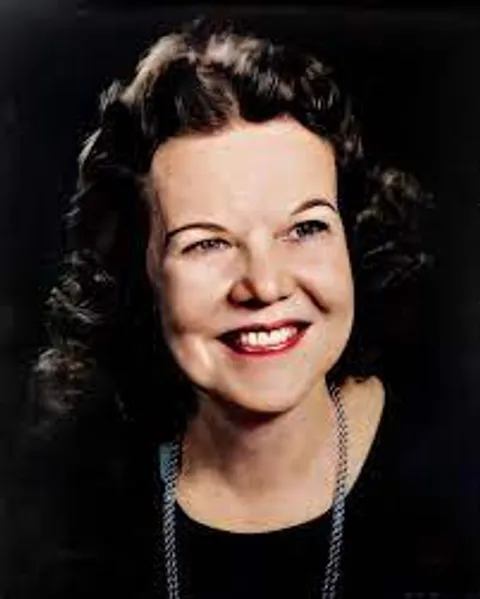 Kathryn Johanna Kuhlman was born on May 9, 1907, in Concordia, Missouri. Her parents were German and she was one of four children. Her mother was a harsh disciplinarian, who showed little love or affection. On the other hand, she had an extremely close and loving relationship with her father. She would describe, as a small child how, her father would come home from work and she would hang on his leg and cling to him. She often said that her relationship with God the Father was extremely real because of her relationship with her own father.
Kuhlman was converted, when she was 14, at an evangelistic meeting held in a small Methodist church. When she was 16 she graduated from high school, which only went to tenth grade in their town. He older sister Myrtle had married an itinerant evangelist, Everett B. Parrott. They spent their time traveling and asked that Kathryn could join them for the summer. Her parents agreed and she went to Oregon to help out. She worked with them, and often gave her testimony. When the summer was over she wanted to stay, and the couple agreed. She ended up working with them for five years.
The evangelistic team was made up of four people, Everette, Myrtle, Kathryn, and pianists named Helen Gulliford. In 1928 Everette missed a meeting in Boise, Idaho. Myrtle and Kathryn preached to cover for Everette. The pastor of the church encouraged Kathryn to step out on her own. Helen agreed to join her. Her first sermon was in a run-down pool hall in Boise, Idaho. The team covered Idaho, Utah, and Colorado for the following five years. In 1933 they moved into Pueblo, Colorado. They set up in an abandoned Montgomery Ward warehouse. They stayed there for six months.
Denver, being a much bigger city, was the next stop. They moved several times but ended up in a paper company's warehouse, which they named the Kuhlman Revival Tabernacle. Then in 1935 they moved once more to an abandoned truck garage they named the Denver Revival Tabernacle. Kathryn was seeing a lot of success in Denver. The church grew to about 2000 members. She began a radio show called "Smiling Through" and invited speakers from all over the country. One of them was Phil Kerr who taught on divine healing. In 1935 another invited evangelist was Burroughs Waltrip.
Waltrip was bad news for Kuhlman. He was a charismatic, handsome man several years older than she was. There was an immediate attraction, and one family claims to have seen the couple embracing in 1935, but he was married and had two children. Waltrip left Denver and went home to Austin, Texas, but the relationship simmered between Kuhlman and Waltrip. In 1937 he was invited back to Denver to take the pulpit for two months. Shortly after he divorced his wife and abandoned his two sons. He then spread the story that his wife had left him. He moved to Mason City, Iowa, where he told everyone he was single, and started a new ministry. Waltrip raised pledges of $70,000 to build a ministry building called Radio Chapel. It was state of the art with a disappearing pulpit and an art deco style. He appeared to be a successful and dynamic preacher.
There was an ongoing relationship between Kuhlman and Waltrip, and they married in September 1938. Kuhlman was naive about the consequences of her choices and the marriage was a disaster. She announced to her church that she and Waltrip were married and they would go between Denver and Mason City preaching at their two churches. Most of the people in her congregation left due to her relationship with Waltrip. She gave up her church in Denver, lost some of her closest associates, and moved to Mason City. Waltrip's success turned out to be a pipe dream as well. The Radio Chapel was completed in June of 1938. By October 1938 Waltrip could not meet his debts. In December Waltrip was demanding a higher salary, even with the shortfall in income. His Board of Directors quit and left him to deal with the finances. His solution was not to pay the mortgage or debts on the Chapel. Radio Chapel went into bankruptcy. Waltrip's last sermon was in May 1939. The Waltrips were on their own. Kathryn's happy vision of she and her husband flying back and forth between Denver and Mason City with a successful preaching careers was utterly demolished.
The next few years were very hard for the couple. They embarked on the road as traveling evangelists, primarily staying in the Midwest. They were not accepted in many places due to their marriage history. Initial advertisements listed Waltrip as the primary evangelist. Then occasionally Mrs. Waltrip was also mentioned. By the early 1940s Kathryn Kuhlman Waltrip was given equal billing. Finally by the mid-1940s Kathryn was using only Kathryn Kuhlman in meetings where she was the primary speaker. In 1944 Kuhlman went on an evangelistic tour on the east coast without Waltrip. It may have been a conscious decision to leave him, or she may also have taken the opportunity to reassess her life. It appears to have been more gradual as Waltrip wrote about them as a couple as late as 1946. Kuhlman never returned to Waltrip and they eventually divorced in 1947. She left her marriage behind and from then on acted as if it never existed in the first place.
In 1946 Kuhlman was asked to speak in Franklin, Pennsylvania. She was well received and decided to stay in the area. Kuhlman began preaching on radio broadcasts in Oil City, Pennsylvania. These became so popular they were picked up in Pittsburgh, and she was preaching throughout the area. She began to preach about the healing power of God. In 1947 a woman was healed of a tumor while listening to Kuhlman preach. Several Sundays later a man was also healed while she was teaching on the Holy Spirit. She was now convinced of God's healing work. One important thing to note is the context and timing of this breakout period in Kuhlman's life. 1947 was the beginning of the Healing Revival (sometimes referred to as the Latter Rain Revival) that would last for the next 10 years. What was happening in Kuhlman's meetings was breaking out across the United States. It was in this time frame that the Voice of Healing Ministry was established and men like William Branham, Oral Roberts, A.A. Allen and many others were propelled onto the public stage. Kuhlman was not associated with those groups, but stepped into the flow of what God's Spirit was doing across the nation and the world.
In 1948 Kuhlman held a series of meetings at Carnegie Hall in Pittsburgh. She eventually moved to Pittsburgh in 1950, and continued to hold meetings at Carnegie Hall until 1971. She was used by God to bring the charismatic message to many denominational churches, including the Catholic Church. (She received a lot of criticism over this and was accused of being a closet Catholic.) These were her best known years. Her style was flamboyant. She would hold her famous miracle services and the auditorium was filled to capacity every time. She was on radio and television shows. She was ordained in 1968 by the Evangelical Church Alliance. Hundreds of people were healed in her meetings, and even while listening to her on the radio or television. People she prayed for would often be hit with the power of God and be "slain in the Spirit." Kuhlman never claimed that she was the healer. She always pointed people to Jesus as their healer.
Kuhlman had been diagnosed with a heart problem in 1955. She kept a very busy schedule and overworked herself, especially in the 1970's. She traveled back and forth from Pittsburgh to Los Angeles frequently, as well as taking trips around the world. Her heart was enlarged and Kuhlman died on February 20, 1976, in Tulsa, following open-heart surgery. Videos of some of her services are still available and continue to be popular today.
Kathryn Johanna Kuhlman was born on May 9, 1907, in Concordia, Missouri. Her parents were German and she was one of four children. Her mother was a harsh disciplinarian, who showed little love or affection. On the other hand, she had an extremely close and loving relationship with her father. She would describe, as a small child how, her father would come home from work and she would hang on his leg and cling to him. She often said that her relationship with God the Father was extremely real because of her relationship with her own father.
Kuhlman was converted, when she was 14, at an evangelistic meeting held in a small Methodist church. When she was 16 she graduated from high school, which only went to tenth grade in their town. He older sister Myrtle had married an itinerant evangelist, Everett B. Parrott. They spent their time traveling and asked that Kathryn could join them for the summer. Her parents agreed and she went to Oregon to help out. She worked with them, and often gave her testimony. When the summer was over she wanted to stay, and the couple agreed. She ended up working with them for five years.
The evangelistic team was made up of four people, Everette, Myrtle, Kathryn, and pianists named Helen Gulliford. In 1928 Everette missed a meeting in Boise, Idaho. Myrtle and Kathryn preached to cover for Everette. The pastor of the church encouraged Kathryn to step out on her own. Helen agreed to join her. Her first sermon was in a run-down pool hall in Boise, Idaho. The team covered Idaho, Utah, and Colorado for the following five years. In 1933 they moved into Pueblo, Colorado. They set up in an abandoned Montgomery Ward warehouse. They stayed there for six months.
Denver, being a much bigger city, was the next stop. They moved several times but ended up in a paper company's warehouse, which they named the Kuhlman Revival Tabernacle. Then in 1935 they moved once more to an abandoned truck garage they named the Denver Revival Tabernacle. Kathryn was seeing a lot of success in Denver. The church grew to about 2000 members. She began a radio show called "Smiling Through" and invited speakers from all over the country. One of them was Phil Kerr who taught on divine healing. In 1935 another invited evangelist was Burroughs Waltrip.
Waltrip was bad news for Kuhlman. He was a charismatic, handsome man several years older than she was. There was an immediate attraction, and one family claims to have seen the couple embracing in 1935, but he was married and had two children. Waltrip left Denver and went home to Austin, Texas, but the relationship simmered between Kuhlman and Waltrip. In 1937 he was invited back to Denver to take the pulpit for two months. Shortly after he divorced his wife and abandoned his two sons. He then spread the story that his wife had left him. He moved to Mason City, Iowa, where he told everyone he was single, and started a new ministry. Waltrip raised pledges of $70,000 to build a ministry building called Radio Chapel. It was state of the art with a disappearing pulpit and an art deco style. He appeared to be a successful and dynamic preacher.
There was an ongoing relationship between Kuhlman and Waltrip, and they married in September 1938. Kuhlman was naive about the consequences of her choices and the marriage was a disaster. She announced to her church that she and Waltrip were married and they would go between Denver and Mason City preaching at their two churches. Most of the people in her congregation left due to her relationship with Waltrip. She gave up her church in Denver, lost some of her closest associates, and moved to Mason City. Waltrip's success turned out to be a pipe dream as well. The Radio Chapel was completed in June of 1938. By October 1938 Waltrip could not meet his debts. In December Waltrip was demanding a higher salary, even with the shortfall in income. His Board of Directors quit and left him to deal with the finances. His solution was not to pay the mortgage or debts on the Chapel. Radio Chapel went into bankruptcy. Waltrip's last sermon was in May 1939. The Waltrips were on their own. Kathryn's happy vision of she and her husband flying back and forth between Denver and Mason City with a successful preaching careers was utterly demolished.
The next few years were very hard for the couple. They embarked on the road as traveling evangelists, primarily staying in the Midwest. They were not accepted in many places due to their marriage history. Initial advertisements listed Waltrip as the primary evangelist. Then occasionally Mrs. Waltrip was also mentioned. By the early 1940s Kathryn Kuhlman Waltrip was given equal billing. Finally by the mid-1940s Kathryn was using only Kathryn Kuhlman in meetings where she was the primary speaker. In 1944 Kuhlman went on an evangelistic tour on the east coast without Waltrip. It may have been a conscious decision to leave him, or she may also have taken the opportunity to reassess her life. It appears to have been more gradual as Waltrip wrote about them as a couple as late as 1946. Kuhlman never returned to Waltrip and they eventually divorced in 1947. She left her marriage behind and from then on acted as if it never existed in the first place.
In 1946 Kuhlman was asked to speak in Franklin, Pennsylvania. She was well received and decided to stay in the area. Kuhlman began preaching on radio broadcasts in Oil City, Pennsylvania. These became so popular they were picked up in Pittsburgh, and she was preaching throughout the area. She began to preach about the healing power of God. In 1947 a woman was healed of a tumor while listening to Kuhlman preach. Several Sundays later a man was also healed while she was teaching on the Holy Spirit. She was now convinced of God's healing work. One important thing to note is the context and timing of this breakout period in Kuhlman's life. 1947 was the beginning of the Healing Revival (sometimes referred to as the Latter Rain Revival) that would last for the next 10 years. What was happening in Kuhlman's meetings was breaking out across the United States. It was in this time frame that the Voice of Healing Ministry was established and men like William Branham, Oral Roberts, A.A. Allen and many others were propelled onto the public stage. Kuhlman was not associated with those groups, but stepped into the flow of what God's Spirit was doing across the nation and the world.
In 1948 Kuhlman held a series of meetings at Carnegie Hall in Pittsburgh. She eventually moved to Pittsburgh in 1950, and continued to hold meetings at Carnegie Hall until 1971. She was used by God to bring the charismatic message to many denominational churches, including the Catholic Church. (She received a lot of criticism over this and was accused of being a closet Catholic.) These were her best known years. Her style was flamboyant. She would hold her famous miracle services and the auditorium was filled to capacity every time. She was on radio and television shows. She was ordained in 1968 by the Evangelical Church Alliance. Hundreds of people were healed in her meetings, and even while listening to her on the radio or television. People she prayed for would often be hit with the power of God and be "slain in the Spirit." Kuhlman never claimed that she was the healer. She always pointed people to Jesus as their healer.
Kuhlman had been diagnosed with a heart problem in 1955. She kept a very busy schedule and overworked herself, especially in the 1970's. She traveled back and forth from Pittsburgh to Los Angeles frequently, as well as taking trips around the world. Her heart was enlarged and Kuhlman died on February 20, 1976, in Tulsa, following open-heart surgery. Videos of some of her services are still available and continue to be popular today.
Christian Depression and the use of Medication
An acquaintance of mine, Becky, is a grandmother who cites her chief joy in life as “pleasing the Lord and walking faithfully with him.” She delves into Scripture daily, and for decades has shepherded others through Bible studies. Christ has claimed her heart, and daily stirs her mind. Yet seasons of guilt and uncertainty have punctuated Becky’s walk with her Lord, because while she remains steadfastly devoted to Christ, she also struggles with clinical depression. To maintain her clarity and focus on God’s word, she needs help from an antidepressant medication. As is often the case, depression runs in Becky’s family. When despair first gripped her in her twenties, Becky had already watched her mother slide through the deep darkness into a mental breakdown. She’d witnessed firsthand how depression can ravage a life, as well as the critical roles that medication and counseling can play in drawing sufferers back into the world again. But even these experiences didn’t banish Becky’s concerns about taking antidepressants herself. She wondered if she were right to take medication for an issue that seemed spiritual. Her guilt only deepened when someone in authority at church claimed, “It’s rare for someone to really need antidepressants, because usually things can be solved biblically.” “Hearing that from the pulpit sent me into the depths of guilt,” she relates. “I feel so guilty that I must take this medication that has kept me well for years.” A Troubling Subject The doubts swamping Becky trouble so many of us who suffer from depression. Some of us worry that reliance upon medications implies a paltry faith. Others confuse antidepressants with opioids, and fear addiction. In an opposing scenario, our pain-averse culture, which prioritizes comfort and instant gratification, can mislead us toward chemical prescriptions for normal, refining grief. Throughout, questions churn: Are antidepressants permissible? Or sufficient? Does our need for them reflect a deficit in faith? How do they factor into other means of grace with which God has blessed us, such as prayer, study of the word, and counseling? After a careful exploration of depression, its treatment, and how the Bible guides us in suffering, these questions should give way to discernment and gratitude. No medication can sponge away the blackness in our hearts. But in his steadfast love and mercy toward us, God has gifted us with medical science as a means of common kindness. In the right circumstances, when carefully combined with counseling and spiritual disciplines, antidepressants can ease some of us back into daylight. While we should never rely on medication exclusively, neither should we demonize those who use it as part of a comprehensive approach. More Than Sadness At this point in the discussion, we need to define terms. In the undulating course of life, seasons of grief, tears, and bleakness can trouble all of us. In most cases, these valleys have limits. We may sink low, but we retain our capacity to climb, and eventually we crest into the bright air again. Clinical depression, also called major depressive disorder , falls outside these usual variations in emotion. The fact that depression increases the suicide rate by 27 times that of the general population should alert us to something gone terribly awry. 1 In major depression, hopelessness, despair, and lack of motivation persist long after wounds have healed, for reasons even the victim can’t always pinpoint. Sufferers can’t control their descent into darkness, nor can they wrench themselves from its clutches by sheer will, because the social, spiritual, and practical factors we can easily see interact with changes deep in the brain, hidden from view. The ramifications are not only spiritual, but also physical (see the table below), 2 hampering engagement in even the most basic stuff of living. Laughter, conversation, and interaction feel impossible, even with those we love. 3 Routine self-care overwhelms, and some of us find ourselves bed-bound, too bereft of joy to drag ourselves into the world. In many ways, living through depression resembles dying. It’s crucial to distinguish this affliction from appropriate sadness or grief, because God works through our suffering to refine us (Genesis 50:20; Jonah 2; Romans 5:2–5). We should never seek chemical means to buttress ourselves through the typical peaks and valleys of our emotions. Not only can melancholy and anguish be worthy responses to the travails of a sinful world, but God also disciplines us, shapes us, and draws us closer to himself through our ordeals. Even Jesus wept in the face of loss (John 11:34–36). Depression, however, isn’t typical grief. It can persist even when our days unfold free from catastrophe. It’s a complex beast, whose sufferers desperately need prayer, Christian love, and professional help. A Complicated Problem Too few sufferers of major depression actually receive the help they need. Guilt — which is a feature of the disorder (see the table) — and stigma discourage many with depression from seeking assistance. 4 In a survey of 5.4 million adults in the US reporting an unmet need for mental-health services, 8.2% did not seek mental-health treatment because they did not want others to find out, 9.5% because “it might cause neighbors/community to have a negative opinion,” and 9.6% due to concerns about confidentiality. Some 28% believed that they could handle the problem without treatment, and 22.8% did not know where to go to receive treatment. 5 Such statistics reveal that the road to healing slouches uphill. Many tread it alone. Yet even those who seek help embark upon a tortuous path, without easy remedies. We have no quick-fix cures for depression, because the neurobiological underpinnings that fuel our despondency are much more elaborate than a simple chemical imbalance. Regions of the brain responsible for memory and executive function shrink in depression, as do the pathways connecting these areas to sites controlling mood, fear, and drives. 6 Brain cell loss is accelerated among the depressed. 7 The actions of chemical signals between nerve cells are disrupted, especially serotonin, a neurotransmitter that helps regulate mood, sleep, appetite, and pain. 8 While we don’t know in all cases whether these changes cause depression or arise as a result of the disorder, they hint at why sufferers struggle to recover. In depression, the architecture of our own brains traps us in the dark. And yet, while neurological changes abound in depression, even biology doesn’t tell the entire story. While some individuals are genetically prone to major depression, 9 a first episode requires the intermingling of this risk with social, psychological, and spiritual triggers. Medical illnesses contribute in up to 15% of cases, and depression increases the risk of a future heart attack by two to threefold among people with heart disease. 10 People with seasonal affective disorder, who struggle with depression during the winter months, respond well to bright-light therapy, while others without this temporal pattern don’t. Some sufferers struggle with anxiety in depression, others with melancholy, and still others with catatonia or psychosis. This variability hints that the current diagnosis we call major depression is probably an umbrella term, a catchall phrase encompassing multiple related syndromes with similar effects, but distinct causative mechanisms. This diversity in depression creates treatment challenges, as one person’s struggle doesn’t resemble another’s. Promising research suggests that MRI scans of the brain may differentiate between depressive subtypes and allow for more precise, targeted treatments. 11 But this research is preliminary. In the meantime, depression continues to wreak havoc upon its victims, earning the eleventh spot on the World Health Organization’s list of conditions causing the greatest disability and mortality. 12 Treatment of such a highly convoluted, variable, and debilitating disorder doesn’t proceed simply. Imperfect Options The two mainstays of treatment for clinical depression are antidepressant medications and psychotherapy or counseling. While both these avenues can provide life-giving support, neither offers a quick fix. And while both play vital roles in recovery, neither diminishes the importance of spiritual disciplines as we strive to reclaim our joy. Most antidepressants work by increasing the concentration of serotonin in the brain. Given strong evidence for reduced serotonin transmission in depression, for decades we hoped that replenishing serotonin would reverse the disorder. Given what we now know about brain structure and circuitry in depression, it’s no surprise that antidepressants produce modest effects. Although these medications can promote crucial improvements in symptoms, when used alone they facilitate full remission in only about 50% of cases. 13 While this effect can be life-giving for half of sufferers, it’s disappointing for a class of medications we hoped would definitively treat the illness. (Imagine our predicament if insulin reduced blood sugar in only half of diabetics, or if antibiotics eradicated the most common bacterial infections only half the time.) Research also reveals only a small benefit of antidepressant therapy over a placebo pill. Just meeting with a health care provider to receive a placebo constitutes personal connection and care, and ameliorates symptoms in up to 35% of cases. 14 Such research, coupled with criticism that studies supporting antidepressants often suffer from publication bias, has sparked debate about whether antidepressants work at all. Last year, a research group attempted to put the issue to rest by conducting a large meta-analysis of FDA data on antidepressants, and found that all twenty-one agents studied were more effective than placebo. The study garnered significant media attention, with exuberant headlines proclaiming, “The Debate Is Over!” But the data warrant a more restrained response. We can confidently glean from the review that antidepressants can lessen symptoms of depression after eight weeks of therapy. That’s good news for those clambering in the gloom, for whom even a minor improvement can provide stability to engage with the world. But it still doesn’t mean antidepressants have earned a reputation as a miracle cure. 15 Taken in total, research on antidepressants supports their use as one component of a comprehensive approach. Antidepressants are often necessary to equip us for the hard work of recovery, but they are not typically sufficient . While antidepressants can lift our darkened mood, full recovery also requires attention to elements that pharmacology cannot penetrate: our social support, our patterns of thinking, our habits and histories, and especially our walk with Christ. While antidepressants improve serotonin signaling, psychotherapy and counseling can help us navigate the social and cognitive barriers to recovery. And a rich life of prayer and Bible intake, with support from the body of Christ, is essential to usher us through the storm. Non-Pharmacological Support The term psychotherapy often scares Christians, as they automatically associate it with the atheist Sigmund Freud. The term, however, refers to multiple approaches in clinical psychology, many quite different from Freudian psychodynamics. According to the medical literature, cognitive-behavioral therapy and interpersonal therapy are most effective in depression, but other methods also garner favor. 16 Psychotherapy and counseling can be crucial to keeping depression at bay. Studies show that antidepressants and psychotherapy have similar efficacy in treating acute depression, but after treatment ends , those who discontinue antidepressants commonly relapse. 17 By contrast, the benefits of psychotherapy persist long after treatment stops. Dr. Karen Mason, associate professor of counseling and psychology at Gordon-Conwell Theological Seminary, has witnessed this phenomenon firsthand. “There’s a biological vulnerability that antidepressants address, but people are also dealing with social and behavioral issues that reinforce their depression,” she relates in personal correspondence. “You might be on antidepressants alone for six months, and they help, but as soon as you stop them you become depressed again because patterns of thinking are still there.” In Dr. Mason’s experience, spiritual support can also be crucial to recovery. “People struggle through the lens of their faith,” she remarks. “In depression, usually the person has a low sense of self-worth, and faith can influence this.” For the believer, our value in Christ, and as God’s image-bearers, helps us sift past the shadows and cling to life. Whether we enroll in psychotherapy or use an antidepressant, our identity in Christ, and what God has done for us through the cross, remain central. A Multifaceted Approach For those of us with mild cases of major depression (as determined by a professional using validated instruments), it’s reasonable to begin with a trial of therapy or counseling alone, and to consider an antidepressant after several months if there’s no improvement. But those with severe cases are at high risk for suicide. In such harrowing circumstances, the precaution of an antidepressant in addition to counseling can be lifesaving. Indeed, given the benefits of psychotherapy and antidepressants together, the American Psychiatric Association (APA) recommends combination therapy in moderate to severe cases of major depression. 18 The APA further recommends that sufferers who improve with antidepressants continue these medications for four to nine months after a first episode, as the risk of recurrence is high before this period. For those who have endured three or more major depressive episodes, the APA recommends continuing an antidepressant for life . Such recommendations can unnerve us. We might worry about addiction, and question the strength of our faith. We read headlines announcing that primary care physicians now prescribe 40% of antidepressants, often without documenting a psychiatric diagnosis, and we wonder if we’re aiding an epidemic of self-medication to numb the ordinary ripples of life. 19 Before we chastise one another, consider that while half of people recover from a first episode of depression without further issues, after three episodes the risk of recurrence approaches 100%. 20 In chronic and recurrent depression, maintenance antidepressants don’t imply addiction, but rather a vital precaution to safeguard against future episodes. Addictive drugs produce euphoria, sedation, or other states that veer from reality and dishonor God (1 Corinthians 6:19–20). Our craving for such substances never abates as long as we continue taking them. Few people, by contrast, covet antidepressants. About 60% of people who take an antidepressant complain of uncomfortable side effects, including diarrhea, nausea, vomiting, insomnia, drowsiness, weight gain, sexual dysfunction, and anxiety. 21 Given these unpleasant effects, the dropout rate for antidepressant therapy is high, with many stopping the medications before their depressive symptoms resolve. 22 Addiction isn’t even an appropriate consideration. When used wisely in severe depression, antidepressants don’t offer an escape from suffering, but rather equip us to contend with it. When used with discernment, these medications can root us in reality, and help us to focus with clarity on our risen Lord. Becky, who shared her experiences at the start of this article, emphasizes their role with this point: “This issue has kept a short tether between the Lord and me as I seek him and stay in his word — I know I must!” Depression and Christian Suffering Even when we grasp that major depression isn’t normal sadness, we can still struggle with misconceptions that depression is somehow “un-Christian.” “How can a believer like me struggle with depression when I have the gospel?” one sufferer asked me. Another admitted, “I feel like there must be something wrong with me and my alleged ‘faith.’ I end up chastising myself for not having the kind of faith that would lead me out of this depression.” Such comments echo those of Dr. Beverly Yahnke, executive director of The Lutheran Center for Spiritual Care and Counsel: Far too many well-intentioned Christians are imbued with the conviction that strong people of faith simply don’t become depressed. Some have come to believe that by virtue of one’s baptism, one ought to be insulated from perils of mind and mood. Others whisper unkindly that those who cast their cares upon the Lord simply wouldn’t fall prey to a disease that leaves its victims emotionally desolate, despairing and regarding suicide as a refuge and comfort — a certain means to stopping relentless pain. 23 An assumption common to such doubts is that gospel hope should guard us against maladies of the mind. But such assertions lack both empathy and biblical grounding. Christ has triumphed over death (1 Corinthians 15:55; 2 Timothy 1:10), and when he returns, all its wretched manifestations will wash away (Isaiah 25:7–8; Revelation 21:4). But for now , we still live in the wake of the fall. We must never mistake the Christian life for a prance through a garden path. Jesus warns that persecution will follow us into the world that has rejected him (Matthew 16:24–25; John 1:10–11; 15:20). All creation groans (Romans 8:22–28). Sin still seethes across the globe, stirring up calamity, infiltrating the synapses in our brains to tangle our thoughts and feelings. Our Savior himself was a man of sorrows, acquainted with grief (Isaiah 53:3), even though he shared perfect communion with the Father. While sin stains the world, even those most devoted to Christ can sink into despondency. The gospel doesn’t promise us freedom from pain, but an abundantly more precious gift: the assurance of God’s love, which prevails over sin and buoys us through the tempests. Christ offers us hope that transcends the crooked wantonness of this broken world. Suffering can bear down on us. Depression can crush even the most faithful among us. But in Christ, nothing can separate us from God’s love (Romans 8:38–39). The Source of Our Hope Christians should feel empowered to consider medical treatments — whether antidepressants or otherwise — as blessings, given by God as evidence of his mercy. We clearly see from Jesus’s ministry that healing displays the Father’s love for us (Mark 1:40–41; 3:1–5; Matthew 8:1–3; John 9:1–7). Prophets and apostles also mention physical means of healing as instruments to nurture the hurting (Isaiah 38:21; 1 Timothy 5:23). Perhaps the best example is the parable of the good Samaritan, when the passerby stops to tend to an injured man’s wounds with bandages, oil, and wine (Luke 10:25–37). Such passages should chase away our guilt if we require antidepressant medications as part of a multifaceted, prayerful approach to depression. And yet, while we partake of these ordinary means of grace, they cannot offer us the renewal we find in Christ. We quench our parched souls only from the living water that springs from the gospel. We’re right to accept medical advances for what they are — blessings from God, gifts to help us heal and prosper. While we seek treatment, however, we must still turn our eyes toward God (2 Chronicles 16:12). The need for a heavenward gaze does not limit itself to depression, but to any ailment of mind, body, or soul. As Christians we cleave to a hope that far exceeds any protocol or prescription. Whether we use medications or not, a vital response when we sink into despair is to pray and to meditate as best as our clouded minds permit on his living and active word (Philippians 4:6; James 1:5; Hebrews 4:12). When we kneel before our Lord in humility and supplication, and with palms open lift our burdens to him, he draws us near (Psalm 34:18), even as we struggle through the avenues of medications and counseling. In the coming age, our Savior will chase away the specters that loom over creation (Revelation 21:4). In the meantime, we take comfort that he too has walked in darkness. He too has endured deep suffering, not from brain circuitry gone awry, but willingly, for our sake, out of abundant love for us (John 3:16). And to that truth we cling, even when the shadows descend, even as we labor through medications and therapy, and breathlessly scramble for the light.