
-480.webp)

Teacher Chuks 3 (E-Novel) Order Printed Copy
- Author: Opeyemi Ojerinde Akintunde
- Size: 1.77MB | 78 pages
- |
Others like teacher chuks 3 (e-novel) Features >>
-160.webp)
-160.webp)
-160.webp)
-160.webp)




-160.webp)

About the Book
"Teacher Chuks 3" is the third installment in a series of e-novels by Opeyemi Ojerinde Akintunde. The book follows the life of Teacher Chuks, a dedicated educator who navigates the challenges of teaching while dealing with personal and professional struggles. Through Teacher Chuks' experiences, the novel explores themes of perseverance, faith, and love.
Amy Carmichael
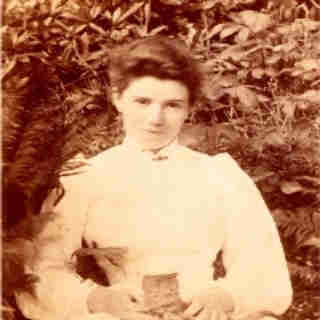 Born in Belfast Ireland, to a devout family of Scottish ancestry, Carmichael was educated at home and in England, where she lived with the familt of Robert Wilson after her father’s death. While never officially adopted, she used the hyphenated name Wilson-Carmichael as late as 1912. Her missionary call came through contacts with the Keswick movement. In 1892 she volunteered to the China Inland Mission but was refused on health grounds. However, in 1893 she sailed for Japan as the first Keswick missionary to join the Church Missionary Society (CMS) work led by Barclay Buxton. After less than two years in Japan and Ceylon, she was back in England before the end of 1894. The next year she volunteered to the Church of England Zenana Missionary Society, and in November 1895 she arrived in South India, never to leave. While still learning the difficult Tamil language, she commenced itinerant evangelism with a band of Indian Christian women, guided by the CMS missionary Thomas Walker. She soon found herself responsible for Indian women converts, and in 1901, she, the Walkers, and their Indian colleagues settled in Dohnavur. During her village itinerations, she had become increasingly aware of the fact that many Indian children were dedicated to the gods by their parents or guardians, became temple children, and lived in moral and spiritual danger. It became her mission to rescue and raise these children, and so the Dohnavur Fellowship came into being (registered 1927). Known at Dohnavur as Amma (Mother), Carmichael was the leader, and the work became well known through her writing. Workers volunteered and financial support was received, though money was never solicited. In 1931 she had a serious fall, and this, with arthritis, kept her an invalid for the rest of her life. She continued to write, and identified leaders, missionary and Indian, to take her place. The Dohnavur Fellowship still continues today.
Jocelyn Murray, “Carmichael, Amy Beatrice,” in Biographical Dictionary of Christian Missions, ed. Gerald H. Anderson (New York: Macmillan Reference USA, 1998), 116.
This article is reprinted from Biographical Dictionary of Christian Missions, Macmillan Reference USA, copyright © 1998 Gerald H. Anderson, by permission of Macmillan Reference USA, New York, NY. All rights reserved.
“Ammai” of orphans and holiness author
Amy Carmichael was born in Ireland in 1867, the oldest of seven children. As a teen, she attended a Wesleyan Methodist girls boarding school, until her father died when she was 18. Carmichael twice attended Keswick Conventions and experienced a holiness conversion which led her to work among the poor in Belfast. Through the Keswick Conventions, Carmichael met Robert Wilson. He developed a close relationship with the young woman, and invited her to live with his family. Carmichael soon felt a call to mission work and applied to the China Inland Mission as Amy Carmichael-Wilson. Although she did not go to China due to health reasons, Carmichael did go to Japan for a brief period of time. There she dressed in kimonos and began to learn Japanese. Her letters home from Japan became the basis for her first book, From Sunrise Land. Carmichael left Japan due to health reasons, eventually returning to England. She soon accepted a position with the Church of England’s Zenana Missionary Society, serving in India. From 1895 to 1925, her work with orphans in Tinnevelly (now Tirunelveli) was supported by the Church of England. After that time, Carmichael continued her work in the faith mission style, establishing an orphanage in Dohnavur. The orphanage first cared for girls who had been temple girls, who would eventually become temple prostitutes. Later the orphanage accepted boys as well.
Carmichael never returned to England after arriving in India. She wrote prolifically, publishing nearly 40 books. In her personal devotions, she relied on scripture and poetry. She wrote many of her own poems and songs. Carmichael had a bad fall in 1931, which restricted her movement. She stayed in her room, writing and studying. She often quoted Julian of Norwich when she wrote of suffering and patience. Many of Carmichael’s books have stories of Dohnavur children, interspersed with scripture, verses, and photographs of the children or nature. Carmichael never directly asked for funding, but the mission continued to be supported through donations. In 1951 Carmichael died at Dohnavur. Her headstone is inscribed “Ammai”, revered mother, which the children of Dohnavur called Carmichael.
Carmichael’s lengthy ministry at Dohnavur was sustained through her strong reliance upon scripture and prayer. Her early dedication to holiness practices and her roots in the Keswick tradition helped to guide her strong will and determination in her mission to the children of southern India.
by Rev. Lisa Beth White
Born in Belfast Ireland, to a devout family of Scottish ancestry, Carmichael was educated at home and in England, where she lived with the familt of Robert Wilson after her father’s death. While never officially adopted, she used the hyphenated name Wilson-Carmichael as late as 1912. Her missionary call came through contacts with the Keswick movement. In 1892 she volunteered to the China Inland Mission but was refused on health grounds. However, in 1893 she sailed for Japan as the first Keswick missionary to join the Church Missionary Society (CMS) work led by Barclay Buxton. After less than two years in Japan and Ceylon, she was back in England before the end of 1894. The next year she volunteered to the Church of England Zenana Missionary Society, and in November 1895 she arrived in South India, never to leave. While still learning the difficult Tamil language, she commenced itinerant evangelism with a band of Indian Christian women, guided by the CMS missionary Thomas Walker. She soon found herself responsible for Indian women converts, and in 1901, she, the Walkers, and their Indian colleagues settled in Dohnavur. During her village itinerations, she had become increasingly aware of the fact that many Indian children were dedicated to the gods by their parents or guardians, became temple children, and lived in moral and spiritual danger. It became her mission to rescue and raise these children, and so the Dohnavur Fellowship came into being (registered 1927). Known at Dohnavur as Amma (Mother), Carmichael was the leader, and the work became well known through her writing. Workers volunteered and financial support was received, though money was never solicited. In 1931 she had a serious fall, and this, with arthritis, kept her an invalid for the rest of her life. She continued to write, and identified leaders, missionary and Indian, to take her place. The Dohnavur Fellowship still continues today.
Jocelyn Murray, “Carmichael, Amy Beatrice,” in Biographical Dictionary of Christian Missions, ed. Gerald H. Anderson (New York: Macmillan Reference USA, 1998), 116.
This article is reprinted from Biographical Dictionary of Christian Missions, Macmillan Reference USA, copyright © 1998 Gerald H. Anderson, by permission of Macmillan Reference USA, New York, NY. All rights reserved.
“Ammai” of orphans and holiness author
Amy Carmichael was born in Ireland in 1867, the oldest of seven children. As a teen, she attended a Wesleyan Methodist girls boarding school, until her father died when she was 18. Carmichael twice attended Keswick Conventions and experienced a holiness conversion which led her to work among the poor in Belfast. Through the Keswick Conventions, Carmichael met Robert Wilson. He developed a close relationship with the young woman, and invited her to live with his family. Carmichael soon felt a call to mission work and applied to the China Inland Mission as Amy Carmichael-Wilson. Although she did not go to China due to health reasons, Carmichael did go to Japan for a brief period of time. There she dressed in kimonos and began to learn Japanese. Her letters home from Japan became the basis for her first book, From Sunrise Land. Carmichael left Japan due to health reasons, eventually returning to England. She soon accepted a position with the Church of England’s Zenana Missionary Society, serving in India. From 1895 to 1925, her work with orphans in Tinnevelly (now Tirunelveli) was supported by the Church of England. After that time, Carmichael continued her work in the faith mission style, establishing an orphanage in Dohnavur. The orphanage first cared for girls who had been temple girls, who would eventually become temple prostitutes. Later the orphanage accepted boys as well.
Carmichael never returned to England after arriving in India. She wrote prolifically, publishing nearly 40 books. In her personal devotions, she relied on scripture and poetry. She wrote many of her own poems and songs. Carmichael had a bad fall in 1931, which restricted her movement. She stayed in her room, writing and studying. She often quoted Julian of Norwich when she wrote of suffering and patience. Many of Carmichael’s books have stories of Dohnavur children, interspersed with scripture, verses, and photographs of the children or nature. Carmichael never directly asked for funding, but the mission continued to be supported through donations. In 1951 Carmichael died at Dohnavur. Her headstone is inscribed “Ammai”, revered mother, which the children of Dohnavur called Carmichael.
Carmichael’s lengthy ministry at Dohnavur was sustained through her strong reliance upon scripture and prayer. Her early dedication to holiness practices and her roots in the Keswick tradition helped to guide her strong will and determination in her mission to the children of southern India.
by Rev. Lisa Beth White
But Have You Prayed
What hasn’t yet changed in your life because you haven’t started praying for it? Prayerlessness, of course, comes in varieties. Some almost never pray, proving that prayer is nothing more than a formality, a greeting card to God when they have time. Others only pray when they have some desperate and immediate need, treating prayer like a crisis-response line (and largely neglecting prayer otherwise). Others may pray regularly, but their prayers slowly devolve into repeated phrases that taste stale, impersonal, removed from real life. Even the best among us can sometimes swing between treasuring prayer when we think we really need it and skipping prayer when life seems to be going well. Prayer, however, is not a last resort, but a first line of defense, because God is not a last resort, but the one to whom we look first. Prayer is powerful because God is the most powerful agent of change in any of our lives. Oh, what peace we often forfeit Oh, what needless pain we bear All because we do not carry Everything to God in prayer. Jesus confronted the threat of prayerlessness in his disciples, and in a way that should land with gravity and hope in the midst of our own trials and burdens. Desperate Situation In Mark 9, a man had come, bearing his self-destructive, demon-oppressed son, searching desperately for Jesus — for healing. “Teacher, I brought my son to you,” the father says, “for he has a spirit that makes him mute. And whenever it seizes him, it throws him down, and he foams and grinds his teeth and becomes rigid” (Mark 9:17–18). Parents of young children can at least begin to imagine how excruciating and debilitating this suffering was. Is there anything this father would not do to see his son whole again? “What hasn’t yet changed in your life because you haven’t yet prayed for it?” By the time Jesus arrives on the scene, his disciples have been attempting to drive out the demon. But they were not able (Mark 9:18), even though they had been given authority over unclean spirits (Mark 6:7). And as they struggled over the helpless boy, the religious leaders emerge with crowds to argue with them (Mark 9:14), surely making the situation all the more stressful and tragic. Nothing but Prayer Jesus asks his father, “How long has this been happening to him?” “From childhood” (Mark 9:21). Not just for several weeks or months, but over years, potentially decades. “And it has often cast him into fire and into water, to destroy him. But if you can do anything, have compassion on us and help us” (Mark 9:22). Jesus, of course, can do anything, literally anything. “‘If you can’! All things are possible for one who believes,” he replies (Mark 9:23). “I believe,” the father famously responds, “help my unbelief!” (Mark 9:24). So, Jesus heals the boy: “You mute and deaf spirit, I command you, come out of him and never enter him again” (Mark 9:25). The same spirit that evaded and overpowered the disciples surrenders immediately (and violently) (Mark 9:26), and at just the sound of his voice. When he is alone with his disciples, who are feeling confused and defeated by their failures, they ask him, “Why could we not cast it out?” (Mark 9:28). A penetrating and ageless question. “This kind,” Jesus says, “cannot be driven out by anything but prayer” (Mark 9:29). Maybe they didn’t pray at all, or maybe they prayed very little, or maybe they prayed formal, empty, heartless prayers, but either way Jesus says prayer — actually asking God — is what was missing. He could have said, This kind cannot be driven out by anyone but me, but instead he said, “This kind cannot be driven out by anything but prayer.” And as surprised as we might be that the disciples didn’t think to pray (or pray more), how often might Jesus say the same to us? What Kept Them from Praying? So, why didn’t the disciples pray? Why didn’t they ask God to help, to intervene, to do what was beyond the disciples’ own ability? We don’t know for sure, but the scene gives us a surprising number of potential reasons, many which might feel surprisingly relevant (and sobering) for own our prayer lives. DISTRACTED BY NOISE “How often have we given up praying because too many days or months or years have passed?” First, a great crowd had gathered to watch (and interfere with) their ministry (Mark 9:14). They weren’t doing spiritual warfare in the privacy of a home. The painful scene had become a stage, and the more the disciples failed and the longer the boy suffered, the more people came to watch. How many of us, with so many curious and suspicious eyes trained on us, would be courageous enough to stop and look toward heaven and pray? Or, how often does the sound of the crowds around us (constantly clawing at our attention through our devices), keep us from hearing Jesus say, “Ask, and it will be given to you; seek, and you will find; knock, and it will be opened to you” (Matthew 7:7)? Distractions, which come in many kinds and ways, often keep us from praying. DOUBTED BY MAN Not all had come simply to watch, though. Religious experts joined the crowd, arguing with the disciples and saying it couldn’t be done (Mark 9:14, 16). The spiritual enemy was obvious, but they had human enemies, as well — doubters, detractors, scoffers. They’re not waiting, like the rest of the crowd, for the disciples to heal the boy; they want nothing more than for followers of Jesus to fail (Mark 11:18). We may not face the same immediate opposition (though many Christians do), but wherever we are in the world, many want our prayers to fail — to prove that Jesus was just a man, the Bible just a book, and our prayers just wishful thinking. We know that faithfulness to Christ will cost us favor and approval from the world, and so the fear of man often keeps us from praying. DEFIED BY SATAN But the scribes were nothing compared with their unseen enemies. The disciples were dealing with an actual demon oppression — a real, destructive, spiritual enemy. A spiritual enemy strong enough to hurl the boy into fire and water, “to destroy him” (Mark 9:22). Maybe worst of all, he made the boy mute (Mark 9:17), unable to cry for help or even explain what was happening to him. What would you do while you watched him being torn apart? Even if we are not experiencing this kind of manifest demonic opposition, we do wrestle, every day, “against the spiritual forces of evil” (Ephesians 6:12). We pray into a downpour of fiery hostility. How often does Satan keep us from praying, doing all he can to keep us from our knees? DISCOURAGED BY INEFFECTIVENESS Though the disciples tried, really tried, to heal the boy, nothing changed. We don’t know what they tried, but we know that they tried (Mark 9:18) and that they had tried everything they knew to do (Mark 9:28). When Jesus says, “This kind cannot be driven out by anything but prayer,” he hints at all their failed attempts. And the boy still writhed and foamed and groaned on the ground — like he had for so long. A sense of futility surely began to set in. They had healed many before, but this spirit wouldn’t surrender. Maybe no one can heal this boy. How often have we given up praying because the outcome seems decided, because too many days or months or years have passed? Discouragement over unanswered prayer often keeps us from praying. Jesus Really Prayed Many barriers keep us from praying, but nothing kept Jesus from asking his Father, because Jesus knew that nothing was more vital and powerful than prayer. And he knew nothing was more vital and powerful than prayer because no one was more vital and powerful than his Father. “Some things will not change unless we humble ourselves, kneel, and plead with our Father in heaven.” When Jesus says, “This kind cannot be driven out by anything but prayer,” he knew so from personal and persistent experience. He was tempted in every way as we are, but without ever indulging in prayerlessness. We know how dependent he was on God — rising early in the morning (Mark 1:35), getting alone with his Father (Mark 6:46), and pouring out his heart (Mark 14:35). And we know he did this regularly (Luke 5:16). He was not distracted by the crowds or undone by the fear of man. He was not intimidated by demonic warfare or discouraged by God’s timing. He knew the soul-sustaining, demon-defeating, mountain-moving power of prayer — and he wanted us to know it too. Some oppression will not lift without prayer. Some wounds will not heal without prayer. Some trials will not end without prayer. Some sins will not die without prayer. Some relationships will not mend without prayer. Some things will not change, things we desperately want to change, unless we consistently and persistently humble ourselves, kneel, and plead with our Father in heaven. The all-wise, all-loving, all-powerful God has chosen to do much in the world through our prayers, because prayer is part of his precious relationship with his children and exalts him as the listening and answering God. So, what hasn’t yet changed in your life because you haven’t yet prayed?

-480.webp)