-by-franklin-hall.webp)

Atomic Power With God (Through Fastng And Prayer) Order Printed Copy
- Author: Franklin Hall
- Size: 5.52MB | 41 pages
- |
Others like atomic power with god (through fastng and prayer) Features >>
Praying Your Way Out Of Bondage
On Prayer

Responding To Spontaneous Burden

Revive Thy Work
-160.webp)
Carriers Of The Glory (Becoming A Friend Of The Holy Spirit)
The Hidden Power Of Prayer And Fasting
Ten Ways God Speaks
-160.webp)
Hi God, It's Me Again (What To Pray When You Don't Know What To Say)
Understanding The Power Of Praise
Only Believe
About the Book
"Atomic Power With God" by Franklin Hall explores the spiritual benefits and power that can be achieved through fasting and prayer. Hall discusses how fasting and prayer can help individuals tap into God's power and experience spiritual breakthroughs in their lives. The book emphasizes the importance of discipline, faith, and surrender in achieving a deeper connection with God and experiencing His miraculous power.
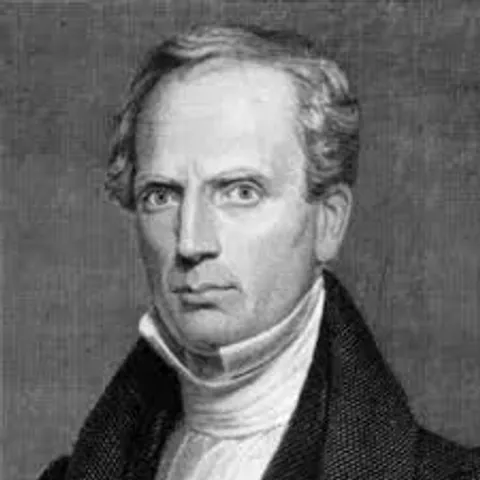
Charles Finney
 Childhood and Teen years
Charles Grandison Finney was born the year after Wesley died on 29th August, 1792 in Warren, Connecticut. In 1794 his family moved to New York state, eventually settling at Henderson, near Lake Ontario. Although he received only a brief formal education he decided to study law and joined the practice of a local lawyer, Benjamin Wright. He was also very musical, played the cello and directed the choir at the local Presbyterian Church pastured by Rev. George Gale.
His conversion
His conversion on October 10th 1821 reads like something out of the book of Acts. Smitten with conviction from Bible reading he decided to ‘settle the question of my soul’s salvation at once, that if it were possible, I would make my peace with God.’ (Autobiography)
This conviction increased to an unbearable level over the next couple of days and came to an head when he was suddenly confronted with an ‘inward voice.’ He was inwardly questioned about his spiritual condition and finally received revelation about the finished work of Christ and his own need to give up his sins and submit to Christ’s righteousness.
As he sought God in a nearby wood he was overwhelmed with an acute sense of his own wickedness and pride but finally submitted his life to Christ. Back at work that afternoon he was filled with a profound sense of tenderness, sweetness and peace. When work was over and he bade his employer goodnight, he then experienced a mighty baptism in the Holy Spirit, which was recorded as vividly as the day he experienced it, though it was penned some fifty years later.
The next morning Finney announced to a customer that he was leaving his law studies to become a preacher of the Gospel.
Charles Finney licensed to preach
He was licensed to preach in 1823 and ordained as an evangelist in 1824. His penetrating preaching was quite different from many local ministers and included an obvious attempt to break away from the traditional and, as he saw it, dead, orthodox Calvinism. He married to Lydia Andrews in October 1824 and was also joined by Daniel Nash (1774-1831), known popularly as ‘Father Nash.’ Undoubtedly Nash’s special ministry of prayer played a great part in Finney’s growing success as an evangelist.
Things really took off when he preached in his old church, where Rev. Gale still ministered. Numerous converts and critics followed! Similar results were experienced in nearby towns of Rome and Utica. Soon newspapers were reporting his campaigns and he began drawing large crowds with dramatic responses.
Soon he was preaching in the largest cities of the north with phenomenal results. Campaign after campaign secured thousands of converts.
The high point of Finney’s revival career was reached at Rochester, New York, during his 1830-1 meetings. Shopkeepers closed their businesses and the whole city seemed to centre on the revivalist. Responding to his irresistible logic and passionate arguments many of his converts were lawyers, merchants and those from a higher income and professional status.
His Preaching
Finney openly preached a modified Calvinism, influenced with his own theology of conversion and used what were perceived to be ‘revivalistic techniques.’
These ‘means’ included the use of the anxious bench (a special place for those under conviction), protracted meetings, women allowed to pray in mixed meetings, publicly naming those present resisting God in meetings and the hurried admission of new converts into church membership. Opponents viewed his preaching of the law as ‘scare tactics’ and his persuasive appeals for sinners to come to Christ for salvation were seen as over-emphasising the responsibility of men and ignoring the sovereignty of God.
His theology and practise soon became known as the ‘New Measures’ and attracted many opponents from the Old School Presbyterians led by Asahel Nettleton (himself no stranger to true revival and , the revivalistic Congregationalists headed by Lyman Beecher.
Pastor at Chatham Street Chapel
Finney accepted an appointment as pastor of Chatham Street Chapel in New York City in 1832 where he remained until 1837. It was during this time that he delivered a series of sermons published in 1835 as ‘Lectures on Revivals of Religion.’ Here he clearly stated his views regarding revivals being products of the correct use of human means. Such was the controversy that he left the Presbyterian denomination and joined the Congregationalists in 1836.
Oberlin College
The next year he became professor of theology at Oberlin College (Ohio) where he taught until his death. He was President here from 1851 until 1866, but still continued regular revival meetings in urban settings (twice in England, 1848, 1851) until 1860. During his stay at Oberlin he produced his, Lectures to Professing Christians (1836), Sermons on Important Subjects (1839) and his famous Memoirs.
The Father of Modern Revivalism
There is no doubt that Charles Grandison Finney well-deserves the title ‘The Father of Modern Revivalism.’ He was an evangelistic pioneer whose model was followed by a long line of revivalists from D. L. Moody to Billy Graham. His writing have made a massive impact on the entire evangelical world and particularly the ‘Lectures on Revivals’ which has, arguably, ignited more fires of revival than any other single piece literature in evangelical history.
This ‘Prince of Revivalists’ passed away peacefully at Oberlin on Sunday, 16th August, 1875 aged almost 83 years.
Bibliography: I Will Pour Out My Spirit, R. E. Davies, 1997; Ed: A. Scott Moreau, Baker Evangelical Dictionary of World Missions, 2000; Dictionary of Evangelical Biography 1730-1860, Vol. 1, 1995.
Tony Cauchi
Childhood and Teen years
Charles Grandison Finney was born the year after Wesley died on 29th August, 1792 in Warren, Connecticut. In 1794 his family moved to New York state, eventually settling at Henderson, near Lake Ontario. Although he received only a brief formal education he decided to study law and joined the practice of a local lawyer, Benjamin Wright. He was also very musical, played the cello and directed the choir at the local Presbyterian Church pastured by Rev. George Gale.
His conversion
His conversion on October 10th 1821 reads like something out of the book of Acts. Smitten with conviction from Bible reading he decided to ‘settle the question of my soul’s salvation at once, that if it were possible, I would make my peace with God.’ (Autobiography)
This conviction increased to an unbearable level over the next couple of days and came to an head when he was suddenly confronted with an ‘inward voice.’ He was inwardly questioned about his spiritual condition and finally received revelation about the finished work of Christ and his own need to give up his sins and submit to Christ’s righteousness.
As he sought God in a nearby wood he was overwhelmed with an acute sense of his own wickedness and pride but finally submitted his life to Christ. Back at work that afternoon he was filled with a profound sense of tenderness, sweetness and peace. When work was over and he bade his employer goodnight, he then experienced a mighty baptism in the Holy Spirit, which was recorded as vividly as the day he experienced it, though it was penned some fifty years later.
The next morning Finney announced to a customer that he was leaving his law studies to become a preacher of the Gospel.
Charles Finney licensed to preach
He was licensed to preach in 1823 and ordained as an evangelist in 1824. His penetrating preaching was quite different from many local ministers and included an obvious attempt to break away from the traditional and, as he saw it, dead, orthodox Calvinism. He married to Lydia Andrews in October 1824 and was also joined by Daniel Nash (1774-1831), known popularly as ‘Father Nash.’ Undoubtedly Nash’s special ministry of prayer played a great part in Finney’s growing success as an evangelist.
Things really took off when he preached in his old church, where Rev. Gale still ministered. Numerous converts and critics followed! Similar results were experienced in nearby towns of Rome and Utica. Soon newspapers were reporting his campaigns and he began drawing large crowds with dramatic responses.
Soon he was preaching in the largest cities of the north with phenomenal results. Campaign after campaign secured thousands of converts.
The high point of Finney’s revival career was reached at Rochester, New York, during his 1830-1 meetings. Shopkeepers closed their businesses and the whole city seemed to centre on the revivalist. Responding to his irresistible logic and passionate arguments many of his converts were lawyers, merchants and those from a higher income and professional status.
His Preaching
Finney openly preached a modified Calvinism, influenced with his own theology of conversion and used what were perceived to be ‘revivalistic techniques.’
These ‘means’ included the use of the anxious bench (a special place for those under conviction), protracted meetings, women allowed to pray in mixed meetings, publicly naming those present resisting God in meetings and the hurried admission of new converts into church membership. Opponents viewed his preaching of the law as ‘scare tactics’ and his persuasive appeals for sinners to come to Christ for salvation were seen as over-emphasising the responsibility of men and ignoring the sovereignty of God.
His theology and practise soon became known as the ‘New Measures’ and attracted many opponents from the Old School Presbyterians led by Asahel Nettleton (himself no stranger to true revival and , the revivalistic Congregationalists headed by Lyman Beecher.
Pastor at Chatham Street Chapel
Finney accepted an appointment as pastor of Chatham Street Chapel in New York City in 1832 where he remained until 1837. It was during this time that he delivered a series of sermons published in 1835 as ‘Lectures on Revivals of Religion.’ Here he clearly stated his views regarding revivals being products of the correct use of human means. Such was the controversy that he left the Presbyterian denomination and joined the Congregationalists in 1836.
Oberlin College
The next year he became professor of theology at Oberlin College (Ohio) where he taught until his death. He was President here from 1851 until 1866, but still continued regular revival meetings in urban settings (twice in England, 1848, 1851) until 1860. During his stay at Oberlin he produced his, Lectures to Professing Christians (1836), Sermons on Important Subjects (1839) and his famous Memoirs.
The Father of Modern Revivalism
There is no doubt that Charles Grandison Finney well-deserves the title ‘The Father of Modern Revivalism.’ He was an evangelistic pioneer whose model was followed by a long line of revivalists from D. L. Moody to Billy Graham. His writing have made a massive impact on the entire evangelical world and particularly the ‘Lectures on Revivals’ which has, arguably, ignited more fires of revival than any other single piece literature in evangelical history.
This ‘Prince of Revivalists’ passed away peacefully at Oberlin on Sunday, 16th August, 1875 aged almost 83 years.
Bibliography: I Will Pour Out My Spirit, R. E. Davies, 1997; Ed: A. Scott Moreau, Baker Evangelical Dictionary of World Missions, 2000; Dictionary of Evangelical Biography 1730-1860, Vol. 1, 1995.
Tony Cauchi
Meeting Christ in Aslan
Over the next five years, the seven installments of C.S. Lewis’s The Chronicles of Narniaseries will turn seventy. Generations of children have found delight in stepping through the wardrobe door to this mythical world, filled with magic, meaning, and a whole cast of fantastic characters. Still, in the end, the appeal of The Chronicles comes back to a single character. Aslan, the Great Lion, who calls the children into Narnia, plays the central role in each adventure. It’s not exactly correct to call Aslan an “allegory” of Jesus. Lewis might prefer that we instead think of Aslan as Christ transposed into a Narnian key, a Creator and Lord fit for a world primarily inhabited by talking animals. Throughout The Chronicles, Aslan often emphasizes that he really is a lion and not an illusion or symbol. “Touch me,” he tells one character in “The Horse and His Boy”. “Smell me. Here are my paws, here is my tail, these are my whiskers. I am a true Beast.” True to Lewis’s genius and his love of myth, Aslan’s purpose in calling children from our world into Narnia is the same as Lewis’s purpose in writing The Chronicles. Through the Great Lion, Lewis gives us a glimpse of the character of the Savior and King he called “myth become fact,” and whom Scripture calls “the Lion of Judah.” Two moments in the Narnia series are particular favorites of my colleague Shane Morris, and illustrate Aslan’s mission with particular clarity. One takes place during the third Chronicle (the fifth in publication order), “The Horse and His Boy.” Shasta, the main character, has ridden through the night and is lost in the mountains. Having grown up in a foreign country and just returned to Narnia, he doesn’t realize he is royalty. After running and riding for his life for so long, he’s tired and discouraged, and concludes that he must be the unluckiest boy alive. Suddenly, a great Voice confronts him out of the darkness, and asks to know his sorrows. A very frightened Shasta, not knowing what else to do, relays how he and his companions fled from their captors across the desert, how fear and danger have stalked them at every turn, and how he’s been threatened by at least four lions. “There was only one lion,” replies the Voice. “But he was swift of foot.” Aslan reveals that he was the lion, and that his intervention at these crucial moments saved the boy’s life, as well as the lives of his fellow travelers and his native kingdom. What Shasta saw as bad luck was Aslan’s providential paw guiding him through danger toward his rightful throne, and even introducing him to his future wife. The second scene takes place at the end of “The Voyage of the Dawn Treader.” Lucy, Edmund, and Eustace have just come to the edge of the world after months at sea. The rest of the characters have gone home or paddled into Aslan’s Country, and the three children are left alone. They encounter Aslan on a grassy shore, who’s taken the form of a lamb and invites them to breakfast. There, he tells the children that it’s time for them to go home and, for Edmund and Lucy, there will be no returning to Narnia. They don’t take the news well. “It isn’t Narnia, you know,” cries Lucy. “It’s you. We shan’t meet you there. And how are we to live, never meeting you?” “But you shall meet me, dear one,” Aslan replies. “But there I have another name. You must learn to know me by that name. This was the very reason why you were brought to Narnia, that by knowing me here for a little, you may know me better there.” Like Jesus revealing Himself to His disciples at the breaking of bread, here Lewis has Aslan shed the disguise to allow readers to fully recognize him. When Aslan reveals his role in Shasta’s story, it brings to mind how Jesus, on the road to Emmaus, revealed to His disciples everything concerning Himself in the Law and Prophets. It’s no wonder that, like those disciples, many who have met Aslan in The Chronicles of Narnia have also felt their hearts burning within them. Seventy years on, C.S. Lewis’s stories deserve every bit of their status as classics, filled as they are with spiritual treasures for young and old alike. But the lion’s share of the credit goes to Aslan. In him we meet a character too good to be just a story. And, like Lucy, we long to know his true name—not in spite of the mane and tail, but because of them. Publication date: October 20, 2021 John Stonestreet