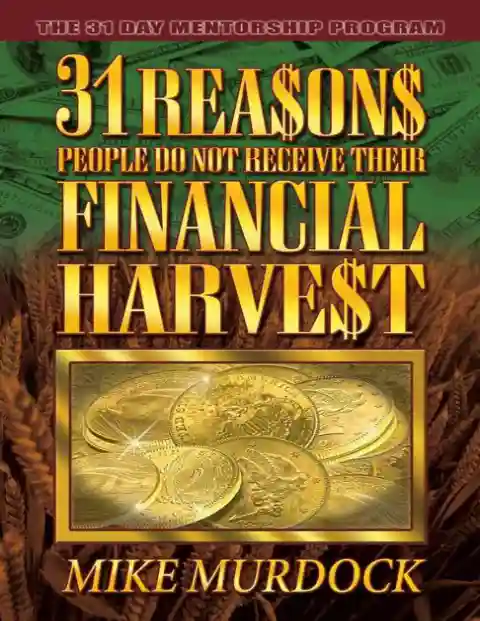

31 Reasons People Do Not Receive Their Financial Harvest Order Printed Copy
- Author: Mike Murdock
- Size: 2.31MB | 203 pages
- |
Others like 31 reasons people do not receive their financial harvest Features >>

Three Straightforward Steps To Outrageous Financial Abundance

From Rats To Riches

The Financial Peace Planner
-160.webp)
Debt-Free Living (Eliminating Debt In A New Economy)

The Wealth Of The World

The Laws Of The Harvest
What Jesus Taught About Manifesting Abundance

Financial Breakthrough

Wealth Creation

Thoughts On Stewardship
About the Book
"31 Reasons People Do Not Receive Their Financial Harvest" by Mike Murdock explores the common obstacles that prevent individuals from achieving financial success. The book provides insight into the attitudes, beliefs, and behaviors that can hinder prosperity and offers practical advice on how to overcome these obstacles to unlock financial abundance.
John Alexander Dowie
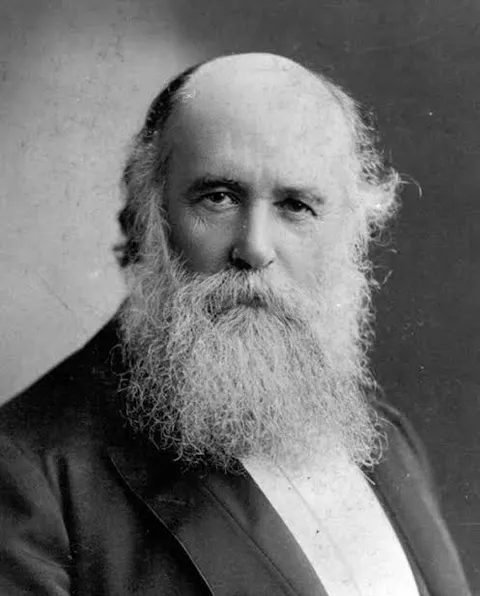 By John Alexander Dowie (1847 – 1907)
I sat in my study in the parsonage of the Congregational Church at Newtown, a suburb of the beautiful city of Sydney, Australia. My heart was very heavy, for I had visited the sick and dying beds of more than thirty of my flock, and I had cast the dust to its kindred dust into more than forty graves within a few weeks. Where, oh where, was He Who used to heal His suffering children? No prayer for healing seemed to reach His ear, and yet I knew His hand had not been shortened. Still it did not save from death even those for whom there was so much in life to live for God and others. Strong men, fathers, good citizens, and more than all, true Christians sickened with a putrid fever, suffered nameless agonies, passed into delirium, sometimes with convulsions, and then died.
Oh, what aching voids were left in many a widowed or orphaned heart. There were many homes where, one by one, the little children, the youths and the maidens lay stricken, and after a hard struggle with the foul disease, they too, lay cold and dead. It seemed sometimes as if I could almost hear the triumphant mockery of evil ringing in my ear whilst I spoke to the bereaved ones the words of Christian hope and consolation. Disease, the foul offspring of its father, Satan, and its mother Sin, was defiling and destroying the earthly temples of God’s children and there was no deliverance.
There I sat with sorrow-bowed head for my afflicted people, until the bitter tears came to relieve my burning heart. Then I prayed for some message, and oh, how I longed to hear some words from Him Who wept and sorrowed for the suffering long ago, a Man of Sorrows and Sympathies. The words of the Holy Ghost inspired In Acts 10:38, stood before me all radiant with light, revealing Satan as the Defiler, and Christ as the Healer. My tears were wiped away, my heart strong, I saw the way of healing, and the door thereto was opened wide, so I said, “God help me now to preach the Word to all the dying around, and tell them how Satan still defiles, and Jesus still delivers, for He is just the same today.”
A loud ring and several raps at the outer door, a rush of feet, and there at my door stood two panting messengers who said, “Oh, come at once, Mary is dying; come and pray. “With just a feeling as a shepherd has who hears that his sheep are being torn from the fold by a cruel wolf, I rushed from my house, ran without my hat down the street, and entered the room of the dying maiden. There she lay groaning and grinding her clenched teeth in the agony of the conflict with the destroyer. The white froth, mingled with her blood, oozing from her pale and distorted mouth. I looked at her and then my anger burned. “Oh,” I thought, “for some sharp sword of heavenly temper keen to slay this cruel foe who is strangling that lovely maiden like an invisible serpent, tightening his deadly coils for a final victory.”
In a strange way, It came to pass; I found the sword I needed was in my hands, and in my hand I hold it still and never will I lay It down. The doctor, a good Christian man, was quietly walking up and down the room, sharing the mother’s pain and grief. Presently he stood at my side and said, “Sir, are not God’s ways mysterious?” Instantly the sword was flashed in my hand, the Spirit’s sword, the Word of God. “God’s way?!” I said, pointing to the scene of conflict, “How dare you call that God’s way of bringing His children home from earth to Heaven? No sir, that is the devil’s work and it is time we called on Him Who came to destroy the work of the devil, to slay that deadly foul destroyer, and to save this child. Can you pray, Doctor, can you pray the prayer of faith that saves the sick?” At once, offended at my words, my friend was changed, and saying,” You are too much excited, sir, it is best to say ‘God’s will be done,’” and he left the room.
Excited?! The word was quite inadequate for I was almost frenzied with divinely imparted anger and hatred of that foul destroyer, disease, which was doing Satan’s will. “It is not so,” I exclaimed, “no will of God sends such cruelty, and I shall never say ‘God’s will be done’ to Satan’s works, which God’s own Son came to destroy, and this is one of them.” Oh, how the Word of God was burning in my heart: “Jesus of Nazareth went about doing good, and healing all that were oppressed of the devil; for God was with Him.” And was not God with me? And was not Jesus there and all His promises true? I felt that it was even so, and turning to the mother I inquired,” Why did you send for me?” To which she answered, “Do pray, oh pray for her that God may raise her up.” So we prayed.
What did I say? It may be that I cannot recall the words without mistake, but words are in themselves of small importance. The prayer of faith may be a voiceless prayer, a simple heartfelt look of confidence into the face of Christ. At such moment, words are few, but they mean much, for God is looking at the heart. Still, I can remember much of that prayer unto this day, and asking God to aid, I will attempt to recall it. I cried, “Our Father, help! and Holy Spirit, teach me how to pray. Plead Thou for us, oh, Jesus, Savior, Healer, Friend, our Advocate with God the Father. Hear and heal, Eternal One! From all disease and death, deliver this sweet child of yours. I rest upon the Word. We claim the promise now. The Word is true, ‘I am the Lord that heals thee.’ Then heal her now. The Word is true, ‘I am the Lord, I change not.’ Unchanging God, then prove Yourself the healer now. The Word is true. ‘These signs shall follow them that believe in My Name, they shall lay hands on the sick, and they shall recover.’ And I believe and I lay hands in Jesus’ Name on her and claim this promise now. Your Word is true. ‘The prayer of faith shall save the sick. Trusting in You alone. I cry. Oh, save her now, for Jesus’ sake. Amen!”
Then, the maid lay in sleep so deep and sweet that the mother asked in a low whisper, “Is she dead?” “No,” I answered, in a whisper lower still. “Mary will live; the fever is gone. She is perfectly well and sleeping as an infant sleeps.” I was smoothing the long dark hair from her now peaceful brow, and feeling the steady pulsation of her heart and cool moist hands. I saw that Christ had heard, and that once more, as long ago in Peter’s house, “He touched her and the fever left her.” Turning to the nurse, I said, “Get me at once, please, a cup of cocoa and several slices of bread and butter.” Beside the sleeping maid we sat quietly and almost silently until the nurse returned, and then I bent over her and snapping my fingers called, “Mary!”
Instantly she woke, smiled and said, “Oh, sir, when did you come? I have slept so long;” then stretching her arms out to meet her mother’s embrace, she said, “Mother, I feel so well.” “And hungry, too?” I asked, pouring some of the cocoa in a saucer and offering it to her when cooled by my breath. “Yes, hungry too,” she answered with a little laugh, and drank and ate again, and yet again until all was gone. In a few minutes, she fell asleep, breathing easily and softly. Quietly thanking God. We left her bed and went to the next room where her brother and sister also lay sick of the same fever. With these two, we prayed and they were healed too. The following day all three were well and in a week or so they brought me a little letter and a gift of gold, two sleeve links with my monogram, which I wore for many years. As I went away from the home where Christ as the Healer had been victorious, I could not but have somewhat in my heart of the triumphant song that rang through Heaven, and yet I was not a little amazed at my own strange doings, and still more at my discovery that He is just the same today.
Excerpt from the Sermons of John Alexander Dowie Champions of Faith by Gordon Lindsay
By John Alexander Dowie (1847 – 1907)
I sat in my study in the parsonage of the Congregational Church at Newtown, a suburb of the beautiful city of Sydney, Australia. My heart was very heavy, for I had visited the sick and dying beds of more than thirty of my flock, and I had cast the dust to its kindred dust into more than forty graves within a few weeks. Where, oh where, was He Who used to heal His suffering children? No prayer for healing seemed to reach His ear, and yet I knew His hand had not been shortened. Still it did not save from death even those for whom there was so much in life to live for God and others. Strong men, fathers, good citizens, and more than all, true Christians sickened with a putrid fever, suffered nameless agonies, passed into delirium, sometimes with convulsions, and then died.
Oh, what aching voids were left in many a widowed or orphaned heart. There were many homes where, one by one, the little children, the youths and the maidens lay stricken, and after a hard struggle with the foul disease, they too, lay cold and dead. It seemed sometimes as if I could almost hear the triumphant mockery of evil ringing in my ear whilst I spoke to the bereaved ones the words of Christian hope and consolation. Disease, the foul offspring of its father, Satan, and its mother Sin, was defiling and destroying the earthly temples of God’s children and there was no deliverance.
There I sat with sorrow-bowed head for my afflicted people, until the bitter tears came to relieve my burning heart. Then I prayed for some message, and oh, how I longed to hear some words from Him Who wept and sorrowed for the suffering long ago, a Man of Sorrows and Sympathies. The words of the Holy Ghost inspired In Acts 10:38, stood before me all radiant with light, revealing Satan as the Defiler, and Christ as the Healer. My tears were wiped away, my heart strong, I saw the way of healing, and the door thereto was opened wide, so I said, “God help me now to preach the Word to all the dying around, and tell them how Satan still defiles, and Jesus still delivers, for He is just the same today.”
A loud ring and several raps at the outer door, a rush of feet, and there at my door stood two panting messengers who said, “Oh, come at once, Mary is dying; come and pray. “With just a feeling as a shepherd has who hears that his sheep are being torn from the fold by a cruel wolf, I rushed from my house, ran without my hat down the street, and entered the room of the dying maiden. There she lay groaning and grinding her clenched teeth in the agony of the conflict with the destroyer. The white froth, mingled with her blood, oozing from her pale and distorted mouth. I looked at her and then my anger burned. “Oh,” I thought, “for some sharp sword of heavenly temper keen to slay this cruel foe who is strangling that lovely maiden like an invisible serpent, tightening his deadly coils for a final victory.”
In a strange way, It came to pass; I found the sword I needed was in my hands, and in my hand I hold it still and never will I lay It down. The doctor, a good Christian man, was quietly walking up and down the room, sharing the mother’s pain and grief. Presently he stood at my side and said, “Sir, are not God’s ways mysterious?” Instantly the sword was flashed in my hand, the Spirit’s sword, the Word of God. “God’s way?!” I said, pointing to the scene of conflict, “How dare you call that God’s way of bringing His children home from earth to Heaven? No sir, that is the devil’s work and it is time we called on Him Who came to destroy the work of the devil, to slay that deadly foul destroyer, and to save this child. Can you pray, Doctor, can you pray the prayer of faith that saves the sick?” At once, offended at my words, my friend was changed, and saying,” You are too much excited, sir, it is best to say ‘God’s will be done,’” and he left the room.
Excited?! The word was quite inadequate for I was almost frenzied with divinely imparted anger and hatred of that foul destroyer, disease, which was doing Satan’s will. “It is not so,” I exclaimed, “no will of God sends such cruelty, and I shall never say ‘God’s will be done’ to Satan’s works, which God’s own Son came to destroy, and this is one of them.” Oh, how the Word of God was burning in my heart: “Jesus of Nazareth went about doing good, and healing all that were oppressed of the devil; for God was with Him.” And was not God with me? And was not Jesus there and all His promises true? I felt that it was even so, and turning to the mother I inquired,” Why did you send for me?” To which she answered, “Do pray, oh pray for her that God may raise her up.” So we prayed.
What did I say? It may be that I cannot recall the words without mistake, but words are in themselves of small importance. The prayer of faith may be a voiceless prayer, a simple heartfelt look of confidence into the face of Christ. At such moment, words are few, but they mean much, for God is looking at the heart. Still, I can remember much of that prayer unto this day, and asking God to aid, I will attempt to recall it. I cried, “Our Father, help! and Holy Spirit, teach me how to pray. Plead Thou for us, oh, Jesus, Savior, Healer, Friend, our Advocate with God the Father. Hear and heal, Eternal One! From all disease and death, deliver this sweet child of yours. I rest upon the Word. We claim the promise now. The Word is true, ‘I am the Lord that heals thee.’ Then heal her now. The Word is true, ‘I am the Lord, I change not.’ Unchanging God, then prove Yourself the healer now. The Word is true. ‘These signs shall follow them that believe in My Name, they shall lay hands on the sick, and they shall recover.’ And I believe and I lay hands in Jesus’ Name on her and claim this promise now. Your Word is true. ‘The prayer of faith shall save the sick. Trusting in You alone. I cry. Oh, save her now, for Jesus’ sake. Amen!”
Then, the maid lay in sleep so deep and sweet that the mother asked in a low whisper, “Is she dead?” “No,” I answered, in a whisper lower still. “Mary will live; the fever is gone. She is perfectly well and sleeping as an infant sleeps.” I was smoothing the long dark hair from her now peaceful brow, and feeling the steady pulsation of her heart and cool moist hands. I saw that Christ had heard, and that once more, as long ago in Peter’s house, “He touched her and the fever left her.” Turning to the nurse, I said, “Get me at once, please, a cup of cocoa and several slices of bread and butter.” Beside the sleeping maid we sat quietly and almost silently until the nurse returned, and then I bent over her and snapping my fingers called, “Mary!”
Instantly she woke, smiled and said, “Oh, sir, when did you come? I have slept so long;” then stretching her arms out to meet her mother’s embrace, she said, “Mother, I feel so well.” “And hungry, too?” I asked, pouring some of the cocoa in a saucer and offering it to her when cooled by my breath. “Yes, hungry too,” she answered with a little laugh, and drank and ate again, and yet again until all was gone. In a few minutes, she fell asleep, breathing easily and softly. Quietly thanking God. We left her bed and went to the next room where her brother and sister also lay sick of the same fever. With these two, we prayed and they were healed too. The following day all three were well and in a week or so they brought me a little letter and a gift of gold, two sleeve links with my monogram, which I wore for many years. As I went away from the home where Christ as the Healer had been victorious, I could not but have somewhat in my heart of the triumphant song that rang through Heaven, and yet I was not a little amazed at my own strange doings, and still more at my discovery that He is just the same today.
Excerpt from the Sermons of John Alexander Dowie Champions of Faith by Gordon Lindsay
We Murder with Words Unsaid
Never since have so few words haunted me. In the dream, I sat in a balcony before the judgment seat of God. Two magnificent beings dragged the man before the throne. He fell in terror. All shivered as the Almighty pronounced judgment upon him. As the powerful beings took the quaking man away, I saw his face — a face I knew well. I grew up with this man. We played sports together, went to school together, were friends in this life — yet here he stood, alone in death. He looked at me with indescribable horror. All he could say, as they led him away — in a voice I cannot forget — “You knew?” The two quivering words held both a question and accusation. We Know A recent study reports that nearly half of all self-professed Christian millennials believe it’s wrong to share their faith with close friends and family members of different beliefs. On average, these millennials had four close, non-believing loved ones — four eternal souls — that would not hear the gospel from them. What a horror. “How then will they call on him in whom they have not believed? And how are they to believe in him of whom they have never heard?” (Romans 10:14). Incredibly, the eternity of human souls, under God, depends on the instrumentality of fellow human voices. Voices that increasingly will not speak. But what about the rest of us? How many people in our lives — if they stood before God tonight — could ask us the same question? We’ve had thousands of conversations with them, spent countless hours in their presence, laughed, smiled, and cried with them, allowed them to call us “friend” — and yet — haven’t come around to risking the relationship on topics like sin, eternity, Christ, and hell. We know they lie dead in their trespasses and sins (Ephesians 2:1–3). We know that their good deeds toward us cannot save them (Romans 3:20). We know they sit in a cell condemned already (John 3:18). We know they wander down the broad path, and, if not interrupted, will plunge headlong into hell (Matthew 25:46). A place of weeping and gnashing of teeth. A place of outer darkness. A place where the smoke of their anguish will rise forever in the presence of the almighty Lamb (Revelation 14:10–11). “And they will not escape” (1 Thessalonians 5:3). We know. We Say Nothing More than this — much more than this — we know who can save them. We know the only name given among men by which they must be saved (Acts 4:12). We know the only Way, the Truth, the Life (John 14:6). We know the one mediator between God and men (1 Timothy 2:5). We know the Lamb of God who takes away sins. We know the power of the gospel for salvation. We know that our God’s heart delights to save, and takes no pleasure in the death of the wicked (Ezekiel 33:11). We know that Jesus’s atoning death made a way of reconciliation, that he can righteously forgive the vilest. We know he sends his Spirit to give new life, new joy, new purpose. We know the meaning of life is reconciliation to God. We know. But why, then, do we merely smile and wave at them — loved ones, family, friends, co-workers, and strangers — as they prepare to stand unshielded before God’s fury? What do we say of their danger, of their God, or of their opportunity to become his children as they float lifelessly down the river towards judgment? Too often, we say nothing. How Christians Murder Souls I awoke from that dream, as Scrooge did in A Christmas Carol, realizing I had more time. I could warn my friend (and others) and tell him about Christ crucified. I could shun that diplomacy that struck so little resemblance to Jesus or his apostles or saints throughout history who, as far as they could help it, refused to hear, “You knew?” I could cease assisting Satan for fear of human shade. My friend needs not slip quietly into judgment. And my silence needs not help dig his grave. I could avoid some of the culpability that Spurgeon spoke of when he called a minister’s unwillingness to tell the whole truth “soul murder.” Ho, ho, sir surgeon, you are too delicate to tell the man he is ill! You hope to heal the sick without their knowing it. You therefore flatter them. And what happens? They laugh at you. They dance upon their own graves and at last they die. Your delicacy is cruelty; your flatteries are poisons; you are a murderer. Shall we keep men in a fool’s paradise? Shall we lull them into soft slumber from which they will awake in hell? Are we to become helpers of their damnation by our smooth speeches? In the name of God, we will not. God said as much to Ezekiel. “If I say to the wicked, ‘You shall surely die,’ and you give him no warning, nor speak to warn the wicked from his wicked way, in order to save his life, that wicked person shall die for his iniquity, but his blood I will require at your hand” (Ezekiel 3:18). Paul, the mighty apostle of justification by faith alone, spoke to the same culpability of silence: “I testify to you this day that I am innocent of the blood of all, for I did not shrink from declaring to you the whole counsel of God” (Acts 20:26–27). Am I an Accomplice? We warn people in order to save their lives. Paul did not allow his beautiful feet to be betrayed by a timid tongue. He “alarmed” men as he “reasoned about righteousness and self-control and the coming judgment” (Acts 24:25). The fear of people-pleasing did not control him — lest he disqualify himself from being a servant of Christ (Galatians 1:10). Now today we are not first-covenant prophets, or new-covenant apostles. Many of us are not even pastors and teachers who “will be judged with greater strictness” (James 3:1). But does this mean that the rest of us will not be judged by any strictness? Do not our pastors and teachers train us “for the work of ministry” (Ephesians 4:11–12)? Should I appease my own conscience by merely inviting others to church, hoping that someday they might cave in and come and there hear the gospel? My pastor did not grow up with my people, live next door, text them frequently, watch football games with them, and sit with them in their homes. But I did. And as much as some of us may throw stones at “seeker-driven” churches, the question comes uncomfortably full circle: Do I shrink back from saying the hard truth in order to win souls? Is my delicacy cruelty? My flatteries poison? Am I an accomplice in the murder of souls? If Not You, Then Who? Recently, a family we care about nearly died. They went to bed not knowing that carbon monoxide would begin to fill the home. They would have fallen asleep on earth and awoke before God had not an unpleasant sound with an unpleasant message startled them. We, like the carbon detector, cannot stay silent and let lost souls slumber into hell. If they endure in unbelief, let them shake their fists at us, pull pillows over their ears, roll over, turn their back to us, and wake before the throne. If we have been unfaithful — where our sin of people-pleasing and indifference abound — grace may abound all the more. Repent, rise, and sin no more. Mount your courage and ride like Paul Revere through your sphere to tell them that God is coming. When the time comes to speak, tell them they stand under righteous judgment. Tell them they must repent and believe. Tell them that Jesus already came once. Tell them he bore God’s wrath for sinners. Tell them he rose from the dead. Tell them he reigns over the nations at the Father’s right hand. Tell them that, by faith, they may live. Tell them that they can become children of God. If we, a chosen race, a royal priesthood, a holy nation, his people left here after conversion to proclaim his excellencies (1 Peter 2:9) will not wake them from their fatal dream, who will? God, save us from hearing those agonizing words, “You knew?” Article by Greg Morse