
Others like thoughts on stewardship Features >>

About the Book
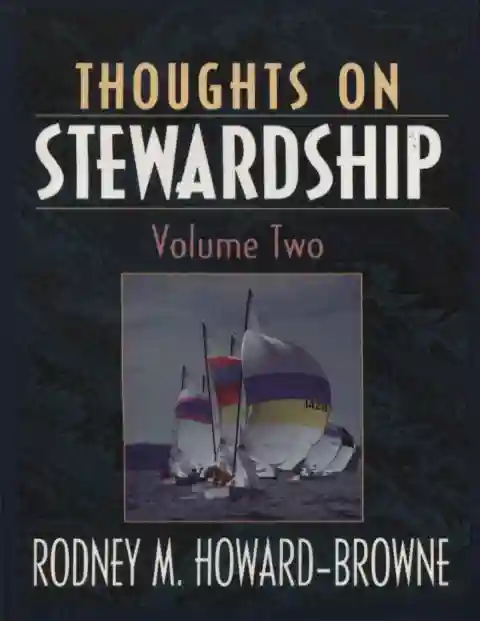
"Thoughts On Stewardship" by Rodney Howard-Browne discusses the importance of stewardship in the Christian faith, highlighting the responsibility of believers to manage and use resources wisely to further God's kingdom. Howard-Browne emphasizes the significance of generosity, faithfulness, and accountability in stewardship, offering practical insights and biblical principles for effective stewardship practices.
Oral Roberts
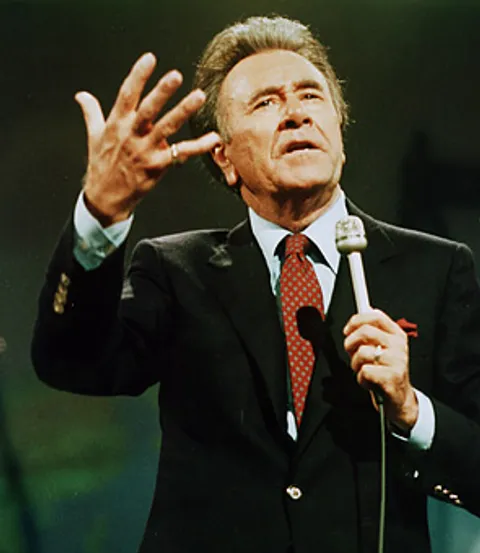 Granville Oral Roberts was born January 24, 1918 in Pontotoc County, near Ada, in Oklahoma. His parents were deeply religious. His father was a farmer who also preached the gospel and established Pentecostal Holiness churches. His mother regularly prayed for the sick and led people to Christ. While she was still pregnant, Robert's mother committed Oral to God's service. Even though Oral had a very strong stutter his mother would tell him that one day God would heal his tongue and he would speak to multitudes.
The Roberts family was desperately poor. When Roberts was 16 he moved away from home, hoping for a better life. He rejected God and his upbringing. He started living a wild life and his health collapsed. Roberts had contracted tuberculosis. He returned home and eventually dropped to 120 pounds. He was a walking skeleton. God spoke to his older sister, Jewel, and told her that He was going to heal Oral. During this same time Oral turned his heart back to God and gave his life to Christ. A traveling healing evangelist named George Moncey came to Ada and held meetings in a tent. Oral's elder brother was touched when he saw friends of his healed in the meeting. He decided that he should get Oral and bring him to be healed. On the way to the meeting God spoke to Oral and said "Son, I'm going to heal you and you are to take my healing power to your generation. You are to build me a University and build it on My authority and the Holy Spirit." Once at the meeting Oral waited until the very end. He was too sick to get up and receive prayer, and so had to wait for Moncey to come to him. At 11:00 at night his parents lifted him so he could stand. When Moncey prayed for him the power of God hit him and he was instantly healed. Not only that but every bit of his stutter was gone!
After Roberts was healed he began to travel the evangelistic circuit. He met and married Evelyn Lutman, a school teacher from the same Holiness Pentecostal background as Roberts. They had their first child Rebecca and then the entire family began traveling as ministers. In 1942 they left the evangelistic field for a while and Roberts became a pastor. He also returned to college to further his education. While a pastor he prayed for a church member whose foot was crushed. The foot was instantly healed. God continued to speak to Roberts about his call to the multitudes. God called him to an unusual fast. Roberts was to read the four gospels and the book of Acts three times consecutively, while on his knees, for thirty days. God began to reveal Jesus as the healer in a new way. God also began to give Roberts dreams where he would see people's needs as God saw them. God called him to hold a healing meeting in his town. A woman was dramatically healed, several people were saved and Roberts' ministry changed overnight.
Roberts resigned his church in 1947 and began an itinerant ministry. Notable healings began to occur. One man tried to shoot Roberts. God used the story to bring him media attention, which expanded his ministry very quickly. Roberts felt called to purchase a tent and take his evangelistic ministry to larger cities. His first tent held 3,000 but he quickly exchanged it for a tent that held 12,000. In July 1948 The Oral Roberts Evangelistic Association was established. Oral began traveling continuously throughout the United States. Like many of his Pentecostal brethren Roberts held inter-racial meetings. This brought him a lot of negative attention from groups who didn't like his stand. He even received death threats for not holding segregated meetings. In 1956 Roberts was invited to Australia. He held meetings in Sydney and Melbourne. In Melbourne there were outright physical attacks and destructive gangs. He was literally driven out of the city for praying for the sick. Often when people discuss the healing revival of the 1950s Oral Roberts and William Branham are listed as the most widely recognized leaders of the movement. Others came along side and many emulated them, but they were the most widely recognized personalities.
Roberts was a man who understood and used the media for his benefit. Roberts began publishing a magazine almost immediately upon starting his ministry. He grasped the power of radio and television. In 1954 Roberts began filming his crusades. He began playing his sermons on radio and then airing the crusade tapes during evening television prime time. Unfortunately there is some evidence that healing meetings were scripted ahead of time, and not all healings were genuine. People began writing to the Ministry headquarters by the thousands. They were accepting Christ as their savior after seeing a person healed on TV. By 1957 the ministry was receiving 1,000 letters a day and he was getting thousands of phone calls. He established a round the clock prayer team to answer calls and pray for people who contacted the ministry. In 1957 Roberts claimed 1,000,000 salvations. Between 1947 and 1968 Roberts conducted over 300 major Crusades. Money was flowing into the organization at an unprecedented rate.
In the late 1950s the healing movement was waning and ministries were under attack for their lack of financial accountability. Roberts began to move on the vision God gave him to build a University. It was chartered in 1963 and became open to students in 1965. Roberts was having a significant national impact in the late 1950s and early 1960s. For several years his named appeared in the Top 100 list of the nation's most respected people. Although Roberts continued to hold healing meetings his focus shifted to the University and the television programs.
The 1970s and 80s brought many crises to the Roberts family. Their daughter Rebecca and son-in-law Marshall were killed in a plane crash. Their son Ronnie struggled with depression after serving in Vietnam and also declaring himself gay. He grew despondent after losing his job and committed suicide. Richard Roberts got a divorce. After Richard remarried he and his wife lost a new born son within two days. Roberts began teaching a doctrine of "seed faith" where he claimed that if you gave to his ministry then God would pay you back in multiplied ways. The television ministry received heavy criticism for the constant requests for money. The Roberts were living an extravagance lifestyle while many of their supporters were not wealthy. Financial questions were raised in how Roberts used University endowment funds to purchase personal homes and cars.
In 1977 Roberts had a vision to build a hospital where people not only received care but received healing prayer. It was to be called City of Faith. Roberts put his heart and soul into the project, believing that God would build it as He had the University. The hospital struggled along and Roberts called his followers to give to the project, believing he had a vision from God to raise the money. Roberts even claimed twice that if money didn't come in that Jesus would "take him home." The hospital was built, but never succeeded financially, and finally closed in 1989. Financial giving was plummeting for both the Oral Roberts Evangelistic Association and Oral Roberts University.
Roberts retired in 1993, at the age of 75. Roberts, with his wife Evelyn, moved to California to live near the coast. Evelyn died in May 2005. Although Roberts influence waned after the problems of the 1970s and 1980s, he was still recognized for his pioneering work on the "sawdust trail", television evangelism, and building a Christian University. He often appeared on religious broadcasting networks as a recognized leader in the healing movement of the last half century. He died December 15, 2009 at the age of 91.
Oral Roberts' legacy is a mixed one. Roberts brought the truth of God's healing to the public in a way that few others accomplished in his lifetime. His financial and personal issues and increasingly extravagant claims eventually brought his ministry into disrepute. The University he established continued to have financial crises under the leadership of his son Richard Roberts. It was only after Richard stepped down in 2009 and new leadership took over the University that it stabilized financially. The University is no longer connected to the Oral Roberts Evangelistic Association.
Granville Oral Roberts was born January 24, 1918 in Pontotoc County, near Ada, in Oklahoma. His parents were deeply religious. His father was a farmer who also preached the gospel and established Pentecostal Holiness churches. His mother regularly prayed for the sick and led people to Christ. While she was still pregnant, Robert's mother committed Oral to God's service. Even though Oral had a very strong stutter his mother would tell him that one day God would heal his tongue and he would speak to multitudes.
The Roberts family was desperately poor. When Roberts was 16 he moved away from home, hoping for a better life. He rejected God and his upbringing. He started living a wild life and his health collapsed. Roberts had contracted tuberculosis. He returned home and eventually dropped to 120 pounds. He was a walking skeleton. God spoke to his older sister, Jewel, and told her that He was going to heal Oral. During this same time Oral turned his heart back to God and gave his life to Christ. A traveling healing evangelist named George Moncey came to Ada and held meetings in a tent. Oral's elder brother was touched when he saw friends of his healed in the meeting. He decided that he should get Oral and bring him to be healed. On the way to the meeting God spoke to Oral and said "Son, I'm going to heal you and you are to take my healing power to your generation. You are to build me a University and build it on My authority and the Holy Spirit." Once at the meeting Oral waited until the very end. He was too sick to get up and receive prayer, and so had to wait for Moncey to come to him. At 11:00 at night his parents lifted him so he could stand. When Moncey prayed for him the power of God hit him and he was instantly healed. Not only that but every bit of his stutter was gone!
After Roberts was healed he began to travel the evangelistic circuit. He met and married Evelyn Lutman, a school teacher from the same Holiness Pentecostal background as Roberts. They had their first child Rebecca and then the entire family began traveling as ministers. In 1942 they left the evangelistic field for a while and Roberts became a pastor. He also returned to college to further his education. While a pastor he prayed for a church member whose foot was crushed. The foot was instantly healed. God continued to speak to Roberts about his call to the multitudes. God called him to an unusual fast. Roberts was to read the four gospels and the book of Acts three times consecutively, while on his knees, for thirty days. God began to reveal Jesus as the healer in a new way. God also began to give Roberts dreams where he would see people's needs as God saw them. God called him to hold a healing meeting in his town. A woman was dramatically healed, several people were saved and Roberts' ministry changed overnight.
Roberts resigned his church in 1947 and began an itinerant ministry. Notable healings began to occur. One man tried to shoot Roberts. God used the story to bring him media attention, which expanded his ministry very quickly. Roberts felt called to purchase a tent and take his evangelistic ministry to larger cities. His first tent held 3,000 but he quickly exchanged it for a tent that held 12,000. In July 1948 The Oral Roberts Evangelistic Association was established. Oral began traveling continuously throughout the United States. Like many of his Pentecostal brethren Roberts held inter-racial meetings. This brought him a lot of negative attention from groups who didn't like his stand. He even received death threats for not holding segregated meetings. In 1956 Roberts was invited to Australia. He held meetings in Sydney and Melbourne. In Melbourne there were outright physical attacks and destructive gangs. He was literally driven out of the city for praying for the sick. Often when people discuss the healing revival of the 1950s Oral Roberts and William Branham are listed as the most widely recognized leaders of the movement. Others came along side and many emulated them, but they were the most widely recognized personalities.
Roberts was a man who understood and used the media for his benefit. Roberts began publishing a magazine almost immediately upon starting his ministry. He grasped the power of radio and television. In 1954 Roberts began filming his crusades. He began playing his sermons on radio and then airing the crusade tapes during evening television prime time. Unfortunately there is some evidence that healing meetings were scripted ahead of time, and not all healings were genuine. People began writing to the Ministry headquarters by the thousands. They were accepting Christ as their savior after seeing a person healed on TV. By 1957 the ministry was receiving 1,000 letters a day and he was getting thousands of phone calls. He established a round the clock prayer team to answer calls and pray for people who contacted the ministry. In 1957 Roberts claimed 1,000,000 salvations. Between 1947 and 1968 Roberts conducted over 300 major Crusades. Money was flowing into the organization at an unprecedented rate.
In the late 1950s the healing movement was waning and ministries were under attack for their lack of financial accountability. Roberts began to move on the vision God gave him to build a University. It was chartered in 1963 and became open to students in 1965. Roberts was having a significant national impact in the late 1950s and early 1960s. For several years his named appeared in the Top 100 list of the nation's most respected people. Although Roberts continued to hold healing meetings his focus shifted to the University and the television programs.
The 1970s and 80s brought many crises to the Roberts family. Their daughter Rebecca and son-in-law Marshall were killed in a plane crash. Their son Ronnie struggled with depression after serving in Vietnam and also declaring himself gay. He grew despondent after losing his job and committed suicide. Richard Roberts got a divorce. After Richard remarried he and his wife lost a new born son within two days. Roberts began teaching a doctrine of "seed faith" where he claimed that if you gave to his ministry then God would pay you back in multiplied ways. The television ministry received heavy criticism for the constant requests for money. The Roberts were living an extravagance lifestyle while many of their supporters were not wealthy. Financial questions were raised in how Roberts used University endowment funds to purchase personal homes and cars.
In 1977 Roberts had a vision to build a hospital where people not only received care but received healing prayer. It was to be called City of Faith. Roberts put his heart and soul into the project, believing that God would build it as He had the University. The hospital struggled along and Roberts called his followers to give to the project, believing he had a vision from God to raise the money. Roberts even claimed twice that if money didn't come in that Jesus would "take him home." The hospital was built, but never succeeded financially, and finally closed in 1989. Financial giving was plummeting for both the Oral Roberts Evangelistic Association and Oral Roberts University.
Roberts retired in 1993, at the age of 75. Roberts, with his wife Evelyn, moved to California to live near the coast. Evelyn died in May 2005. Although Roberts influence waned after the problems of the 1970s and 1980s, he was still recognized for his pioneering work on the "sawdust trail", television evangelism, and building a Christian University. He often appeared on religious broadcasting networks as a recognized leader in the healing movement of the last half century. He died December 15, 2009 at the age of 91.
Oral Roberts' legacy is a mixed one. Roberts brought the truth of God's healing to the public in a way that few others accomplished in his lifetime. His financial and personal issues and increasingly extravagant claims eventually brought his ministry into disrepute. The University he established continued to have financial crises under the leadership of his son Richard Roberts. It was only after Richard stepped down in 2009 and new leadership took over the University that it stabilized financially. The University is no longer connected to the Oral Roberts Evangelistic Association.
walk in his providence - how god opens doors for you
When the master in Jesus’s parable gave talents to his servants and went away, two got busy multiplying their master’s money, and one hid his talent in the dirt. Something similar can happen when people like us hear about the providence of God. On the one hand, few doctrines have inflamed more holy ambition in the hearts of God’s people. When some hear that God rules over galaxies and governments, over winds and waves, and over every detail in our little lives (Ephesians 1:11), they get busy doing good. Christians gripped by providence have built hospitals, ended slave trades, founded orphanages, launched reformations, and pierced the darkness of unreached peoples. On the other hand, few doctrines have been used more often to excuse passivity, sloth, and the sovereignty of the status quo. When some hear that God reigns over all, they reach for the remote, kick up their feet, take sin a little less seriously, bury their talents six feet under. They may do good when the opportunity arises, when the schedule allows, but they will rarely search for good to do. How could the all-pervasive providence of God energize some and paralyze others? How could it cause some to blaze boldly into the unknown, and others to putter on the same tired paths, rarely dreaming, never risking? Waiting for an Open Door When William Carey, the pioneering missionary to India, first proposed the idea of sending Christians to unreached places, an older pastor reportedly protested, “Sit down, young man, sit down and be still. When God wants to convert the heathen, he will do it without consulting either you or me.” Such an application of God’s providence is simplistic, unbiblical, irresponsible — and yet also understandable. Though many of us would never make such a statement, we have our own ways of allowing providence to lull us into passivity. Consider the common language of waiting or praying for “an open door.” The phrase “open door” comes from the apostle Paul (Colossians 4:3–4), yet many of us use the phrase in ways the apostle didn’t. Paul prayed for open doors, yes, but then he vigorously turned handles (compare 1 Corinthians 16:8–9 with Acts 19:1–10). Many of us, on the other hand, sit in the hallway of life, waiting until a divine hand should swing a door open and push us through it. Too often, by saying, “There was no open door,” we mean that there was no obvious, divine orchestration of events that made our path unmistakable. “I didn’t share the gospel because no one seemed interested.” “I didn’t have that hard conversation because we just never ran into each other.” “I didn’t confess that sin because there didn’t seem to be a good time.” Providence, if distorted, can excuse us from all manner of uncomfortable duties. When William Carey gazed toward India, he did not see what we might call an open door: fifty million Muslims and Hindus living half a world and two oceans away. Hence the pastor’s response. Yet Carey went anyway, believing that God, in his providence, could make a way where there seemed to be no way. And India is still bearing fruit from his faith. For Such a Time as This Carey found his inspiration, of course, from dozens of men and women in Scripture who ventured forth into discomfort and danger by the power of God’s providence. Where did Jonathan find the courage to attack an army with only his armor-bearer at his side? Providence: “Come, . . . it may be that the Lord will work for us, for nothing can hinder the Lord from saving by many or by few” (1 Samuel 14:6). How did Esther muster the courage to risk the king’s fury? Providence: “Who knows whether you have not come to the kingdom for such a time as this?” (Esther 4:14). Why did David step toward Goliath with only a sling and five stones? Providence: “The Lord who delivered me from the paw of the lion and from the paw of the bear will deliver me from the hand of this Philistine” (1 Samuel 17:37). “God has planned for some doors to open only as we push them.” Some hear, “God reigns over all,” and think, “Then what difference could my effort make?” Others, like Jonathan, Esther, and David, heard, “God reigns over all,” and thought, “Then God can use even my effort, small though it is.” And so, after thinking, weighing, and praying, they went forth — not always sure that God would prosper their plans, but deeply confident that, if he wanted to, no force in heaven or on earth could stop him. In other words, they knew their God ruled in heaven. They saw a need on the earth. And with “Your kingdom come” burning through the chambers of their hearts (Matthew 6:10), they dreamed up something new for the sake of his name. Act the Providence of God Perhaps, for some of us, the difficulty lies here: we expect to react to the providence of God, but not to act the providence of God. Some of us live as though providence were something only to react to . We wait for a clear, providential open door, and then we react to that providence by walking through the doorway. But as we’ve seen, God has planned for some doors to open only as we push them. He has planned for us to act his providence. Paul gives us the clearest biblical expression of this dynamic in Philippians 2:12–13: “Work out your own salvation with fear and trembling, for it is God who works in you, both to will and to work for his good pleasure.” Notice: Our work does not follow God’s work. Rather, our work is the simultaneous effect of God’s work. Or as John Piper writes, “What Paul makes plain here is how fully our own effort is called into action. We do not wait for the miracle; we act the miracle” ( Providence , 652). Sometimes, to be sure, God is pleased to place some good work right in our lap. Perhaps someone really does ask about the hope that is in us, or the hard conversation we need to have opens easily and naturally. In moments like these, we do indeed react to God’s providence. But God can be just as active in us when our effort is fully involved: when we invite a neighbor over to study the Bible together, or when we arrange a time and place for the difficult talk. We need not wait for something unmistakably divine, something unquestionably providential, before we work out our salvation in all kinds of obedience. Instead, we need only see some good work to do, entrust ourselves to God through earnest prayer, work hard in conscious dependence on him, and then, once finished, turn around and say with Paul, “It was not I, but the grace of God that is with me” (1 Corinthians 15:10). And thus we act the providence of God. Imagine Good In his providence, God has prepared good works for us to walk in (Ephesians 2:10). But many of them will not come as we passively drift beneath God’s providence. They will come to us, instead, as we strain our renewed minds, bend our born-again imaginations, and fashion possibilities in the factory of our new hearts — knowing that every good resolve is a spark of his providence. “You are who you are, what you are, where you are, because of the all-pervasive providence of God.” So look around you. Nothing about your life is an accident. You are who you are, what you are, where you are, because of the all-pervasive providence of God. He has given you whatever talents you have, in his wisdom, for such a time as this — so that you would add a stroke to the canvas in front of you, chisel away at the statue you see, speak and act in the drama you’re in, so that this world looks a little more like the work of art God is redeeming it to be. There are neighbors to befriend, children to disciple, churches to plant, crisis-pregnancy centers to serve, and a thousand tasks at our jobs to do with excellence and love. And how will we know if God, in his providence, has opened a door for any of these opportunities? We will pray and turn the handle.