
Others like thoughts on stewardship Features >>


About the Book
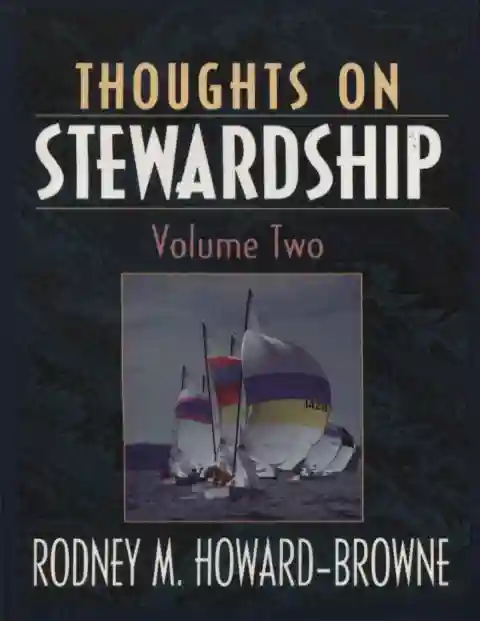
"Thoughts On Stewardship" by Rodney Howard-Browne discusses the importance of stewardship in the Christian faith, highlighting the responsibility of believers to manage and use resources wisely to further God's kingdom. Howard-Browne emphasizes the significance of generosity, faithfulness, and accountability in stewardship, offering practical insights and biblical principles for effective stewardship practices.
John Alexander Dowie
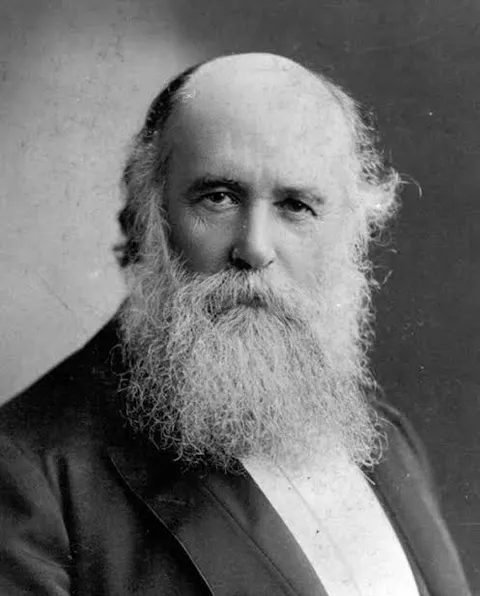 By John Alexander Dowie (1847 – 1907)
I sat in my study in the parsonage of the Congregational Church at Newtown, a suburb of the beautiful city of Sydney, Australia. My heart was very heavy, for I had visited the sick and dying beds of more than thirty of my flock, and I had cast the dust to its kindred dust into more than forty graves within a few weeks. Where, oh where, was He Who used to heal His suffering children? No prayer for healing seemed to reach His ear, and yet I knew His hand had not been shortened. Still it did not save from death even those for whom there was so much in life to live for God and others. Strong men, fathers, good citizens, and more than all, true Christians sickened with a putrid fever, suffered nameless agonies, passed into delirium, sometimes with convulsions, and then died.
Oh, what aching voids were left in many a widowed or orphaned heart. There were many homes where, one by one, the little children, the youths and the maidens lay stricken, and after a hard struggle with the foul disease, they too, lay cold and dead. It seemed sometimes as if I could almost hear the triumphant mockery of evil ringing in my ear whilst I spoke to the bereaved ones the words of Christian hope and consolation. Disease, the foul offspring of its father, Satan, and its mother Sin, was defiling and destroying the earthly temples of God’s children and there was no deliverance.
There I sat with sorrow-bowed head for my afflicted people, until the bitter tears came to relieve my burning heart. Then I prayed for some message, and oh, how I longed to hear some words from Him Who wept and sorrowed for the suffering long ago, a Man of Sorrows and Sympathies. The words of the Holy Ghost inspired In Acts 10:38, stood before me all radiant with light, revealing Satan as the Defiler, and Christ as the Healer. My tears were wiped away, my heart strong, I saw the way of healing, and the door thereto was opened wide, so I said, “God help me now to preach the Word to all the dying around, and tell them how Satan still defiles, and Jesus still delivers, for He is just the same today.”
A loud ring and several raps at the outer door, a rush of feet, and there at my door stood two panting messengers who said, “Oh, come at once, Mary is dying; come and pray. “With just a feeling as a shepherd has who hears that his sheep are being torn from the fold by a cruel wolf, I rushed from my house, ran without my hat down the street, and entered the room of the dying maiden. There she lay groaning and grinding her clenched teeth in the agony of the conflict with the destroyer. The white froth, mingled with her blood, oozing from her pale and distorted mouth. I looked at her and then my anger burned. “Oh,” I thought, “for some sharp sword of heavenly temper keen to slay this cruel foe who is strangling that lovely maiden like an invisible serpent, tightening his deadly coils for a final victory.”
In a strange way, It came to pass; I found the sword I needed was in my hands, and in my hand I hold it still and never will I lay It down. The doctor, a good Christian man, was quietly walking up and down the room, sharing the mother’s pain and grief. Presently he stood at my side and said, “Sir, are not God’s ways mysterious?” Instantly the sword was flashed in my hand, the Spirit’s sword, the Word of God. “God’s way?!” I said, pointing to the scene of conflict, “How dare you call that God’s way of bringing His children home from earth to Heaven? No sir, that is the devil’s work and it is time we called on Him Who came to destroy the work of the devil, to slay that deadly foul destroyer, and to save this child. Can you pray, Doctor, can you pray the prayer of faith that saves the sick?” At once, offended at my words, my friend was changed, and saying,” You are too much excited, sir, it is best to say ‘God’s will be done,’” and he left the room.
Excited?! The word was quite inadequate for I was almost frenzied with divinely imparted anger and hatred of that foul destroyer, disease, which was doing Satan’s will. “It is not so,” I exclaimed, “no will of God sends such cruelty, and I shall never say ‘God’s will be done’ to Satan’s works, which God’s own Son came to destroy, and this is one of them.” Oh, how the Word of God was burning in my heart: “Jesus of Nazareth went about doing good, and healing all that were oppressed of the devil; for God was with Him.” And was not God with me? And was not Jesus there and all His promises true? I felt that it was even so, and turning to the mother I inquired,” Why did you send for me?” To which she answered, “Do pray, oh pray for her that God may raise her up.” So we prayed.
What did I say? It may be that I cannot recall the words without mistake, but words are in themselves of small importance. The prayer of faith may be a voiceless prayer, a simple heartfelt look of confidence into the face of Christ. At such moment, words are few, but they mean much, for God is looking at the heart. Still, I can remember much of that prayer unto this day, and asking God to aid, I will attempt to recall it. I cried, “Our Father, help! and Holy Spirit, teach me how to pray. Plead Thou for us, oh, Jesus, Savior, Healer, Friend, our Advocate with God the Father. Hear and heal, Eternal One! From all disease and death, deliver this sweet child of yours. I rest upon the Word. We claim the promise now. The Word is true, ‘I am the Lord that heals thee.’ Then heal her now. The Word is true, ‘I am the Lord, I change not.’ Unchanging God, then prove Yourself the healer now. The Word is true. ‘These signs shall follow them that believe in My Name, they shall lay hands on the sick, and they shall recover.’ And I believe and I lay hands in Jesus’ Name on her and claim this promise now. Your Word is true. ‘The prayer of faith shall save the sick. Trusting in You alone. I cry. Oh, save her now, for Jesus’ sake. Amen!”
Then, the maid lay in sleep so deep and sweet that the mother asked in a low whisper, “Is she dead?” “No,” I answered, in a whisper lower still. “Mary will live; the fever is gone. She is perfectly well and sleeping as an infant sleeps.” I was smoothing the long dark hair from her now peaceful brow, and feeling the steady pulsation of her heart and cool moist hands. I saw that Christ had heard, and that once more, as long ago in Peter’s house, “He touched her and the fever left her.” Turning to the nurse, I said, “Get me at once, please, a cup of cocoa and several slices of bread and butter.” Beside the sleeping maid we sat quietly and almost silently until the nurse returned, and then I bent over her and snapping my fingers called, “Mary!”
Instantly she woke, smiled and said, “Oh, sir, when did you come? I have slept so long;” then stretching her arms out to meet her mother’s embrace, she said, “Mother, I feel so well.” “And hungry, too?” I asked, pouring some of the cocoa in a saucer and offering it to her when cooled by my breath. “Yes, hungry too,” she answered with a little laugh, and drank and ate again, and yet again until all was gone. In a few minutes, she fell asleep, breathing easily and softly. Quietly thanking God. We left her bed and went to the next room where her brother and sister also lay sick of the same fever. With these two, we prayed and they were healed too. The following day all three were well and in a week or so they brought me a little letter and a gift of gold, two sleeve links with my monogram, which I wore for many years. As I went away from the home where Christ as the Healer had been victorious, I could not but have somewhat in my heart of the triumphant song that rang through Heaven, and yet I was not a little amazed at my own strange doings, and still more at my discovery that He is just the same today.
Excerpt from the Sermons of John Alexander Dowie Champions of Faith by Gordon Lindsay
By John Alexander Dowie (1847 – 1907)
I sat in my study in the parsonage of the Congregational Church at Newtown, a suburb of the beautiful city of Sydney, Australia. My heart was very heavy, for I had visited the sick and dying beds of more than thirty of my flock, and I had cast the dust to its kindred dust into more than forty graves within a few weeks. Where, oh where, was He Who used to heal His suffering children? No prayer for healing seemed to reach His ear, and yet I knew His hand had not been shortened. Still it did not save from death even those for whom there was so much in life to live for God and others. Strong men, fathers, good citizens, and more than all, true Christians sickened with a putrid fever, suffered nameless agonies, passed into delirium, sometimes with convulsions, and then died.
Oh, what aching voids were left in many a widowed or orphaned heart. There were many homes where, one by one, the little children, the youths and the maidens lay stricken, and after a hard struggle with the foul disease, they too, lay cold and dead. It seemed sometimes as if I could almost hear the triumphant mockery of evil ringing in my ear whilst I spoke to the bereaved ones the words of Christian hope and consolation. Disease, the foul offspring of its father, Satan, and its mother Sin, was defiling and destroying the earthly temples of God’s children and there was no deliverance.
There I sat with sorrow-bowed head for my afflicted people, until the bitter tears came to relieve my burning heart. Then I prayed for some message, and oh, how I longed to hear some words from Him Who wept and sorrowed for the suffering long ago, a Man of Sorrows and Sympathies. The words of the Holy Ghost inspired In Acts 10:38, stood before me all radiant with light, revealing Satan as the Defiler, and Christ as the Healer. My tears were wiped away, my heart strong, I saw the way of healing, and the door thereto was opened wide, so I said, “God help me now to preach the Word to all the dying around, and tell them how Satan still defiles, and Jesus still delivers, for He is just the same today.”
A loud ring and several raps at the outer door, a rush of feet, and there at my door stood two panting messengers who said, “Oh, come at once, Mary is dying; come and pray. “With just a feeling as a shepherd has who hears that his sheep are being torn from the fold by a cruel wolf, I rushed from my house, ran without my hat down the street, and entered the room of the dying maiden. There she lay groaning and grinding her clenched teeth in the agony of the conflict with the destroyer. The white froth, mingled with her blood, oozing from her pale and distorted mouth. I looked at her and then my anger burned. “Oh,” I thought, “for some sharp sword of heavenly temper keen to slay this cruel foe who is strangling that lovely maiden like an invisible serpent, tightening his deadly coils for a final victory.”
In a strange way, It came to pass; I found the sword I needed was in my hands, and in my hand I hold it still and never will I lay It down. The doctor, a good Christian man, was quietly walking up and down the room, sharing the mother’s pain and grief. Presently he stood at my side and said, “Sir, are not God’s ways mysterious?” Instantly the sword was flashed in my hand, the Spirit’s sword, the Word of God. “God’s way?!” I said, pointing to the scene of conflict, “How dare you call that God’s way of bringing His children home from earth to Heaven? No sir, that is the devil’s work and it is time we called on Him Who came to destroy the work of the devil, to slay that deadly foul destroyer, and to save this child. Can you pray, Doctor, can you pray the prayer of faith that saves the sick?” At once, offended at my words, my friend was changed, and saying,” You are too much excited, sir, it is best to say ‘God’s will be done,’” and he left the room.
Excited?! The word was quite inadequate for I was almost frenzied with divinely imparted anger and hatred of that foul destroyer, disease, which was doing Satan’s will. “It is not so,” I exclaimed, “no will of God sends such cruelty, and I shall never say ‘God’s will be done’ to Satan’s works, which God’s own Son came to destroy, and this is one of them.” Oh, how the Word of God was burning in my heart: “Jesus of Nazareth went about doing good, and healing all that were oppressed of the devil; for God was with Him.” And was not God with me? And was not Jesus there and all His promises true? I felt that it was even so, and turning to the mother I inquired,” Why did you send for me?” To which she answered, “Do pray, oh pray for her that God may raise her up.” So we prayed.
What did I say? It may be that I cannot recall the words without mistake, but words are in themselves of small importance. The prayer of faith may be a voiceless prayer, a simple heartfelt look of confidence into the face of Christ. At such moment, words are few, but they mean much, for God is looking at the heart. Still, I can remember much of that prayer unto this day, and asking God to aid, I will attempt to recall it. I cried, “Our Father, help! and Holy Spirit, teach me how to pray. Plead Thou for us, oh, Jesus, Savior, Healer, Friend, our Advocate with God the Father. Hear and heal, Eternal One! From all disease and death, deliver this sweet child of yours. I rest upon the Word. We claim the promise now. The Word is true, ‘I am the Lord that heals thee.’ Then heal her now. The Word is true, ‘I am the Lord, I change not.’ Unchanging God, then prove Yourself the healer now. The Word is true. ‘These signs shall follow them that believe in My Name, they shall lay hands on the sick, and they shall recover.’ And I believe and I lay hands in Jesus’ Name on her and claim this promise now. Your Word is true. ‘The prayer of faith shall save the sick. Trusting in You alone. I cry. Oh, save her now, for Jesus’ sake. Amen!”
Then, the maid lay in sleep so deep and sweet that the mother asked in a low whisper, “Is she dead?” “No,” I answered, in a whisper lower still. “Mary will live; the fever is gone. She is perfectly well and sleeping as an infant sleeps.” I was smoothing the long dark hair from her now peaceful brow, and feeling the steady pulsation of her heart and cool moist hands. I saw that Christ had heard, and that once more, as long ago in Peter’s house, “He touched her and the fever left her.” Turning to the nurse, I said, “Get me at once, please, a cup of cocoa and several slices of bread and butter.” Beside the sleeping maid we sat quietly and almost silently until the nurse returned, and then I bent over her and snapping my fingers called, “Mary!”
Instantly she woke, smiled and said, “Oh, sir, when did you come? I have slept so long;” then stretching her arms out to meet her mother’s embrace, she said, “Mother, I feel so well.” “And hungry, too?” I asked, pouring some of the cocoa in a saucer and offering it to her when cooled by my breath. “Yes, hungry too,” she answered with a little laugh, and drank and ate again, and yet again until all was gone. In a few minutes, she fell asleep, breathing easily and softly. Quietly thanking God. We left her bed and went to the next room where her brother and sister also lay sick of the same fever. With these two, we prayed and they were healed too. The following day all three were well and in a week or so they brought me a little letter and a gift of gold, two sleeve links with my monogram, which I wore for many years. As I went away from the home where Christ as the Healer had been victorious, I could not but have somewhat in my heart of the triumphant song that rang through Heaven, and yet I was not a little amazed at my own strange doings, and still more at my discovery that He is just the same today.
Excerpt from the Sermons of John Alexander Dowie Champions of Faith by Gordon Lindsay
my times are in your hand - learning to trust the speed of god
Did you know your head ages faster than your feet? Scientists have confirmed this, proving again that Albert Einstein was spot-on in his theories of relativity: the speed of time is relative to a particular frame of reference. For us terrestrials, that frame of reference is earth’s gravitational force. The higher up from the earth something is, the weaker the gravitational pull and the faster time moves. An implication of this is that we frequently put our trust in a frame of reference on time different from the one we experience. For instance, the Global Positioning System (GPS) we rely on to accurately and safely guide us as we pilot our cars, ships, planes, and spaceships only works because it’s programmed, based on Einstein’s theories of relativity, to compensate for the distance between earth and space. Without those formulas, our computers and smartphones would soon get disastrously out of sync with the GPS satellites, which orbit in a different time. Stick with me; I am going somewhere with this. How we experience time depends on our frame of reference. And our particular frame of reference is not always the one we should trust. In fact, sometimes it’s critically important that we trust another framing more than our own. One Day with the Lord For Christians, this concept is nothing new. Over three millennia ago, Moses wrote, A thousand years in your sight are but as yesterday when it is past, or as a watch in the night. (Psalm 90:4) And some two millennia ago, Peter wrote, Do not overlook this one fact, beloved, that with the Lord one day is as a thousand years, and a thousand years as one day. (2 Peter 3:8) In other words, time in God’s eyes moves at different speeds from time in our ours. And in the life of faith, it’s critically important that we learn to rely on God’s timing more than our own — to learn to trust the speed of God. How Long, O Lord? Learning to trust God’s timing is not easy, to say the least. This is partly due to our sin and unbelief. But it’s also because trusting a frame of reference different from ours is, by definition, counterintuitive. Since we can’t calculate God’s time, his timing often doesn’t make sense to us. That’s why after Peter described one God-day as being like a thousand years for us, he went on to say, “The Lord is not slow . . . as some count slowness” (2 Peter 3:9). The “some” he referred to were “scoffers” who mocked Christians’ hope in the return of Christ (2 Peter 3:3–4). But the truth is that all of us fit into the “some” category at times. I don’t mean as scoffers, but as children of God painfully perplexed by our heavenly Father’s apparent slowness. We cry out, “How long, O Lord?” (Psalm 13:1), wondering when he will finally fulfill some promise to which we’re clinging. So, Peter exhorts us, the “beloved” of God, not to “overlook” the fact that God-time is not man-time; therefore, God “is not slow” as man counts slowness (2 Peter 3:8–9) — as I sometimes count slowness. Indeed, he is not. God Is Not Slow Someone who has created such a thing as light speed, and who knows what’s happening in every part of a universe spanning some 93 billion light-years across, is clearly not slow. “It’s critically important that we learn to rely on God’s timing more than our own.” It’s also clear, however, that such a being as God operates on a very different timeline than we do — if timeline is even the right word. For God is not constrained by time. He is the Father of time (Genesis 1:1; Colossians 1:16). He is “the Ancient of Days” (Daniel 7:9), existing “from everlasting to everlasting” (Psalm 90:2). God is not in time ; time is in God (Acts 17:28; Colossians 1:17). The “thousand years” of Psalm 90:4 and 2 Peter 3:8 is just a metaphor, using a timeframe we can somewhat comprehend to communicate a reality we can’t. So, when the speed of God seems slow to us, or when his timing doesn’t make sense, we must “not overlook this one fact”: God-time is different from man-time. God-time is relative to his purposes, which is his frame of reference. And God, according to his wise purposes, makes everything beautiful in its time — the time he purposefully chooses for it. Time for Everything Everything beautiful in its time . I get that from Ecclesiastes 3:11: [God] has made everything beautiful in its time. Also, he has put eternity into man’s heart, yet so that he cannot find out what God has done from the beginning to the end. This verse captures like no other both the mysterious nature of our experience of time, and the pointers God has placed within our frame of reference to help us trust the wisdom of his timing. In designing us with eternity in our hearts, the “eternal God” made us to know him (Deuteronomy 33:27). But in limiting the scope of our perspective and comprehension, he also made us to fundamentally trust him and not ourselves (Proverbs 3:5–6). This is how he means for us to know him: I am God, and there is no other; I am God, and there is none like me, declaring the end from the beginning and from ancient times things not yet done, saying, “My counsel shall stand, and I will accomplish all my purpose.” (Isaiah 46:9–10) He is “the everlasting God” (Isaiah 40:28), “who works all things,” including all time everywhere, “according to the counsel of his will” (Ephesians 1:11). One clear way he reveals the wisdom of his purposes is how he has created, in our frame of reference, “a time for every matter under heaven” (Ecclesiastes 3:1): a time to be born, and a time to die; a time to plant, and a time to pluck up what is planted; a time to kill, and a time to heal; a time to break down, and a time to build up; a time to weep, and a time to laugh; a time to mourn, and a time to dance. (Ecclesiastes 3:2–4) God “made everything beautiful in its time.” The Hebrew word translated “beautiful” means appropriate , fitting , right . God’s “invisible attributes” can be “clearly perceived” in the created order we observe and experience (Romans 1:20). They reveal the wisdom of his purposes — a wisdom far beyond ours. And God intends them to teach us that his “beautiful” timing can be trusted, even when we don’t understand it. In the Fullness of Time God did not merely leave us to deduce his character and wisdom from nature. For “when the fullness of time had come, God sent forth his Son” (Galatians 4:4). In Jesus, the Creator of all stepped into terrestrial time, into our frame of reference (John 1:2). In fully human form, he “dwelt among us,” directly revealing the divine attributes with a “glory as of the only Son from the Father, full of grace and truth” (John 1:14). “Time in God’s eyes moves at different speeds than time in our ours.” While here, he performed many signs and wonders and proclaimed, “The time is fulfilled, and the kingdom of God is at hand; repent and believe in the gospel” (Mark 1:14–15). As he did so, he displayed the marvelous wisdom of the timing of God, often in ways that surprised and confused his followers (John 4:1–42; 11:1–44). Then, when his time had come (John 12:23), Jesus obeyed his Father to the point of death on a cross, “offer[ing] for all time a single sacrifice for sins.” And then he was raised from the dead and “sat down at the right hand of God, waiting from that time until his enemies should be made a footstool for his feet” (Hebrews 10:12–14). As his followers, we also wait. We wait for the Father to “send the Christ appointed for [us], Jesus, whom heaven must receive until the time for restoring all the things about which God spoke by the mouth of his holy prophets long ago” (Acts 3:20–21). Trust the Speed of God As we wait, two thousand years later (or two God-days), we help each other remember, The Lord is not slow to fulfill his promise as some count slowness, but is patient toward [us], not wishing that any should perish, but that all should reach repentance. (2 Peter 3:9) Yes, we must frequently help each other remember: God-time moves at different speeds than ours. God works all things, at all times, in all places, in all dimensions, after the counsel of his will to accomplish all his purpose. God has a purposeful time for everything, and he makes everything beautiful in its time. However God chooses to use our times, it’s critically important that we learn to trust his timing over the relative and unreliable earthbound perspective that shapes our expectations. Our times, like all times, are in God’s hand (Psalm 31:15). This is what it means to live by faith in relation to time. In choosing to trust the speed of God, we humble ourselves under his mighty, time-holding hand. According to 1 Peter 5:6–7, the amazing reward of choosing to embrace such joyful, peaceful, childlike trust in God is that he will exalt us at the proper time.