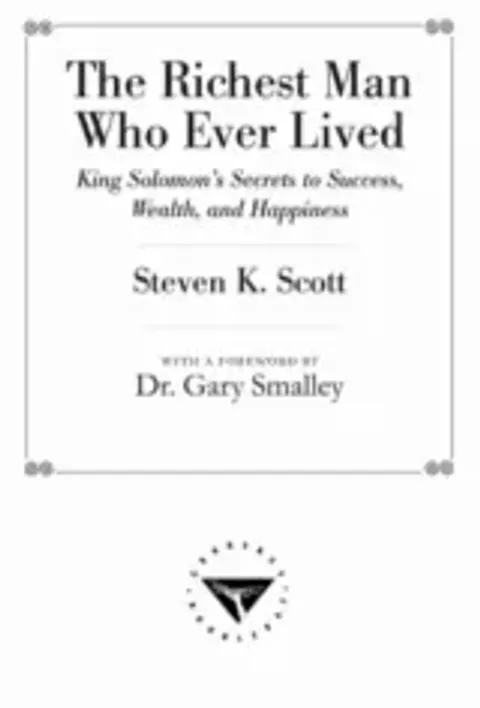

The Richest Man Who Ever Lived Order Printed Copy
- Author: Steven K. Scott
- Size: 2.17MB | 234 pages
- |
Others like the richest man who ever lived Features >>
Secrets Of The Richest Man Who Ever Lived
The Richest Man In Babylon
Are Tithes And Offerings The Same
Your Money Or Your Life: 9 Steps To Transforming Your Relationship With Money And Achieving Financial Independence
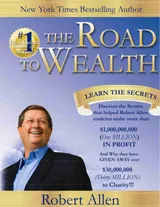
The Road To Wealth

Financial Breakthrough
The Parable Of Dollars
God's Banking System
From Rats To Riches
About the Book
"The Richest Man Who Ever Lived" by Steven K. Scott is a book that examines the wisdom and financial practices of King Solomon from the Bible. The author distills Solomon's teachings on wealth and success into practical principles that readers can apply in their own lives to achieve prosperity and fulfillment. Through exploring Solomon's story and insights, Scott provides a guide for cultivating financial wisdom and achieving true wealth.
Lecrae Moore
Lecrae Devaughn Moore, or simply Lecrae, is an American Christian rapper, songwriter, and record producer who performs both as a solo artist and as the leader of a group named ‘116 Clique’. He had a troubled beginning in life but all that changed after he found his faith at 19. Heavily influenced by 2Pac Shakur, and motivated by his new found faith, he ventured into a musical career. He and his friend Ben Washer set up their own independent record label ‘Reach Records’ and through it, he released his debut album ‘Real Talk’ in 2004. In the following years, he brought out six more studio albums, three mix tapes, and two EPs as a solo artist and three studio albums, one remix album, and one EP with his group. He has received six ‘GMA Dove Awards’, two Grammys, two ‘BET Awards’ and more. Lecrae is very active in the community and in 2005, he established ‘ReachLife Ministries’, the mission of which was to “bridge the gap between biblical truth and the urban context”. He is a vocal supporter of the preservation of responsibility and believes that fatherhood should be considered as a value to be installed among men in the United States. He has authored several op-ed articles on race relations in the modern-day America which were published by ‘Billboard’.
Childhood & Early Life
Lecrae Devaughn Moore was born on October 9, 1979, in Houston, Texas, USA. His father had always been absent from his life and later became a drug addict. He was raised by his poor but hardworking mother and grandmother. He attended services with them at their local church but the initial response to religion was indifferent at best. Growing up, he lived in San Diego, Denver, and Dallas.
He suffered sexual molestation at the hands of a female baby sitter when he was eight, and according to Lecrae, it left a long-term negative impact on his views on sexuality. In a life full of abuse and violence, hip hop provided him with a refuge.
Besides 2Pac who he admired for his rapping skills, he also looked up to his uncle who introduced him to a life of crime. He began doing drugs at 16 and soon started dealing as well. He kept a Bible with him that his grandmother had given him as a good luck charm.
The turning point in his life came when he was arrested for drug possession. The officer let him go upon Lecrae’s promising that he would read and follow the Bible. He thus started visiting the church again. Upon an invitation from a friend, he also started attending Bible studies.
He was once involved in an accident where he wrecked his car but he himself came out unscathed. This incident further strengthened his belief in Christ and he devoted his life fully to his faith. He returned to his college, the ‘University of North Texas’ and volunteered and sang at a juvenile detention centre.
Career
Six years after his conversion, Lecrae Moore released the album ‘Real Talk’ (2004) through ‘Reach Records’, a label he had founded with his friend Ben Washer. It reached #29 spot on the ‘Billboard Gospel Album’ chart after being re-released in 2005 by ‘Cross Movement Records’.
In 2005, he formed ‘116 Clique’ with other artists who had signed with ‘Reach Records’. The group owes its name to the Bible Verse ‘Romans 1:16’. They debuted with ‘The Compilation Album’ in the same year. They have since released three more albums, ‘The Compilation Album: Chopped & Screwed’ (remix, 2006), ‘13 Letters’ (2007), and ‘Man Up’ (2011), and one EP, ‘Amped’ (2007).
He was nominated for a ‘Stellar Award’ for the ‘Rap/Hip-Hop/Gospel CD of the Year’ for his second solo album ‘After the Music Stops’ (2006). In 2008, he put out his third studio album ‘Rebel’.
In his fourth studio album, ‘Rehab’ (2010), Lecrae talks about freedom from inhibiting addictions and habits. Both Lecrae and his album received accolades in the 2010 ‘Rapzilla.com staff picks’, being hailed as the ‘Artist of the Year’ and the ‘Album of the Year’, respectively.
His fifth studio album, ‘Rehab: The Overdose’ (2011) was a direct follow-up to ‘Rehab’, both being highly conceptual works. While ‘Rehab’ was about the victory over addiction, ‘Rehab: The Overdose’ focused on attaining "grace, love, peace and hope" in Jesus. He won his first two Doves because of this album, one for the ‘Rap/Hip Hop Album of the Year’ and the other for the ‘Rap/Hip Hop Recorded Song of the Year’ for the track, ‘Hallelujah’.
’Gravity’, released on September 4, 2012, was his sixth studio album and had 15 songs with a total runtime of 57 minutes. It peaked on the ‘Rap Albums’, ‘Christian Albums’, ‘Gospel Albums’, and ‘Independent Albums’ charts.
Lecrae released his first mixtape ‘Church Clothes’ on May 10, 2012, through digital download for free. It was followed by ‘Church Clothes 2’ (November 7, 2013), and ‘Church Clothes 3’ (January 15, 2016). He has also released two Extended Plays till date, the EP version of ‘Church Clothes’, and ‘Gravity: The Remix EP’, both released in 2012.
He has collaborated with the likes of Trip Lee, Tedashii, Canon, Mali Music, and Ty Dolla Sign. ‘Columbia Records’ signed him in May 2016, in a contract between them and his label. His most recent work, a track named ‘Hammer Time’, which is a collaborative effort with 1k Phew, was released on June 23, 2017.
On May 3, 2016, he published his memoir titled ‘Unashamed’ through ‘Broadman & Holman Publishers’. It debuted at #19 spot on the ‘New York Times Best Sellers’ list.
Philanthropic Works
In 2011, Lecrae, through ‘116 Clique’ and the ‘ReachLife Ministries’, instigated the campaign ‘Man Up’, focused on providing guidance to young urban males on fatherhood and Biblical manhood. In March 2015, ReachLife was deactivated and ‘116 Clique’ shifted its attention to contribute to ‘Peace Preparatory Academy’, a Christian school in Atlanta.
In May 2013, he worked alongside several other celebrities on a media initiative named ‘This is Fatherhood’. Jay Z, Barack Obama, Joshua DuBois, Lecrae himself, and others have appeared in the initiative’s promotional public service announcement videos.
Major Works
In a career marked by successful artistic ventures and awards, Lecrae’s greatest musical achievement is unarguably his seventh and the latest studio album ‘Anomaly’, released on September 9, 2014. It was the first album in history to debut at #1 on both ‘Billboard 200’ and ‘Top Gospel Albums’ charts. It was also certified Gold by the RIAA.
Awards & Achievements
Lecrae Moore received a Grammy in 2013 for the ‘Best Gospel Album’ for his sixth studio album ‘Gravity’. He won his second Grammy in 2015 for the ‘Best Contemporary Christian Music Performance/Song’ for the track ‘Messengers’ which also featured the Christian pop band ‘For King & Country’.
He was named the best gospel artist at the ‘2015 BET Awards’. In 2017, he was the recipient of the ‘BET Best Gospel/ Inspirational Award’ for the song ‘Can’t Stop Me Now (Destination)’.
On March 14, 2016, he was conferred with an honorary doctorate from ‘Canada Christian College’.
Personal Life & Legacy
Lecrae Moore met his wife Darragh at a Bible study when they were both teenagers. They have three children together, two sons and a daughter. The family resides in Atlanta, Georgia.
In 2002, he was informed by his then girlfriend that she was pregnant with his child. The couple had an abortion, a decision which he has regretted since. The incident was the subject of the song ‘Good, Bad, Ugly’ from ‘Anomaly’.
Trivia
Lecrae portrayed the character Dr. Darnall Malmquist in the 2014 independent film ‘Believe Me’.
Souls Are Our Reward
Run the race. Fight the good fight. Finish strong. Obtain the prize. Many of the familiar catchphrases for Christian faithfulness and perseverance come from a couple memorable verses: Do you not know that in a race all the runners run, but only one receives the prize? So run that you may obtain it. Every athlete exercises self-control in all things. They do it to receive a perishable wreath, but we an imperishable. (1 Corinthians 9:24–25) When our faith begins to falter, or our spiritual disciplines wane, or our joy fades to a dim flicker, or our love grows cold, we need to be reminded to run. Even when it hurts, even when we want to give up, even when we’d rather do anything else. Any race with Jesus will be hard (Luke 9:23). Faith, hope, love, and joy may come freely by grace, but that does not mean they are always easy. The apostle Paul, knowing the costs and rigors of following Christ, reaches for this kind of rugged and strenuous imagery again and again (Philippians 3:12–14; 2 Timothy 4:7–8). What might surprise us — even those of us who have been running with Christ for decades now — is what race Paul really had in mind, at least in 1 Corinthians 9:24. When he held out that wreath of all wreaths, he had more in mind than our clinging to faith and persisting in private prayer. Run to Win The verses above come immediately after another familiar passage, which ends, I have become all things to all people, that by all means I might save some. I do it all for the sake of the gospel, that I may share with them in its blessings. Do you not know that in a race all the runners run, but only one receives the prize? So run that you may obtain it. (1 Corinthians 9:22–24) The race Paul was running (and calling us to run) was not merely about guarding the faith in our own hearts, but about pursuing that faith and joy in others. The race may look (very) different for us than it did for an unmarried apostle, but the race is still our race. Paul was running to win the lost, despite how much effort it required and how much it cost him. He was talking about aggressive mission, not merely secret devotion. And that race — becoming all things to all people that we might save some — can be even more demanding, confusing, and discouraging than nurturing our own relationship with God. Many more give up trying to win the lost than give up going to church or reading the Bible. “Winning souls fills and waters the soul like nothing else.” Paul knew that winning the lost often feels like the back half of a marathon in the heat of August. So, he reminded the church to keep running — not to lose heart or slow down, but to press through to the end. Keep taking risks and making sacrifices to share, keep enduring the inevitable rejection and hostility, and, above all, keep praying for the lost. Keep running. Four Reasons to Run Well The apostle knew how much resistance we face in evangelism. Remember that he was hunted by murderers, stoned by crowds, beaten with rods, and almost flogged to death for trying to win people to Jesus. More than almost anyone, he knew how many incentives there were not to go and make disciples. But he also knew there were even more incentives to choose faithfulness and embrace suffering along the dangerous roads of soul-winning. He shares at least four of those incentives right here in 1 Corinthians 9. NEW JOY Perhaps nothing drove the soul-winning apostle more than the thought of one more sinner, even just one, being brought from the horrors of death and judgment to the heights of life and joy in Christ (2 Corinthians 1:24). “I have become all things to all people, that by all means I might save some” (1 Corinthians 9:22). Some. Notice how modest he (even he!) is about his goals in evangelism. And yet notice how driven he is: all things to all people by all means. The threefold all expresses the precious worth of the some, the unparalleled reward of seeing someone finally stumble upon their Treasure hidden in a field (Matthew 13:44). Winning souls fills and waters the soul like nothing else. Jesus himself says, “I tell you, there is joy before the angels of God over one sinner who repents” (Luke 15:10). If even one conversion sets heaven afire with joy, should it not thrill and motivate us? SHARED JOY The joy of seeing someone saved, however, is heightened further by the joy of enjoying Jesus with them (2 Timothy 1:4). “I do it all for the sake of the gospel,” Paul continues, “that I may share with them in its blessings” (1 Corinthians 9:23; Philippians 1:25). This incentive is wired into the heart of God himself — Father, Son, and Holy Spirit forever loving, sharing, enjoying, creating, saving together. It’s wired into the creation, which waits to share in “the freedom of the glory” waiting for us (Romans 8:21). And it’s wired into any real joy in us, because real joy is never content just to have, but must give and share. As Jesus says, “It is more blessed to give than to receive” (Acts 20:35). Has anyone modeled the ecstasy of shared joy more than the church in Macedonia? “In a severe test of affliction, their abundance of joy and their extreme poverty have overflowed in a wealth of generosity on their part” (2 Corinthians 8:2). What does abundant joy look like, even in extreme poverty? It looks like sharing. IMPERISHABLE JOY The clearest incentive to run well here, though, is the imperishable wreath waiting at the finish line. “Every athlete exercises self-control in all things. They do it to receive a perishable wreath, but we an imperishable” (1 Corinthians 9:25). So, what is this wreath? While Paul does not mention wreaths anywhere else in his letters, he does tell us more about the prize he covets. “What is our hope or joy or crown of boasting before our Lord Jesus at his coming?” he asks the Thessalonians. “Is it not you? For you are our glory and joy” (1 Thessalonians 2:19–20). And to the church at Philippi: “My brothers, whom I love and long for, my joy and crown, stand firm thus in the Lord, my beloved” (Philippians 4:1). His crown, his prize, his wreath on the last day will not be something he owns or wears; it will be the lives he saved, the joy he shared, the souls he won. And that wreath, unlike any wages or reward we might receive on earth, will live and grow and bloom long into eternity. How many of us spend our best time and effort, year after year, pursuing wreaths that perish, while failing to run for that which lasts forever? ASSURED JOY The last incentive, unlike the others, comes as a warning: “I do not run aimlessly; I do not box as one beating the air. But I discipline my body and keep it under control, lest after preaching to others I myself should be disqualified” (1 Corinthians 9:26–27). Along with the stunning rewards — new joy, shared joy, imperishable joy — fear also inspired Paul to love and pursue the lost. What will happen to me if I fail to prove faithful? He wanted the depth of assurance that comes through faithfully fulfilling his mission. The apostle knew he, even he, would be disqualified if he disobeyed what Jesus had called him to do — if he gave up running. And he knew men, even in ministry, who had been disqualified. He describes such men twice, with one sobering thread between them. He warns, People will be lovers of self, lovers of money, proud, arrogant, abusive, disobedient to their parents, ungrateful, unholy, heartless, unappeasable, slanderous, without self-control, brutal, not loving good, treacherous, reckless, swollen with conceit, lovers of pleasure rather than lovers of God, having the appearance of godliness, but denying its power. . . . These men also oppose the truth, men corrupted in mind and disqualified regarding the faith. (2 Timothy 3:2–5, 8) What’s startling (and frightening) about these men is that they were lovers of self, lovers of money, proud, arrogant, and abusive, yet they still had the appearance of godliness. They looked faithful while secretly indulging sin at the expense of others. They looked like they were running well when they were really only running from God. “Many more give up trying to win the lost than give up going to church or reading the Bible.” Paul mentions similar men elsewhere, who are “insubordinate, empty talkers, and deceivers” (Titus 1:10). “They profess to know God,” he says, “but they deny him by their works. They are detestable, disobedient, unfit” — “disqualified” — “for any good work” (Titus 1:16). The tragic thread between the two passages is that some profess to know Jesus, and even learn to act like Christians, and yet fail to ever truly run — to truly repent, believe, and treasure Jesus, and then make him known to others. And if we live like them, neglecting or ignoring what Christ demands of us, we too will be disqualified. “So,” Paul says, “I do not run aimlessly; I do not box as one beating the air. But I discipline my body and keep it under control” (1 Corinthians 9:26–27). He did everything he could to avoid their awful fate. Fear was not his sole motivation, or even his greatest motivation, but he feared the horrible cost of unfaithfulness — of skipping the race and abandoning the lost. So, he disciplined himself to run hard, and long, and well. And he called us to run with him. Article by Marshall Segal Staff writer, desiringGod.org