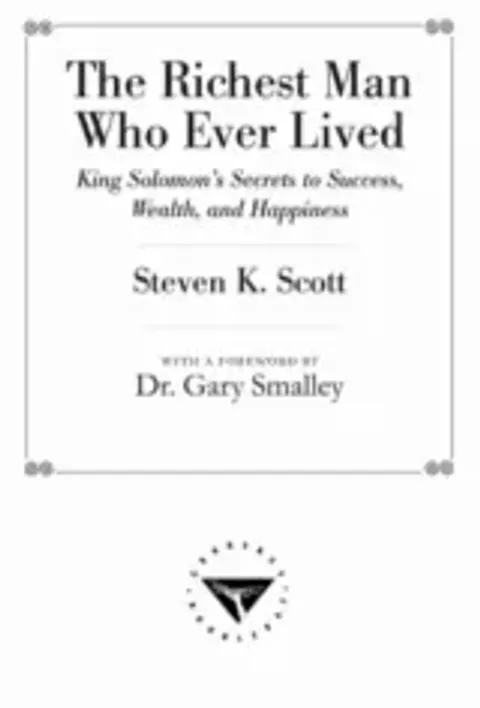

The Richest Man Who Ever Lived Order Printed Copy
- Author: Steven K. Scott
- Size: 2.17MB | 234 pages
- |
Others like the richest man who ever lived Features >>
Secrets Of The Richest Man Who Ever Lived
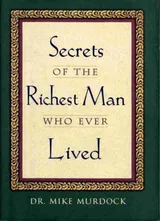
Secrets Of The Richest Man Who Ever Lived
The Richest Man In Babylon
Are Tithes And Offerings The Same
-1-160.webp)
Your Money Or Your Life: 9 Steps To Transforming Your Relationship With Money And Achieving Financial Independence
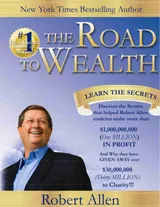
The Road To Wealth
Financial Breakthrough
The Parable Of Dollars
God's Banking System
From Rats To Riches
About the Book
"The Richest Man Who Ever Lived" by Steven K. Scott is a book that examines the wisdom and financial practices of King Solomon from the Bible. The author distills Solomon's teachings on wealth and success into practical principles that readers can apply in their own lives to achieve prosperity and fulfillment. Through exploring Solomon's story and insights, Scott provides a guide for cultivating financial wisdom and achieving true wealth.
Hannah More
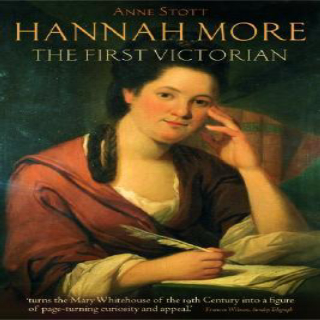 Beyond any doubt, Hannah More was the most influential female member of the Society for Effecting the Abolition of the African Slave Trade. She was educated at Bristol, an important slave-trading town, and began to publish her writing in the 1760s, while she was still a teenager. Her first play, The Inflexible Captive, was staged at Bath in 1775. Later in the 1770s, and for much of the 1780s, she spent time in London and made the acquaintance of many important political and society figures, including Samuel Johnson, Edmund Burke, and Elizabeth Montagu. Her play Percy was produced by David Garrick in 1777, and Fatal Falsehood was staged in 1779, but she came to regard the theatre as morally wrong, especially after the death of her mentors; Garrick and Johnson. She turned to religious writing, beginning with her Sacred Dramas in 1782. In 1784-5, she 'discovered' Ann Yearsley, the so-called 'poetical milkmaid of Bristol', whose poems More helped to publish, although the two later fell out.
In the 1780s, More widened her circle to include religious and philanthropic figures, including John Newton, Beilby Porteus and William Wilberforce. In the summer of 1786, she spent time with Sir Charles and Lady Margaret Middleton at the their home in Teston in Kent. Among their guests were the local vicar James Ramsay and a young Thomas Clarkson, both of whom were central to the early abolition campaign. More and Clarkson met again in Bristol in 1787, while he was on his fact-finding mission to the city, but they did not become close. However, in the same year More met Wilberforce, and their friendship was to become a deep and lasting one. More contributed much to the running of the newly-founded Abolition Society including, in February 1788, her publication of Slavery, a Poem which has been recognised as one of the more important slavery poems of the abolition period. Her relationship with members of the society, especially Wilberforce, was close. For example, she spent the summer of 1789 holidaying with Wilberforce in the Peak District - planning for the abolition campaign, at that time at its height, formed a great deal of their conversation.
By the mid-1790s, More had become closely involved with the 'Clapham Sect' of evangelical Christians, many of whom were involved in the abolition campaign. The group centred on Henry Thornton's home in Clapham and included Wilberforce, James Stephen, and Zachary Macaulay, among others. Throughout the 1790s, she wrote a number of religious tracts, known as the Cheap Repository Tracts, that eventually led to the formation of the Religious Tracts Society. Several of the Tracts oppose slavery and the slave trade, in particular, the poem The Sorrows of Yamba; or, The Negro Woman's Lamentation, which appeared in November 1795 and which was co-authored with Eaglesfield Smith. However, the tracts have also been noted for their encouragement of social quietism in an age of revolution. She continued to oppose slavery throughout her life, but at the time of the Abolition Bill of 1807, her health did not permit her to take as active a role in the movement as she had done in the late 1780s, although she maintained a correspondence with Wilberforce and others. In her later life, she dedicated much time to religious writing. Nevertheless, her most popular work was a novel, Coelebs in Search of a Wife, which appeared in two volumes in 1809 (and which ran to nine editions in 1809 alone). In the 1820s she grew gradually less well, and decreased - but did not entirely halt - the amount of writing she produced. On her death in 1833, she left more than £30,000 to charities and religious societies (equivalent to about £2,000,000 or $3,000,000 in 2004).
© Brycchan Carey 2004
Beyond any doubt, Hannah More was the most influential female member of the Society for Effecting the Abolition of the African Slave Trade. She was educated at Bristol, an important slave-trading town, and began to publish her writing in the 1760s, while she was still a teenager. Her first play, The Inflexible Captive, was staged at Bath in 1775. Later in the 1770s, and for much of the 1780s, she spent time in London and made the acquaintance of many important political and society figures, including Samuel Johnson, Edmund Burke, and Elizabeth Montagu. Her play Percy was produced by David Garrick in 1777, and Fatal Falsehood was staged in 1779, but she came to regard the theatre as morally wrong, especially after the death of her mentors; Garrick and Johnson. She turned to religious writing, beginning with her Sacred Dramas in 1782. In 1784-5, she 'discovered' Ann Yearsley, the so-called 'poetical milkmaid of Bristol', whose poems More helped to publish, although the two later fell out.
In the 1780s, More widened her circle to include religious and philanthropic figures, including John Newton, Beilby Porteus and William Wilberforce. In the summer of 1786, she spent time with Sir Charles and Lady Margaret Middleton at the their home in Teston in Kent. Among their guests were the local vicar James Ramsay and a young Thomas Clarkson, both of whom were central to the early abolition campaign. More and Clarkson met again in Bristol in 1787, while he was on his fact-finding mission to the city, but they did not become close. However, in the same year More met Wilberforce, and their friendship was to become a deep and lasting one. More contributed much to the running of the newly-founded Abolition Society including, in February 1788, her publication of Slavery, a Poem which has been recognised as one of the more important slavery poems of the abolition period. Her relationship with members of the society, especially Wilberforce, was close. For example, she spent the summer of 1789 holidaying with Wilberforce in the Peak District - planning for the abolition campaign, at that time at its height, formed a great deal of their conversation.
By the mid-1790s, More had become closely involved with the 'Clapham Sect' of evangelical Christians, many of whom were involved in the abolition campaign. The group centred on Henry Thornton's home in Clapham and included Wilberforce, James Stephen, and Zachary Macaulay, among others. Throughout the 1790s, she wrote a number of religious tracts, known as the Cheap Repository Tracts, that eventually led to the formation of the Religious Tracts Society. Several of the Tracts oppose slavery and the slave trade, in particular, the poem The Sorrows of Yamba; or, The Negro Woman's Lamentation, which appeared in November 1795 and which was co-authored with Eaglesfield Smith. However, the tracts have also been noted for their encouragement of social quietism in an age of revolution. She continued to oppose slavery throughout her life, but at the time of the Abolition Bill of 1807, her health did not permit her to take as active a role in the movement as she had done in the late 1780s, although she maintained a correspondence with Wilberforce and others. In her later life, she dedicated much time to religious writing. Nevertheless, her most popular work was a novel, Coelebs in Search of a Wife, which appeared in two volumes in 1809 (and which ran to nine editions in 1809 alone). In the 1820s she grew gradually less well, and decreased - but did not entirely halt - the amount of writing she produced. On her death in 1833, she left more than £30,000 to charities and religious societies (equivalent to about £2,000,000 or $3,000,000 in 2004).
© Brycchan Carey 2004
books don’t change people, paragraphs do
I have often said, “Books don’t change people, paragraphs do — sometimes sentences.” This may not be fair to books, since paragraphs find their way to us through books, and they often gain their peculiar power because of the context they have in the book. But the point remains: One sentence or paragraph may lodge itself so powerfully in our mind that its effect is enormous when all else is forgotten. It might be useful to illustrate this with two books by Jonathan Edwards that have influenced me most. Here are the key paragraphs and lessons from these books. Most of the rest of their content I have long forgotten (but who knows what remains in the subconscious and has profound impact?). 1. The End for Which God Created the World Outside the Bible this may be the most influential book I have ever read. Its influence was inseparable from its transposition into the syllabus on Unity of the Bible in a course by that name with Daniel Fuller in seminary. There are two massive truths that were settled for me. First: All that is ever spoken of in the Scripture as an ultimate end of God’s works is included in that one phrase, the glory of God. (Yale, Vol. 8, p. 526) The book was an avalanche of Scripture demonstrating one of the most influential convictions in my life: God does everything for his glory. Then came its life-changing corollary: In the creature’s knowing, esteeming, loving, rejoicing in, and praising God, the glory of God is both exhibited and acknowledged; his fullness is received and returned. Here is both an emanation and remanation . The refulgence shines upon and into the creature, and is reflected back to the luminary. The beams of glory come from God, and are something of God, and are refunded back again to their original. So that the whole is of God , and in God, and to God; and God is the beginning, middle and end in this affair. (Yale, Vol. 8, p. 531) To me this was simply beautiful. It was overwhelming as a picture of the greatness of God. The impact was heighted by the fact that the last line is a manifest echo of Romans 11:36: “From him and through him and to him are all things. To him be glory forever. Amen.” But the central, life-shaping impact was the sentence: “In the creature’s knowing, esteeming, loving, rejoicing in, and praising God, the glory of God is both exhibited and acknowledged.” And even more specifically: “In the creature’s rejoicing in God, the glory of God is exhibited.” God’s glory is exhibited in my being happy in him. Or as Edwards says earlier: “The happiness of the creature consists in rejoicing in God, by which also God is magnified and exalted” (Yale, Vol. 8, p. 442.) If not being supremely happy in God means robbing him of his glory, everything changes. That has been the unifying message of my life: God is most glorified in us when we are most satisfied in him. 2. The Freedom of the Will This was a breathtaking book. The scope and rigor of its argument made it one of the most demanding books I have ever read. David Wells calls it a watershed book: How you judge this argument decides where all waters of your life will flow. My judgment was: irresistibly compelling . Here’s the unforgettable summary sentence: God’s moral government over mankind, his treating them as moral agents, making them the objects of his commands, counsels, calls, warnings, expostulations, promises, threatenings, rewards and punishments, is not inconsistent with a determining disposal of all events, of every kind, throughout the universe, in his providence; either by positive efficiency, or permission. (Yale, Vol. 1, p. 431) God governs all events of every kind, including my acts of will, yet in such a way that I am still liable to rewards and punishments. His sovereignty and my accountability are compatible. The implications of this are vast. One of the most important insights for me in working this out was Edwards’s distinction between natural inability to do something and moral inability to do something. Here’s the key paragraph: We are said to be naturally unable to do a thing, when we can’t do it if we will, because what is most commonly called nature don’t allow of it, or because of some impeding defect or obstacle that is extrinsic to the will; either in the faculty of understanding, constitution of body, or external objects. Moral inability consists not in any of these things; but either in the want of inclination; or the strength of a contrary inclination; or the want of sufficient motives in view, to induce and excite the act of the will, or the strength of apparent motives to the contrary. (Yale, Vol. 1, p. 159) If we are naturally unable to do something, we are not accountable to do it (like trying to get out of a chair if we truly want to but are chained in it), but if we are morally unable to do something, we are still accountable to do it (like trying to keep the law of God, though we can’t because we hate it). This insight was crucial in understanding Romans 8:7 (“the mind of the flesh cannot submit to God”), and 1 Corinthians 2:14 (“the natural man cannot understand the things of the Spirit”). As I look back over my life and what I have been able to see and savor in God’s word, I give thanks for momentous sentences and paragraphs, and for the God-besotted people who wrote them. In this case, I thank God for Jonathan Edwards.