
Others like the search for significance Features >>



About the Book
In "The Search for Significance," Robert S. McGee explores the underlying issues of self-worth and significance that many people struggle with. Through personal stories, biblical teachings, and practical advice, McGee helps readers discover their true value and identity in God. The book offers a transformative perspective on overcoming feelings of insecurity, inadequacy, and worthlessness by finding true worth and significance in Christ.
John and Betty Stam
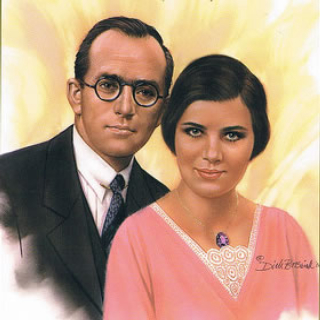 The year 1934. Americans John and Betty Stam were serving as missionaries in China. One morning Betty was bathing her three-month-old daughter Helen Priscilla Stam when Tsingteh's city magistrate appeared. Communist forces were near, he warned, and urged the Stams to flee.
So John Stam went out to investigate the situation for himself. He received conflicting reports. Taking no chances, he arranged for Betty and the baby to be escorted away to safety if need be. But before the Stams could make their break, the Communists were inside the city. By little-known paths, they had streamed over the mountains behind government troops. Now gun shots sounded in the streets as looting began. The enemy beat on the Stams' own gate.
A faithful cook and maid at the mission station had stayed behind. The Stams knelt with them in prayer. But the invaders were pounding at the door. John opened it and spoke courteously to the four leaders who entered, asking them if they were hungry. Betty brought them tea and cakes. The courtesy meant nothing. They demanded all the money the Stams had, and John handed it over. As the men bound him, he pleaded for the safety of his wife and child. The Communists left Betty and Helen behind as they led John off to their headquarters.
Before long, they reappeared, demanding mother and child. The maid and cook pleaded to be allowed to accompany Betty.
"No," barked the captors, and threatened to shoot.
"It is better for you to stay here," Betty whispered. "If anything happens to us, look after the baby."
[When we consecrate ourselves to God, we think we are making a great sacrifice, and doing lots for Him, when really we are only letting go some little, bitsie trinkets we have been grabbing, and when our hands are empty, He fills them full of His treasures. --Betty Stam]
Betty was led to her husband's side. Little Helen needed some things and John was allowed to return home under guard to fetch them. But everything had been stolen. That night John was allowed to write a letter to mission authorities. "My wife, baby and myself are today in the hands of the Communists in the city of Tsingteh. Their demand is twenty thousand dollars for our release. . . . We were too late. The Lord bless and guide you. As for us, may God be glorified, whether by life or by death."
Prisoners in the local jail were released to make room for the Stams. Frightened by rifle fire, the baby cried out. One of the Reds said, "Let's kill the baby. It is in our way." A bystander asked, "Why kill her? What harm has she done?"
"Are you a Christian?" shouted one of the guards.
The man said he was not; he was one of the prisoners just released.
"Will you die for this foreign baby?" they asked. As Betty hugged Helen to her chest, the man was hacked to pieces before her eyes.
Terror in the Streets
The next morning their captors led the Stams toward Miaosheo, twelve miles distant. John carried little Helen, but Betty, who was not physically strong, owing to a youthful bout with inflammatory rheumatitis was allowed to ride a horse part of the way. Terror reigned in the streets of Miaosheo. Under guard, the foreign family was hustled into the postmaster's shop.
"Where are you going?" asked the postmaster, who recognized them from their previous visits to his town. "We do not know where they are going, but we are going to heaven," answered John. He left a letter with the postmaster. "I tried to persuade them to let my wife and baby go back from Tsingteh with a letter to you, but they would not let her. . . ."
That night the three were held in the house of a wealthy man who had fled. They were guarded by soldiers. John was tied to a post all that cold night, but Betty was allowed enough freedom to tend the baby. As it turned out, she did more than that.
Execution
The next morning the young couple were led through town without the baby. Their hands were tightly bound, and they were stripped of their outer garments as if they were common criminals. John walked barefoot. He had given his socks to Betty. The soldiers jeered and called the town’s folk to come see the execution. The terrified people obeyed.
On the way to the execution, a medicine-seller, considered a lukewarm Christian at best, stepped from the crowd and pleaded for the lives of the two foreigners. The Reds angrily ordered him back. The man would not be stilled. His house was searched, a Bible and hymnbook found, and he, too was dragged away to die as a hated Christian.
John pleaded for the man’s life. The Red leader sharply ordered him to kneel. As John was speaking softly, the Red leader swung his sword through the missionary’s throat so that his head was severed from his body. Betty did not scream. She quivered and fell bound beside her husband’s body. As she knelt there, the same sword ended her life with a single blow.
Betty
Betty Scott was born in the United States but reared in China as the daughter of missionaries. She came to the United States and attended Wilson College in Pennsylvania. Betty prepared to follow in her parents’ footsteps and work in China or wherever else the Lord directed her.
But China it proved to be. At a prayer meeting for China, she met John Stam and a friendship developed that ripened into love. Painfully they recognized that marriage was not yet possible. “The China Inland Mission has appealed for men, single men, to work in sections where it would be impossible to take a woman until more settled work has commenced,” wrote John. He committed the matter to the Lord, whose work, he felt, must come before any human affection. At any rate, Betty would be leaving for China before him, to work in an entirely different region, and so they must be separated anyhow. As a matter of fact, John had not yet even been accepted by the China Inland Mission whereas Betty had. They parted after a long tender day, sharing their faith, picnicking, talking, and praying.
Betty sailed while John continued his studies. On July 1, 1932, John, too, was accepted for service in China. Now at least he could head toward the same continent as Betty. He sailed for Shanghai.
Meanwhile, Betty found her plans thwarted. A senior missionary had been captured by the Communists in the region where she was to have worked. The mission directors decided to keep her in a temporary station, and later ill-health brought her to Shanghai. Thus without any choice on her part, she was in Shanghai when John landed in China. Immediately they became engaged and a year later were married, long before they expected it. In October, 1934 Helen Priscilla was born to them. What would become of her now that her parents John and Betty were dead?
In the Hills
For two days, local Christians huddled in hiding in the hills around Miaosheo. Among them was a Chinese evangelist named Mr. Lo. Through informants, he learned that the Communists had captured two foreigners. At first he did not realize that these were John and Betty Stam, with whom he had worked, but as he received more details, he put two and two together. As soon as government troops entered the valley and it was safe to venture forth, Mr. Lo hurried to town. His questions met with silence. Everyone was fearful that spies might report anyone who said too much.
An old woman whispered to Pastor Lo that there was a baby left behind. She nodded in the direction of the house where John and Betty had been chained their last night on earth. Pastor Lo hurried to the site and found room after room trashed by the bandits. Then he heard a muffled cry. Tucked by her mother in a little sleeping bag, Helen was warm and alive, although hungry after her two day fast.
The kindly pastor took the child in his arms and carried her to his wife. With the help of a local Christian family, he wrapped the bodies that still lay upon the hillside and placed them into coffins. To the crowd that gathered he explained that the missionaries had only come to tell them how they might find forgiveness of sin in Christ. Leaving others to bury the dead, he hurried home. Somehow Helen had to be gotten to safety.
Pastor Lo's own son, a boy of four, was desperately ill -- semi-conscious after days of exposure. Pastor Lo had to find a way to carry the children a hundred miles through mountains infested by bandits and Communists. Brave men were found willing to help bear the children to safety, but there was no money to pay them for their efforts. Lo had been robbed of everything he had.
From Beyond the Grave
But from beyond the grave, Betty provided. Tucked in Helen's sleeping bag were a change of clothes and some diapers. Pinned between these articles of clothing were two five dollar bills. It made the difference.
Placing the children in rice baskets slung from the two ends of a bamboo pole, the group departed quietly, taking turns carrying the precious cargo over their shoulders. Mrs. Lo was able to find Chinese mothers along the way to nurse Helen. On foot, they came safely through their perils. Lo's own boy recovered consciousness suddenly and sat up, singing a hymn.
Eight days after the Stams fell into Communist hands, another missionary in a nearby city heard a rap at his door. He opened it and a Chinese woman, stained with travel, entered the house, bearing a bundle in her arms. "This is all we have left," she said brokenly.
The missionary took the bundle and turned back the blanket to uncover the sleeping face of Helen Priscilla Stam. Many kind hands had labored to preserve the infant girl, but none kinder than Betty who had spared no effort for her baby even as she herself faced degradation and death.
Kathleen White has written an excellent and very readable biography John and Betty Stam, available from Bethany House Publishers (1988). She reports that Betty's alma mater, Wilson College in Pennsylvania, took over baby Helen's support and covered the costs of her college education. She added: "Helen is living in this country (USA) with her husband and family but does not wish her identity and whereabouts to be made known."
Resources:
Huizenga, Lee S. John and Betty Stam; Martyrs. Zondervan, 1935.
Pollock, John. Victims of the Long March and Other Stories. Waco, Texas.: Word Publishing, 1970.
Taylor, Mrs. Howard. The Triumph of John and Betty Stam. China Inland Mission, 1935.
The year 1934. Americans John and Betty Stam were serving as missionaries in China. One morning Betty was bathing her three-month-old daughter Helen Priscilla Stam when Tsingteh's city magistrate appeared. Communist forces were near, he warned, and urged the Stams to flee.
So John Stam went out to investigate the situation for himself. He received conflicting reports. Taking no chances, he arranged for Betty and the baby to be escorted away to safety if need be. But before the Stams could make their break, the Communists were inside the city. By little-known paths, they had streamed over the mountains behind government troops. Now gun shots sounded in the streets as looting began. The enemy beat on the Stams' own gate.
A faithful cook and maid at the mission station had stayed behind. The Stams knelt with them in prayer. But the invaders were pounding at the door. John opened it and spoke courteously to the four leaders who entered, asking them if they were hungry. Betty brought them tea and cakes. The courtesy meant nothing. They demanded all the money the Stams had, and John handed it over. As the men bound him, he pleaded for the safety of his wife and child. The Communists left Betty and Helen behind as they led John off to their headquarters.
Before long, they reappeared, demanding mother and child. The maid and cook pleaded to be allowed to accompany Betty.
"No," barked the captors, and threatened to shoot.
"It is better for you to stay here," Betty whispered. "If anything happens to us, look after the baby."
[When we consecrate ourselves to God, we think we are making a great sacrifice, and doing lots for Him, when really we are only letting go some little, bitsie trinkets we have been grabbing, and when our hands are empty, He fills them full of His treasures. --Betty Stam]
Betty was led to her husband's side. Little Helen needed some things and John was allowed to return home under guard to fetch them. But everything had been stolen. That night John was allowed to write a letter to mission authorities. "My wife, baby and myself are today in the hands of the Communists in the city of Tsingteh. Their demand is twenty thousand dollars for our release. . . . We were too late. The Lord bless and guide you. As for us, may God be glorified, whether by life or by death."
Prisoners in the local jail were released to make room for the Stams. Frightened by rifle fire, the baby cried out. One of the Reds said, "Let's kill the baby. It is in our way." A bystander asked, "Why kill her? What harm has she done?"
"Are you a Christian?" shouted one of the guards.
The man said he was not; he was one of the prisoners just released.
"Will you die for this foreign baby?" they asked. As Betty hugged Helen to her chest, the man was hacked to pieces before her eyes.
Terror in the Streets
The next morning their captors led the Stams toward Miaosheo, twelve miles distant. John carried little Helen, but Betty, who was not physically strong, owing to a youthful bout with inflammatory rheumatitis was allowed to ride a horse part of the way. Terror reigned in the streets of Miaosheo. Under guard, the foreign family was hustled into the postmaster's shop.
"Where are you going?" asked the postmaster, who recognized them from their previous visits to his town. "We do not know where they are going, but we are going to heaven," answered John. He left a letter with the postmaster. "I tried to persuade them to let my wife and baby go back from Tsingteh with a letter to you, but they would not let her. . . ."
That night the three were held in the house of a wealthy man who had fled. They were guarded by soldiers. John was tied to a post all that cold night, but Betty was allowed enough freedom to tend the baby. As it turned out, she did more than that.
Execution
The next morning the young couple were led through town without the baby. Their hands were tightly bound, and they were stripped of their outer garments as if they were common criminals. John walked barefoot. He had given his socks to Betty. The soldiers jeered and called the town’s folk to come see the execution. The terrified people obeyed.
On the way to the execution, a medicine-seller, considered a lukewarm Christian at best, stepped from the crowd and pleaded for the lives of the two foreigners. The Reds angrily ordered him back. The man would not be stilled. His house was searched, a Bible and hymnbook found, and he, too was dragged away to die as a hated Christian.
John pleaded for the man’s life. The Red leader sharply ordered him to kneel. As John was speaking softly, the Red leader swung his sword through the missionary’s throat so that his head was severed from his body. Betty did not scream. She quivered and fell bound beside her husband’s body. As she knelt there, the same sword ended her life with a single blow.
Betty
Betty Scott was born in the United States but reared in China as the daughter of missionaries. She came to the United States and attended Wilson College in Pennsylvania. Betty prepared to follow in her parents’ footsteps and work in China or wherever else the Lord directed her.
But China it proved to be. At a prayer meeting for China, she met John Stam and a friendship developed that ripened into love. Painfully they recognized that marriage was not yet possible. “The China Inland Mission has appealed for men, single men, to work in sections where it would be impossible to take a woman until more settled work has commenced,” wrote John. He committed the matter to the Lord, whose work, he felt, must come before any human affection. At any rate, Betty would be leaving for China before him, to work in an entirely different region, and so they must be separated anyhow. As a matter of fact, John had not yet even been accepted by the China Inland Mission whereas Betty had. They parted after a long tender day, sharing their faith, picnicking, talking, and praying.
Betty sailed while John continued his studies. On July 1, 1932, John, too, was accepted for service in China. Now at least he could head toward the same continent as Betty. He sailed for Shanghai.
Meanwhile, Betty found her plans thwarted. A senior missionary had been captured by the Communists in the region where she was to have worked. The mission directors decided to keep her in a temporary station, and later ill-health brought her to Shanghai. Thus without any choice on her part, she was in Shanghai when John landed in China. Immediately they became engaged and a year later were married, long before they expected it. In October, 1934 Helen Priscilla was born to them. What would become of her now that her parents John and Betty were dead?
In the Hills
For two days, local Christians huddled in hiding in the hills around Miaosheo. Among them was a Chinese evangelist named Mr. Lo. Through informants, he learned that the Communists had captured two foreigners. At first he did not realize that these were John and Betty Stam, with whom he had worked, but as he received more details, he put two and two together. As soon as government troops entered the valley and it was safe to venture forth, Mr. Lo hurried to town. His questions met with silence. Everyone was fearful that spies might report anyone who said too much.
An old woman whispered to Pastor Lo that there was a baby left behind. She nodded in the direction of the house where John and Betty had been chained their last night on earth. Pastor Lo hurried to the site and found room after room trashed by the bandits. Then he heard a muffled cry. Tucked by her mother in a little sleeping bag, Helen was warm and alive, although hungry after her two day fast.
The kindly pastor took the child in his arms and carried her to his wife. With the help of a local Christian family, he wrapped the bodies that still lay upon the hillside and placed them into coffins. To the crowd that gathered he explained that the missionaries had only come to tell them how they might find forgiveness of sin in Christ. Leaving others to bury the dead, he hurried home. Somehow Helen had to be gotten to safety.
Pastor Lo's own son, a boy of four, was desperately ill -- semi-conscious after days of exposure. Pastor Lo had to find a way to carry the children a hundred miles through mountains infested by bandits and Communists. Brave men were found willing to help bear the children to safety, but there was no money to pay them for their efforts. Lo had been robbed of everything he had.
From Beyond the Grave
But from beyond the grave, Betty provided. Tucked in Helen's sleeping bag were a change of clothes and some diapers. Pinned between these articles of clothing were two five dollar bills. It made the difference.
Placing the children in rice baskets slung from the two ends of a bamboo pole, the group departed quietly, taking turns carrying the precious cargo over their shoulders. Mrs. Lo was able to find Chinese mothers along the way to nurse Helen. On foot, they came safely through their perils. Lo's own boy recovered consciousness suddenly and sat up, singing a hymn.
Eight days after the Stams fell into Communist hands, another missionary in a nearby city heard a rap at his door. He opened it and a Chinese woman, stained with travel, entered the house, bearing a bundle in her arms. "This is all we have left," she said brokenly.
The missionary took the bundle and turned back the blanket to uncover the sleeping face of Helen Priscilla Stam. Many kind hands had labored to preserve the infant girl, but none kinder than Betty who had spared no effort for her baby even as she herself faced degradation and death.
Kathleen White has written an excellent and very readable biography John and Betty Stam, available from Bethany House Publishers (1988). She reports that Betty's alma mater, Wilson College in Pennsylvania, took over baby Helen's support and covered the costs of her college education. She added: "Helen is living in this country (USA) with her husband and family but does not wish her identity and whereabouts to be made known."
Resources:
Huizenga, Lee S. John and Betty Stam; Martyrs. Zondervan, 1935.
Pollock, John. Victims of the Long March and Other Stories. Waco, Texas.: Word Publishing, 1970.
Taylor, Mrs. Howard. The Triumph of John and Betty Stam. China Inland Mission, 1935.
Fasting for Beginners
Chances are you are among the massive majority of Christians who rarely or never fast. It’s not because we haven’t read our Bibles or sat under faithful preaching or heard about the power of fasting, or even that we don’t genuinely want to do it. We just never actually get around to putting down the fork. Part of it may be that we live in a society in which food is so ubiquitous that we eat not only when we don’t need to, but sometimes even when we don’t want to. We eat to share a meal with others, to build or grow relationships (good reasons), or just as a distraction from responsibility. And of course, there are our own cravings and aches for comfort that keep us from the discomfort of fasting. Not So Fast Fasting is voluntarily going without food — or any other regularly enjoyed, good gift from God — for the sake of some spiritual purpose. It is markedly counter-cultural in our consumerist society, like abstaining from sex until marriage. If we are to learn the lost art of fasting and enjoy its fruit, it will not come with our ear to the ground of society, but with Bibles open. Then, the concern will not be whether we fast, but when. Jesus assumes his followers will fast, and even promises it will happen. He doesn’t say “if,” but “when you fast” (Matthew 6:16). And he doesn’t say his followers might fast, but “they will” (Matthew 9:15). “Fasting is markedly counter-cultural in our consumerist society, like abstaining from sex until marriage.” We fast in this life because we believe in the life to come. We don’t have to get it all here and now, because we have a promise that we will have it all in the coming age. We fast from what we can see and taste, because we have tasted and seen the goodness of the invisible and infinite God — and are desperately hungry for more of him. Radical, Temporary Measure Fasting is for this world, for stretching our hearts to get fresh air beyond the pain and trouble around us. And it is for the battle against the sin and weakness inside us. We express our discontent with our sinful selves and our longing for more of Christ. When Jesus returns, fasting will be done. It’s a temporary measure, for this life and age, to enrich our joy in Jesus and prepare our hearts for the next — for seeing him face to face. When he returns, he will not call a fast, but throw a feast; then all holy abstinence will have served its glorious purpose and be seen by all for the stunning gift it was. Until then, we will fast. How to Start Fasting Fasting is hard. It sounds much easier in concept than it proves to be in practice. It can be surprising how on-edge we feel when we miss a meal. Many an idealistic new fast-er has decided to miss a meal and only found our belly drove us to make up for it long before the next mealtime came. Fasting sounds so simple, and yet the world, our flesh, and the devil conspire to introduce all sorts of complications that keep it from happening. In view of helping you start down the slow path to good fasting, here are six simple pieces of advice. These suggestions might seem pedantic, but the hope is that such basic counsel can serve those who are new at fasting or have never seriously tried it. 1. Start small. Don’t go from no fasting to attempting a weeklong. Start with one meal; maybe fast one meal a week for several weeks. Then try two meals, and work your way up to a daylong fast. Perhaps eventually try a two-day juice fast. A juice fast means abstaining from all food and beverage, except for juice and water. Allowing yourself juice provides nutrients and sugar for the body to keep you operating, while also still feeling the effects from going without solid food. It’s not recommended that you abstain from water during a fast of any length. 2. Plan what you’ll do instead of eating. Fasting isn’t merely an act of self-deprivation, but a spiritual discipline for seeking more of God’s fullness. Which means we should have a plan for what positive pursuit to undertake in the time it normally takes to eat. We spend a good portion of our day with food in front of us. One significant part of fasting is the time it creates for prayer and meditation on God’s word or some act of love for others. Before diving headlong into a fast, craft a simple plan. Connect it to your purpose for the fast. Each fast should have a specific spiritual purpose. Identify what that is and design a focus to replace the time you would have spent eating. Without a purpose and plan, it’s not Christian fasting; it’s just going hungry. 3. Consider how it will affect others. Fasting is no license to be unloving. It would be sad to lack concern and care for others around us because of this expression of heightened focus on God. Love for God and for neighbor go together. Good fasting mingles horizontal concern with the vertical. If anything, others should even feel more loved and cared for when we’re fasting. So as you plan your fast, consider how it will affect others. If you have regular lunches with colleagues or dinners with family or roommates, assess how your abstaining will affect them, and let them know ahead of time, instead of just being a no-show, or springing it on them in the moment that you will not be eating. Also, consider this backdoor inspiration for fasting: If you make a daily or weekly practice of eating with a particular group of friends or family, and those plans are interrupted by someone’s travel or vacation or atypical circumstances, consider that as an opportunity to fast, rather than eating alone. 4. Try different kinds of fasting. The typical form of fasting is personal, private, and partial, but we find a variety of forms in the Bible: personal and communal, private and public, congregational and national, regular and occasional, absolute and partial. In particular, consider fasting together with your family, small group, or church. Do you share together in some special need for God’s wisdom and guidance? Is there an unusual difficulty in the church, or society, for which you need God’s intervention? Do you want to keep the second coming of Christ in view? Plead with special earnestness for God’s help by linking arms with other believers to fast together. 5. Fast from something other than food. Fasting from food is not necessarily for everyone. Some health conditions keep even the most devout from the traditional course. However, fasting is not limited to abstaining from food. As Martyn Lloyd-Jones said, “Fasting should really be made to include abstinence from anything which is legitimate in and of itself for the sake of some special spiritual purpose.” If the better part of wisdom for you, in your health condition, is not to go without food, consider fasting from television, computer, social media, or some other regular enjoyment that would bend your heart toward greater enjoyment of Jesus. Paul even talks about married couples fasting from sex “for a limited time, that you may devote yourselves to prayer” (1 Corinthians 7:5). 6. Don’t think of white elephants. “Without a purpose and plan, it’s not Christian fasting; it’s just going hungry.” When your empty stomach starts to growl and begins sending your brain every “feed me” signal it can, don’t be content to let your mind dwell on the fact that you haven’t eaten. If you make it through with an iron will that says no to your stomach, but doesn’t turn your mind’s eye elsewhere, it says more about your love for food than your love for God. Christian fasting turns its attention to Jesus or some great cause of his in the world. Christian fasting seeks to take the pains of hunger and transpose them into the key of some eternal anthem, whether it’s fighting against some sin, or pleading for someone’s salvation, or for the cause of the unborn, or longing for a greater taste of Jesus. Article by David Mathis Executive Editor, desiringGod.org