

Others like why you act the way you do Features >>

Who Will Cry When You Die

Feel The Fear And Do It Anyway

Goal Setting And Goal Getting

Successful Time Managememt For Dummies

The Secrets Of Ceos

Good To Great
-160.webp)
The Fifteen Percent (Overcoming Hardships And Achieving Lasting Success)

Empty Out The Negative

Ordering Your Private World

The Crossroads Of Should And Must
About the Book
"Why You Act the Way You Do" by Tim LaHaye explores the concept of temperament and how it influences our behavior, relationships, and overall personality. LaHaye identifies four main temperaments – choleric, melancholic, sanguine, and phlegmatic – and discusses how understanding and embracing our individual temperament can lead to personal growth and improved relationships with others. The book provides valuable insights and practical advice for anyone seeking to better understand themselves and those around them.
William Chalmers Burns
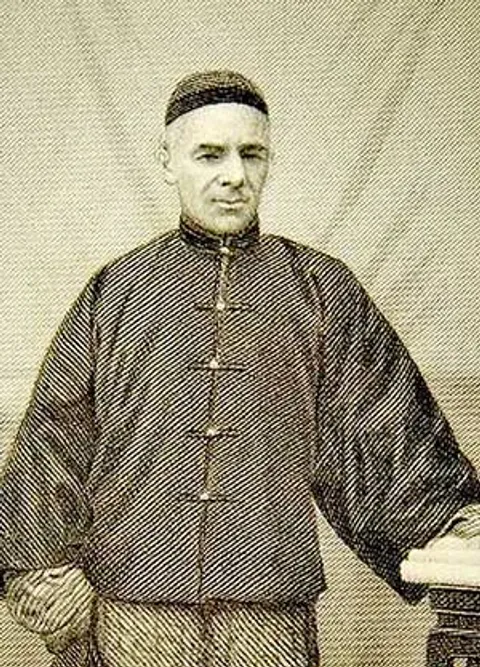 William Chalmers Burns was born in the Manse of Dun, in Angus, on April Ist, 1815. He was the third son of the Parish Church minister there. After leaving school, he went to Edinburgh to be apprenticed with an uncle to the legal profession. His eldest sister, a gay young lady, was converted to God, and became a bright witness for the Lord Jesus in 1831, and it was by means of her decided testimony that William was first awakened to a sense of his need of salvation, and led to put his trust in the Son of God, as his Redeemer and Saviour.
It was shortly after his conversion that he walked into the manse of Kilsyth, where the family then resided, having walked on foot the thirty-six miles from Edinburgh, to tell his mother and his sisters the glad news of his conversion, and to say that his desire now was to relinquish his study of law, and devote himself entirely to the preaching of the Gospel of God’s grace to his fellowmen.
And this he did heartily and with all his might, first in the neglected Parts of Scotland, and latterly among many heathen millions of the great Chinese Empire, then scarcely touched by the feet of God’s messengers of peace.
Mr. Burns’s name came into prominence in connection with a wonderful work of grace in Dundee, while he was preaching for Robert Murray M’Cheyne, then on a visit to Palestine, for the evangelization of the Jews. During Mr. Burns’s preaching in Dundee, a remarkable awakening took place; thousands were aroused to their condition in the sight of God, truly converted, and set on the heavenward way.
Remarkable scenes were witnessed in the old church of St. Peter’s, near to which M’Cheyne’s body now lies, awaiting the first resurrection. It was on the evening of a Lord’s Day in Kilsyth, after preaching to a crowded congregation, that Mr. Burns felt constrained to intimate to the people that he would preach to the people in the open air, before returning to Dundee the following day.
Deeply burdened with the souls of the people, he went into the village and invited the people, who thronged into the old church, until every seat and passage was filled. And the Lord helped His servant to preach straight to the people with great power, with the result that the whole congregation became melted under the message, many weeping aloud and crying to God for mercy. A glorious work of conversion followed.
Meetings for prayer and preaching of the Gospel continued in the churchyard, the market-place and elsewhere for weeks, while Mr. Burns returned to Dundee to resume his ministry. The work progressed in Dundee with increased interest, until the return of Mr. M’Cheyne, who greatly rejoiced in all that the Lord had done during his absence, through the ministry of His servant.
There was no jealousy, but the deepest gratitude, and these two true ministers of Christ rejoiced together over the Lord’s doings, which were indeed marvellous in their eyes.
From that time onward, until the Lord’s call came to go to China, Mr. Burns gave himself almost wholly to itinerant Gospel preaching, through Perthshire, up as far north as Aberdeen, preaching in barns, on market-places, and wherever the people could be gathered together to hear the Word. His message was plain, and to the point; thousands were awakened and many saved. But the adversary opposed. Time and again Mr. Burns was stoned, and bore the marks of these brands of the enemy for many days.
Believing it to be the call of the Lord, he went forth to China as the first missionary of the Presbyterian Church of England, in June, 1847. When questioned by those interested in his out-going, how long it would take him to prepare for the voyage, he replied with all simplicity, “I will be ready to go to-morrow.”
On a brief visit to his home, to take farewell of his sister, he silently wrung her hand, took a last glance around their old home, and with a small bag in his hand and his mother’s plaid across his arm, went forth, in the Name of the Lord with the Gospel to China’s benighted people, of whom it was said “a million a month” were dying without having once heard the Gospel.
For years this solitary witness toiled alone, at times with a few helpers, in the great heathen land, amid overwhelming hindrances, but his faith in God never faltered. On and on he went, sowing the seed which others would reap, until he reached the borders of the great kingdom of Manchuria, where, in a small, comfortless room in Nieu-chang, wearied and worn in labours abundant, he fell asleep on April 4th, 1868, his last audible words being, “For Thine is the Kingdom and the Power and the Glory.”
It is of this great land that the story of grace related in the following pages is told, and those who saw and shared in its joyful results, say that it was no doubt part of the result of William Burns’s sowing, in his earlier years in China.
William Chalmers Burns was born in the Manse of Dun, in Angus, on April Ist, 1815. He was the third son of the Parish Church minister there. After leaving school, he went to Edinburgh to be apprenticed with an uncle to the legal profession. His eldest sister, a gay young lady, was converted to God, and became a bright witness for the Lord Jesus in 1831, and it was by means of her decided testimony that William was first awakened to a sense of his need of salvation, and led to put his trust in the Son of God, as his Redeemer and Saviour.
It was shortly after his conversion that he walked into the manse of Kilsyth, where the family then resided, having walked on foot the thirty-six miles from Edinburgh, to tell his mother and his sisters the glad news of his conversion, and to say that his desire now was to relinquish his study of law, and devote himself entirely to the preaching of the Gospel of God’s grace to his fellowmen.
And this he did heartily and with all his might, first in the neglected Parts of Scotland, and latterly among many heathen millions of the great Chinese Empire, then scarcely touched by the feet of God’s messengers of peace.
Mr. Burns’s name came into prominence in connection with a wonderful work of grace in Dundee, while he was preaching for Robert Murray M’Cheyne, then on a visit to Palestine, for the evangelization of the Jews. During Mr. Burns’s preaching in Dundee, a remarkable awakening took place; thousands were aroused to their condition in the sight of God, truly converted, and set on the heavenward way.
Remarkable scenes were witnessed in the old church of St. Peter’s, near to which M’Cheyne’s body now lies, awaiting the first resurrection. It was on the evening of a Lord’s Day in Kilsyth, after preaching to a crowded congregation, that Mr. Burns felt constrained to intimate to the people that he would preach to the people in the open air, before returning to Dundee the following day.
Deeply burdened with the souls of the people, he went into the village and invited the people, who thronged into the old church, until every seat and passage was filled. And the Lord helped His servant to preach straight to the people with great power, with the result that the whole congregation became melted under the message, many weeping aloud and crying to God for mercy. A glorious work of conversion followed.
Meetings for prayer and preaching of the Gospel continued in the churchyard, the market-place and elsewhere for weeks, while Mr. Burns returned to Dundee to resume his ministry. The work progressed in Dundee with increased interest, until the return of Mr. M’Cheyne, who greatly rejoiced in all that the Lord had done during his absence, through the ministry of His servant.
There was no jealousy, but the deepest gratitude, and these two true ministers of Christ rejoiced together over the Lord’s doings, which were indeed marvellous in their eyes.
From that time onward, until the Lord’s call came to go to China, Mr. Burns gave himself almost wholly to itinerant Gospel preaching, through Perthshire, up as far north as Aberdeen, preaching in barns, on market-places, and wherever the people could be gathered together to hear the Word. His message was plain, and to the point; thousands were awakened and many saved. But the adversary opposed. Time and again Mr. Burns was stoned, and bore the marks of these brands of the enemy for many days.
Believing it to be the call of the Lord, he went forth to China as the first missionary of the Presbyterian Church of England, in June, 1847. When questioned by those interested in his out-going, how long it would take him to prepare for the voyage, he replied with all simplicity, “I will be ready to go to-morrow.”
On a brief visit to his home, to take farewell of his sister, he silently wrung her hand, took a last glance around their old home, and with a small bag in his hand and his mother’s plaid across his arm, went forth, in the Name of the Lord with the Gospel to China’s benighted people, of whom it was said “a million a month” were dying without having once heard the Gospel.
For years this solitary witness toiled alone, at times with a few helpers, in the great heathen land, amid overwhelming hindrances, but his faith in God never faltered. On and on he went, sowing the seed which others would reap, until he reached the borders of the great kingdom of Manchuria, where, in a small, comfortless room in Nieu-chang, wearied and worn in labours abundant, he fell asleep on April 4th, 1868, his last audible words being, “For Thine is the Kingdom and the Power and the Glory.”
It is of this great land that the story of grace related in the following pages is told, and those who saw and shared in its joyful results, say that it was no doubt part of the result of William Burns’s sowing, in his earlier years in China.
the bride satan loves to insult
My Dear Globdrop, I’ve had the misfortune of receiving the protestation you called a letter. My favorite line was when you asked how we (your superiors) could expect you (a mere afterthought) to damn souls with all those bombs exploding night and day outside your barracks? You assume Glubgore and our Cannon Battalion are engaged in endless target practice. This, your great error, is somewhat understandable. Headquarters may have, I admit, exaggerated our current position in the war. They did not want to unsettle morale, you see, and thus their reports these past centuries make it perhaps unthinkable that the unpleasant tremor at our gates could be, in reality, the Enemy’s troops firing upon us. But so it is. The humans, though mostly harmless, can make a great deal of noise. They press at the door; their cannons knock. Now, you mustn’t lose your nerve, nephew. I remember my initial discomfort when Screwtape allowed me my first gaze over the wall, writing, “we see her spread out through all time and space and rooted in eternity, terrible as an army with banners .” “That,” Screwtape confessed, “is a spectacle which makes our boldest tempters uneasy .” Although you might assume that we stand in a defensive position, two thousand years have passed, nephew, and our flag still flies firmly overhead. And firm overhead it shall always fly. The Enemy shall not advance; noise is all we need fear. Why? Screwtape alluded to one of the main reasons in his very next sentence: “But fortunately it is quite invisible to these humans.” They cannot see themselves as we do. Where might we be if they did? The Church (Invisible) When the humans look about them in the pews, what do they see? Do they see what we see: handfuls of saints dressed in their Enemy’s blinding armor — golden helmets, shields, and swords — a horror which makes even our boldest tempters tense? When they gather, what do they hear? You complain of all the blasts and screams of warfare — but do they? Do they hear that cloud of witnesses behind them, the living saints beside them, their dreadful Commander before them urging them onwards? May it never be! They mean to take up that barren banner, The Church Triumphant , but we must show them other, more accurate, slogans. The Church Insignificant Even their best soldiers can be deceived into looking at his clumsy comrades with unimpressed glances. As he looks about the congregation at our bitterest foes, show him the Arnett family sneaking into church late (once again); let him catch a whiff of silly Mr. Jones who always smells of his cats; amplify the joyful noise of always-out-of-tune Mrs. Johnson upon him; extinguish any belief that he could possibly be in the presence of anything grand. Wonder loud enough for him to overhear: How could this group possibly be a threat to all that is wrong with the world? The Enemy, in his matchless arrogance, helps us on this point by choosing mostly the weak, lowly, despised of the world. He wages his warfare with the ducks and squirrels, leaving us the lions and bears. By fighting with these blunt spoons, of course, he means to make fools of us. The Church Impotent Periodically, place upon your man’s mind doubt as to how these people’s bumbling prayers, their simple faith, their small acts of love, and ordinary obedience — spurred on somehow by something like that man’s preaching — could really make any difference at all in the world. Ask him how could this ragtag assembly of misfit toys really be the grand temple of the Spirit of the living God? Is this really God’s great response to evil? Old widow Ortiz cannot even see the words in her Bible anymore — should she have anything to do with our undoing? Highlight all the real (worldly) movements for change happening outside the narrow confines of the so-called “buttress of truth.” Enflame the itch to bring about real change, and allow him to recognize the impotence of the church to engage in anything of real importance. Make him clamor to combat the earthly darkness with more of the same, never the cosmic powers behind it. The Church Dying Next, you must show the church severely wounded. Show her dying out. Of course, to our shame, she has been “dying” now for centuries, and yet never “dead.” The humans, unversed in history, do not consider how vexing this has been to us. The more we have mauled her in the Roman Coliseum, or burned her to light the streets, or cut off heads on foreign beaches, the larger she grew. When we persecute her most violently, our gates begin to shake most forcefully. She is never fiercer, we almost discovered too late, than when covered in her own blood. We contend with a warrior, nephew, who gains more arms, ears, and eyes with each swipe at her. Even when the age of our persecution is bloodiest, she seems the healthier for it in the end. Who is this that grows stronger when wounded? The humans must never know. The Church Hideous Make it sport — especially among the most spiritual — to insult the church. Call her a whore in as many ways as you can devise. The Enemy, as pointless as it was, claims to have given himself up for her to dress her in the finest clothes and beautify her completely. He claims her as his family , his own body, his bride, and boasts to have “filled her with his Spirit,” “reformed her ways of life,” and “made her precious to him” (all Enemy propaganda, of course). We cannot allow these lies to take hold. Don’t let them think well of her. The church, with all her reported crusades, abuses, divorces, racism, pornography, adultery, and deformity (this among the “professed” church, of course) is to be apologized for profusely. Suggest, and this constantly, that there is not an actual difference from those who belong to the Enemy and those who belong to us. Don’t let them see that sickening splendor, that horrid stateliness, that perverse potency, that actual transformation in them that has stood despite all our missiles throughout the ages. Play the Devil Globdrop, though this army has proven an inconvenience for us, though it may appear we fight with our backs temporarily against the wall, to guarantee our campaign, we must keep their blood from stirring at a sight of themselves as eternity sees them. Veil who they are and the effect of what they accomplish while continuing to unveil the oddities, the annoyances, the awful mundaneness of the day-to-day and the week-to-week. Assure your man that this mission is small, the stakes smaller, and those with him the smallest of all — hardly anything to take too seriously. Nothing of value transpires during their prayers, their sermons, their evangelism, their gatherings — at least, nothing to outweigh the afternoon sports game. Your Concerned Uncle, Grimgod