
Others like why you act the way you do Features >>

Who Will Cry When You Die

Feel The Fear And Do It Anyway

Goal Setting And Goal Getting

Successful Time Managememt For Dummies

The Secrets Of Ceos

Good To Great
-160.webp)
The Fifteen Percent (Overcoming Hardships And Achieving Lasting Success)

Empty Out The Negative

Ordering Your Private World

The Crossroads Of Should And Must
About the Book
"Why You Act the Way You Do" by Tim LaHaye explores the concept of temperament and how it influences our behavior, relationships, and overall personality. LaHaye identifies four main temperaments – choleric, melancholic, sanguine, and phlegmatic – and discusses how understanding and embracing our individual temperament can lead to personal growth and improved relationships with others. The book provides valuable insights and practical advice for anyone seeking to better understand themselves and those around them.
Gregory Thaumaturgus
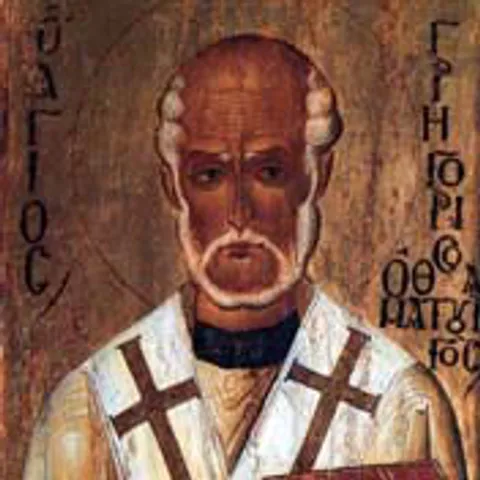 Gregory the Wonderworker’s Early life
Gregory was born in a Pontus, a region on the southern coast of the Black Sea, located in the modern-day eastern Black Sea Region of Turkey, around 212-13. His was a wealthy home and his parents named him Theodore (Gift of God) despite their pagan beliefs. When he was 14 years old his father died and soon after, he and his brother, Athenodorus, were anxious to study law at Beirut, Lebanon, then one of the four of five famous schools in the Hellenic world.
Influence of Origen
However, on the way, they first had to escort their sister to rejoin her husband, who was a government official assigned to Caesarea in Palestine (modern Haifa, Israel). When they arrived they learned that the celebrated scholar Origen, head of the catechetical school of Alexandria, lived there.
Inquisitiveness led them to hear and speak with the Origen and his irresistible charm quickly won their hearts. They soon dropped their desires for a life in Roman law, became Christian believers and pupils of Origen, learning philosophy and theology, for somewhere between five and eight years. Origen also baptised Gregory.
Pastor (then Bishop) of Neoceasarea
Gregory returned to his native Pontus with the intention of practicing oratory, but also to write a book proving the truth of Christianity, revealing his evangelistic heart. But his plans were disrupted when locals noticed his passion for Christ and his spiritual maturity. There were just seventeen Christians in Neoceasarea when Gregory arrived and this small group persuaded him to lead them as their bishop. (‘bishop’ simply meant a local overseer). At the time, Neocaesarea was a wicked, idolatrous province.
Signs of the Spirit
By his saintly life, his direct and lively preaching, helping the needy and settling quarrels and complaints, Gregory began to see many converts to Christ. But it was the signs and wonders that particularly attracted people to Christ.
En route to Neocaesarea from Amasea, Gregory expelled demons from a pagan temple, its priest converted to Christ immediately.
Once, when he was conversing with philosophers and teachers in the city square, a notorious harlot came up to him and demanded payment for the sin he had supposedly committed with her. At first Gregory gently remonstrated with her, saying that she perhaps mistook him for someone else.
But the loose woman would not be silenced. He then asked a friend to give her the money. Just as the woman took the unjust payment, she immediately fell to the ground in a demonic fit, and the fraud became evident. Gregory prayed over her, and the devil left her. This was the beginning of Gregory’s miracles. It was at this time he became known as ‘Gregory Thaumaturgus,’ ‘Gregory the Miracle Worker’ (or Wonderworker).
At one point Gregory wanted to flee from the worldly affairs into which influential townsmen persistently sought to push him. He went into the desert, where by fasting and prayer he developed an intimacy with God and received gifts of knowledge, wisdom and prophecy. He loved life in the wilderness and wanted to remain in solitude with God until the end of his days, but the Lord willed otherwise.
His theological contribution
Though he was primarily an evangelist and pastor, Gregory also had a deep theological understanding.
His principal work ‘The Exposition of Faith’, was a theological apology for Trinitarian belief. It incorporated his doctrinal instructions to new believers, expressed his arguments against heretical groups and was widely influential amongst leaders in the Patristic period: Basil the Great, Gregory the Theologian, and Gregory of Nyssa (The Cappadocian Fathers). It was the forerunner of the Nicene Creed that was to appear in the early 4th century.
In summary
He gave himself to the task of the complete conversion of the population of his diocese. The transformation in Neocaesarea was astonishing. Persuasive preaching, numerous healings and miraculous signs had a powerful effect. Such was his success that it was said that when Gregory became bishop (c 240) he found only seventeen Christians in his diocese; when he died only seventeen remained pagan (Latourette 1953:76).
Basil the Great’s Testimony
Basil the Great (330-379, Bishop of Caesarea, in his work ‘On the Spirit’ wrote the following account of Gregory the wonder-worker.
“But where shall I rank the great Gregory, and the words uttered by him? Shall we not place among Apostles and Prophets a man who walked by the same Spirit as they; who never through all his days diverged from the footprints of the saints; who maintained, as long as he lived, the exact principles of evangelical citizenship?
I am sure that we shall do the truth a wrong if we refuse to number that soul with the people of God, shining as it did like a beacon in the Church of God: for by the fellow-working of the Spirit the power which he had over demons was tremendous, and so gifted was he with the grace of the word ‘for obedience to the faith among. . .the nations.’ that, although only seventeen Christians were handed over to him, he brought the whole people alike in town and country through knowledge to God.
He too by Christ’s mighty name commanded even rivers to change their course, and caused a lake, which afforded a ground of quarrel to some covetous brethren, to dry up. Moreover, his predictions of things to come were such as in no wise to fall short of those of the great prophets. To recount all his wonderful works in detail would be too long a task. By the superabundance of gifts, wrought in him by the Spirit, in all power and in signs and in marvels, he was styled a second Moses by the very enemies of the Church.
Thus, in all that he through grace accomplished, alike by word and deed, a light seemed ever to be shining, token of the heavenly power from the unseen which followed him. To this day he is a great object of admiration to the people of his own neighborhood, and his memory, established in the churches ever fresh and green, is not dulled by length of time. (Schaff and Wace nd., Series 2. 8:46-47).
“Gregory was a great and conspicuous lamp, illuminating the church of God.” —Basil the Great.
Gregory the Wonderworker’s Early life
Gregory was born in a Pontus, a region on the southern coast of the Black Sea, located in the modern-day eastern Black Sea Region of Turkey, around 212-13. His was a wealthy home and his parents named him Theodore (Gift of God) despite their pagan beliefs. When he was 14 years old his father died and soon after, he and his brother, Athenodorus, were anxious to study law at Beirut, Lebanon, then one of the four of five famous schools in the Hellenic world.
Influence of Origen
However, on the way, they first had to escort their sister to rejoin her husband, who was a government official assigned to Caesarea in Palestine (modern Haifa, Israel). When they arrived they learned that the celebrated scholar Origen, head of the catechetical school of Alexandria, lived there.
Inquisitiveness led them to hear and speak with the Origen and his irresistible charm quickly won their hearts. They soon dropped their desires for a life in Roman law, became Christian believers and pupils of Origen, learning philosophy and theology, for somewhere between five and eight years. Origen also baptised Gregory.
Pastor (then Bishop) of Neoceasarea
Gregory returned to his native Pontus with the intention of practicing oratory, but also to write a book proving the truth of Christianity, revealing his evangelistic heart. But his plans were disrupted when locals noticed his passion for Christ and his spiritual maturity. There were just seventeen Christians in Neoceasarea when Gregory arrived and this small group persuaded him to lead them as their bishop. (‘bishop’ simply meant a local overseer). At the time, Neocaesarea was a wicked, idolatrous province.
Signs of the Spirit
By his saintly life, his direct and lively preaching, helping the needy and settling quarrels and complaints, Gregory began to see many converts to Christ. But it was the signs and wonders that particularly attracted people to Christ.
En route to Neocaesarea from Amasea, Gregory expelled demons from a pagan temple, its priest converted to Christ immediately.
Once, when he was conversing with philosophers and teachers in the city square, a notorious harlot came up to him and demanded payment for the sin he had supposedly committed with her. At first Gregory gently remonstrated with her, saying that she perhaps mistook him for someone else.
But the loose woman would not be silenced. He then asked a friend to give her the money. Just as the woman took the unjust payment, she immediately fell to the ground in a demonic fit, and the fraud became evident. Gregory prayed over her, and the devil left her. This was the beginning of Gregory’s miracles. It was at this time he became known as ‘Gregory Thaumaturgus,’ ‘Gregory the Miracle Worker’ (or Wonderworker).
At one point Gregory wanted to flee from the worldly affairs into which influential townsmen persistently sought to push him. He went into the desert, where by fasting and prayer he developed an intimacy with God and received gifts of knowledge, wisdom and prophecy. He loved life in the wilderness and wanted to remain in solitude with God until the end of his days, but the Lord willed otherwise.
His theological contribution
Though he was primarily an evangelist and pastor, Gregory also had a deep theological understanding.
His principal work ‘The Exposition of Faith’, was a theological apology for Trinitarian belief. It incorporated his doctrinal instructions to new believers, expressed his arguments against heretical groups and was widely influential amongst leaders in the Patristic period: Basil the Great, Gregory the Theologian, and Gregory of Nyssa (The Cappadocian Fathers). It was the forerunner of the Nicene Creed that was to appear in the early 4th century.
In summary
He gave himself to the task of the complete conversion of the population of his diocese. The transformation in Neocaesarea was astonishing. Persuasive preaching, numerous healings and miraculous signs had a powerful effect. Such was his success that it was said that when Gregory became bishop (c 240) he found only seventeen Christians in his diocese; when he died only seventeen remained pagan (Latourette 1953:76).
Basil the Great’s Testimony
Basil the Great (330-379, Bishop of Caesarea, in his work ‘On the Spirit’ wrote the following account of Gregory the wonder-worker.
“But where shall I rank the great Gregory, and the words uttered by him? Shall we not place among Apostles and Prophets a man who walked by the same Spirit as they; who never through all his days diverged from the footprints of the saints; who maintained, as long as he lived, the exact principles of evangelical citizenship?
I am sure that we shall do the truth a wrong if we refuse to number that soul with the people of God, shining as it did like a beacon in the Church of God: for by the fellow-working of the Spirit the power which he had over demons was tremendous, and so gifted was he with the grace of the word ‘for obedience to the faith among. . .the nations.’ that, although only seventeen Christians were handed over to him, he brought the whole people alike in town and country through knowledge to God.
He too by Christ’s mighty name commanded even rivers to change their course, and caused a lake, which afforded a ground of quarrel to some covetous brethren, to dry up. Moreover, his predictions of things to come were such as in no wise to fall short of those of the great prophets. To recount all his wonderful works in detail would be too long a task. By the superabundance of gifts, wrought in him by the Spirit, in all power and in signs and in marvels, he was styled a second Moses by the very enemies of the Church.
Thus, in all that he through grace accomplished, alike by word and deed, a light seemed ever to be shining, token of the heavenly power from the unseen which followed him. To this day he is a great object of admiration to the people of his own neighborhood, and his memory, established in the churches ever fresh and green, is not dulled by length of time. (Schaff and Wace nd., Series 2. 8:46-47).
“Gregory was a great and conspicuous lamp, illuminating the church of God.” —Basil the Great.
Though Dead, He Still Speaks - How Satan Remembers C.S. Lewis
The scene is in hell at the annual dinner of the Tempters’ Training College for young devils. The principal, Dr. Snufftub, has just proposed a toast to the health of the guests. Grimgod, a very experienced devil, who is the guest of honor, rises to reply: Headmaster, favorite Decadents, Ghouls, Fiends, and Imps, to my Intolerable Tempters, Ghastly Graduates, and Gentledevils: Gladly do I assume my place in our great tradition to charge our recent graduates towards highest malevolence, mischief, and devilry. I could begin my remarks by dribbling on about how honored I am to have been invited — but you, my lowly esteemed guests, are not humans to be flattered, and I, not a man to feign humility. I tell you plainly: I both deserve and expected to address you this evening. If but for that incompetent Dr. Slubgob — whose faults and failings (and finish) you are all keenly aware — I would have said my piece centuries ago. You would search in vain to find one more suitable in all of Satandom to enflame you in such crucial times as ours. Now that I have your attention, let me direct it to the point of my address: As the tide begins to turn decisively in our favor, we must not let the enemy regain his footing. To initiate a final push, to rally the closing campaign, we must do what young devils tend to relax: We must sever the humans from voices of the past. Now is the time to dispel the great cloud of witnesses, silence those terrible men and women who, though they died, still speak — should they continue to make fools of us? In the name of all that is unholy, they will not! Some of you — and this to your disgrace — do not mind old books lying peacefully upon nightstands. Some of these (and check the registry to recall which ones) cast light upon our shadows, point out ancient traps, inform them of our designs, and thus threaten to rouse this otherwise slumbering generation — but there they lie, tolerated. Many of you are too young to have grown already so careless. As we feast in celebration, I for one agitate to hear their voices sound disgracefully, mockingly outside of our gates. Can you not hear them? For every scrap of the damned that lies upon your plate, for every bite that inspires your snorts and howls, awaken to the fact that negligence in this matter allows the dead to steal meat from our bellies and drink from our cups. Gnash your teeth to realize that they caused us — during this past shortage — to sup on the relatives of most in this room. Their shrieks of protest, still fresh in my mind, commission us all to exorcise these voices from the earth. Should our war efforts continue to be frustrated by ghosts? Appraise one such a phantom — whose birthday happens to fall on this very day — that Irksome Irishman whose very name has become a curse: C.S. Lewis. Stories of Aslan First recall, with trembling voice, that embarrassment, Soretongue, who lost the patient after so many decades in his grasp. A blunder, young Graduates, that few listening to my voice could hope to surpass. His influence took a staunch atheist, a reviler of the faith, and turned him into one of these haunting voices of which I now warn you. Consider the error in full. Consider what this Lewis became. For one thing, this man — unlike so many of their drab ministers and colorless academics whose work we most heartily support — made ghastly impressions upon even our most prized possessions: the children. Through that otherwise terribly useful faculty, the imagination, he corrupted boys and girls across the globe with stories containing the Enemy’s horrible Echo scribbled across their pages. In a make-believe world, with a make-believe lion, and all sorts of other bumbling characters, he captured more than their attention. Can you believe that after losing the man, this dimwitted Tempter actually laughed over Clive’s shoulder as he wrote? “Pure rubbish,” I believe he called it. He could not discern the Enemy’s propaganda smuggled into fictional stories featuring the children, princes, rats, dragons, magical kingdoms, white witches, curses, and fauns. “As threatening to our designs as an old, blind, toothless tiger,” Soretongue reported. But this seducer beckoned into Narnia to show them earth. He introduced Edmund, Lucy, Peter, Eustace, Reepicheep to introduce them to themselves. He told of Aslan — and excuse me for my exasperation — to bring them to that nasty Uncreated One of Judah. He discovered how to preach sermons to children, and Soretongue smiled at it. The Enemy plundered our keepsake through the back of a wardrobe. Wicked Leaks In another turn, that logic, which we knew those many years only as an ally, betrayed us in the end. With each passing essay, with each published book, with each responded letter, radio broadcast, and sermon, he toured them up the mountain to look above to the Enemy and then below upon the labyrinths we so carefully devised for their destruction. Soretongue grossly underestimated the danger of this topographer in our war efforts. Our twisted and turned paths, knotted by delicious deceits and half-truths, began to be spoiled by his mapping out our temptations and pits. Our smoke of relativism, atheism, materialism — and our other favorite isms — availed minimally against this crow who made his nest above the fog. In the last, you might have thought, after Soretongue was through with him, that this fattened pig turned wizard to have broken so many of our spells of worldliness. So often did he — with great exaggeration and deceit, to be sure — appeal to that other world beyond, that many of our enticements fell useless against the bewitched souls of his hearers. His many embellishments about the “weight of glory” and other such nonsense, gross as such slobber stands to us, moved countless humans to take seriously the Enemy’s lies about such things as eternal life. He, pirating the Enemy’s horrible Book, talked often and much of holidays at sea, the country beyond, about the scent, the sight, the longing for a land that they were “made for” — a home standing just over the hill, just around the bend. And something called Joy with a capital J. He fooled the vermin, with pretty colors and poetic potpourri, that the Enemy’s torture and death somehow ensured that his followers — who also take up their own crosses and endure their own sufferings after him — might be the better off in the end. May it never be! Should not the mere existence of our established kingdom below expose the slight of hand? If heaven was as the Enemy so shamelessly boasts it is, why should a host of us so violently leave? But Lewis, with his wand in hand doodling fictions, compelled the swine towards the true ruin we so narrowly escaped. They will find him out eventually. Yet, though they will be sorely and deliciously disappointed at the road’s end, we will still remain the hungrier for it. Silence the Skunks But, enough of the man. I do not mean to honor the vermin by speaking too much of him. The point is this: Do not let the message of the departed saints survive. Should we, of all beings, not know how to silence the dead? Cut out the tongues of the mischief-makers. Six feet below is too shallow — dig deeper. A toast, then. You have studied. You have hungered. You have tempted, watched, and waited for this day. Each of you has, with the indispensable help of your more fiendish advisor, damned one human soul. The dish prepared so perversely before you contains remnants of your spoil — the lion’s share going, of course, to your mentor. May it be the beginning of uninterrupted success — for you know what awaits any alternative. Raise your glasses. To a future brim-filled with courage, cruelty, and conviction. To the setting of sun and the fleeing of the light. To the return of the age of devils. To the silencing of the skunks — to one we mock, “Happy birthday!” Onward and downward! Article by Greg Morse