
Others like the seven spirits of god Features >>

Recreating Your World

The Holy Spirit — The Missing Ingredient

7 Things The Holy Spirit Will Do For You

The Oil And The Mantle

The Release Of Power
The Spirit Within & The Spirit Upon
The Pursuit Of Holiness
The Holy Spirit And His Gifts
-160.webp)
The Power Of Your Words: How God Can Bless Your Life Through The Words You Speak

Don't Stop Here
About the Book
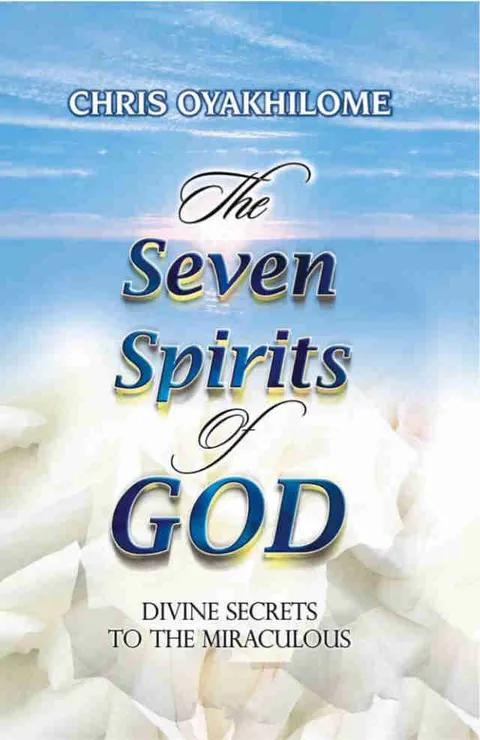
"The Seven Spirits of God" by Chris Oyakhilome explores the seven manifestations of the Holy Spirit as described in the Bible. The book delves into how understanding and tapping into these spirits can lead to a deeper spiritual connection and a more fulfilling Christian life. Through in-depth analysis and personal anecdotes, Oyakhilome aims to help readers unleash the power of the Holy Spirit in their lives.
Gordon Lindsay
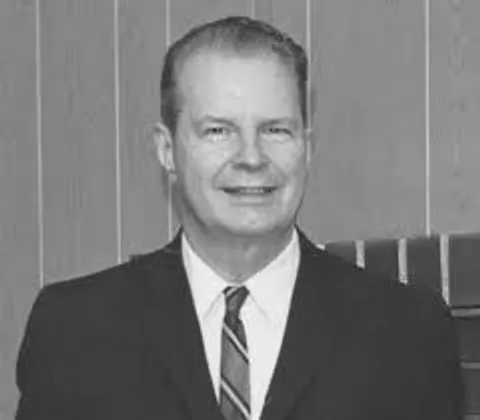 Gordon Lindsay’s Early life
Gordon Lindsay’s parents were members of J. A. Dowie’s Zion City, Illinois when he was born. The city’s financial difficulties forced the family west in 1904, where they temporarily joined another Christian-based community led by Finis Yoakum at Pisgah Grande, California. When similar problems emerged the family moved to Oregon after only a few months. From here the family moved to Portland, Oregon where Lindsay attended high school and was converted during a Charles F. Parham evangelistic campaign.
During his youth he came under the influence of John G. Lake, former resident of Zion City, missionary to South Africa, and founder of the Divine Healing missions in Spokane, Washington, and Portland, Oregon in 1920. Lindsay joined the healing and evangelistic campaigns of Lake, traveling throughout California and the southern states.
Lindsay began his own ministry in California as pastor of small churches in Avenal and San Fernando and for the next eighteen years, he travelled acros s the country holding revivals in full gospel churches. This period of travel prepared him as perhaps no other man in the nation to establish communication among a variety of Pentecostals.
When World War II began, Lindsay felt compelled to give up his evangelistic ministry because its rigorous lifestyle was taking its toll on his young family. He accepted a call to pastor a church in Ashland, Oregon.
William Branham enters Gordon Lindsay’s life
By 1947 he had witnessed the extraordinary ministry of William Branham and responded to the invitation to become Branham’s manager. His managerial skills were soon obvious in the Branham campaigns, and in April 1948, he furthered the cause of the of the revival when he produced the first issue of The Voice of Healing, specifically to promote Branham’s ministry. To Lindsay’s great surprise Branham announced that he “would not continue on the field more than a few weeks more.”
At great financial cost Lindsay decided to continue the publication of the new magazine in cooperation with his long-time friends, Jack Moore and his talented daughter Anna Jeanne Moore. He broadened the scope of the magazine by including more of the lesser known healing evangelists who were beginning to hold campaigns and were drawing large audiences.
One such evangelist was William Freeman who had been holding meetings in small churches. Lindsay visited one of his campaigns and immediately felt it was the will of God to team up with him and organise a series of meetings through 1948. The Voice of Healing featured the miracles of the Freeman campaigns.
Voice of Healing Conventions
By March 1949 The Voice of Healing circulation had grown to nearly 30,000 per month and had clearly become the voice of the healing movement. It’s pages successfully spread the message of the Salvation-Deliverance-Healing revival across the world.
In December 1949, Lindsay arranged the first convention of healing revivalists in Dallas, Texas. The assembly was addressed by Branham, Lindsay, Moore, old-timers such as F. F. Bosworth and Raymond T. Richey, and a number of rising revivalists including O. L. Jaggers, Gayle Jackson, Velmer Gardner, and Clifton Erickson. This historic conference symbolized the vitality and cohesion of the revival.
The following year, the convention, now about 1,000 strong, met in Kansas City, with virtually every important revivalist in the nation, with the notable exceptions of William Branham and Oral Roberts. Lindsay exercised great skill and wisdom exposing several points of danger and tension in the movement proposed guidelines for the future. Lindsay understood the fears of the older Pentecostal denominations and leaders and tried his utmost to deal with the offending issues.
In an article announcing “the purpose, plan and policy of the Voice of Healing Convention,” he denounced “free-lancers who violently and indiscriminately attack organization in general,” and he urged avoidance of “novel prophetic interpretations, dogmatic doctrinal assertions, sectarian predilections, theological hair-splitting.”
The Voice of Healing Association
The 1950 meeting made the Voice of Healing convention into a loose association of healing revivalists. The evangelists officially associated with The Voice of Healing magazine held “family meetings” at the conventions, at the same time maintaining their desire to “prove to the world that those associated with The Voice of Healing have no intention to organize another movement.” Through the decade the Voice of Healing conventions were showcases for healing revivalism.
The conference programs were workshops on the problems of healing evangelists. Typical topics were “prayer and fasting,” “preparation for a campaign,” “the follow-up work after a campaign,” “the system of cards for the prayer tent and the healing line” and the delicate issue of finances. As the association grew in importance in the 1950s, the program was frequently headed by Roberts or Branham; though every new revivalist aspired to be a speaker on the program.
The Voice of Healing family of evangelists flowered in the early 1950s. Lindsay continued to publicize Branham’s work, although he was not formally associated with the organization; the nucleus of the fellowship was an influential clique which included O. L. Jaggers, William Freeman, Jack Coe, T. L. Osborn, A. A. Allen, and Velmer Gardner.
Gradually major ministries began their own magazines and had no further need for Voice of Healing promotion. Nevertheless, by 1954 the “associate editors and evangelists” listed in The Voice of Healing numbered nearly fifty.
Though Lindsay became personally involved with healing evangelism from 1949, especially with other revivalists such as T. L. Osborn, he confined his best work to organization and management of the Voice of Healing magazine. By 1956 the expenses of the Voice of Healing were running $1,000 a day. In addition to the national and regional conventions sponsored by his organization, Lindsay also began to sponsor missions and a radio program.
“Lindsay was more than an advisor during the first decade of the healing revival; he was much like the director of an unruly orchestra. He tried desperately to control the proliferation of ministries in an effort to keep the revival respectable. He repeatedly advised, “It is better for one to go slow. Get your ministry on a solid foundation. . . . By all means avoid Hollywood press agent stuff.”
Many of the new leaders of the early 1950s owed their early success to the literary support of Gordon Lindsay through the Voice of Healing, but by 1958, many of the revivalists believed that Lindsay’s work was over.
An evolving ministry
Lindsay’s efforts to consolidate and coordinate the healing movement and its ministries became an impossible task. The increasing independence of ministries and the burgeoning charismatic movement caused Lindsay to reconsider his goals. He took the example of T. L. Osborn and concentrated on missionary endeavours. He remained the historian and theologian of the healing movement but began to produce teaching and evangelistic materials which were sent across the world.
The Voice of Healing ultimately became Christ for the Nations. Native church programs, literature, teaching tapes and funds were distributed to hundreds of locations. The organization had changed from one of healing revivalists into an important missionary society.
His ministry was always to those involved in the healing revival, independents and mainline Pentecostals, but the new charismatics – Lutherans, Methodists and Baptists – became his new audience. His encouragement of, and involvement with, the Full Gospel Businessmen’s Fellowship was designed to provide teaching and wisdom for charismatic leaders, many of whom held Lindsay in high regard.
His death on April 1st 1971
Suddenly, on April 1, 1973, Gordon Lindsay died. His wife, Freda, stepped into the breach and was able to stabilize and advance the ministry of Christ for the Nations. Lindsay’s death brought unparalleled financial support paying off all debts and expanding most of its programs.
David Harrel summarises the life of Gordon Lindsay perfectly: ‘The death of Gordon Lindsay closed a major chapter in the charismatic revival. No single man knew the revival and its leaders so well. No man understood its origins, its changes, and its diversity as did Lindsay. A shrewd manager and financier, Lindsay had been as nearly the coordinator of the healing revival as any man could be.
When the revival began to wane, Lindsay was faced with a crisis more severe than those of most of the evangelists themselves. Never a dynamic preacher, he found himself virtually abandoned by his most successful protégés. But Lindsay proved able to adapt. Always a balanced person, Lindsay built a balanced and enduring ministry.’
Tony Cauchi
Gordon Lindsay’s Early life
Gordon Lindsay’s parents were members of J. A. Dowie’s Zion City, Illinois when he was born. The city’s financial difficulties forced the family west in 1904, where they temporarily joined another Christian-based community led by Finis Yoakum at Pisgah Grande, California. When similar problems emerged the family moved to Oregon after only a few months. From here the family moved to Portland, Oregon where Lindsay attended high school and was converted during a Charles F. Parham evangelistic campaign.
During his youth he came under the influence of John G. Lake, former resident of Zion City, missionary to South Africa, and founder of the Divine Healing missions in Spokane, Washington, and Portland, Oregon in 1920. Lindsay joined the healing and evangelistic campaigns of Lake, traveling throughout California and the southern states.
Lindsay began his own ministry in California as pastor of small churches in Avenal and San Fernando and for the next eighteen years, he travelled acros s the country holding revivals in full gospel churches. This period of travel prepared him as perhaps no other man in the nation to establish communication among a variety of Pentecostals.
When World War II began, Lindsay felt compelled to give up his evangelistic ministry because its rigorous lifestyle was taking its toll on his young family. He accepted a call to pastor a church in Ashland, Oregon.
William Branham enters Gordon Lindsay’s life
By 1947 he had witnessed the extraordinary ministry of William Branham and responded to the invitation to become Branham’s manager. His managerial skills were soon obvious in the Branham campaigns, and in April 1948, he furthered the cause of the of the revival when he produced the first issue of The Voice of Healing, specifically to promote Branham’s ministry. To Lindsay’s great surprise Branham announced that he “would not continue on the field more than a few weeks more.”
At great financial cost Lindsay decided to continue the publication of the new magazine in cooperation with his long-time friends, Jack Moore and his talented daughter Anna Jeanne Moore. He broadened the scope of the magazine by including more of the lesser known healing evangelists who were beginning to hold campaigns and were drawing large audiences.
One such evangelist was William Freeman who had been holding meetings in small churches. Lindsay visited one of his campaigns and immediately felt it was the will of God to team up with him and organise a series of meetings through 1948. The Voice of Healing featured the miracles of the Freeman campaigns.
Voice of Healing Conventions
By March 1949 The Voice of Healing circulation had grown to nearly 30,000 per month and had clearly become the voice of the healing movement. It’s pages successfully spread the message of the Salvation-Deliverance-Healing revival across the world.
In December 1949, Lindsay arranged the first convention of healing revivalists in Dallas, Texas. The assembly was addressed by Branham, Lindsay, Moore, old-timers such as F. F. Bosworth and Raymond T. Richey, and a number of rising revivalists including O. L. Jaggers, Gayle Jackson, Velmer Gardner, and Clifton Erickson. This historic conference symbolized the vitality and cohesion of the revival.
The following year, the convention, now about 1,000 strong, met in Kansas City, with virtually every important revivalist in the nation, with the notable exceptions of William Branham and Oral Roberts. Lindsay exercised great skill and wisdom exposing several points of danger and tension in the movement proposed guidelines for the future. Lindsay understood the fears of the older Pentecostal denominations and leaders and tried his utmost to deal with the offending issues.
In an article announcing “the purpose, plan and policy of the Voice of Healing Convention,” he denounced “free-lancers who violently and indiscriminately attack organization in general,” and he urged avoidance of “novel prophetic interpretations, dogmatic doctrinal assertions, sectarian predilections, theological hair-splitting.”
The Voice of Healing Association
The 1950 meeting made the Voice of Healing convention into a loose association of healing revivalists. The evangelists officially associated with The Voice of Healing magazine held “family meetings” at the conventions, at the same time maintaining their desire to “prove to the world that those associated with The Voice of Healing have no intention to organize another movement.” Through the decade the Voice of Healing conventions were showcases for healing revivalism.
The conference programs were workshops on the problems of healing evangelists. Typical topics were “prayer and fasting,” “preparation for a campaign,” “the follow-up work after a campaign,” “the system of cards for the prayer tent and the healing line” and the delicate issue of finances. As the association grew in importance in the 1950s, the program was frequently headed by Roberts or Branham; though every new revivalist aspired to be a speaker on the program.
The Voice of Healing family of evangelists flowered in the early 1950s. Lindsay continued to publicize Branham’s work, although he was not formally associated with the organization; the nucleus of the fellowship was an influential clique which included O. L. Jaggers, William Freeman, Jack Coe, T. L. Osborn, A. A. Allen, and Velmer Gardner.
Gradually major ministries began their own magazines and had no further need for Voice of Healing promotion. Nevertheless, by 1954 the “associate editors and evangelists” listed in The Voice of Healing numbered nearly fifty.
Though Lindsay became personally involved with healing evangelism from 1949, especially with other revivalists such as T. L. Osborn, he confined his best work to organization and management of the Voice of Healing magazine. By 1956 the expenses of the Voice of Healing were running $1,000 a day. In addition to the national and regional conventions sponsored by his organization, Lindsay also began to sponsor missions and a radio program.
“Lindsay was more than an advisor during the first decade of the healing revival; he was much like the director of an unruly orchestra. He tried desperately to control the proliferation of ministries in an effort to keep the revival respectable. He repeatedly advised, “It is better for one to go slow. Get your ministry on a solid foundation. . . . By all means avoid Hollywood press agent stuff.”
Many of the new leaders of the early 1950s owed their early success to the literary support of Gordon Lindsay through the Voice of Healing, but by 1958, many of the revivalists believed that Lindsay’s work was over.
An evolving ministry
Lindsay’s efforts to consolidate and coordinate the healing movement and its ministries became an impossible task. The increasing independence of ministries and the burgeoning charismatic movement caused Lindsay to reconsider his goals. He took the example of T. L. Osborn and concentrated on missionary endeavours. He remained the historian and theologian of the healing movement but began to produce teaching and evangelistic materials which were sent across the world.
The Voice of Healing ultimately became Christ for the Nations. Native church programs, literature, teaching tapes and funds were distributed to hundreds of locations. The organization had changed from one of healing revivalists into an important missionary society.
His ministry was always to those involved in the healing revival, independents and mainline Pentecostals, but the new charismatics – Lutherans, Methodists and Baptists – became his new audience. His encouragement of, and involvement with, the Full Gospel Businessmen’s Fellowship was designed to provide teaching and wisdom for charismatic leaders, many of whom held Lindsay in high regard.
His death on April 1st 1971
Suddenly, on April 1, 1973, Gordon Lindsay died. His wife, Freda, stepped into the breach and was able to stabilize and advance the ministry of Christ for the Nations. Lindsay’s death brought unparalleled financial support paying off all debts and expanding most of its programs.
David Harrel summarises the life of Gordon Lindsay perfectly: ‘The death of Gordon Lindsay closed a major chapter in the charismatic revival. No single man knew the revival and its leaders so well. No man understood its origins, its changes, and its diversity as did Lindsay. A shrewd manager and financier, Lindsay had been as nearly the coordinator of the healing revival as any man could be.
When the revival began to wane, Lindsay was faced with a crisis more severe than those of most of the evangelists themselves. Never a dynamic preacher, he found himself virtually abandoned by his most successful protégés. But Lindsay proved able to adapt. Always a balanced person, Lindsay built a balanced and enduring ministry.’
Tony Cauchi
If God Approves, Let Men Condemn
It may appear, at first glance, to be an odd text to hang in your bedroom: Blessed are ye, when men shall revile you, and persecute you, and shall say all manner of evil against you falsely, for my sake. Rejoice, and be exceeding glad: for great is your reward in heaven: for so persecuted they the prophets which were before you. (Matthew 5:11–12 KJV) Whereas others might draw from a thousand wells before this one, Susannah Spurgeon framed Jesus’s words to remind her husband, Charles, of Jesus’s upside-down perspective. When his disciples face bitter opposition for his name’s sake, the proper response should be joy. “Spurgeon was slandered in the newspapers, ridiculed by his opponents, and censured by many evangelical ministers.” When we consider this Baptist giant, when we read his stirring sermons, when we remember that his life’s work rivaled that of one hundred men, when we read of the revival and the winning of countless souls to Christ, we can imagine the Prince of Preachers encountering little but unbroken success. Compared with so many of our ministries, his seemed to soar high in the clouds. We rarely consider, as Iain Murray contends, The Forgotten Spurgeon — the Spurgeon who needed Matthew 5:11–12 hanging on his wall. Forgotten Prince The forgotten Spurgeon stood among the tornadoes of several great controversies in his day. His protestation against Arminianism, his disgust at baptismal regeneration, and his resistance to an evangelical unity founded upon fragments of Christian doctrine (known as the Downgrade Controversy) made him the target for many arrows. This Spurgeon, especially at the beginning and end of his ministry, had reason to reckon himself as “the scum of the earth” (24–25). The name Spurgeon, which we regard fondly, was, by estimation of its owner, “kicked about the street like a football” (28). He had occasion to remark in a sermon, “Scarce a day rolls over my head in which the most villainous abuse, the most fearful slander is not uttered against me both privately and by the public press; every engine is employed to put down God’s minister — every lie that man can invent is hurled at me” (63). This Spurgeon was slandered in the newspapers, ridiculed by his opponents, and censured by many evangelical ministers who he anticipated would be his allies. This Spurgeon was a living example of the happy — but often hated — man of God to whom Jesus spoke in the Sermon on the Mount. Fleeing Compromise What can we learn from this forgotten Spurgeon? This Spurgeon can teach us to handle controversy manfully and without compromising. His convictions, which he held to his dying day, cost him dearly. He did not practice that vice he so clearly preached against: “I think there is scarcely a Christian man or woman that has been able to go all the way to heaven and yet quietly hide himself and run from bush to bush, skulking into glory. Christianity and cowardice? What a contradiction in terms!” (“Speak for Yourself — a Challenge”). If we would cast away the temptation to tiptoe into glory, and be of real benefit for Christ’s name in this world, Spurgeon teaches us that we would do well to resist loving our own names, be comfortable in the minority, and recognize (and reject) false unity. 1. Don’t fall in love with your own name. “Let my name perish, but let Christ’s name last forever! Jesus! Jesus! Jesus! Crown him Lord of all!” (43) Spurgeon warns us of falling in love with our own reputations and influence. This self-love, he identified, is a main ingredient in the undoing of the best of us. He exposes the steps to compromise of the person initially used by God: The temptation comes to be careful of the position he has gained, and to do nothing to endanger it. The man, so lately a faithful man of God, compromises with worldlings, and to quiet his own conscience invents a theory by which such compromises are justified and even commended. He receives the praises of “the judicious”; he has, in truth, gone over to the enemy. The whole force of his former life now tells upon the wrong side. (170) How many times have we seen or experienced this drift? First, we are somehow exalted for special use. Then we quietly begin to notice it and relish the attention. Falling in love with recognition, we tighten our grip around our platforms in fear of losing them. We then calculate what we say, filtering out anything that may weaken our influence — including the unfavorable truths of Scripture. And finally, faced with the thing we used to call compromise, we invent reasons to support what we’ve become — why we’ve beaten the sword into a plowshare. “When we begin sharing truth based on how well that truth will be received, we are halfway to compromise.” Fierce loves fixed on unworthy objects mold Christians into cowards. If we have begun to love the music of our own name, manage our brand, or consider our popularity as necessary to the advancement of Christ’s kingdom, we have begun building our own kingdoms. May we say with Spurgeon, “I count my own character, popularity, and usefulness to be as the small dust of the balance compared with fidelity to the Lord Jesus” (219). It is Christ we proclaim, not ourselves (2 Corinthians 4:5). 2. Be comfortable in the minority. “Long ago I ceased to count heads. Truth is usually in the minority in this evil world. I have faith in the Lord Jesus for myself, a faith burned into me as with a hot iron. I thank God, what I believe I shall believe, even if I believe it alone.” (146) Have you ever felt the temptation to count heads — or followers, likes, and shares — to see what you should or should not say? I have. When we begin sharing truth based on how well that truth will be received, we are halfway to compromise. Spurgeon counsels us to consider the cost beforehand: truth is often in the minority; to stand with it means you may stand alone. Yet those who stand for Christ’s truth never truly stand alone. You may go as Esther before the king without kin beside you, resolved that if you perish, you perish; you may preach like Stephen, as crowds press in around you, shutting their ears and hurling stones; you may rebuke King Herod’s adultery alone or say with Paul, “At my first defense no one came to stand by me” (2 Timothy 4:16) — but Christ shall be with you, even until the end of the age (Matthew 28:20). And if your cause is true, you will find, like Elijah, you are not the only one not to bow the knee to Baal (1 Kings 19:14, 18). 3. Recognize false unity. “It is, of course, the most easy to flesh and blood to deal in generalities, to denounce sectarianism, and claim to be of an ultra-catholic spirit; but though rough and rugged, it is required of the loyal servant of King Jesus to maintain all his crown rights and stand up for every word of his laws. Friends chide us and foes abhor us when we are very jealous for the Lord God of Israel, but what do these things matter if the Master approves?” (18) Error loves vagueness. As in Spurgeon’s day, the temptation to tolerate all positions and accept all perspectives on truth is strong in ours. We are told it is prejudiced, narrow, and even unchristian to draw lines. But to Spurgeon, promoting a type of “Christian unity” whose common denominator sinks lower than genuine Christianity in the first place is unacceptable. Unity of Jew and Gentile into one new man is bought with the blood of Christ; unity of gospel truth and gospel untruth is unity brought about by Satan. Orthodox Christianity, he argued, is distinct. Not all views can be true. When the only standard left is for all in the flock to have four legs, wolves and goats stand at ease among us. The trend toward an undoctrinal, atheological, shapeless evangelicalism, beginning in Spurgeon’s day and seemingly ripening in ours, is one of the quickest ways to compromise our fidelity to Christ and witness in the world. “Truth is often in the minority; to stand with it means you may stand alone.” In saying this, Spurgeon did not intend to divide over every possible theological difference — lest every man be an island unto himself. But Spurgeon chafed at minimizing Christian zeal and truth in order to bring together contrasting theologies and to mix liberalism with historic Christianity. We may be called particular or dogmatic, but what do we care if what we promote is the Master’s truth? Though the Heavens Fall “It is yours and mine to do the right though the heavens fall, and follow the command of Christ whatever the consequence may be. “That is strong meat,” do you say? Be strong men, then, and feed thereon.” (171) His beloved wife, who hung Matthew 5:11–12 in their bedroom, said after his death at the age of 57, “His fight for the faith . . . cost him his life.” He fought the good fight of faith, he kept the faith, he finished the race (2 Timothy 4:7), claiming before his death, “My work is done” (173). He lived for his Lord, and now he basks in his presence. To those of us who lag behind him, traversing our own times with all of their challenges and opportunities, temptations and labors, take up his oft-quoted hymn as we continue on in our race of faith: Must I be carried to the skies On flowery beds of ease, While others fought to win the prize And sailed through bloody seas? Since I must fight if I would reign, Increase my courage, Lord! I’ll bear the toil, endure the pain, Supported by thy word. Though the heavens fall, though the earth gives way, though controversy and temptations of spiritual compromise stand before us, may we heed this forgotten Spurgeon, hang Matthew 5:11–12 in our hearts, and live before men and devils with the courage and hope that only Christ supplies. Article by Greg Morse