
Others like recreating your world Features >>

The Promised Land

Letting Go Of Your Past
%20-%20Patricia%20King-160.webp)
Activating Your God-Given Power To Create Realms And Atmospheres (Create Your World)
-160.webp)
Finding Your Purpose In Life (Why Am I Here)

The Consecrated Way To Christian Perfection
Breathing Under Water

Basic Elements Of The Christian Life Vol II
-160.webp)
The Power Of Your Words: How God Can Bless Your Life Through The Words You Speak
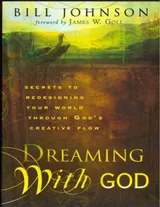
Dreaming With God - Co-Laboring With God
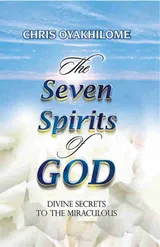
The Seven Spirits Of God
About the Book
"Recreating Your World" by Pastor Chris Oyakhilome is a transformative book that explores the power of words and thoughts in shaping our reality. It emphasizes the importance of speaking positively, believing in oneself, and aligning one's thoughts with God's will in order to create a successful and fulfilling life. Through practical examples and biblical principles, the book guides readers on how to take control of their destinies and bring about positive change in all areas of their lives.
Nik Ripken
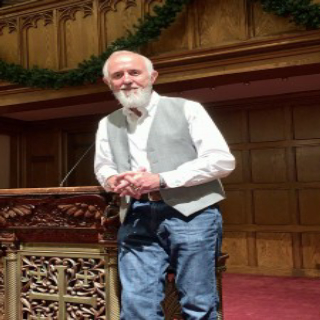 Nik and Ruth, with 3 children, served for over 32 years obeying Christ’s command to share Jesus across the globe. After 7 years in Malawi & South Africa, they moved to Nairobi, Kenya to begin work among the Somali people (1991-1997). Since that time (1998-2013) they have journeyed globally among people whom, when they gave their lives to Jesus, faced increasing persecution for their faith.
The Ripkens and their teams served throughout the Horn of Africa within famine and war zones; resettling refugees, providing famine relief, and operating mobile medical clinics. Formerly Muslims, many Somali believers, suffered for their faith. Most were martyred. Near the end of the Ripken’s tenure among the Somalis, their 16-year-old son died of an asthma attack on Easter Sunday morning. He’s buried at the school from which the other Ripken children graduated.
One year later, the Holy Spirit led the Ripkens to begin a global pilgrimage to learn from believers in persecution how to recapture a biblical missiology of witness and house-church planting in the midst of persecution and martyrdom. Most of all, believers in persecution modeled for the Ripkens how to trust Jesus completely. Many of these lessons have been lost or forgotten by the church in the West.
Currently the Ripkens have interviewed over 600 believers in persecution, exceeding 72 countries. Sitting at their feet, the Ripkens learned from the suffering church how to thrive amidst suffering, not merely survive. The Ripkens, using everything they’ve learned from believers in persecution are creating resources as gifts from the church to the church. To date they have created articles, books, a music CD, a documentary, workshops, and other tools that allow the church in persecution to teach the church in the West about its biblical heritage of both crucifixion and resurrection. A teaching DVD is included in future plans. All these tools are designed to challenge believers to boldly follow Jesus, sharing their faith with others-no matter the cost.
Nik and Ruth, with 3 children, served for over 32 years obeying Christ’s command to share Jesus across the globe. After 7 years in Malawi & South Africa, they moved to Nairobi, Kenya to begin work among the Somali people (1991-1997). Since that time (1998-2013) they have journeyed globally among people whom, when they gave their lives to Jesus, faced increasing persecution for their faith.
The Ripkens and their teams served throughout the Horn of Africa within famine and war zones; resettling refugees, providing famine relief, and operating mobile medical clinics. Formerly Muslims, many Somali believers, suffered for their faith. Most were martyred. Near the end of the Ripken’s tenure among the Somalis, their 16-year-old son died of an asthma attack on Easter Sunday morning. He’s buried at the school from which the other Ripken children graduated.
One year later, the Holy Spirit led the Ripkens to begin a global pilgrimage to learn from believers in persecution how to recapture a biblical missiology of witness and house-church planting in the midst of persecution and martyrdom. Most of all, believers in persecution modeled for the Ripkens how to trust Jesus completely. Many of these lessons have been lost or forgotten by the church in the West.
Currently the Ripkens have interviewed over 600 believers in persecution, exceeding 72 countries. Sitting at their feet, the Ripkens learned from the suffering church how to thrive amidst suffering, not merely survive. The Ripkens, using everything they’ve learned from believers in persecution are creating resources as gifts from the church to the church. To date they have created articles, books, a music CD, a documentary, workshops, and other tools that allow the church in persecution to teach the church in the West about its biblical heritage of both crucifixion and resurrection. A teaching DVD is included in future plans. All these tools are designed to challenge believers to boldly follow Jesus, sharing their faith with others-no matter the cost.
expect god to do something unexpected
God doesn’t do things the way we think he should. That theme emerges reading de-conversion stories or listening to people explain why they left Christianity based on supposedly intellectual arguments. God doesn’t fit our expectations. He is not like us; he is wholly different. Although not put in exactly these words, the argument goes something like this: If God is perfect and good, he should have revealed himself more clearly, he should have preserved the Scriptures without any textual variants, he should have produced a Bible less open to so many different interpretations (it should somehow be transhistorical and transcultural), he should have completely removed evil and suffering right away. These arguments could be rephrased: If I were God, I would have done things differently . In comparison to our enlightened reason, God’s actions are seen as wanting and deficient. Our preferences, wisdom, rationality, and expectations become the standard to which God must submit or be rejected as false and untrustworthy. There seems to be no place left for a humble assessment of the limits and frailty of human ability and rationality. Scandal and Folly at the Cross God often does not do things the way that we as humans think he should. The clearest example of this is Jesus’s crucifixion. Paul argues that “we preach Christ crucified, a stumbling block to Jews and folly to Gentiles, but to those who are called, both Jews and Greeks, Christ the power of God and the wisdom of God. For the foolishness of God is wiser than men, and the weakness of God is stronger than men” (1 Corinthians 1:23–25). Paul is not embracing fideism, blind faith, or anti-intellectualism; he is recognizing the limits of human rationality and the reality that God is not bound to act as we think he should. The crucifixion may have been scandalous to Jews and ridiculous to Gentiles, but it was God’s plan to save and restore his image-bearing representatives. Scandal and Folly at Christmas We are so familiar with the Christmas narratives that we often fail to see how they are similar to the crucifixion: certainly scandalous, debatably foolish, but nevertheless, God’s plan to fulfill his promises and save his people. First, the virgin conception was scandalous. Joseph himself assumed infidelity and intended to divorce Mary. Around 100 years after Matthew wrote his Gospel, Origen describes the common non-Christian Jewish counter-narrative. He accuses him of having “invented his birth from a virgin,” and upbraids him with being “born in a certain Jewish village, of a poor woman of the country, who gained her subsistence by spinning, and who was turned out of doors by her husband, a carpenter by trade, because she was convicted of adultery; that after being driven away by her husband, and wandering about for a time, she disgracefully gave birth to Jesus, an illegitimate child.” (Origen, Against Celsus 1.28, in The Ante-nicene Fathers , 4.408) These claims have no surviving first-century corroborating evidence, but it is easy enough to see how they arose in response to Christian claims about Jesus’s virgin conception. Could God have done things in a way less open to ridicule? Or could he not have somehow provided more supernatural proof? Of course he could have; but he didn’t. And skeptics mock. Meanwhile, Christians celebrate this truth as the way God chose to act to save the world through his Son Jesus, fully God and fully man. Second, the incarnation itself is incredible to believe — did God really need to become man? Justin Martyr describes early criticism of Christianity from the mid-second century, You ought to feel ashamed when you make assertions similar to theirs [Greco-Roman religions], and rather [should] say that this Jesus was born man of men. . . . You endeavor to prove an incredible and well-nigh impossible thing; [namely], that God endured to be born and become man. (Justin, Dial . 67–68, in The Ante-nicene Fathers , 1.231–232) It may be hard to believe, but God became man; he entered our pain, our suffering, and our death in order to defeat death for all of us. As the book of Hebrews makes clear, he experienced our limitations and temptations in order to become our perfect and eternal High Priest and to offer a perfect and final sacrifice for sin. Could God have done it a different, less painful, less embarrassing way? Maybe, but he didn’t. Third, why the lowly birth? Why be born in poverty, in obscurity, and in weakness? We are so familiar with the Christmas story that we fail to see how counterintuitive this all is. In saving the world, God seems to have gone the most difficult route imaginable. Like Satan’s temptation to instantly give Jesus global sovereignty without the suffering of the cross, there could have been quite a few quicker and easier ways to get this done. But as Paul notes, God’s “folly” is greater than man’s wisdom (1 Corinthians 1:25). Trust God to Be God As you reflect this Christmas season on your life, your struggles, your disappointments, your victories, your faith, and your hope, remember that God is God and we are not. Jesus’s death on the cross was simultaneously foolishness to the wise in the world, to those who are perishing, and a demonstration of the power and wisdom of God to those of us who believe. He doesn’t always do things the way we might expect or wish he would, but when it comes to God, shouldn’t we know by now to expect the unexpected? Faith in God certainly doesn’t make us safe (as if we were living in a magical bubble in which nothing bad could happen and we were guaranteed success at every turn), but it does make us incredibly secure. Because he is faithful and good, we can trust and worship without always completely understanding. Christianity did not begin, survive, and expand primarily through intellectual argumentation but through a demonstration of the Spirit, who is the true power of Christmas.