-480.webp)

The Power Of Your Words: How God Can Bless Your Life Through The Words You Speak Order Printed Copy
- Author: Robert Morris
- Size: 1.05MB | 170 pages
- |
Others like the power of your words: how god can bless your life through the words you speak Features >>
Power Of Your Words
Kingdom Revolution - Bringing Change To Your Life And Beyond

The Full Armor Of God
-160.webp)
The Law Of Recognition (The Laws Of Life Series)
The Root Of The Righteous

The Seven Spirits Of God

The Power Of Hope

The Power Of Your Mind
The Art Of War For Spiritual Battle
The Judas Goat: How To Deal With False Friendships, Betrayals, And The Temptation Not To Forgive
About the Book
"The Power of Your Words" by Robert Morris explores the impact of the words we speak on our lives and how God can bless us through our speech. Morris emphasizes the importance of speaking positive, life-giving words and shares practical strategies for harnessing the power of our words to create a more fulfilling and purposeful life. The book offers biblical insights and personal anecdotes to inspire readers to use their words to speak life, truth, and blessings into their lives and the lives of others.
Warren Wiersbe
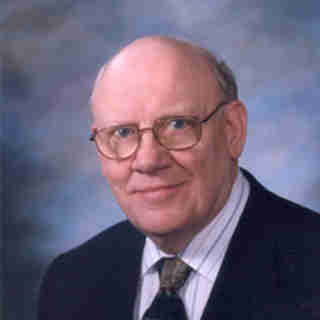 Dr. Warren Wiersbe once described Heaven as “not only a destination, but also a motivation. When you and I are truly motivated by the promise of eternity with God in heaven, it makes a difference in our lives.”
For Wiersbe, the promise of eternity became the motivation for his long ministry as a pastor, author, and radio speaker. Beloved for his biblical insight and practical teaching, he was called “one of the greatest Bible expositors of our generation” by the late Billy Graham.
Warren W. Wiersbe died on May 2, 2019, in Lincoln, Nebraska, just a few weeks shy of his 90th birthday.
“He was a longtime, cherished friend of Moody Bible Institute, a faithful servant of the Word, and a pastor to younger pastors like me,” said Dr. Mark Jobe, president of Moody Bible Institute. “We are lifting up pastor Wiersbe’s family in prayer at this time and rejoicing in the blessed hope that believers share together.”
Wiersbe grew up in East Chicago, Indiana, a town known for its steel mills and hard-working blue-collar families. In his autobiography, he connected some of his earliest childhood memories to Moody Bible Institute; his home church pastor was a 1937 graduate, Dr. William H. Taylor. After volunteering to usher at a 1945 Youth for Christ rally, Wiersbe found himself listening with rapt attention to Billy Graham’s sermon, and responded with a personal prayer of dedication.
In a precocious turn of events, the young Wiersbe was already a published author, having written a book of card tricks for the L. L. Ireland Magic Co. of Chicago. He quickly learned to liven up Sunday school lessons with magic tricks as object lessons (“not the cards!” he would say). After his high school graduation in 1947 (he was valedictorian), he spent a year at Indiana University before transferring to Northern Baptist Seminary in Chicago, where he earned a bachelor of theology degree. His future wife, Betty, worked in the school library, and Wiersbe was a frequent visitor.
While in seminary he became pastor of Central Baptist Church in East Chicago, serving until 1957. During those years he became a popular YFC speaker, which led to a full-time position with Youth for Christ International in Wheaton. He published his first article for Moody Monthly magazine in 1956, about Bible study methods, and seemed to outline his ongoing writing philosophy. “This is more of a personal testimony,” he said, “because I want to share these blessings with you, rather than write some scholarly essay, which I am sure I could not do anyway.”
At a 1957 YFC convention in Winona Lake, Indiana, Wiersbe preached a sermon that was broadcast live over WMBI, his first connection to Moody Radio. “I wish every preacher could have at least six months’ experience as a radio preacher,” he said later (because they would preach shorter).
While working with Youth for Christ, Wiersbe got a call from Pete Gunther at Moody Publishers, asking about possible book projects. First came Byways of Blessing (1961), an adult devotional; then two more books in 1962, A Guidebook for Teens and Teens Triumphant. He would eventually publish 14 titles with Moody, including William Culbertson: A Man of God (1974), Live Like a King (1976), The Annotated Pilgrim’s Progress (1980), and Ministering to the Mourning (2006), written with his son, David Wiersbe.
In 1961, D. B. Eastep invited Wiersbe to join the staff of Calvary Baptist Church in Covington, Kentucky. forming a succession plan that was hastened by Eastep’s sudden death in 1962. Warren and Betty Wiersbe remained at the church for 10 years, until they were surprised by a phone call from The Moody Church. The pastor, Dr. George Sweeting, had just resigned to become president of Moody Bible Institute. Would Wiersbe fill the pulpit, and pray about becoming a candidate?
He was already well known to the Chicago church—and to the MBI community. He continued to write for Moody Monthly and had just started a new column, “Insights for the Pastor.” The monthly feature continued to run during the years Wiersbe served at The Moody Church. Wiersbe would become one of the magazine’s most prolific writers—200 articles during a 40-year span. Meanwhile he also started work on the BE series of exegetical commentaries, books that soon found a place on the shelf of every evangelical pastor.
His ministry to pastors continued as he spoke at Moody Founder’s Week, Pastors’ Conference, and numerous campus events. He also inherited George Sweeting’s role as host of the popular Songs in the Night radio broadcast, produced by Moody Radio’s Bob Neff and distributed on Moody’s growing network of radio stations.
Later in life he would move to Lincoln, Nebraska, where he served as host of the Back to the Bible radio broadcast. He also taught courses on preaching at Trinity Evangelical Divinity School and Grand Rapids Baptist Seminary. He kept writing, eventually publishing more than 150 books and losing track of how many (“I can’t remember them all, and I didn’t save copies of everything,” he said.)
Throughout his ministry, Warren Wiersbe described himself as a bridge builder, a reference to his homiletical method of moving “from the world of the Bible to the world of today so that we could get to the other side of glory in Jesus.” As explained by his grandson, Dan Jacobson, “His preferred tools were words, his blueprints were the Scriptures, and his workspace was a self-assembled library.”
Several of Wiersbe’s extended family are Moody alums, including a son, David Wiersbe ’76; grandson Dan Jacobsen ’09 and his wife, Kristin (Shirk) Jacobsen ’09; and great-nephew Ryan Smith, a current student.
During his long ministry and writing career, Warren Wiersbe covered pretty much every topic, including the inevitability of death. These words from Ministering to the Mourning offer a fitting tribute to his own ministry:
We who are in Christ know that if He returns before our time comes to die, we shall be privileged to follow Him home. God’s people are always encouraged by that blessed hope. Yet we must still live each day soberly, realizing that we are mortal and that death may come to us at any time. We pray, “Teach us to number our days aright, that we may gain a heart of wisdom” (Psalm 90:12).
Dr. Warren Wiersbe once described Heaven as “not only a destination, but also a motivation. When you and I are truly motivated by the promise of eternity with God in heaven, it makes a difference in our lives.”
For Wiersbe, the promise of eternity became the motivation for his long ministry as a pastor, author, and radio speaker. Beloved for his biblical insight and practical teaching, he was called “one of the greatest Bible expositors of our generation” by the late Billy Graham.
Warren W. Wiersbe died on May 2, 2019, in Lincoln, Nebraska, just a few weeks shy of his 90th birthday.
“He was a longtime, cherished friend of Moody Bible Institute, a faithful servant of the Word, and a pastor to younger pastors like me,” said Dr. Mark Jobe, president of Moody Bible Institute. “We are lifting up pastor Wiersbe’s family in prayer at this time and rejoicing in the blessed hope that believers share together.”
Wiersbe grew up in East Chicago, Indiana, a town known for its steel mills and hard-working blue-collar families. In his autobiography, he connected some of his earliest childhood memories to Moody Bible Institute; his home church pastor was a 1937 graduate, Dr. William H. Taylor. After volunteering to usher at a 1945 Youth for Christ rally, Wiersbe found himself listening with rapt attention to Billy Graham’s sermon, and responded with a personal prayer of dedication.
In a precocious turn of events, the young Wiersbe was already a published author, having written a book of card tricks for the L. L. Ireland Magic Co. of Chicago. He quickly learned to liven up Sunday school lessons with magic tricks as object lessons (“not the cards!” he would say). After his high school graduation in 1947 (he was valedictorian), he spent a year at Indiana University before transferring to Northern Baptist Seminary in Chicago, where he earned a bachelor of theology degree. His future wife, Betty, worked in the school library, and Wiersbe was a frequent visitor.
While in seminary he became pastor of Central Baptist Church in East Chicago, serving until 1957. During those years he became a popular YFC speaker, which led to a full-time position with Youth for Christ International in Wheaton. He published his first article for Moody Monthly magazine in 1956, about Bible study methods, and seemed to outline his ongoing writing philosophy. “This is more of a personal testimony,” he said, “because I want to share these blessings with you, rather than write some scholarly essay, which I am sure I could not do anyway.”
At a 1957 YFC convention in Winona Lake, Indiana, Wiersbe preached a sermon that was broadcast live over WMBI, his first connection to Moody Radio. “I wish every preacher could have at least six months’ experience as a radio preacher,” he said later (because they would preach shorter).
While working with Youth for Christ, Wiersbe got a call from Pete Gunther at Moody Publishers, asking about possible book projects. First came Byways of Blessing (1961), an adult devotional; then two more books in 1962, A Guidebook for Teens and Teens Triumphant. He would eventually publish 14 titles with Moody, including William Culbertson: A Man of God (1974), Live Like a King (1976), The Annotated Pilgrim’s Progress (1980), and Ministering to the Mourning (2006), written with his son, David Wiersbe.
In 1961, D. B. Eastep invited Wiersbe to join the staff of Calvary Baptist Church in Covington, Kentucky. forming a succession plan that was hastened by Eastep’s sudden death in 1962. Warren and Betty Wiersbe remained at the church for 10 years, until they were surprised by a phone call from The Moody Church. The pastor, Dr. George Sweeting, had just resigned to become president of Moody Bible Institute. Would Wiersbe fill the pulpit, and pray about becoming a candidate?
He was already well known to the Chicago church—and to the MBI community. He continued to write for Moody Monthly and had just started a new column, “Insights for the Pastor.” The monthly feature continued to run during the years Wiersbe served at The Moody Church. Wiersbe would become one of the magazine’s most prolific writers—200 articles during a 40-year span. Meanwhile he also started work on the BE series of exegetical commentaries, books that soon found a place on the shelf of every evangelical pastor.
His ministry to pastors continued as he spoke at Moody Founder’s Week, Pastors’ Conference, and numerous campus events. He also inherited George Sweeting’s role as host of the popular Songs in the Night radio broadcast, produced by Moody Radio’s Bob Neff and distributed on Moody’s growing network of radio stations.
Later in life he would move to Lincoln, Nebraska, where he served as host of the Back to the Bible radio broadcast. He also taught courses on preaching at Trinity Evangelical Divinity School and Grand Rapids Baptist Seminary. He kept writing, eventually publishing more than 150 books and losing track of how many (“I can’t remember them all, and I didn’t save copies of everything,” he said.)
Throughout his ministry, Warren Wiersbe described himself as a bridge builder, a reference to his homiletical method of moving “from the world of the Bible to the world of today so that we could get to the other side of glory in Jesus.” As explained by his grandson, Dan Jacobson, “His preferred tools were words, his blueprints were the Scriptures, and his workspace was a self-assembled library.”
Several of Wiersbe’s extended family are Moody alums, including a son, David Wiersbe ’76; grandson Dan Jacobsen ’09 and his wife, Kristin (Shirk) Jacobsen ’09; and great-nephew Ryan Smith, a current student.
During his long ministry and writing career, Warren Wiersbe covered pretty much every topic, including the inevitability of death. These words from Ministering to the Mourning offer a fitting tribute to his own ministry:
We who are in Christ know that if He returns before our time comes to die, we shall be privileged to follow Him home. God’s people are always encouraged by that blessed hope. Yet we must still live each day soberly, realizing that we are mortal and that death may come to us at any time. We pray, “Teach us to number our days aright, that we may gain a heart of wisdom” (Psalm 90:12).
Laziness Ruins Happiness
Most people do not want to be thought of as lazy — as a person averse to hard work. We all know laziness is a vice — a corrupting and addicting use of a good gift: rest. Leisure in proper doses is a wonderful, refreshing gift of God. But habitual indulgence in leisure to the neglect of God-given responsibilities brings destruction, both to ourselves and to others. But it’s destructive for a deeper reason than the obvious detrimental impact of work done negligently, or not done at all. At the deeper levels, laziness robs us of happiness by decreasing our capacity to enjoy the deepest delights. And on top of this, it leaves us failing to love as we ought. “Laziness robs us of happiness by decreasing our capacity to enjoy the deepest delights.” Since all of us are tempted in different ways to the sin of laziness, it’s helpful to keep in mind all that’s at stake — and why, over and over throughout the Bible, God commands us to pursue the virtue of diligence. Virtues and Vices For Christians, a virtue is moral excellence that, if cultivated into a habit, becomes a morally excellent character trait. We become more conformed to the image of Christ (Romans 8:29) and experience an increased capacity to delight in what God has made good, true, and beautiful. We see scriptural examples in 2 Peter 1:5–8: Make every effort to supplement your faith with virtue [aretē in Greek, referring to all the virtues] and virtue with knowledge, and knowledge with self-control, and self-control with steadfastness, and steadfastness with godliness, and godliness with brotherly affection, and brotherly affection with love. For if these qualities are yours and are increasing, they keep you from being ineffective or unfruitful in the knowledge of our Lord Jesus Christ. Conversely, a vice is moral corruption that, if cultivated into a habit, becomes a morally corrupt character trait. We become more conformed to the pattern of this fallen world (Romans 12:2) and experience a decreased capacity to delight in what God has made good, true, and beautiful. We see scriptural examples in Galatians 5:19–21: Now the works of the flesh are evident: sexual immorality, impurity, sensuality, idolatry, sorcery, enmity, strife, jealousy, fits of anger, rivalries, dissensions, divisions, envy, drunkenness, orgies, and things like these. I warn you, as I warned you before, that those who do [prassontes in Greek, meaning “make a practice of doing”] such things will not inherit the kingdom of God. Why Diligence Is a ‘Heavenly Virtue’ In the fifth or sixth century, many in the church included diligence on the list of the seven heavenly virtues to counter sloth (the old English word for laziness), which it had on its list of seven deadly sins. But saints throughout redemptive history have always considered diligence a necessary virtue. Both the Old and New Testaments consistently command saints to be diligent, and warn against the dangers of being slothful. Here’s a sampling: Only take care, and keep your soul diligently, lest you forget the things that your eyes have seen, and lest they depart from your heart all the days of your life. (Deuteronomy 4:9) The soul of the sluggard craves and gets nothing, while the soul of the diligent is richly supplied. (Proverbs 13:4) You have commanded your precepts to be kept diligently. (Psalm 119:4) Do not be slothful in zeal, be fervent in spirit, serve the Lord. (Romans 12:11) If anyone is not willing to work, let him not eat. For we hear that some among you walk in idleness, not busy at work, but busybodies. (2 Thessalonians 3:10–11) Therefore, brothers, be all the more diligent to confirm your calling and election, for if you practice these qualities you will never fall. (2 Peter 1:10) As these passages show, diligence is a “heavenly virtue” because it is a means of cultivating godliness — increased capacities to deeply delight in God and his gifts. Cultivating the “deadly sin” (or vice) of sloth, on the other hand, is a means of cultivating ungodliness — decreased capacities to deeply delight in God and his gifts. Wearing Our Love on Our Sleeve But when we speak of pursuing diligence as a way of cultivating godliness, there’s an additional dimension besides developing a strong work ethic for the sake of experiencing greater joys. Since “God is love” (1 John 4:8), and since love fulfills his law (Romans 13:10; Galatians 5:14), growing in godliness means we grow in some aspect of what it means to love. What makes the virtue of diligence distinctly Christian is that it is one of the ways we love God supremely and love our neighbors as ourselves (Matthew 22:37–39). “How we behave reflects what we believe; what we do reflects what we desire; our labors reflect our loves.” God designed us such that our actions bring into view the real affections of our inner being. To put it very simply (and admittedly simplistically): how we behave, over time, reflects what we believe; what we do reflects what we desire; our labors reflect our loves. Now, I realize I’m touching on a complex issue. Our motivating beliefs, desires, and loves are not simple, nor are the contexts in which we behave, do, and labor. Nor are the neurological disorders and diseases that sometimes throw wrenches into these already complex gears. That said, it remains true that our consistent behaviors over time reveal what we really believe, desire, and love. This is what Jesus meant by saying we can distinguish between a healthy (virtuous) tree and a diseased (corrupt) tree by its fruit (Matthew 7:17–20). And of course, the “fruit” is seen not only in what we do, but in how we do it. And here is where our diligence or laziness often reveals what or whom we truly love. Since we seek to take care of what we value greatly, it’s usually apparent when others put their heart into what they’re doing and when they don’t. Or as Paul said of some who were “lazy gluttons” in Crete, “They profess to know God, but they deny him by their works” (Titus 1:12, 16). In what we do and how we do it, in our diligence or laziness, we come to wear our loves on our sleeves — whether we love God (John 14:15) and our neighbor (1 John 3:18), or selfishly love ourselves (2 Timothy 3:2). Be All the More Diligent So, there’s more at stake in our diligence or laziness than we might have previously thought. Yes, diligence is important for the sake of doing high-quality work, which is beneficial in many ways. But hard work, by itself, does not equal the virtue of diligence. As Tony Reinke points out, “Workaholism is slothful because it uses labor in a self-centered way to focus on personal advancement or accumulated accolades” (Killjoys, 50). When Scripture commands us to “be all the more diligent” (2 Peter 1:10), God is calling us to work hard toward the right ends (growing in godliness), in the right ways (what God commands), for the right reasons (love). The more this kind of diligence becomes characteristic of us, the more we become like Jesus: we increasingly delight in what gives him delight, and increasingly love as he loves — which is true virtue. Article by Jon Bloom