
GIP Library icon

LOG IN TO REVIEW
About the Book


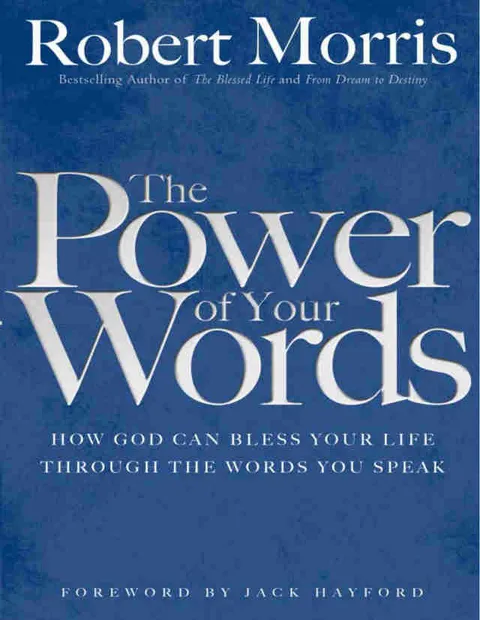
"Power of Your Words" by Robert Morris explores the impact of our words on our lives and relationships. Morris highlights the importance of speaking positive, life-giving words and avoiding destructive language. He emphasizes the biblical principles of the power of words and offers practical strategies for harnessing this power for good. Ultimately, the book serves as a guide for cultivating a mindset of positivity and encouragement through intentional speech.

Cornelius Van Til

Cornelius Van Til Cornelius Van Til (May 3, 1895 – April 17, 1987) was a Dutch-American reformed philosopher and theologian, who is credited as being the originator of modern presuppositional apologetics. Biography Van Til (born Kornelis van Til in Grootegast, Netherlands) was the sixth son of Ite van Til, a dairy farmer, and his wife Klasina van der Veen. At the age of ten, he moved with his family to Highland, Indiana. He was the first of his family to receive a higher education. In 1914 he attended Calvin Preparatory School, graduated from Calvin College, and attended one year at Calvin Theological Seminary, where he studied under Louis Berkhof, but he transferred to Princeton Theological Seminary and later graduated with his PhD from Princeton University. He began teaching at Princeton Seminary, but shortly went with the conservative group that founded Westminster Theological Seminary, where he taught for forty-three years. He taught apologetics and systematic theology there until his retirement in 1972 and continued to teach occasionally until 1979. He was also a minister in the Christian Reformed Church in North America and in the Orthodox Presbyterian Church from the 1930s until his death in 1987, and in that denomination, he was embroiled in a bitter dispute with Gordon Clark over God's incomprehensibility known as the Clark–Van Til Controversy. Work Van Til drew upon the works of Dutch Calvinist philosophers such as D. H. Th. Vollenhoven, Herman Dooyeweerd, and Hendrik G. Stoker and theologians such as Herman Bavinck and Abraham Kuyper to devise a novel Reformed approach to Christian apologetics, one that opposed the traditional methodology of reasoning on the supposition that there is a neutral middle-ground, upon which the non-Christian and the Christian can agree. His contribution to the Neo-Calvinist approach of Dooyeweerd, Stoker and others, was to insist that the "ground motive" of a Christian philosophy must be derived from the historical terms of the Christian faith. In particular, he argued that the Trinity is of indispensable and insuperable value to a Christian philosophy. In Van Til: The Theologian, John Frame, a sympathetic critic of Van Til, claims that Van Til's contributions to Christian thought are comparable in magnitude to those of Immanuel Kant in non-Christian philosophy. He indicates that Van Til identified the disciplines of systematic theology and apologetics, seeing the former as a positive statement of the Christian faith and the latter as a defense of that statement – "a difference in emphasis rather than of subject matter." Frame summarizes Van Til's legacy as one of new applications of traditional doctrines: Unoriginal as his doctrinal formulations may be, his use of those formulations – his application of them – is often quite remarkable. The sovereignty of God becomes an epistemological, as well as a religious and metaphysical principle. The Trinity becomes the answer to the philosophical problem of the one and the many. Common grace becomes the key to a Christian philosophy of history. These new applications of familiar doctrines inevitably increase [Christians'] understanding of the doctrines themselves, for [they] come thereby to a new appreciation of what these doctrines demand of [them]. Similarly, Van Til's application of the doctrines of total depravity and the ultimate authority of God led to his reforming of the discipline of apologetics. Specifically, he denied neutrality on the basis of the total depravity of man and the invasive effects of sin on man's reasoning ability and he insisted that the Bible, which he viewed as a divinely inspired book, be trusted preeminently because he believed the Christian's ultimate commitment must rest on the ultimate authority of God. As Frame says elsewhere, "the foundation of Van Til's system and its most persuasive principle" is a rejection of autonomy since "Christian thinking, like all of the Christian life, is subject to God's lordship". However, it is this very feature that has caused some Christian apologists to reject Van Til's approach. For instance, D. R. Trethewie describes Van Til's system as nothing more than "a priori dogmatic transcendental irrationalism, which he has attempted to give a Christian name to." Kuyper–Warfield synthesis It is claimed that Fideism describes the view of fellow Dutchman Abraham Kuyper, whom Van Til claimed as a major inspiration. Van Til is seen as taking the side of Kuyper against his alma mater, Princeton Seminary, and particularly against Princeton professor B. B. Warfield. But Van Til described his approach to apologetics as a synthesis of these two approaches: "I have tried to use elements both of Kuyper's and of Warfield's thinking." Greg Bahnsen, a student of Van Til and one of his most prominent defenders and expositors, wrote that "A person who can explain the ways in which Van Til agreed and disagreed with both Warfield and Kuyper, is a person who understands presuppositional apologetics." With Kuyper, Van Til believed that the Christian and the non-Christian have different ultimate standards, presuppositions that color the interpretation of every fact in every area of life. But with Warfield, he believed that a rational proof for Christianity is possible: "Positively Hodge and Warfield were quite right in stressing the fact that Christianity meets every legitimate demand of reason. Surely Christianity is not irrational. To be sure, it must be accepted on faith, but surely it must not be taken on blind faith. Christianity is capable of rational defense." And like Warfield, Van Til believed that the Holy Spirit will use arguments against unbelief as a means to convert non-believers. Van Til sought a third way from Kuyper and Warfield. His answer to the question "How do you argue with someone who has different presuppositions?" is the transcendental argument, an argument that seeks to prove that certain presuppositions are necessary for the possibility of rationality. The Christian and non-Christian have different presuppositions, but, according to Van Til, only the Christian's presuppositions allow for the possibility of human rationality or intelligible experience. By rejecting an absolutely rational God that determines whatsoever comes to pass and presupposing that some non-rational force ultimately determines the nature of the universe, the non-Christian cannot account for rationality. Van Til claims that non-Christian presuppositions reduce to absurdity and are self-defeating. Thus, non-Christians can reason, but they are being inconsistent with their presuppositions when they do so. The unbeliever's ability to reason is based on the fact that, despite what he believes, he is God's creature living in God's world. Hence, Van Til arrives at his famous assertion that there is no neutral common ground between Christians and non-Christians because their presuppositions, their ultimate principles of interpretation, are different; but because non-Christians act and think inconsistently with regard to their presuppositions, common ground can be found. The task of the Christian apologist is to point out the difference in ultimate principles, and then show why the non-Christian's reduce to absurdity. Transcendental argument The substance of Van Til's transcendental argument is that the doctrine of the ontological Trinity, which is concerned with the reciprocal relationships of the persons of the Godhead to each other without reference to God's relationship with creation, is the aspect of God's character that is necessary for the possibility of rationality. R. J. Rushdoony writes, "The whole body of Van Til's writings is given to the development of this concept of the ontological Trinity and its philosophical implications." The ontological Trinity is important to Van Til because he can relate it to the philosophical concept of the "concrete universal" and the problem of the One and the many. For Van Til, the ontological Trinity means that God's unity and diversity are equally basic. This is in contrast with non-Christian philosophy in which unity and diversity are seen as ultimately separate from each other: The whole problem of knowledge has constantly been that of bringing the one and the many together. When man looks about him and within him, he sees that there is a great variety of facts. The question that comes up at once is whether there is any unity in this variety, whether there is one principle in accordance with which all these many things appear and occur. All non-Christian thought, if it has utilized the idea of a supra-mundane existence at all, has used this supra-mundane existence as furnishing only the unity or the a priori aspect of knowledge, while it has maintained that the a posteriori aspect of knowledge is something that is furnished by the universe. Pure unity with no particularity is a blank, and pure particularity with no unity is chaos. Frame says that a blank and chaos are "meaningless in themselves and impossible to relate to one another. As such, unbelieving worldviews always reduce to unintelligible nonsense. This is, essentially, Van Til's critique of secular philosophy (and its influence on Christian philosophy)." Karl Barth Van Til was also a strident opponent of the theology of Karl Barth, and his opposition led to the rejection of Barth's theology by many in the Calvinist community. Despite Barth's assertions that he sought to base his theology solely on the 'Word of God', Van Til believed that Barth's thought was syncretic in nature and fundamentally flawed because, according to Van Til, it assumed a Kantian epistemology, which Van Til argued was necessarily irrational and anti-Biblical. Influence Many recent theologians have been influenced by Van Til's thought, including John Frame, Greg Bahnsen, Rousas John Rushdoony, Francis Schaeffer, as well as many of the current faculty members of Westminster Theological Seminary, Reformed Theological Seminary, and other Calvinist seminaries. He was also the personal mentor of K. Scott Oliphint late in life.

can i follow my new heart

“Why shouldn’t I follow my heart? If I am a Christian — if God has caused me to be ‘born again’ and has given me ‘a new heart’ — isn’t my new heart trustworthy?” Readers have raised some version of this objection when I’ve exhorted Christians, “Don’t follow your heart.” And the objection is warranted. After all, the Bible clearly teaches that in this era of the new covenant, God writes his law on our new hearts so that we willingly follow him (Jeremiah 31:31–34; Hebrews 8:8–12). This would seem to not merely imply, but even mandate, that Christians should follow their hearts. But the Bible’s description of what a regenerated person actually experiences in this age reveals a more spiritually and psychologically complex picture — one that I believe gives Christians biblical warrant to cultivate a healthy suspicion of what they recognize as their hearts’ desires. So, while we may, and hopefully will, reach a point in our lives as Christians where it’s right, at times, to follow our hearts, allow me to make a brief case that the phrase actually undermines Christians as they labor and struggle to discern their various desires, and that Scripture itself discourages us from thinking this way. War Within How might we summarize the complex picture the Bible paints of the born-again experience in this already-not-yet age? The New Testament explains that when the Spirit brings us from spiritual death to spiritual life (John 5:24; Romans 6:13), we enter a strange new reality. Our regenerated  new self  emerges, “created after the likeness of God in true righteousness and holiness.” And yet our “ old self , which belongs to [our] former manner of life,” is still “corrupt through deceitful desires” (Ephesians 4:22–24). We are “born of the Spirit” (John 3:6) while still inhabiting the “flesh,” our “body of death” in which “nothing good dwells” (Romans 7:18, 24). “The hearts of regenerated people are not yet fully free from the influence of their flesh.” When Christians are born again, we enter into a lifelong internal war where “the desires of the flesh are against the Spirit, and the desires of the Spirit are against the flesh, for these are opposed to each other, to keep you from doing the things you want to do” (Galatians 5:17). Stepping back and viewing these desires objectively, “the works of the flesh” that result from fleshly desires “are evident,” and so is “the fruit of the Spirit” (Galatians 5:19–23). But Christians often struggle — on the ground, in real time — to discern the desires of the Spirit from the desires of the flesh. This is why the New Testament Epistles are full of exhortations and corrections addressed to Christians. James tells his readers (and us at relevant times) that their “passions are at war within” them (James 4:1). Peter warns his readers (and us), “Do not be conformed to the passions of your former ignorance” (1 Peter 1:14). Paul describes this internal experience of warring passions as “wretched” (Romans 7:24). And he admonishes the Colossian Christians (and us) with strong language: “Put to death therefore  what is earthly in you : sexual immorality, impurity, passion, evil desire, and covetousness, which is idolatry” (Colossians 3:5). Why did these apostles feel the need to speak this way to regenerated people? Because the hearts of these regenerated people were not yet fully free from the influence of their flesh, their old selves. Follow the Spirit Much of the Christian life is a war to die to remaining sin and live by the Spirit. John Piper calls it “the main battle of the Christian life”: The main battle is to see our hearts renovated, recalibrated, so that we don’t want to do those sinful external behaviors, and don’t just need willpower not to do them, but the root has been severed and we have different desires. In other words, the goal of change — of sanctification, of the Christian life — is to be so changed that we can and ought to follow our desires. That’s exactly right. And when we have been so changed through progressive sanctification, so renovated that our hearts (and therefore our desires, dispositions, motives, emotions, and passions) are, as Piper says, “calibrated to Christ,” then we  should  follow our hearts. However, at any given time within our churches, small groups, friendships, and families, different Christians are at different places for different reasons in this heart-renovation process. Some hearts are more sanctified, and therefore more reliable to follow, than others. I think that’s why we don’t hear the apostles generally counsel us to follow our hearts in our fight of faith against remaining sin, but rather to  follow the Holy Spirit . Let Not Sin Reign Paul is the one who delves most deeply into this issue: “I say, walk by the Spirit, and you will not gratify the desires of the flesh” (Galatians 5:16). He devotes most of Romans 6–8 to explaining the nature of the strange new-self/old-self, Spirit/flesh reality of the Christian life, including Romans 8:13: “If you live according to the flesh you will die, but if by the Spirit you put to death the deeds of the body, you will live.” Paul lays the theological foundation of our understanding by explaining “that our old self was crucified with [Christ] in order that [our] body of sin might be brought to nothing, so that we would no longer be enslaved to sin” (Romans 6:6). Our new selves were “raised with Christ” (Colossians 3:1) so that “we too might walk in newness of life” (Romans 6:4). Therefore, we “must consider [ourselves] dead to sin and alive to God in Christ Jesus” (Romans 6:11). In light of this, Paul admonishes us, Let not sin therefore reign in your mortal body, to make you obey its passions. Do not present your members to sin as instruments for unrighteousness, but present yourselves to God as those who have been brought from death to life, and your members to God as instruments for righteousness. For sin will have no dominion over you, since you are not under law but under grace. (Romans 6:12–14) And how do we do this? By learning to “set [our] minds on the things of the Spirit” and not on “the things of the flesh” (Romans 8:5) — by learning to follow the Spirit, to “walk by the Spirit” (Galatians 5:16), because “all who are led by the Spirit of God are sons of God” (Romans 8:14). Follow the Treasure One of the reasons I find “follow your heart” generally unhelpful as counsel for Christians is that many of us, from the time we were young, have absorbed this as a pop-cultural creed that says if we just look deep into our hearts, we’ll be shown our deepest truth, and discover the way we should go. Given the significant amount our sinful flesh still influences our hearts, it’s not hard to see how this phrase can easily increase confusion when applying it to the Christian life. “Some hearts are more sanctified, and therefore more reliable to follow, than others.” I also don’t believe the Bible encourages that idea since, when it comes to engaging our hearts, far and away what we hear in it is counsel to “direct our hearts,” not to follow them. We see that clearly in Paul’s instructions above. God made our hearts to follow, not to lead. And what do our hearts follow? Jesus gives the clearest answer: “Where your treasure is, there your heart will be also” (Matthew 6:21). In time, our heart always pursues (follows) our treasure. When we are born again, the eyes of our hearts are enlightened (Ephesians 1:18) and, through faith, we begin to see the Treasure: God himself in Christ. And since our heart learns to pursue the  object  that stirs its greatest affections, its  treasure , I suggest we not counsel each other to “follow your heart,” but instead to “follow the Treasure.” Looking into our hearts for direction can be spiritually hazardous. It is usually more helpful for us to direct our hearts to what is most valuable and delightful. Which is why I believe David counsels us, “Delight yourself in the Lord, and he will give you the desires of your heart” (Psalm 37:4).

Feedback
Suggestionsuggestion box
x