
GIP Library icon

LOG IN TO REVIEW
About the Book


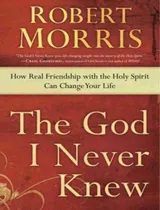
"Power of Your Words" by Robert Morris explores the impact of our words on our lives and relationships. Morris highlights the importance of speaking positive, life-giving words and avoiding destructive language. He emphasizes the biblical principles of the power of words and offers practical strategies for harnessing this power for good. Ultimately, the book serves as a guide for cultivating a mindset of positivity and encouragement through intentional speech.

Jerry Bridges

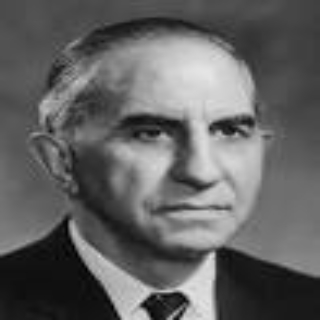
Jerry Bridges Jerry Bridges entered into the joy of his Master on Sunday evening, March 6, 2016, at Penrose Hospital in Colorado Springs, the day after he suffered cardiac arrest. He was 86 years old. Childhood Gerald Dean Bridges was born on December 4, 1929, in a cotton-farming home in Tyler, Texas, to fundamentalist parents, six weeks after the Black Tuesday stock market crash that led to the Great Depression. Jerry was born with several disabilities: he was cross-eyed, he was deaf in his right ear (which was not fully developed), and he had spine and breastbone deformities. But given his family’s poverty, they were unable to afford medical care for these challenges. The separatist church in East Texas where the Bridges were members had an altar call after every service. Jerry walked the aisle three times, at the ages of 9, 11, and 13. But he later realized that he had not been born again. His mother Lillian passed away in 1944 when he was 14. Conversion In August of 1948, as an 18-year-old college student right before his sophomore year began, Jerry was home alone one night in bed. He acknowledged to the Lord that he was not truly a Christian, despite growing up in a Christian home and professing faith. He prayed, ”God whatever it takes, I want Christ to be my Savior.” The next week in his dorm room at the University of Oklahoma he was working on a school assignment and reached for a textbook, when he noticed the little Bible his parents had given him in high school. He figured that since he was now a Christian, he ought to start reading it daily, which he did (and never stopped doing for the rest of his days). The Navy After graduating with an engineering degree on a Navy ROTC scholarship, he went on active duty with the Navy, serving as an officer during the Korean conflict (1951-1953). A fellow officer invited him to go to a Navigator Bible study. Jerry went and he was hooked. He had never experienced anything like this before. When stationed on ship in Japan, he got to know several staff members of the Navigators quite well. One day, after Jerry had been in Japan for six months, a Navy worker asked him why he didn’t just throw in his lot with the Navigators and come to work for them. The very next day, December 26, 1952, Jerry failed a physical exam due to the hearing loss in his right ear, and he was given a medical discharge in July 1953, after being in the Navy for only two years. Jerry was not overly disappointed, surmising that perhaps this was the Lord’s way of steering him to the Navigators. When he returned to the U.S., he began working for Convair, an airplane manufacturing company in southern California, writing technical papers for shop and flight line personnel. It was there that he learned to write simply and clearly—skills the Lord would later use to instruct and edify thousands of people from his pen. The Navigators Jerry was single at the time, living in the home of Navigator Glen Solum, a common practice in the early days of The Navigators. In 1955 Jim invited Jerry to go with him to a staff conference at the headquarters of The Navigators in Glen Eyrie at Colorado Springs. It was there that Jerry sensed a call from the Lord to be involved with vocational ministry. He was resistant to the idea of going on staff, but felt conviction and prayed to the Lord, “Whatever you want.” The following day he met Dawson Trotman, the 49-year-old founder of The Navigators, who wanted to interview Jerry for a position, which he received and accepted. Jerry was put in charge of the correspondence department—answering letters, handling receipts, and mainly the NavLog newsletter to supporters. When Trotman died in June of 1956 (saving a girl who was drowning), Jim Downing took a position equivalent to a chief operations operator. A Navy man, Jim Downing knew that Jerry had also served in the Navy and tapped him to be his assistant. Jerry struggled at times in his role, unsure if this was his calling since his position was so different from the typical campus reps. After ten years on staff he told the Lord, “I’m going to do this for the rest of my life. If you want me out of The Navigators you’ll have to let me know.” Beginning in 1960, Jerry served for three years in Europe as administrative assistant to the Navigators’ Europe Director. In January of 1960, he read a booklet entitled The Doctrine of Election, which he first considered heresy but then embraced the following day. In October of 1963, at the age of 34, he married his first wife, Eleanor Miller of The Navigators following a long-distance relationship. Two children followed: Kathy in 1966, and Dan in 1967. From 1965 to 1969 Jerry served as office manager for The Navigators’ headquarters office at Glen Eyrie. From 1969 to 1979 Jerry served as the Secretary-Treasurer for The Navigators. It was during this time that NavPress was founded in 1975. Their first publications began by transcribing and editing audio material from their tape archives and turning them into booklets. They produced one by Jerry on Willpower. Leroy Eims—who started the Collegiate ministry—encouraged Jerry to try his hand at writing new material. Jerry had been teaching at conferences on holiness, so he suggested a book along those lines. In 1978, NavPress published The Pursuit of Holiness, which has now sold over 1.5 million copies. Jerry assumed it would be his only book. A couple of years later, after reading about putting off the old self and putting on the new self from Ephesians 4, he decided to write The Practice of Godliness—on developing a Christlike character. That book went on to sell over half a million copies, and his 1988 book on Trusting God has sold nearly a million copies. Jerry served as The Navigators’ Vice President for Corporate Affairs from 1979 to 1994. It was in this season of ministry that Eleanor developed non-Hodgkin’s lymphoma. She went to be with the Lord on November 9, 1988, just three weeks after their 25th wedding anniversary. On November 24, 1989, Jerry married Jane Mallot, who had known the Bridges family since the early ’70s. Jerry’s final position with The Navigator’s was in the area of staff development with the Collegiate Mission. He saw this ministry as developing people, rather than teaching people how to do ministry. In addition to his work with The Navigators, he also maintained an active writing and teaching ministry, traveling the world to instruct and equip pastors and missionaries and other workers through conferences, seminars, and retreats. Lessons In 2014, Jerry published a memoir of his life, tracing the providential hand of God through his own story: God Took Me by the Hand: A Story of God’s Unusual Providence (NavPress, 2014). He closes the work with seven spiritual lessons he learned in his six decades of the Christian life: The Bible is meant to be applied to specific life situations. All who trust in Christ as Savior are united to Him in a loving way just as the branches are united to the vine. The pursuit of holiness and godly character is neither by self-effort nor simply letting Christ “live His life through you.” The sudden understanding of the doctrine of election was a watershed event for me that significantly affected my entire Christian life. The representative union of Christ and the believer means that all that Christ did in both His perfect obedience and His death for our sins is credited to us. The gospel is not just for unbelievers in their coming to Christ. We are dependent on the Holy Spirit to apply the life of Christ to our lives. His last book, The Blessing of Humility: Walk within Your Calling, will be published this summer by NavPress. Legacy One of the great legacies of Jerry Bridges is that he combined—to borrow some titles from his books—the pursuit of holiness and godliness with an emphasis on transforming grace. He believed that trusting God not only involved believing what he had done for us in the past, but that the gospel empowers daily faith and is transformative for all of life. In 2009 he explained to interviewer Becky Grosenbach the need for this emphasis within the culture of the ministry he had given his life to: When I came on staff almost all the leaders had come out of the military and we had pretty much a military culture. We were pretty hard core. We were duty driven. The WWII generation. We believed in hard work. We were motivated by saying “this is what you ought to do.” That’s okay, but it doesn’t serve you over the long haul. And so 30 years ago there was the beginning of a change to emphasize transforming grace, a grace-motivated discipleship. In the days ahead, many will write tributes of this dear saint (see, e.g., this one from his friend, prayer partner, and sometimes co-author Bob Bevington). I would not be able to improve upon the reflections and remembrances of those who knew him better than I did. But I do know that he received from the Lord the ultimate acclamation as he entered into the joy of his Master and received the words we all long to hear, “Well done, my good and faithful servant.” There was nothing flashy about Jerry Bridges. He was a humble and unassuming man—strong in spirit, if not in voice or frame. And now we can rejoice with him in his full and final healing as he beholds his beloved Savior face to face. Thank you, God, for this man who helped us see and know you more. Jerry Bridges wrote more than 20 books over the course of nearly 40 years: The Pursuit of Holiness (NavPress, 1978) The Practice of Godliness (NavPress, 1983) True Fellowship (NavPress, 1985) [later published as The Crisis of Caring (P&R, 1992); finally republished with a major revision as True Community (NavPress, 2012)] Trusting God (NavPress, 1988) Transforming Grace (NavPress, 1991) The Discipline of Grace (NavPress, 1994) The Joy of Fearing God (Waterbrook, 1997) I Exalt You, O God (Waterbrook, 2000) I Give You Glory, O God (Waterbrook, 2002) The Gospel for Real Life (NavPress, 2002) The Chase (NavPress, 2003) [taken from Pursuit of Holiness] Growing Your Faith (NavPress, 2004) Is God Really in Control? (NavPress, 2006) The Fruitful Life (NavPress, 2006) Respectable Sins (NavPress, 2007) [student edition, 2013] The Great Exchange [co-authored with Bob Bevington] (Crossway, 2007) Holiness Day by Day (NavPress, 2008) [a devotional drawing from his earlier writing on holiness] The Bookends of the Christian Life [co-authored with Bob Bevington] (Crossway, 2009) Who Am I? (Cruciform, 2012) The Transforming Power of the Gospel (NavPress, 2012) 31 Days Toward Trusting God (NavPress, 2013) [abridged from Trusting God] God Took Me by the Hand (NavPress, 2014) The Blessing of Humility: Walk within Your Calling (NavPress, 2016) For an audio library of Jerry Bridges’ talks, go here. Funeral Visitation for Jerry Bridges was held on Thursday, March 10, 2016, from 5 to 8 pm, at Shrine of Remembrance (1730 East Fountain Blvd, Colorado Springs, CO 80910). The memorial service was held on Friday, March 11, 2016, at 2 pm at Village Seven Presbyterian Church (4055 Nonchalant Circle South, Colorado Springs, CO 80917).

Blessed Are the Unoffendable

I remember the flush of embarrassment that came to my face as I realized that my friend was letting me know I hadn’t been invited to be a part of the group of women she was meeting with regularly — and not by accident. I tried to navigate the moment, relieving the tension by telling her not to worry about it. I let her know that my plate was full with doctors’ appointments and kids’ activities. “I couldn’t join the group even if I were asked!” I laughed, doing all I could to keep her from feeling sorry for me. And my words were true. I really did have a plate too full to add anything else. I really didn’t want her to worry about it. Yet my hot cheeks and thumping heart told the secret I was trying to conceal — I was fighting the impulse to take offense. Shutting the Gates I knew well enough how destructive becoming offended can be. Proverbs 18:19 says, “A brother offended is more unyielding than a strong city.” What horrible strength there is in taking up an offense! Offended people can become unassailable. Recalcitrant. Too hard-hearted to hear an appeal. When we are offended, we believe ourselves to have the moral high ground; therefore, we feel justified in making the one who has offended us a villain. I thought I was on the inside of this particular group of friends, only to discover I was not. My sense of where I fit in with others was challenged in a painful way. I could choose to accept it with goodwill toward these sisters and lean on my Savior who has called me his friend, or I could get tough — hard as nails — like an unyielding strong city whose gates have been shut and whose pride has locked out the offending parties. “Offended people become unassailable. Recalcitrant. Too hard-hearted to hear an appeal.” The Scriptures show us many instances of Jesus causing offense. He offends his hometown crowd. He offends Pharisees and scribes. He is the stone of stumbling and rock of offense. This is no big surprise to Christians. We aren’t shocked that the Pharisees or the hometown crowd are resentful and outraged by his superior understanding and his mighty deeds. From our vantage point, it isn’t too hard to see that when Jesus challenges their view of reality, he’s always right. We can see their blind spots and pride and how that pride makes them easily offended. But it’s much harder to spot the pride when we’re the one being offended, and when the offender is someone other than the perfect Jesus. The Drug of Offendedness What do we do when we’re offended by one another? What do we do if the offense given or taken is a result of carelessness, or thin skin, or personality differences, or unintentionally missing the mark, or sinfulness in ourselves or others? First, remember that when others are offensive in a truly sinful way, their offense is against God first and foremost. Sin against us feels personal, because it often is personal. But it’s significantly more personal to God, who doesn’t just relate to us, but who created us. God is patient with those who have offended his holiness. But he will not wait forever. And for those who are united to his Son through faith, their offenses against him have been extinguished at the cross. Second, it is good to remember that God has made a way for us to deal with a legitimate offense. We can follow the instructions of our Lord and go to that person directly in the hopes of gaining our brother (Matthew 18:15). We don’t ever need to stay offended. Even when we don’t gain our brother by going to him, we don’t have to live in our offended state; we can lay that down at the cross. And laying our offense there, we can take a posture that is eager for reconciliation, should God grant it. But what about when there is no intentional or discernible sin? What about the kind of situation that I found myself in — the one where I had not been sinned against, yet my hurt feelings were poised to harden into offendedness? It helps to acknowledge that taking offense is a powerful drug. It’s a powerful drug precisely because it gives us power. Remember the proverb — the offended brother is more unyielding than a strong city! “Taking offense is a powerful drug. It’s a powerful drug precisely because it gives us power.” When we turn hurt feelings into offendedness, we go from vulnerable to impenetrable. When we’re hurt by someone else’s words or actions, it’s tempting to try to protect ourselves with anger or self-righteousness that masquerades as having been offended. It’s easier to imagine the ones who have hurt us as villains rather than own that our hurt often has to do with our insecurities and fragility more than with the objective sinfulness of others. Good Sense and Glory Proverbs 19:11 says, “Good sense makes one slow to anger, and it is his glory to overlook an offense.” Good sense and glory are in short supply these days. Rather than slow down and give our rational minds a chance to inform our wildly thumping hearts, we let our feelings inform our response. Rather than overlook an offense, we go conjuring them up from every possible infraction, mounting chips on our shoulders. Everything another person says that we disagree with is a devilish opportunity for taking up an offense. Anything another person does that is different than how we would do it strengthens the resolve of the unyielding, hardened heart. Too often, we can’t merely disagree with people; we are personally offended by the words, opinions, and actions of others, even when they have no bearing on our personal lives. And if we can’t find a way to be personally offended ourselves, too many have begun taking up an offense on behalf of another. Rather than cover an offense in the interest of love and refusing to repeat a matter (Proverbs 17:9), the society around us urges us to lend and borrow offenses as a currency of backward virtue. Blessed Are the Unoffendable There is more than insecurity and fragility underneath our proclivity to take up an offense, although those problems are constantly feeding it. At root, our easily offended hearts are full of pride and idolatry. We have set ourselves as the standard of what is right and good and what must be honored — any perceived challenge to that assumption results in anger, resentment, and the taking up of an offense. But we’re not the standard; God is — which is wonderful news for sinners. Because he is the standard, because only he can see into hearts and discern the motives of each of us, we can be free to assume the best of others, trusting that he will judge perfectly in the end. We can have the good sense to be slow to anger. We can become gloriously unoffendable. Won’t you lay down the offendedness you’ve nursed against others, and rest in the salvation of the God who is slow to anger and abounding in steadfast love? He is patient in delaying judgment, but judgment will come. Today is the day to crucify the counterfeit power of offendedness and take hold of the gospel — which is the power of God for salvation to all who believe (Romans 1:16). Article by Abigail Dodds

Feedback
Suggestionsuggestion box
x