

The Spirit Within & The Spirit Upon Order Printed Copy
- Author: Kenneth Hagin
- Size: 1.6MB | 405 pages
- |
Others like the spirit within & the spirit upon Features >>
-160.webp)
.epub-160.webp)


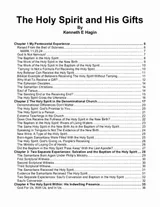





About the Book
"The Spirit Within & the Spirit Upon" by Kenneth Hagin explores the role of the Holy Spirit in the life of a believer, discussing the indwelling presence of the Spirit and the empowering anointing that comes upon believers. Hagin uses biblical teachings and personal experiences to help readers understand how to cultivate a deeper relationship with the Holy Spirit and operate in His power.
Nik Ripken
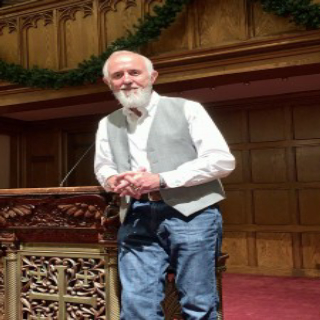 Nik and Ruth, with 3 children, served for over 32 years obeying Christ’s command to share Jesus across the globe. After 7 years in Malawi & South Africa, they moved to Nairobi, Kenya to begin work among the Somali people (1991-1997). Since that time (1998-2013) they have journeyed globally among people whom, when they gave their lives to Jesus, faced increasing persecution for their faith.
The Ripkens and their teams served throughout the Horn of Africa within famine and war zones; resettling refugees, providing famine relief, and operating mobile medical clinics. Formerly Muslims, many Somali believers, suffered for their faith. Most were martyred. Near the end of the Ripken’s tenure among the Somalis, their 16-year-old son died of an asthma attack on Easter Sunday morning. He’s buried at the school from which the other Ripken children graduated.
One year later, the Holy Spirit led the Ripkens to begin a global pilgrimage to learn from believers in persecution how to recapture a biblical missiology of witness and house-church planting in the midst of persecution and martyrdom. Most of all, believers in persecution modeled for the Ripkens how to trust Jesus completely. Many of these lessons have been lost or forgotten by the church in the West.
Currently the Ripkens have interviewed over 600 believers in persecution, exceeding 72 countries. Sitting at their feet, the Ripkens learned from the suffering church how to thrive amidst suffering, not merely survive. The Ripkens, using everything they’ve learned from believers in persecution are creating resources as gifts from the church to the church. To date they have created articles, books, a music CD, a documentary, workshops, and other tools that allow the church in persecution to teach the church in the West about its biblical heritage of both crucifixion and resurrection. A teaching DVD is included in future plans. All these tools are designed to challenge believers to boldly follow Jesus, sharing their faith with others-no matter the cost.
Nik and Ruth, with 3 children, served for over 32 years obeying Christ’s command to share Jesus across the globe. After 7 years in Malawi & South Africa, they moved to Nairobi, Kenya to begin work among the Somali people (1991-1997). Since that time (1998-2013) they have journeyed globally among people whom, when they gave their lives to Jesus, faced increasing persecution for their faith.
The Ripkens and their teams served throughout the Horn of Africa within famine and war zones; resettling refugees, providing famine relief, and operating mobile medical clinics. Formerly Muslims, many Somali believers, suffered for their faith. Most were martyred. Near the end of the Ripken’s tenure among the Somalis, their 16-year-old son died of an asthma attack on Easter Sunday morning. He’s buried at the school from which the other Ripken children graduated.
One year later, the Holy Spirit led the Ripkens to begin a global pilgrimage to learn from believers in persecution how to recapture a biblical missiology of witness and house-church planting in the midst of persecution and martyrdom. Most of all, believers in persecution modeled for the Ripkens how to trust Jesus completely. Many of these lessons have been lost or forgotten by the church in the West.
Currently the Ripkens have interviewed over 600 believers in persecution, exceeding 72 countries. Sitting at their feet, the Ripkens learned from the suffering church how to thrive amidst suffering, not merely survive. The Ripkens, using everything they’ve learned from believers in persecution are creating resources as gifts from the church to the church. To date they have created articles, books, a music CD, a documentary, workshops, and other tools that allow the church in persecution to teach the church in the West about its biblical heritage of both crucifixion and resurrection. A teaching DVD is included in future plans. All these tools are designed to challenge believers to boldly follow Jesus, sharing their faith with others-no matter the cost.
what would judas do
Wednesday plants the suicidal seed of Holy Week: betrayal. Before there could be a Garden, there had to be a seed — the inception of insurrection. Jesus gloriously paid for our redemption with blood, but his blood was murderously bought with money. The promised Savior sold for just thirty pieces of silver. Jesus had taught his disciples, including the one who would betray him, “No one can serve two masters, for either he will hate the one and love the other, or he will be devoted to the one and despise the other. You cannot serve God and money” (Matthew 6:24). No one. Not Judas. Not you or me. The Love of Money Murdered Jesus The Pharisees loved money (Luke 16:14), feared men (Matthew 26:5), and hated Jesus (Matthew 26:4). That formula may be lived out before you more than you realize. The love of money often looks merely practical. The fear of men can hide behind masks. But the Bible is clear: If you love money and fear men, you cannot love God or escape hell (Luke 16:13; John 5:44) — and you become a card-carrying member of the crowd who crucified the Author of life (Acts 3:15). The cross — that horrifying drama of hatred — was only a symptom of the Pharisees’ craving for money, approval, and power. It was as if they bought a billboard to advertise their love for money, and set on a hill for all to see. But they would never do something so obvious. What would the people say? They “feared the people” (Luke 22:2). In fact, the people’s love for Jesus was half the reason the religious leaders hated him so much. The authorities were cowards with cravings. They had to find a way to kill him quietly (Matthew 26:3–5). They had to find a way to murder an innocent man without losing any esteem or influence. First they needed an insider — someone close enough to Jesus to betray him, but far enough from Jesus to betray him. In other words, they needed a perp dressed like the Pope. “Then one of the twelve, whose name was Judas Iscariot, went to the chief priests and said, ‘What will you give me if I deliver him over to you?’” (Matthew 26:14–15). “When they heard it, they were glad and promised to give him money” (Mark 14:11). They found their man, someone who loved money as much as they did, someone who was willing to offend and ostracize even his closest friends for a pay day. The market had opened against the Messiah, and Judas was there to profit. As Randy Alcorn writes, “Satan works on the assumption that every person has a price. Often, unfortunately, he is right. Many people are willing to surrender themselves and their principles to whatever god will bring them the greatest short-term profit” ( Money, Possessions, and Eternity , 41). Judas sold out the Savior, and for just thirty pieces of silver (Matthew 26:15). The Love of Money Makes a Name If you love money — value money and what it can buy above all else — you cannot love God. You will hate him, maybe quietly or privately and hypocritically — but you will hate him. And that hatred will mark you and follow you everywhere. That kind of divine rejection and betrayal renames a person. It defines you. For example, look at how Judas is talked about in the Gospels. “ . . . Simon the Zealot, and Judas Iscariot, who betrayed him .” (Matthew 10:4) “Judas, who would betray him , answered, ‘Is it I, Rabbi?’ He said to him, ‘You have said so.’” (Matthew 26:25) “ . . . and Judas Iscariot, who betrayed him .” (Mark 3:19) “ . . . and Judas the son of James, and Judas Iscariot, who became a traitor .” (Luke 6:16) “But Judas Iscariot, one of his disciples ( he who was about to betray him ), said,” (John 12:4). “He spoke of Judas the son of Simon Iscariot, for he, one of the Twelve, was going to betray him .” (John 6:71) “Judas, who betrayed him , was standing with them.” (John 18:5) Instead of being a faithful disciple guiding people to follow Jesus, he “became a guide to those who arrested Jesus” (Acts 1:16). What will be the testimony of your life — of your spending and giving? Will it be clear to others that you used what God had given you to lead others to his Son, or will it be plain that you surrendered to the gods of the material and drew people away from Jesus? Did you guide the blind to sight, or help blind them to death? The Love of Money Leads to Regret Judas’s affair did not fair so well for him. “Then when Judas, his betrayer, saw that Jesus was condemned, he changed his mind and brought back the thirty pieces of silver to the chief priests and the elders” (Matthew 27:3). Drowning in shame, he screamed for a refund. Confronted with the horror of his exchange, the money had lost its allure. What have I done?! What awful trade have I made?! Take it all back, and give me Jesus! There was no turning back for Judas, no return policy on this rejection. He killed himself in the overwhelming waves of regret and remorse (Matthew 27:5). However, there is time to turn back for you. Luke quotes Jesus for the greedy today, “Take care, and be on your guard against all covetousness, for one’s life does not consist in the abundance of his possessions” (Luke 12:15). When life begins to seem like one long mission to make more money, someone is lying to you. Wake up and give back the silver before it crucifies you. John Piper writes, “When you are dying . . . money walks away from you. It abandons you. It will not go with you to help you. And nothing that you bought with it can go either” ( Money, Sex, and Power , 65). And again later, “[The love of money] substitutes a dollar bill for the divine” (71). The love of money leads only to regret and loss. Reject Judas, Receive Joy Ask yourself what Judas would do in your situation. How would he feel about your current income, shopping habits, and retirement savings? How uneasy would he be about your generosity? Does your budget begin to look like his, just two thousand years later? Refuse to follow Judas in his betrayal, and reject all that money promises to be in place of God. Find your security and satisfaction in something supernatural, eternal, and free. Piper goes on, reflecting on Paul in Philippians 4:11–13, When the stock market goes up or he gets a bonus, he says, I find Jesus more precious and valuable and satisfying than my increasing money . And when the stock market goes down or he faces a pay cut, he says, I find Jesus more precious and valuable and satisfying than all that I have lost . The glory and beauty and worth and preciousness of Christ is the secret of contentment that keeps money from controlling him. ( Money, Sex, and Power , 65) When our joy is no longer in our money but rather is in God . . . our money becomes the visible extension of joy in God, directed toward others. . . . Treasuring God above all things turns money into the currency of worship and love. ( Money, Sex, and Power , 123) Instead of surrendering to our cravings for more, let’s pour ourselves, every penny, into telling the world God is our treasure — right now, later in retirement, and forever in eternity — and spending whatever it takes to bring others into that joy and security with us.
-480.webp)