
GIP Library icon

LOG IN TO REVIEW
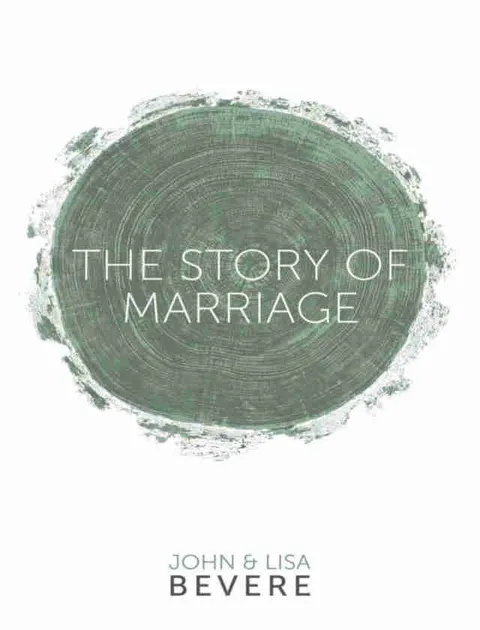
About the Book


"The Story of Marriage" by John and Lisa Bevere explores the biblical definition and purpose of marriage, offering practical advice and insights for creating a strong and lasting relationship. The book discusses the roles and responsibilities of husbands and wives, the importance of communication and intimacy, and how to navigate challenges in marriage with grace and love. Overall, it emphasizes the significance of honoring God in marriage and building a foundation of faith and commitment.

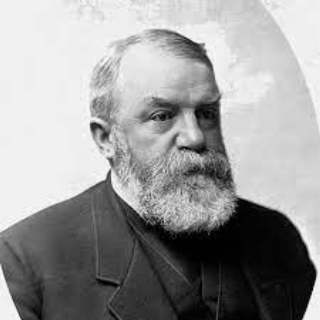
Warren Wiersbe

Warren Wiersbe Dr. Warren Wiersbe once described Heaven as “not only a destination, but also a motivation. When you and I are truly motivated by the promise of eternity with God in heaven, it makes a difference in our lives.” For Wiersbe, the promise of eternity became the motivation for his long ministry as a pastor, author, and radio speaker. Beloved for his biblical insight and practical teaching, he was called “one of the greatest Bible expositors of our generation” by the late Billy Graham. Warren W. Wiersbe died on May 2, 2019, in Lincoln, Nebraska, just a few weeks shy of his 90th birthday. “He was a longtime, cherished friend of Moody Bible Institute, a faithful servant of the Word, and a pastor to younger pastors like me,” said Dr. Mark Jobe, president of Moody Bible Institute. “We are lifting up pastor Wiersbe’s family in prayer at this time and rejoicing in the blessed hope that believers share together.” Wiersbe grew up in East Chicago, Indiana, a town known for its steel mills and hard-working blue-collar families. In his autobiography, he connected some of his earliest childhood memories to Moody Bible Institute; his home church pastor was a 1937 graduate, Dr. William H. Taylor. After volunteering to usher at a 1945 Youth for Christ rally, Wiersbe found himself listening with rapt attention to Billy Graham’s sermon, and responded with a personal prayer of dedication. In a precocious turn of events, the young Wiersbe was already a published author, having written a book of card tricks for the L. L. Ireland Magic Co. of Chicago. He quickly learned to liven up Sunday school lessons with magic tricks as object lessons (“not the cards!” he would say). After his high school graduation in 1947 (he was valedictorian), he spent a year at Indiana University before transferring to Northern Baptist Seminary in Chicago, where he earned a bachelor of theology degree. His future wife, Betty, worked in the school library, and Wiersbe was a frequent visitor. While in seminary he became pastor of Central Baptist Church in East Chicago, serving until 1957. During those years he became a popular YFC speaker, which led to a full-time position with Youth for Christ International in Wheaton. He published his first article for Moody Monthly magazine in 1956, about Bible study methods, and seemed to outline his ongoing writing philosophy. “This is more of a personal testimony,” he said, “because I want to share these blessings with you, rather than write some scholarly essay, which I am sure I could not do anyway.” At a 1957 YFC convention in Winona Lake, Indiana, Wiersbe preached a sermon that was broadcast live over WMBI, his first connection to Moody Radio. “I wish every preacher could have at least six months’ experience as a radio preacher,” he said later (because they would preach shorter). While working with Youth for Christ, Wiersbe got a call from Pete Gunther at Moody Publishers, asking about possible book projects. First came Byways of Blessing (1961), an adult devotional; then two more books in 1962, A Guidebook for Teens and Teens Triumphant. He would eventually publish 14 titles with Moody, including William Culbertson: A Man of God (1974), Live Like a King (1976), The Annotated Pilgrim’s Progress (1980), and Ministering to the Mourning (2006), written with his son, David Wiersbe. In 1961, D. B. Eastep invited Wiersbe to join the staff of Calvary Baptist Church in Covington, Kentucky. forming a succession plan that was hastened by Eastep’s sudden death in 1962. Warren and Betty Wiersbe remained at the church for 10 years, until they were surprised by a phone call from The Moody Church. The pastor, Dr. George Sweeting, had just resigned to become president of Moody Bible Institute. Would Wiersbe fill the pulpit, and pray about becoming a candidate? He was already well known to the Chicago church—and to the MBI community. He continued to write for Moody Monthly and had just started a new column, “Insights for the Pastor.” The monthly feature continued to run during the years Wiersbe served at The Moody Church. Wiersbe would become one of the magazine’s most prolific writers—200 articles during a 40-year span. Meanwhile he also started work on the BE series of exegetical commentaries, books that soon found a place on the shelf of every evangelical pastor. His ministry to pastors continued as he spoke at Moody Founder’s Week, Pastors’ Conference, and numerous campus events. He also inherited George Sweeting’s role as host of the popular Songs in the Night radio broadcast, produced by Moody Radio’s Bob Neff and distributed on Moody’s growing network of radio stations. Later in life he would move to Lincoln, Nebraska, where he served as host of the Back to the Bible radio broadcast. He also taught courses on preaching at Trinity Evangelical Divinity School and Grand Rapids Baptist Seminary. He kept writing, eventually publishing more than 150 books and losing track of how many (“I can’t remember them all, and I didn’t save copies of everything,” he said.) Throughout his ministry, Warren Wiersbe described himself as a bridge builder, a reference to his homiletical method of moving “from the world of the Bible to the world of today so that we could get to the other side of glory in Jesus.” As explained by his grandson, Dan Jacobson, “His preferred tools were words, his blueprints were the Scriptures, and his workspace was a self-assembled library.” Several of Wiersbe’s extended family are Moody alums, including a son, David Wiersbe ’76; grandson Dan Jacobsen ’09 and his wife, Kristin (Shirk) Jacobsen ’09; and great-nephew Ryan Smith, a current student. During his long ministry and writing career, Warren Wiersbe covered pretty much every topic, including the inevitability of death. These words from Ministering to the Mourning offer a fitting tribute to his own ministry: We who are in Christ know that if He returns before our time comes to die, we shall be privileged to follow Him home. God’s people are always encouraged by that blessed hope. Yet we must still live each day soberly, realizing that we are mortal and that death may come to us at any time. We pray, “Teach us to number our days aright, that we may gain a heart of wisdom” (Psalm 90:12).

Some Wounds Never Heal

I didn’t realize how disorienting grief can be. In the aftermath of a dearly loved one’s death, I felt like I was living two worlds at once: one with him, and one without. My grandfather, more like a father, died on a Tuesday this past December. He “died on a Tuesday” summarizes the concussion.  He died  — no longer will I see him poke his head up from his garden, or sit in the living room as he drinks in classical music. No longer will we go see movies together, study the Bible together, or go hiking up north. Death has hidden his face. And yet, it was  a Tuesday . An hour after weeping with family at his side as he took his last breaths, I remember the profane intrusion:  What would be for dinner?  Life, in one form or fashion, would continue without him. Tuesdays always hurry towards Wednesday. Time does not pay its respects for anyone. Our loved ones, when they die, die on Tuesdays. We Are Not the Same Their deaths, on their Tuesdays, affect our remaining Tuesdays after. Life has changed. We are changed. The death of a loved one is a blade that pierces beneath the armor, an arrow that lodges down in the soul. It brings a hurt we cannot defend, a pain we cannot forget, an injury which will never fully heal. “Alas! there are some wounds that cannot be wholly cured,” said Gandalf. “I fear it may be so with mine,” said Frodo. “There is no real going back. Though I may come to the Shire, it will not seem the same; for I shall not be the same. I am wounded with knife, sting, and tooth, and a long burden. Where shall I find rest?” Gandalf did not answer. “That old wound may never heal in this life, but Jesus will comfort us day by day and glorify our scars in the next.” Though life goes on without noticing our loss — daily broadcasts continue, people shop at grocery stores, buses come and go —  we  are no longer the same. The ache will not finally leave, the groan not silence, the limp not amend until we remove the tattered garments of this life.  They  are no longer with us. The loveliness of their memory is a beautiful, but long, burden cast over our remaining days. The streets we walked are haunted with laughter. We glance at their empty-chair out of habit. Though life for us has not ended, it has changed. There is no real going back. Death’s Prolonged Victims Death, I realize, often inflicts its greatest havoc upon its survivors; its primary victims do not yet lie in the grave. When my grandfather departed in the Lord, he went to a place where pain and suffering are forbidden, while our grief, on that same day, deepened. His tears finally wiped away as ours sprung forth. He is healed. Our bleeding goes on. We, not the departed, are left to wonder with the prophet, “Why is my pain unceasing, my wound incurable, refusing to be healed?” (Jeremiah 15:18). Our grief refuses to be healed, as C.S. Lewis describes, after the death of his wife, in  A Grief Observed : Tonight all the hells of young grief have opened again. . . . In grief nothing “stays put.” One keeps on emerging from a phase, but it always recurs. Round and round. Everything repeats. . . . How often . . . will vast emptiness astonish me like a complete novelty and make me say, “I never realized my loss till this moment”? The same leg is cut off time after time. The first plunge of the knife into the flesh is felt again and again. Dying can be an ugly thing. But for many, the knife enters once and releases its victim. But for those left behind, the stab is repetitive. Death not only claims its victims but torments their loved ones. Where, if anywhere, shall we find rest? Pierced with Mary This heart-stabbing we feel is owned, not avoided, in the Scriptures. For one, this blade was foretold to pierce Mary decades before its advent. As Mary marveled at the prophesy given by Simeon concerning her newborn son — that he would be a light for the Gentiles and glory for Israel (Luke 2:29–32) — her wonder was interrupted by a prophesy concerning her as well: Behold, this child is appointed for the fall and rising of many in Israel, and for a sign that is opposed (and a sword will pierce through your own soul also), so that thoughts from many hearts may be revealed. (Luke 2:34–35) A sword will pierce through your own soul also. Jesus would be pierced,  and Mary also . The blade entered later in the Gospels, “standing by the cross of Jesus were his mother and his mother’s sister, Mary the wife of Clopas, and Mary Magdalene” (John 19:25). She stood with her son and watched the horrible sight — she stood valiantly as the blade went in. Her beloved son, crucified upon a Roman tree in infamy and shame. The child to whom she spoke baby talk now groaned in unforgettable anguish. The child she swaddled, nursed, and held, now wrapped in death, nursed by anguish, and held up by nails which stapled his flesh to wood. “Death brings a hurt we cannot defend, a pain we cannot forget, an injury which will never fully heal.” How far through did it run when she heard him gasp through suffocation one last time on her behalf, “Woman, behold, your son!” Then he said to the disciple, “Behold, your mother!” (John 19:26–27). In his dying breath, under the wrath of men and the wrath of God, he considered  her  well-being. Nails had pierced his hands and feet, and a spear now pierced his side, while a sword pierced her soul. Where Can We Find Rest? I do not mean to normalize the death of God’s own Son — it has no rival. His death is more horrific, more unthinkable, more grievous than the summation of every other death in history. But we know the soul-piercing effect of this blade when others have died as well. We see its sharpness pierce speech for seven days in the ash heap with Job and climb into the tears of Jesus at the tomb of Lazarus. And yet, while the death of our loved ones in the Lord constitute a heavy blow, it is  precious  in the eyes of our Father. “Precious in the sight of the Lord is the death of his saints” (Psalm 116:15). And the reason for the preciousness is also foretold in the same verse as the piercing of soul. “Behold, this child is appointed for the fall and  rising  of many in Israel” (Luke 2:34). The  anastasis , the  resurrection  of many. Death for God’s people is precious only because Mary’s son was appointed for their resurrection. He is the Resurrection and the Life. Death will not hide faces for long. Life After the Sword We may never return to life as it once was. That’s okay. But we must never let the old ache stop us from living. Wednesday must follow Tuesday. Here, John Piper’s counsel is timeless: “Occasionally, weep deeply over the life you hoped would be. Grieve the losses. Then wash your face. Trust God. And embrace the life you have.” Frodo asked what so many of us with missing loved ones do:  Where can I find rest?  Gandalf did not answer. Jesus does: “Come to me, all who labor and are heavy laden, and  I will give you rest.  Take my yoke upon you, and learn from me, for I am gentle and lowly in heart, and you will find  rest for your souls ” (Matthew 11:28–29). We must go to him moment by moment, groan by groan, tear by tear. That old wound may never heal in this life, but Jesus will comfort us day by day and glorify our scars in the next.

Feedback
Suggestionsuggestion box
x